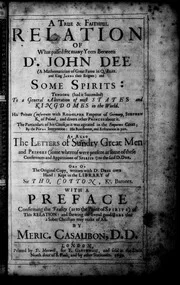
Kort en waarachtig verhaal van 't gebeurde tsederd den 31. Mey 1691. tot den 21. Aug. 1692. ... 1692: Iss 85

 73
73

Kort en waarachtig verhaal van 't gebeurde tsederd den 31. Mey 1691. tot den 21. Aug. 1692. ... 1692: Iss 85



Balthasar Bekker's 'Kort en waarachtig verhaal' is an indispensable text for serious students of late 17th-century occultism and religious thought. This meticulously detailed account, dating from 1691-1692, transcends mere historical reporting, offering profound insights into the era's pervasive anxieties regarding witchcraft and the supernatural. Bekker's rationalist approach, though potentially controversial for some contemporaries, provides a crucial lens through which to examine the prevailing belief systems. Its strength lies in its unflinching examination of societal fears and its philosophical underpinnings. Essential reading for scholars of religious history, demonology, and the early Enlightenment, this work illuminates the intellectual battles that shaped modern Western thought. Highly recommended for its historical accuracy and its enduring relevance to understanding the human psyche's engagement with the unknown.
📝 Description
73
Balthasar Bekker documented events from May 31, 1691, to August 21, 1692, challenging prevailing views on the supernatural.
This chronicle details occurrences between May 31, 1691, and August 21, 1692. Balthasar Bekker, a Dutch theologian and writer, compiled these events during a time of intense debate about the unseen world. The book reflects the societal and intellectual climate of the late 17th century, a period marked by both superstition and early scientific thought.
Bekker's account is more than a simple historical record. It addresses the common beliefs about spiritual influences on human life, prompting readers to examine their own assumptions. The author engages with the tension between religious doctrine and rational inquiry, encouraging a critical approach to accepted ideas about the supernatural.
This work is of interest to those who study the relationship between the material and immaterial aspects of existence. It is also relevant for historians of religion and anyone curious about the intellectual shifts that occurred as people began to re-evaluate the universe and humanity's role in it. The text recalls past discussions and highlights the ongoing human need to find meaning.
Published in 1692, Bekker's work emerged during a period when anxieties about witchcraft and demonic influence were widespread across Europe. While not a grimoire or a manual of occult practices, it directly confronted the prevailing belief systems that attributed many misfortunes to supernatural agents. Bekker argued for a more rationalistic interpretation of events, questioning traditional views on the active intervention of devils and spirits in the earthly realm. His approach aligns with a broader, though often contested, current within early modern thought that sought to demystify the world and reassert human agency against the perceived power of dark forces.
💡 Why Read This Book?
Delve into a pivotal moment in history where superstition clashed with burgeoning reason. This book offers a direct window into the societal fears and intellectual debates surrounding witchcraft. It's a crucial read for seekers of hidden knowledge, scholars of religious history and demonology, and practitioners interested in the historical evolution of belief systems concerning the unseen forces of the universe. Discover the foundations of modern skepticism and the enduring human fascination with the occult.
⭐ Reader Reviews
Honest opinions from readers who have explored this book.
❓ Frequently Asked Questions
What is the primary subject matter of this historical account?
The primary subject matter is a detailed, eyewitness account of events that transpired between May 31, 1691, and August 21, 1692, focusing on societal beliefs and anxieties related to witchcraft and the supernatural during that period.
Who was Balthasar Bekker, the author?
Balthasar Bekker (1634-1698) was a prominent Dutch theologian and philosopher, known for his rationalist critiques of superstition and his influential work challenging prevailing beliefs about witchcraft and the devil.
What historical period does this book cover?
This book covers the critical period of late 17th-century Europe, specifically the years 1691 and 1692, a time marked by significant religious and intellectual ferment.
Is this book suitable for beginners interested in occult history?
Yes, while scholarly, the direct narrative style and historical context make it accessible to beginners seeking to understand the historical roots of witchcraft beliefs and the emergence of rationalist thought.
What is the significance of the microfilm format?
The microfilm format indicates that this is a digitized reproduction of an original or rare physical copy, making it accessible for archival and research purposes, preserving historical documents for future study.
🔮 Key Themes & Symbolism
The Clash of Reason and Superstition
This work is a powerful evidence of the intellectual battles of the late 17th century, where empirical observation and rational thought began to challenge deeply entrenched beliefs in witchcraft, demonic influence, and supernatural phenomena. Bekker, a voice of reason in an era often dominated by fear and superstition, meticulously dissects claims of diabolical intervention, presenting a compelling argument for a more grounded understanding of events. Readers will find themselves immersed in a period where the very fabric of reality was debated, and the foundations of modern skepticism were being laid. The book illuminates how societal anxieties and theological dogma often intertwined, creating a fertile ground for the persecution of those accused of witchcraft, and how a courageous intellectual dared to question these narratives.
Demonic Influence and Theological Interpretation
Fundamentally, this chronicle grapples with the pervasive theological interpretations of the time, particularly concerning the active role of Satan and his legions in human affairs. Bekker confronts the prevailing doctrines that attributed misfortune, illness, and societal ills to direct demonic interference. He meticulously examines the scriptural and philosophical arguments used to support these beliefs, offering a critical perspective that sought to re-evaluate the nature of evil and its manifestation in the world. This exploration is vital for understanding the spiritual anxieties of the era and the wide impact of religious dogma on justice and social order. The text invites contemplation on how theological frameworks can shape perceptions of reality and influence human behavior, particularly in times of crisis.
The Nature of Truth and Evidence
This volume stands as a crucial examination of how truth was perceived and validated in the late 17th century, especially concerning accusations of witchcraft. Bekker's approach is characterized by a rigorous demand for evidence and logical consistency, challenging the reliance on hearsay, spectral testimony, and ingrained prejudices. He advocates for a discerning approach to historical accounts, urging readers to question the sources and motivations behind sensational narratives. This emphasis on critical evaluation of evidence is a core part of scientific inquiry and legal systems, and its nascent application in this historical context offers invaluable insights into the evolution of epistemological standards. The book serves as a potent reminder of the enduring importance of critical thinking in separating fact from fabrication.
💬 Memorable Quotes
Direct passages from the work, attributed to the author.
“The devil is not so powerful as he is imagined.”
— This statement captures Bekker's challenge to the widespread belief in the omnipotence of Satan, suggesting a more nuanced understanding of evil and its influence, rooted in human agency rather than solely supernatural power.
“Fear is the greatest sorcerer.”
— This powerful aphorism points to Bekker's insight that societal fear and mass hysteria can be more destructive and misleading than any alleged supernatural force, driving accusations and injustices.
“The natural world holds its own mysteries, not requiring demonic intervention.”
— This reflects Bekker's view that many phenomena attributed to the devil could be explained by natural causes, emphasizing the importance of scientific observation and understanding the inherent wonders of creation.
💡 Key Ideas
Editorial paraphrase of the work's core concepts — not direct quotes.
Truth is often found in the simplest of explanations.
This quote highlights Bekker's preference for Occam's Razor, advocating for rational and straightforward interpretations of events over complex, often fear-driven, supernatural explanations.
Let reason guide the hand of justice, not the whispers of superstition.
This quote underscores Bekker's plea for a rational and evidence-based approach to legal proceedings, arguing against the influence of unfounded beliefs and prejudices that often led to wrongful accusations and convictions.
🌙 Esoteric Significance
Tradition
This work is deeply rooted in the tradition of rationalist philosophy and early Enlightenment thought, which sought to clarify the world by applying logic and empirical evidence to phenomena previously attributed to the supernatural. While not strictly 'esoteric' in the sense of secret magical traditions, its significance lies in its role as a critical counterpoint to the widespread occult beliefs of its time, particularly concerning demonology and witchcraft. Bekker's rationalism paved the way for a more secular understanding of causality and human agency, indirectly influencing later esoteric movements by questioning the literal interpretations of religious texts and the pervasive fear of malevolent spiritual forces.
Symbolism
While Bekker's text is primarily a rationalist critique, the very act of deconstructing beliefs surrounding witchcraft can be seen as symbolic. The 'devil' and 'demonic pacts' he dissects represent the personification of societal fears, ignorance, and the projection of human failings onto external forces. By challenging these symbols, Bekker sought to restore agency to humanity and to reveal the 'true' nature of events, unclouded by superstition. The 'truth' he pursues is not esoteric knowledge in a hidden sense, but rather the clarity that comes from critical thinking and the rejection of unfounded fear-based symbolism that governed so much of daily life.
Modern Relevance
The relevance of Bekker's work to modern readers is profound, particularly in an age where misinformation and conspiracy theories can spread rapidly, often fueled by fear and emotional appeals. His meticulous approach to evidence and his insistence on critical thinking serve as a vital reminder of the importance of discerning truth from falsehood. In a world still grappling with prejudice, mass hysteria, and the attribution of complex problems to simple, often villainous, explanations, Bekker's intellectual courage and rational inquiry offer timeless lessons. His challenge to unfounded authority and his defense of human reason remain essential for reading through the complexities of contemporary society and for fostering a more informed and less fearful populace.
👥 Who Should Read This Book
This volume is essential for scholars of religious history, demonology, and the history of ideas, offering primary source material on late 17th-century beliefs and intellectual debates. Seekers interested in the historical evolution of skepticism and the Enlightenment will find it useful, providing context for the shift from superstition to reason. Practitioners of occult studies may read it to understand the historical landscape against which esoteric traditions developed and to appreciate the intellectual challenges that shaped contemporary understandings of the supernatural. Beginners in occult history can benefit from its clear narrative and its foundational role in challenging widespread beliefs, making it an excellent starting point for understanding the historical context of witchcraft and its associated lore.
📜 Historical Context
The period between 1691 and 1692 was a critical juncture in European intellectual history, marked by a palpable tension between deeply ingrained religious dogma and the burgeoning spirit of rationalism. This era witnessed the tail end of widespread witch trials in some regions, while simultaneously experiencing the intellectual ferment that would lead to the Enlightenment. Balthasar Bekker, a prominent theologian and philosopher, emerged as a significant voice challenging the prevailing notions of demonic influence and the reality of witchcraft. His work was published in the wake of the infamous Salem witch trials in colonial America, though his focus was on European contexts. The scientific revolution was gaining momentum, with figures like Newton beginning to offer mechanistic explanations for natural phenomena, providing an intellectual backdrop for questioning older, more mystical interpretations of the world. This volume offers a direct lens into the societal anxieties, legal practices, and theological debates that defined this transformative period, showcasing the intellectual courage required to confront entrenched beliefs and advocate for reason.
📔 Journal Prompts
Reflect on a modern-day 'witch hunt' – a phenomenon where a group or individual is unfairly targeted and demonized. What parallels do you see with the accusations discussed in this text?
Bekker argues that 'fear is the greatest sorcerer.' How does fear influence decision-making in your own life or in society today? Provide specific examples.
Consider the concept of 'evidence.' How has the definition and acceptance of evidence evolved since Bekker's time? What criteria do you use to evaluate information?
Bekker's work challenges traditional interpretations of the devil. How do you personally understand the concept of 'evil' or malevolent forces in the world?
If Bekker were alive today, what contemporary phenomena do you think he would apply his critical analysis to? How might his arguments translate to modern issues?
🗂️ Glossary
Witchcraft
In the context of this historical period, witchcraft refers to the alleged practice of magic, often in league with the devil, believed to cause harm to people, livestock, and property. It was a deeply feared and often legally prosecuted offense.
Demonology
The study of demons or beliefs about demons. In the 17th century, demonology was a significant field of theological and philosophical inquiry, focused on the nature, hierarchy, and influence of evil spirits.
Rationalism
A philosophical stance that emphasizes reason as the primary source of knowledge and justification. In Bekker's time, rationalism began to challenge traditional authorities and supernatural explanations, advocating for logic and empirical observation.
Superstition
A belief or practice resulting from ignorance, fear of the unknown, trust in magic or chance, or a false conception of causation. In this context, it refers to beliefs in witchcraft, omens, and direct supernatural intervention.
Theological
Relating to the study of the nature of God and religious belief. Theological interpretations heavily influenced societal understanding of events and morality during the period covered by this book.
This book appears in 2 collections
🔮 Readers Also Liked
Browse all →








More by BEKKER, Balthasar, 1634-1698.
All books →





From the “Witchcraft” Collection
View all →





More Free Witchcraft & Paganism Books
View all →