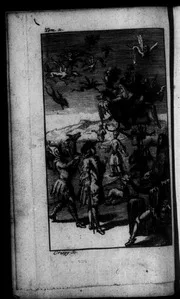
Le monde enchanté ; ou, Examen des communs sentimens touchant les esprits, leur nature, leur pouvoir, leur administration, & leurs opérations. ... 1694: Vol 1 Iss 86

 82
82

Le monde enchanté ; ou, Examen des communs sentimens touchant les esprits, leur nature, leur pouvoir, leur administration, & leurs opérations. ... 1694: Vol 1 Iss 86

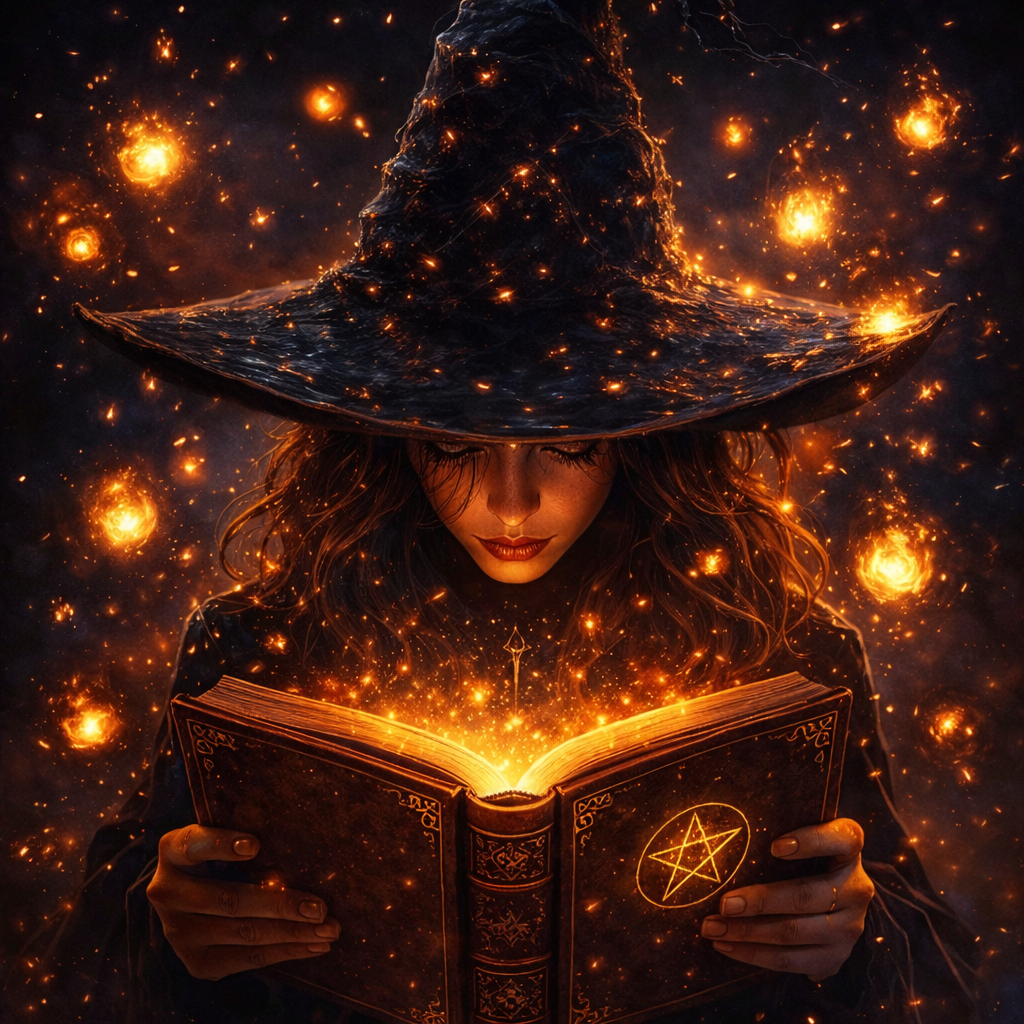

Isolde Whitaker, Sacred Texts Editor, finds Balthasar Bekker's 'Le Monde Enchanté' a profoundly illuminating, albeit controversial, exploration of 17th-century spiritual beliefs. Bekker's incisive critique of common notions surrounding spirits, demons, and their influence is presented with intellectual rigor. This volume serves as a vital document for understanding the historical trajectory of thought on witchcraft and the supernatural, offering esoteric insights into the anxieties and dogmas of the era. Its strength lies in its fearless deconstruction of superstition, making it essential reading for scholars and practitioners interested in the philosophical underpinnings of magic and its societal impact. A challenging yet rewarding delve into the disenchantment of the world.
📝 Description
82
Balthasar Bekker published 'Le Monde Enchanté' in 1694, challenging contemporary beliefs about spirits.
Balthasar Bekker's 'Le Monde Enchanté', published in 1694, scrutinizes common ideas about spirits, their essence, their power, and how people believed they acted. Bekker systematically takes apart widespread beliefs in demonic influence and supernatural causes. He questions the established teachings that supported widespread fear and superstition at the time.
His methodical, often argumentative style removes layers of old beliefs. He encourages readers to find logical reasons and a clearer understanding of the unseen. This is more than just a historical study; it invites readers to doubt what they accept as real. It asks them to look at the psychological roots of belief and to face how 'enchantment' can affect human decisions. For those who want to see how thinking about the occult and the divine changed, this book acts as a vital tool. It sheds light on the intellectual world of an era dealing with significant spiritual and philosophical issues.
Published in 1694, 'Le Monde Enchanté' emerged during a period rife with belief in the supernatural, witchcraft trials, and widespread fear of demonic forces across Europe. Bekker's work stands in contrast to many contemporary theological and philosophical views that accepted the active agency of spirits and demons in the world. It engages with the broader European intellectual currents questioning established religious dogma and exploring the boundaries between faith, reason, and magic. The book reflects a growing movement toward rationalism and empiricism, which would later influence Enlightenment thought and the study of folklore and occult traditions.
💡 Why Read This Book?
Unravel the historical roots of Western occult beliefs and challenge your perceptions of the supernatural. 'Le Monde Enchanté' offers a rare glimpse into the intellectual battles of the 17th century, providing crucial context for understanding the decline of widespread belief in demonic forces. Ideal for scholars of religious history, philosophy, and the occult, as well as seekers of critical thinking and rational inquiry into mystical phenomena.
⭐ Reader Reviews
Honest opinions from readers who have explored this book.
❓ Frequently Asked Questions
What is the primary focus of 'Le Monde Enchanté'?
The book primarily examines and critiques common beliefs and doctrines regarding spirits, their nature, their power, and their alleged operations in the world during the 17th century.
Who was Balthasar Bekker?
Balthasar Bekker (1634-1698) was a Dutch theologian and writer, known for his rationalist critiques of prevailing religious superstitions and his controversial work 'Le Monde Enchanté'.
What historical period does this volume represent?
This particular volume, Issue 86 of Volume 1, dates from 1694, placing it squarely within the late 17th century.
Is this book suitable for beginners in occult studies?
While a foundational text, its scholarly and critical nature might be more directly appreciated by those with some background in religious history or philosophical inquiry into the supernatural.
Where can I find more information about related topics?
Esoteric Library offers a curated collection on Witchcraft & Paganism, including related historical journals and texts that explore similar themes of belief and disenchantment.
🔮 Key Themes & Symbolism
Deconstruction of Daemonology
Bekker systematically dismantled the prevailing 17th-century understanding of demons and their active role in human affairs. He questioned the literal interpretation of biblical passages and folklore that attributed misfortunes, illnesses, and magical phenomena to direct demonic intervention. His work sought to re-evaluate the power attributed to spirits, suggesting more naturalistic or psychological explanations for events previously ascribed to the supernatural, thus initiating a significant shift in theological and philosophical discourse.
The Nature of Spirits and Belief
A core theme is the philosophical and theological examination of what constitutes a 'spirit.' Bekker challenged the anthropomorphic and often terrifying depictions of these entities, proposing that the concept of spirits, particularly malevolent ones, was often a construct of human fear and societal conditioning rather than objective reality. This exploration studies the psychology of belief and how widespread acceptance of certain narratives can shape perception and reality for individuals and communities.
Rationalism vs. Superstition
This important work stands as a powerful proof of the burgeoning rationalist movement of the Enlightenment. Bekker championed reason and empirical observation over blind faith and inherited dogma. 'Le Monde Enchanté' is a key text in the historical transition from an era where superstition and supernatural explanations dominated to one increasingly influenced by scientific inquiry and critical thought. It highlights the intellectual courage required to question deeply entrenched societal beliefs.
💬 Memorable Quotes
Direct passages from the work, attributed to the author.
“Where reason sleeps, phantoms dance.”
— This aphorism implies that a lack of rational thought or critical inquiry opens the mind to unfounded beliefs and illusions, allowing superstition to take hold and flourish.
“The enchantment of the mind is the true prison.”
— Bekker posits that the most significant 'enchantment' is not external but internal – the way our minds can be captivated by unexamined beliefs, hindering true understanding and freedom.
“To believe in all that is told is the mark of a weak mind.”
— This reflects Bekker's emphasis on critical discernment and the importance of questioning information rather than accepting it passively, a central to his rationalist approach.
“Nature holds its secrets, but not through demonic whispers.”
— This suggests that while the natural world is full of mysteries, their solutions lie in observation and understanding, not in supernatural or occult explanations attributed to spirits.
💡 Key Ideas
Editorial paraphrase of the work's core concepts — not direct quotes.
The fear of spirits is often worse than the spirits themselves.
This quote captures Bekker's argument that human imagination and instilled fear are more potent forces than any actual supernatural threat, suggesting that our perception of danger is often self-inflicted.
🌙 Esoteric Significance
Tradition
While Bekker is often categorized as a rationalist and critic of superstition, his work holds significance within the broader context of esoteric thought by offering a counter-narrative to prevailing occult beliefs. By dissecting and deconstructing the common understanding of spirits and their influence, he inadvertently highlights the psychological and societal mechanisms that give rise to esoteric doctrines. His critique can be seen as a challenge to unexamined faith, pushing seekers towards a more introspective or philosophical engagement with the unseen, rather than a literal acceptance of folkloric accounts.
Symbolism
The 'enchanted world' itself serves as a potent symbol of a reality obscured by fear, dogma, and uncritical belief. Spirits, in Bekker's critique, can be interpreted as symbolic representations of irrationality, societal anxieties, or the darker aspects of the human psyche that are projected outward. His endeavor to 'disenchant' the world symbolizes a quest for clarity, truth, and the liberation of the human mind from the shackles of superstition and ignorance, urging a return to a more grounded and reasoned perception of existence.
Modern Relevance
In an age still susceptible to misinformation, conspiracy theories, and the allure of simplistic supernatural explanations, Bekker's call for critical thinking and rational inquiry remains profoundly relevant. His work encourages us to examine our own beliefs, to question authority, and to seek evidence-based understanding. For those interested in the historical development of skepticism and the deconstruction of occult narratives, 'Le Monde Enchanté' provides invaluable insights into the enduring human struggle between faith, fear, and reason.
👥 Who Should Read This Book
This volume is essential for scholars and students of religious history, philosophy, and the history of science, particularly those focusing on the Enlightenment and the transition from medieval to modern thought. Seekers of esoteric knowledge will find it useful for understanding the historical context and intellectual challenges that shaped Western occult traditions and the subsequent rise of skepticism. Practitioners and those interested in the cultural impact of witchcraft beliefs will gain a critical perspective on the forces that both fueled and sought to dismantle such narratives. Beginners in occult studies might find it a challenging but rewarding introduction to the critical deconstruction of supernatural claims.
📜 Historical Context
Published in 1694, 'Le Monde Enchanté' emerged during a key period in European intellectual history. The late 17th century was characterized by the ongoing Scientific Revolution, the burgeoning Enlightenment, and a complex interplay between traditional religious authority and emerging rationalism. This era witnessed widespread belief in witchcraft and demonic influence, often leading to persecution, yet simultaneously saw thinkers like Bekker challenging these deeply entrenched notions. The work reflects a growing intellectual climate that sought to understand the world through reason and observation, questioning the supernatural explanations that had dominated for centuries. Bekker's book was both a product of this intellectual ferment and a catalyst for further debate, contributing to the gradual disenchantment of the world and paving the way for modern critical thought.
📔 Journal Prompts
Reflect on a time when you believed something was supernatural, and later found a rational explanation. How did your perception change?
Bekker critiques the 'enchantment' of the mind. What modern 'enchantments' or unexamined beliefs do you observe in society?
Consider the symbolic meaning of 'spirits' in Bekker's context versus contemporary interpretations. How have these concepts evolved?
How does the fear of the unknown influence personal beliefs and societal actions, both historically and in the present day?
Write a dialogue between Balthasar Bekker and a modern skeptic discussing the role of evidence in understanding the world.
🗂️ Glossary
Daemonology
The study of demons and other supernatural beings, often focusing on their nature, hierarchy, and influence on the human world, particularly prevalent in early modern Europe.
Rationalism
A philosophical approach that emphasizes reason as the primary source of knowledge and justification, often contrasting with empiricism and faith-based belief systems.
Superstition
Excessively credulous belief in and reverence for supernatural beings, causes, or omens, often leading to irrational practices or fears.
Dogma
A principle or set of principles laid down by an authority as incontrovertibly true, often associated with religious or political doctrine.
Polemical
Engaging in strongly critical, controversial, or disputatious writing or speech, often intended to attack or refute an opposing view.
This book appears in 2 collections
🔮 Readers Also Liked
Browse all →








More by BEKKER, Balthasar, 1634-1698.
All books →




![D. [i. e., Doktor] Balthasar Bekkers reformierten Predigers in Amsterdam bezauberte Welt. ... 1781: Vol 2 Iss 81](/img/thumb/d-i-e-doktor-balthasar-bekkers-reformierten-predigers-in-amsterdam-bezauberte-welt-1781-vol-2-iss-81-bekker-balthasar-1634-1698.webp)
From the “Witchcraft” Collection
View all →





![The Tipperary (or Clonmel) witch case : [transcripts of newspaper reports &c. concerning Bridget Cleary, burned as a witch, and the trial of her husband and neighbours for murder, in 1895]](/img/thumb/the-tipperary-or-clonmel-witch-case-transcripts-of-newspaper-reports-c-concerning-bridget-cleary-burned-as-a-witch-and-the-trial-of-her-husband-and-neighbours-for-murder-in-1895.webp)



More Free Witchcraft & Paganism Books
View all →