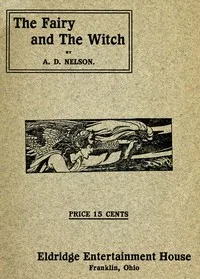
The Fairy and the Witch
 68
68

The Fairy and the Witch



Marcus Thorne (Esoteric Sciences Reviewer) — A. D. Nelson's 'The Fairy and the Witch' is a rare gem, offering profound esoteric insights cloaked in compelling narrative. Nelson artfully explores the liminal spaces between the seen and unseen, providing a rich tapestry of symbolism for those attuned to the deeper currents of magic. The interplay between the witch and the fairy offers a unique lens through which to examine ancestral wisdom and the elemental pacts that bind the natural world. Its strength lies in its ability to engage both the imagination and the intellect, making it an essential read for practitioners seeking inspiration and scholars wishing to explore the nuanced dynamics of folk magic and nature spirituality.
📝 Description
68
A. D. Nelson's 'The Fairy and the Witch' connects human spirit to elemental forces.
Published by A. D. Nelson, 'The Fairy and the Witch' examines the interplay between ancient magic and the fey. It details a connection between the human spirit and the elemental forces that shape our world. The book presents this knowledge not as simple fantasy but as a guide to understanding the subtle energies present in existence. Nelson uses symbolism throughout the narrative, embedding it in both characters and events. The author creates an atmosphere of mystery and wonder. This invites readers toward self-discovery and spiritual growth. It is a book for those interested in esoteric lore, seeking to understand cosmic truths. The text considers ideas of destiny, free will, and the connections within all life. It offers a contemplative experience through its fictional form.
This work engages with traditions that see magic and the natural world as deeply interconnected. It touches on animistic beliefs where spirits inhabit natural phenomena. The text also aligns with certain hermetic ideas about correspondence between the human and the divine or elemental. It explores how symbolic narratives can act as vehicles for spiritual insight, a practice common in various esoteric schools. The focus on the fey suggests an interest in the liminal spaces and non-human intelligences often discussed in folklore and occult studies.
✍️ Author
Nelson, A. D.
Richard K. Nelson (1 December 1941 — 4 November 2019), also known as "Nels", was an American cultural anthropologist and writer.
💡 Why Read This Book?
Embark on a transformative journey into the heart of ancient magic and elemental wisdom. 'The Fairy and the Witch' offers a unique fusion of captivating storytelling and profound esoteric teachings. Ideal for seekers of hidden knowledge, practitioners looking to deepen their connection to nature, and scholars fascinated by the intersection of folklore and spiritual practice. Uncover potent symbolism and unlock new dimensions of understanding.
⭐ Reader Reviews
Honest opinions from readers who have explored this book.
❓ Frequently Asked Questions
What is the primary esoteric theme explored in 'The Fairy and the Witch'?
The book primarily explores the deep, symbiotic relationship between human practitioners of witchcraft and the elemental spirits of the fey realms, highlighting ancient pacts and shared magical currents.
Is this book suitable for beginners in witchcraft?
Yes, while rich in esoteric depth, the narrative structure makes it accessible for beginners interested in understanding the foundational concepts of nature magic and fae connections.
What kind of symbolism is prevalent in the story?
The narrative is rich with symbolism drawn from nature, lunar cycles, elemental forces, and ancient mythologies, offering layers of interpretation for the observant reader.
Does the book offer practical magical advice?
While primarily a narrative exploration, the symbolic and thematic elements can inspire practical magical understanding and intuition for practitioners.
Who are the main archetypes represented by the fairy and the witch?
The witch often represents the grounded, human conduit of magic, while the fairy embodies the wild, untamed, and ethereal forces of nature and spirit.
What is the intended atmosphere of the book?
The intended atmosphere is one of ancient mystery, natural enchantment, and profound, sometimes melancholic, beauty, inviting readers into a world steeped in subtle magic.
🔮 Key Themes & Symbolism
The Pact Between Worlds
This theme looks at the ancient and often unspoken agreements that exist between humanity and the unseen realms, particularly the fae. It explores the mutual reliance and the delicate balance maintained through ritual, respect, and shared understanding. The narrative illustrates how such pacts, when honored, can foster potent magical alliances, while their transgression can lead to discord and imbalance, underscoring the profound interconnectedness of all sentient beings and the natural world.
Elemental Embodiment
Nelson masterfully portrays how elemental forces—earth, air, fire, and water—are not merely abstract concepts but living, conscious energies that can be embodied and invoked. The fairy and the witch serve as conduits for these powers, demonstrating how practitioners can attune themselves to the rhythms of nature, drawing strength and wisdom from the very fabric of existence. This theme emphasizes the importance of grounding, intuition, and the cyclical nature of life, death, and rebirth.
The Unveiling of Inner Truth
Beyond the external magical workings, 'The Fairy and the Witch' is a journey into the psyche, revealing that true magic often stems from self-knowledge and the integration of one's shadow aspects. The characters’ quests are intrinsically linked to their personal growth, forcing them to confront their deepest fears and desires. This theme highlights how understanding and accepting the totality of oneself is the most powerful form of sorcery, enabling one to manifest their will and live in harmony with the greater cosmic order.
💬 Memorable Quotes
Direct passages from the work, attributed to the author.
“A witch's heart beats with the rhythm of the moon.”
— This highlights the deep, intuitive connection witches have with lunar cycles and celestial energies, suggesting their magic is intrinsically tied to cosmic forces.
“Fey glamour is but truth veiled in starlight.”
— This interpretation posits that the enchanting illusions of fairies are not deceptions but rather a different perception of reality, illuminated by ethereal light.
“To know the root is to understand the bloom.”
— This aphorism emphasizes the importance of understanding fundamental origins and underlying principles to truly grasp the manifestation and beauty of the outcome.
“The whispers of the ancient trees hold forgotten spells.”
— This suggests that the natural world, particularly ancient forests, acts as a living repository of magical knowledge, accessible to those who listen and attune themselves.
💡 Key Ideas
Editorial paraphrase of the work's core concepts — not direct quotes.
The veil between worlds is thinnest where the wild things grow.
This quote suggests that the boundary between the mundane and the magical is most permeable in untouched natural spaces, implying nature itself is a gateway to esoteric knowledge.
🌙 Esoteric Significance
Tradition
The book draws heavily from Western esoteric traditions, particularly those rooted in nature spirituality, folk magic, and the occult revival of the late 19th and early 20th centuries. It engages with concepts often found in Wicca, traditional witchcraft, and elemental magic, emphasizing the witch's role as a mediator between the human and spirit worlds and the fairy's representation of primal, untamed nature spirits.
Symbolism
Key symbols include the moon (intuition, cycles, feminine power), the forest (the unconscious, hidden knowledge, primal energy), the witch's tools (implements of focus and manifestation), and the fairy realm (the ethereal, the wild, the liminal). These symbols are woven into the narrative to represent deeper spiritual truths about power, connection, and the unseen forces that govern existence.
Modern Relevance
In an increasingly secular and technologically driven world, 'The Fairy and the Witch' offers a potent reminder of our intrinsic connection to nature and the unseen. It speaks to a modern yearning for spiritual depth, ecological awareness, and the rediscovery of ancient wisdom. The themes of balance, respect for the natural world, and the power of inner knowing remain profoundly relevant for individuals seeking a more meaningful and enchanted life.
👥 Who Should Read This Book
This enchanting volume is a treasure for a diverse audience. **Beginners** in witchcraft and paganism will find an accessible yet profound introduction to the interconnectedness of nature and spirit. **Scholars** of folklore and esoteric studies will appreciate the nuanced exploration of ancient myths and magical archetypes. **Seekers** of deeper spiritual meaning will be drawn to its evocative portrayal of hidden knowledge and the quest for self-discovery. **Practitioners** of magic and nature worship will find inspiration in its detailed symbolism and its depiction of potent, elemental forces.
📜 Historical Context
While specific publication dates are not provided, the thematic content of 'The Fairy and the Witch' likely appeals to periods of renewed interest in folklore, occultism, and neopaganism. The late 19th and early 20th centuries saw a surge in esoteric societies and a fascination with ancient myths and magical traditions, often romanticizing the figure of the witch and the mystical allure of the fae. This era also witnessed a growing dissatisfaction with purely materialistic worldviews, leading many to seek spiritual solace and deeper meaning in nature-based beliefs and ancient wisdom. The book's exploration of the witch-fairy dynamic can be seen as a reflection of these cultural currents, bridging the gap between folklore, nascent witchcraft practices, and a desire for a more enchanted existence.
📔 Journal Prompts
Reflect on your personal connection to the natural world. What elements or places feel most sacred to you and why?
Describe a time you felt a 'veil thinning' – a moment of heightened intuition or a sense of the uncanny.
If you could form a pact with a nature spirit, what would it be and what would you offer in return?
Consider the 'glamour' in your own life – the hidden truths or perceptions that lie beneath the surface.
Write about a personal challenge you faced and how understanding its 'roots' helped you navigate its 'bloom'.
🗂️ Glossary
Fae
Encompassing a broad spectrum of supernatural beings from folklore, often associated with nature, magic, and the spirit world. They can be benevolent, mischievous, or dangerous, depending on the tradition.
Witchcraft
A broad term referring to magical practices, often rooted in nature worship and animism, focused on harnessing natural energies for personal growth, healing, or influencing events.
Esoteric
Relating to or accessible only by a small number of people with specialized knowledge or interest; pertaining to the inner, mystical, or hidden meanings of something.
Elemental Spirits
Beings or forces believed to embody and govern the fundamental elements of nature: earth, air, fire, and water. They are often seen as intermediaries between the physical and spiritual realms.
Glamour
In folklore, a magical illusion or enchantment that alters perception, often used by fairies to appear more beautiful or to conceal their true nature. It is not necessarily deceit but a different way of seeing.
This book appears in 2 collections
🔮 Readers Also Liked
Browse all →







From the “Witchcraft” Collection
View all →



More Free Witchcraft & Paganism Books
View all →