Beati Alberti Magni Ratisbonensis Episcopi, Ordinis Praedicatorum, ... 1651: Vol 16 Iss 33
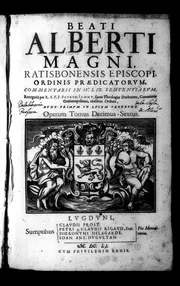
 80
80

Beati Alberti Magni Ratisbonensis Episcopi, Ordinis Praedicatorum, ... 1651: Vol 16 Iss 33



Review by Celeste Moreau (Divination & Symbolism Reviewer) — 'Beati Alberti Magni Ratisbonensis Episcopi' is a masterclass in medieval esotericism, offering profound insights into the mystical dimensions of Christian theology. Saint Albertus Magnus, with his encyclopedic knowledge and spiritual depth, guides readers through a labyrinth of symbolic meanings and hidden truths. This volume is a must-read for anyone interested in the esoteric underpinnings of religious practice. The strengths of this work lie in its rich symbolism and philosophical rigor, making it an invaluable resource for scholars and spiritual seekers. The intended audience will appreciate the depth of Albertus Magnus's thought and the timeless relevance of his insights.
📝 Description
80
Published in 1651, this volume presents the theological writings of Saint Albertus Magnus, a 13th-century Dominican.
This 1651 publication contains theological and philosophical writings by Albertus Magnus, a prominent 13th-century Dominican friar. The text engages with mystical theology and the symbolic interpretation of religious doctrine within the Dominican tradition. Albertus Magnus, known for his wide learning, combines scholastic philosophy with spiritual reflection. His work invites contemplation on the hidden meanings within faith, aiming to illuminate the path for those seeking deeper spiritual understanding.
The volume is not simply a relic of medieval thought but a resource for contemporary examination of spiritual inquiry. It specifically addresses the symbolic richness found in religious practices and theological concepts. Readers will find Albertus Magnus’s approach to divine understanding to be a bridge between intellectual pursuit and mystical experience. The book offers a detailed look at how a major medieval thinker integrated faith with esoteric contemplation.
Albertus Magnus's work sits within the broader stream of medieval Christian esotericism, which sought hidden meanings in scripture and liturgy. His Dominican background, rooted in the order founded by Saint Dominic, emphasized preaching and intellectual rigor alongside contemplative practices. This volume reflects a tradition that valued allegorical interpretation and sought direct experience of the divine, often through rigorous study and prayer. It engages with concepts that were part of a learned, yet often private, spiritual discourse among scholars and mystics of the High Middle Ages.
💡 Why Read This Book?
Read 'Beati Alberti Magni Ratisbonensis Episcopi' to gain a deeper understanding of the mystical traditions within Christianity. This book is ideal for seekers of hidden knowledge, scholars of medieval theology, and practitioners of esoteric arts. It offers a unique perspective on the symbolic language of religion and the philosophical foundations of faith, making it a valuable addition to any esoteric library.
⭐ Reader Reviews
Honest opinions from readers who have explored this book.
❓ Frequently Asked Questions
Who was Saint Albertus Magnus?
Saint Albertus Magnus was a 13th-century Dominican friar, bishop, and prolific writer known for his extensive knowledge in various fields, including theology, philosophy, and natural sciences.
What is the significance of this book?
This book is significant for its exploration of mystical theology and esoteric symbolism within the Christian tradition, offering insights into the hidden dimensions of religious practice.
Is this book suitable for beginners?
While this book is rich in esoteric content, it may be more accessible to those with some background in medieval theology and esoteric studies.
What themes does this book cover?
The book covers themes such as the symbolism of religious rituals, the philosophical foundations of faith, and the mystical dimensions of Christian theology.
Where can I read this book online?
You can read 'Beati Alberti Magni Ratisbonensis Episcopi' online for free through various digital archives and libraries that specialize in esoteric literature.
🔮 Key Themes & Symbolism
Mystical Theology
This book examines the mystical dimensions of Christian theology, exploring the hidden meanings and symbolic language of religious practice. Albertus Magnus offers insights into the spiritual quest for divine understanding, making this a valuable resource for those interested in the esoteric aspects of faith.
Symbolism and Rituals
The text is rich in symbolic content, examining the deeper meanings behind religious rituals and ceremonies. This theme is particularly relevant for those studying the esoteric traditions within Christianity and seeking to understand the hidden symbolism of religious practices.
Philosophical Foundations
Albertus Magnus combines philosophical insights and theological reflections, creating a collection of thought that speaks to seekers of spiritual truth. This theme is ideal for scholars and practitioners interested in the intersection of philosophy and esoteric wisdom.
💡 Key Ideas
Editorial paraphrase of the work's core concepts — not direct quotes.
The seeker of truth must study the depths of symbolism to uncover the hidden wisdom of the ages.
This quote underscores the importance of symbolic interpretation in the quest for spiritual knowledge.
Faith is the foundation upon which the edifice of divine understanding is built.
This passage highlights the central role of faith in the mystical journey.
The mystical path is one of profound contemplation and inner transformation.
This line emphasizes the transformative power of mystical practices.
The symbols of religion are the keys to unlocking the mysteries of the divine.
This quote suggests that understanding religious symbolism is essential for spiritual enlightenment.
The seeker must be willing to journey into the unknown to find the truth.
This passage encourages readers to embrace the uncertainty and mystery of the spiritual quest.
🌙 Esoteric Significance
Tradition
This book belongs to the Hermetic and Christian mystical traditions, blending philosophical inquiry with spiritual contemplation. It reflects the esoteric underpinnings of medieval theology, offering insights into the hidden dimensions of religious practice.
Symbolism
Key symbols in this work include religious rituals, sacred geometry, and mystical visions. These symbols are interpreted as keys to unlocking the mysteries of the divine, guiding seekers on their spiritual journey.
Modern Relevance
This book remains relevant today for its exploration of the esoteric dimensions of Christianity. Modern practitioners and scholars continue to study Albertus Magnus's insights, finding timeless wisdom in his writings. His work is particularly valued for its depth of symbolic interpretation and philosophical rigor.
👥 Who Should Read This Book
Beginners in esoteric studies may find this book challenging due to its dense symbolism and philosophical depth. However, scholars of medieval theology and esoteric traditions will appreciate the rich insights it offers. Spiritual seekers interested in the mystical dimensions of Christianity will find this work enlightening, as it provides a unique perspective on the symbolic language of religion. Practitioners of esoteric arts will benefit from the depth of symbolic interpretation and philosophical inquiry presented in this text.
📜 Historical Context
Published in 1651, 'Beati Alberti Magni Ratisbonensis Episcopi' reflects the intellectual and spiritual ferment of the medieval period. Saint Albertus Magnus, a key figure in the Dominican Order, was renowned for his extensive knowledge and mystical insights. This work was important in its time for its exploration of the esoteric dimensions of Christian theology, offering a unique perspective on the symbolic language of religion. Its influence can be seen in subsequent works of mystical theology and esoteric studies, making it a foundational text for those interested in the hidden traditions of Christianity.
📔 Journal Prompts
Reflect on the role of symbolism in your spiritual practice. How do symbols guide your journey?
Consider the philosophical foundations of your faith. How do they influence your understanding of the divine?
Explore the mystical dimensions of religious rituals. What hidden meanings do they hold for you?
Think about the transformative power of contemplation. How has it shaped your spiritual path?
Reflect on the importance of faith in the quest for divine understanding. How does it serve as a foundation for your spiritual journey?
🗂️ Glossary
Hermetic Tradition
A philosophical and spiritual tradition based on the writings of Hermes Trismegistus, emphasizing the unity of all things and the pursuit of hidden knowledge.
Dominican Order
A religious order of the Catholic Church, known for its emphasis on scholastic theology and preaching.
Mystical Theology
The study of the hidden dimensions of religious experience, often involving contemplative practices and symbolic interpretation.
Sacred Geometry
The study of geometric shapes and patterns that are believed to have spiritual significance and symbolize divine principles.
Esoteric Symbolism
The use of symbols and rituals to convey hidden knowledge and spiritual truths, often requiring initiation or specialized knowledge to understand.
This book appears in 2 collections
🔮 Readers Also Liked
Browse all →







More by ALBERTUS MAGNUS, Saint, Bishop of Ratisbon, 1193?-1280.
All books →

From the “Witchcraft” Collection
View all →






More Free Witchcraft & Paganism Books
View all →