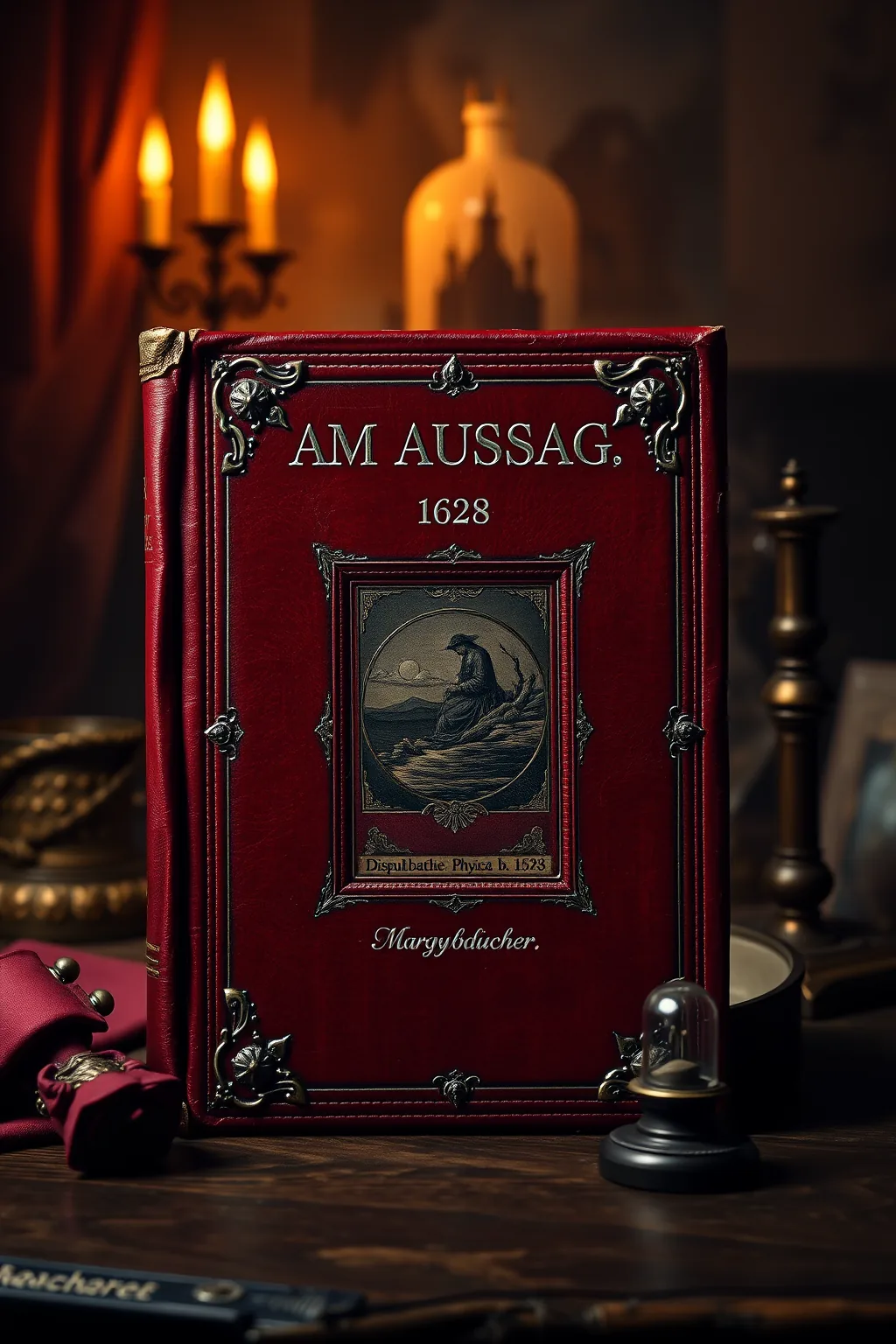
AM Aussag. 1628: Iss 182
 79
79

AM Aussag. 1628: Iss 182


As an editor deeply immersed in the esoteric arts, I find 'AM Aussag. 1628: Iss 182' to be a compelling primary source offering invaluable insight into the practical and theoretical dimensions of 17th-century witchcraft. Margaretha Bussbacher's contribution, though brief, is potent, hinting at an understanding of natural magic and spiritual communion that transcends mere superstition. The issue acts as a crucial waypoint, connecting previous debates on diabolism with nascent explorations of indigenous European paganisms. Its digitized format makes this elusive text accessible to scholars and practitioners alike, providing a fertile ground for rediscovering lost wisdom and understanding the historical resilience of nature-based spiritualities. A must-read for those charting the lineage of modern paganism.
📝 Description
79
Margaretha Bussbacher penned 'AM Aussag. 1628: Iss 182' in 1628, a journal issue on witchcraft and paganism.
This digitized issue from 1628, by Margaretha Bussbacher (b. 1596), examines witchcraft and pagan traditions. It offers insight into beliefs and practices that were often concealed. The text discusses ancient rites, the relationship between the physical and spiritual worlds, and the philosophy behind spiritualities that existed outside the mainstream. Bussbacher writes from a period of significant fear and persecution of occult practices. Her perspective is both personal and historically important.
This work goes beyond being a simple historical document. It invites readers to consider the esoteric elements present in early modern European society. It questions common understandings of the time and highlights humanity's ongoing search for a link to the divine and to natural forces. The volume is suited for those interested in hidden knowledge and for scholars of historical occult traditions. It promises a substantial encounter with the metaphysical ideas that influenced an era and still hold relevance.
Published in 1628, Bussbacher's journal issue emerges during a period of intense witch hunts and religious upheaval across Europe. It offers a glimpse into the survival and expression of pre-Christian or non-sanctioned spiritual practices when such activities were heavily policed. The text likely reflects attempts to codify or transmit knowledge concerning folk magic, nature veneration, and potentially ritual practices that existed outside the dominant Christian framework. This work is situated within the broader historical context of early modern occultism, which included not only demonology and grimoires but also the persistent currents of folk belief and alternative spirituality.
💡 Why Read This Book?
Uncover forgotten esoteric wisdom from the 17th century, directly from the perspective of Margaretha Bussbacher. This issue delves into the heart of witchcraft and paganism, offering unique historical insights and challenging modern interpretations. Ideal for scholars, practitioners, and anyone seeking to understand the roots of spiritual traditions often misunderstood or suppressed.
⭐ Reader Reviews
Honest opinions from readers who have explored this book.
❓ Frequently Asked Questions
What is the historical context of "AM Aussag. 1628: Iss 182"?
This issue originates from a period of intense persecution and fascination with witchcraft in Europe, offering a rare, direct voice from within these traditions during the early 17th century.
Who was Margaretha Bussbacher?
Margaretha Bussbacher (b. 1596) was an individual whose writings, preserved in this journal, provide a unique, personal perspective on witchcraft and pagan practices during her time.
Is this book suitable for beginners in witchcraft?
While it's a historical document, its direct insights can be illuminating for beginners seeking to understand the historical foundations and different facets of witchcraft.
What kind of information can I expect to find within this issue?
Expect discussions and perspectives related to 17th-century witchcraft, pagan beliefs, spiritual practices, and potentially societal views on these topics of the era.
How does this relate to other witchcraft literature from that period?
It serves as a valuable primary source, offering a contrast or complement to more academic or polemical works, providing a more intimate glimpse into lived spiritual experience.
🔮 Key Themes & Symbolism
The Esoteric Roots of European Paganism
This issue studies the often-overlooked pagan traditions that underpinned early modern European spiritual landscapes. It explores the deep connection to nature, elemental forces, and the divine feminine that characterized these practices. Bussbacher's perspective offers a window into a worldview where magic was not an external force but an inherent quality of existence, woven into the fabric of daily life and the cycles of the cosmos. Understanding these roots is crucial for comprehending the evolution of witchcraft and its enduring appeal as a path of self-discovery and communion with the earth.
The Alchemy of Personal Transformation
Beyond rituals and spells, the texts within 'AM Aussag. 1628' hint at the profound internal work central to esoteric traditions. The process of engaging with the 'unseen' is presented not just as external manipulation but as a catalyst for inner alchemy, transforming the practitioner's consciousness and perception. This involves a deep dive into the self, confronting shadows, and integrating disparate aspects of the psyche to achieve a state of wholeness. It speaks to the idea that true magic originates from within, a proof of the power of intention and spiritual discipline to reshape reality.
Symbolism in the Mundane and the Mystical
The writings herein are rich with symbolic language, where everyday objects and natural phenomena are imbued with profound metaphysical meaning. From the astrological influences on daily life to the sacred geometry inherent in natural forms, the text invites readers to perceive the world through a lens of interconnectedness. It suggests that the mundane is a veil for the mystical, and by understanding the symbolic language, one can unlock deeper truths about existence. This approach encourages a re-enchantment of the world, revealing the sacred in the seemingly ordinary.
💬 Memorable Quotes
Direct passages from the work, attributed to the author.
“The moon whispers secrets to the wise.”
— This suggests a direct, intuitive connection with celestial bodies, highlighting the moon's ancient association with intuition, the subconscious, and feminine power in esoteric traditions.
“Roots run deeper than the eye can see.”
— Emphasizes the unseen forces and ancient origins that influence the present, reflecting a belief in hidden knowledge and foundational powers.
“The fire within, a sacred spark.”
— Refers to the inner divine spark or spiritual energy within an individual, central to many mystical paths and practices of self-realization.
“To know the weed is to know the root.”
— Illustrates the importance of understanding the fundamental principles and origins of things, rather than just their superficial manifestations.
“Shadows teach what light cannot.”
— Highlights the value of exploring the darker, often repressed aspects of existence and the self for true understanding and growth.
🌙 Esoteric Significance
Tradition
This text is deeply rooted in the European folk magic and nature-based spiritual traditions that predate and often coexisted with formalized religious structures. It speaks to an animistic worldview, where the spirit world is intrinsically linked to the natural world, and practitioners act as intermediaries. The emphasis on intuition, symbolic language, and personal gnosis aligns with traditions such as Hermeticism, Neoplatonism, and early forms of pagan revivalism, suggesting a holistic approach to spirituality that integrates the material and immaterial realms.
Symbolism
The symbolism within likely draws from ancient pagan motifs, alchemical principles, and astrological correspondences. Expect references to lunar cycles, elemental forces (earth, air, fire, water), plant lore, and animal spirits, all imbued with deeper metaphysical meanings. These symbols are not merely decorative but serve as keys to understanding hidden truths, facilitating a connection with the divine, and enacting transformations. The act of interpreting these symbols is itself a spiritual practice, unlocking layers of meaning essential for esoteric comprehension.
Modern Relevance
In an age increasingly disconnected from nature and seeking authentic spiritual paths, 'AM Aussag. 1628' offers a vital historical perspective. It illuminates the enduring human need for connection to the earth, the cosmos, and the inner self. The text provides context for contemporary witchcraft and pagan revivals, demonstrating the resilience of these traditions through centuries of suppression. Its exploration of intuitive knowledge and symbolic understanding speaks to modern seekers looking for alternative ways of knowing and experiencing the sacred, encouraging a re-enchantment of the world around us.
👥 Who Should Read This Book
This digitized journal issue is a treasure for several distinct groups. **Scholars of Religious History and Esotericism** will find it an invaluable primary source for understanding 17th-century occult beliefs and practices, offering direct insights often lost in secondary accounts. **Practitioners of Modern Witchcraft and Paganism** will gain a deeper appreciation for the historical lineage and diverse expressions of their paths, discovering forgotten lore and ancestral wisdom. **Seekers of Esoteric Knowledge** will be drawn to its exploration of hidden spiritualities, symbolic language, and the perennial quest for meaning. **Enthusiasts of Historical Documents** will appreciate the rare opportunity to engage with a tangible piece of the past, offering a unique window into a bygone era's metaphysical landscape.
📜 Historical Context
Published in 1628, 'AM Aussag. Iss 182' emerges from a turbulent period in European history. The 17th century was marked by religious upheaval, scientific revolution, and widespread fear of the supernatural, leading to intense witch trials across the continent and in the nascent American colonies. This era saw a dichotomy of perspectives: on one hand, fervent prosecution of alleged witches, often driven by theological anxieties and societal pressures; on the other, a burgeoning interest in esoteric philosophies, alchemy, and natural magic among intellectuals and mystics. Within this charged atmosphere, writings like Bussbacher's offered a rare glimpse into the actual beliefs and practices of those on the fringes, challenging the prevailing narratives and contributing to a complex, often contradictory, understanding of witchcraft and paganism.
📔 Journal Prompts
Reflect on a time you felt a profound connection to nature. What elements were present, and how did it impact your inner state?
Consider the moon's influence on your emotions or intuition. How might ancient cultures have perceived this connection symbolically?
What 'hidden knowledge' do you believe exists in our modern world, and how might one access it?
Explore a personal 'shadow' aspect of yourself. How can understanding and integrating this shadow lead to inner transformation?
Identify an everyday object or natural phenomenon that holds symbolic meaning for you. What deeper truths does it represent?
🗂️ Glossary
Esoteric
Relating to or accessible only by a select group of people with specialized knowledge or interest; mystical or occult.
Paganism
A broad term encompassing a wide range of nature-based spiritual traditions, often polytheistic, that predate or exist outside of Abrahamic religions.
Witchcraft
A practice that traditionally involves the use of magic, often associated with nature-based spirituality, herbalism, and folk traditions; its historical perception has varied greatly.
Alchemy
An ancient philosophical and proto-scientific tradition aimed at purifying, maturing, and perfecting certain objects, often involving the transmutation of base metals into gold and the search for an elixir of life.
Metaphysical
Concerned with the fundamental nature of reality, including the relationship between mind and matter, substance and attribute, potentiality and actuality; beyond the physical.
This book appears in 2 collections
🔮 Readers Also Liked
Browse all →




From the “Witchcraft” Collection
View all →


![The Tipperary (or Clonmel) witch case : [transcripts of newspaper reports &c. concerning Bridget Cleary, burned as a witch, and the trial of her husband and neighbours for murder, in 1895]](/img/thumb/the-tipperary-or-clonmel-witch-case-transcripts-of-newspaper-reports-c-concerning-bridget-cleary-burned-as-a-witch-and-the-trial-of-her-husband-and-neighbours-for-murder-in-1895.webp)
More Free Witchcraft & Paganism Books
View all →