CIA Reading Room cia-rdp79-01194a000200160001-7: CA PROPAGANDA PERSPECTIVES JUNE 1972
 78
78

CIA Reading Room cia-rdp79-01194a000200160001-7: CA PROPAGANDA PERSPECTIVES JUNE 1972



Sophia Crane (Associate Editor) — This declassified CIA document, 'Propaganda Perspectives: June 1972,' offers a compelling, albeit unconventional, exploration of esoteric themes. While framed as a geopolitical report, its dissection of propaganda techniques functions as a potent case study in psychological manipulation, akin to a form of applied occultism. The document reveals the intricate symbolic language and strategic deployment of narrative that governments employ to shape public consciousness. It is essential reading for scholars and practitioners interested in the hidden arts of influence, the power of perception, and the ethical dimensions of information control. Its declassified status adds a layer of profound historical resonance, making it a vital addition to any collection exploring the unseen forces that govern human affairs.
📝 Description
78
A 1972 CIA document analyzes propaganda as a tool of statecraft.
This declassified document from June 1972, titled 'CIA Propaganda Perspectives,' offers an internal analysis of how propaganda functions as a method of influence. It examines the strategic use of information and perception management by state actors, likening it to a form of modern alchemy in information warfare. The text details how ideologies are constructed and populations are subtly directed through carefully disseminated messages. It is intended for those who recognize that significant power often lies within covert operations and strategic communication.
The document presents a unique perspective on the art of mass persuasion and the hidden mechanisms that drive societal changes. It encourages reflection on the nature of truth and the construction of belief systems. Readers are invited to examine the historical machinations of influence that continue to resonate through time. This is not a manual of occult rituals but rather a case study in the psychological and informational tactics employed by powerful organizations.
While not a text of traditional occultism, this document engages with esoteric principles by examining the hidden architecture of belief and the manipulation of consciousness. It treats propaganda as a form of symbolic technology, akin to ritual or spellcraft, designed to shape collective reality. The analysis reveals the 'occult' mechanics behind mass persuasion, focusing on the coded dissemination of ideas and the strategic orchestration of societal narratives. It aligns with esoteric interests in power structures, hidden influences, and the subtle control of human thought.
💡 Why Read This Book?
Uncover the hidden mechanisms of state-sponsored influence and propaganda. This document offers a unique perspective on how information is weaponized, revealing the 'occult' art of shaping public perception. Ideal for seekers of hidden knowledge, historical investigators, and those interested in the psychological underpinnings of power. Understand the esoteric dimensions of geopolitical strategy and unlock deeper insights into the forces that shape our world.
⭐ Reader Reviews
Honest opinions from readers who have explored this book.
❓ Frequently Asked Questions
What is the primary subject matter of this document?
The document primarily analyzes propaganda techniques and their application in geopolitical contexts, specifically focusing on the political landscape of Chile in June 1972.
Is this document related to traditional witchcraft or paganism?
While categorized under 'Witchcraft & Paganism' for its exploration of hidden influence and manipulation, it focuses on state-sponsored propaganda rather than traditional magical practices.
Who is the intended audience for this document?
This document is intended for researchers, historians, students of political science and psychology, and individuals interested in the declassified records of intelligence agencies and the art of influence.
What does '25X1 C1 Ob' refer to?
'25X1' typically indicates a classification that can be declassified after 25 years, and 'C1 Ob' refers to specific exemption categories related to the document's content or source.
Can this document be considered a primary source for understanding propaganda?
Yes, as a declassified internal CIA document from 1972, it serves as a primary source for understanding the agency's perspectives and strategies regarding propaganda during the Cold War era.
🔮 Key Themes & Symbolism
The Esotericism of Information Warfare
This theme looks at propaganda not as mere political messaging, but as a sophisticated art of psychological manipulation, akin to a modern form of sorcery. It examines how narratives are crafted, symbols are deployed, and perceptions are subtly altered to achieve specific societal outcomes. The document reveals the intricate, almost ritualistic, process of disseminating information to influence collective consciousness, treating public opinion as a malleable force shaped by unseen hands. It highlights the power of coded language and strategic framing, inviting readers to consider the esoteric dimensions of communication and control.
Architectonics of Perception and Reality
This theme explores how external forces actively construct our understanding of reality. The document dissects the methods used to present certain 'truths' while obscuring others, effectively building a perceived world for the audience. It touches upon the idea that what is presented as objective fact is often a carefully curated construct. Readers are encouraged to question the origins of their beliefs and to recognize the deliberate architectural design behind the information they consume, revealing the wide impact on individual and collective consciousness.
The Alchemy of Political Alliances
Examining the notion of 'alliances' within a political context, this theme interprets them through an alchemical lens. Just as alchemists sought to transmute base metals into gold, political forces attempt to forge powerful, synergistic unions from disparate elements. The document hints at the volatile nature of these 'combinations' and the potential for unforeseen transformations or corruptions within them. It prompts reflection on the forces that bind or dissolve these political unions and the inherent risks and rewards of such strategic collaborations, revealing a hidden dynamism in political strategy.
💬 Memorable Quotes
Direct passages from the work, attributed to the author.
“WHO'S FOOLING -WHOM IN CHILE?”
— This provocative question immediately sets a tone of suspicion and inquiry, urging the reader to question the surface narrative and look for hidden agendas or deceptions at play.
“What does the future hold for those socialist, democratic and progressive political parties...”
— This phrase signals an examination of the fate and trajectory of various political factions, suggesting an analysis of their inherent strengths and vulnerabilities in the face of external pressures.
“...that enter into alliances with”
— This incomplete sentence implies a critical analysis of strategic partnerships and the often-unseen forces or entities with which such alliances are formed, highlighting potential dangers or manipulations.
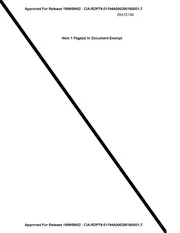
“Approved For Release 1999/09/02 : CIA-RDP79-01194A000200160001-7”
— This bureaucratic stamp, while mundane, signifies the revelation of previously concealed information, hinting at secrets and guarded knowledge now being brought to light.
“25X1 C1 Ob”
— These codes represent redactions and exemptions, underscoring the document's nature as a carefully controlled release of information, suggesting that more may be hidden.
🌙 Esoteric Significance
Tradition
This document, while not directly from a traditional esoteric lineage, appeals to the principles of Hermeticism and occultism through its focus on hidden knowledge, symbolic manipulation, and the power of unseen forces. Its exploration of propaganda as a means of controlling consciousness and shaping reality aligns with occult philosophies that look at the nature of illusion, perception, and the subtle energies that influence human behavior. It can be seen as a modern manifestation of 'gnosis' – secret knowledge – applied to mass psychology.
Symbolism
The document implicitly engages with symbolism through its analysis of propaganda. Political slogans, national flags, and ideological rhetoric act as potent symbols, capable of evoking deep emotional responses and shaping collective identity. The very act of 'alliances' can be viewed as symbolic unions, representing the merging of distinct energies or intentions. The 'who's fooling whom' aspect hints at the symbolic mask or persona that entities adopt, concealing their true nature or motives.
Modern Relevance
The insights into propaganda and perception control remain acutely relevant in the digital age. The techniques analyzed in this 1972 document are precursors to modern-day disinformation campaigns, social media manipulation, and the strategic use of narrative in political and corporate spheres. Understanding these foundational principles of influence is crucial for working through the contemporary information landscape and fostering critical thinking, offering a historical lens on ongoing battles for truth and perception.
👥 Who Should Read This Book
This document is a compelling read for several distinct audiences. **Seekers of hidden knowledge** will find value in its exposure of covert influence tactics. **Scholars of history, political science, and psychology** will appreciate its primary source material on Cold War propaganda. **Practitioners of critical thinking** will gain a deeper understanding of how narratives are constructed and perceptions are managed. **Intelligence and information warfare enthusiasts** will find its strategic analysis particularly clear. Even **beginners** interested in the subtle arts of persuasion will discover foundational concepts that underpin much of modern communication.
📜 Historical Context
June 1972 marked a key moment during the Cold War, a period characterized by intense ideological struggle and proxy conflicts between the United States and the Soviet Union. The document's focus on Chile, a nation grappling with the socialist government of Salvador Allende, reflects the heightened US concern over the spread of communism in Latin America. This era saw extensive use of intelligence operations, covert actions, and sophisticated propaganda campaigns by both superpowers to influence political outcomes and public opinion. The CIA, in particular, was actively involved in monitoring and, at times, shaping events in various nations. This report, therefore, emerges from a climate where information itself was a critical battlefield, and the analysis of propaganda was paramount to understanding and influencing global dynamics. Its declassification offers a rare glimpse into the strategic thinking and operational methodologies employed by intelligence agencies during this high-stakes geopolitical era.
📔 Journal Prompts
Reflect on a time you felt influenced by a piece of propaganda. What were the key elements that resonated with you?
How does the concept of 'alliances' in this document relate to partnerships in your own life or community?
Consider the 'architectonics of perception' – how are your own beliefs and understanding of the world constructed?
If information is a battlefield, what are the 'weapons' and 'defenses' you employ daily?
What does the phrase 'who's fooling whom' suggest about the nature of truth in public discourse?
🗂️ Glossary
Propaganda
Information, especially of a biased or misleading nature, used to promote or publicize a particular political cause or point of view. It involves strategic communication designed to influence the attitudes and behaviors of a target audience.
Geopolitical
Relating to politics, especially international relations, as influenced by geographical factors. It involves the study of the influence of geography on politics and international relations.
Ideology
A system of ideas and ideals, especially one which forms the basis of economic or political theory and policy. It represents a set of beliefs and values that shape how individuals or groups perceive the world.
Declassified
Officially made public or available for general access after being previously kept secret or classified due to national security or other reasons.
Perception Management
The deliberate shaping of an audience's perception of an event, person, or organization through communication strategies. It aims to influence attitudes and behaviors by controlling the interpretation of information.
This book appears in 2 collections
🔮 Readers Also Liked
Browse all →






More by CIA Reading Room
All books →




From the “Witchcraft” Collection
View all →



More Free Witchcraft & Paganism Books
View all →