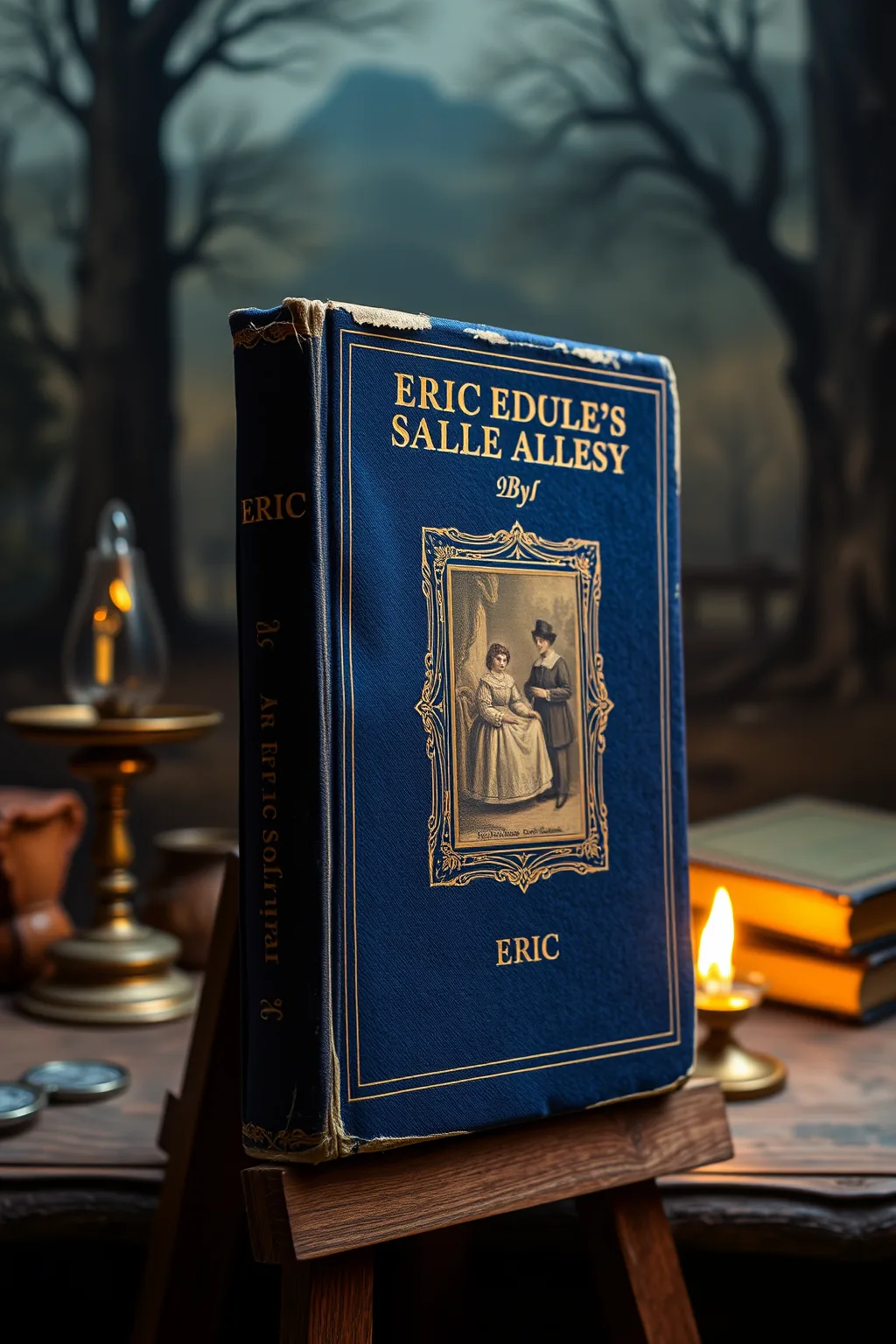
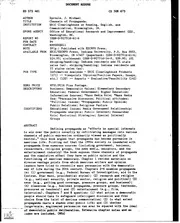
ERIC ED365427: Family Roles in America's Utopian Communities from the 1820s to the 1920s.
 74
74

ERIC ED365427: Family Roles in America's Utopian Communities from the 1820s to the 1920s.



Isolde Whitaker (Sacred Texts Editor): ERIC ED365427 offers a compelling examination of family dynamics within American utopian communities, a topic ripe with esoteric implications. The author adeptly navigates the historical currents, revealing how communal experiments, from Fourierist phalanxes to Shaker villages, sought to redefine the primal bond between parent and child, often in alignment with broader spiritual or philosophical quests for transcendence. This work is invaluable for understanding the practical application of idealistic philosophies on the fundamental unit of society. Its strength lies in its synthesis of historical data with an underlying appreciation for the symbolic and aspirational dimensions of these communities. Highly recommended for students of social history, communalism, and the perennial search for ideal human organization.
📝 Description
74
This 2002 ERIC document examines family roles in American utopian communities between 1820 and 1920.
This document analyzes family structures within American utopian communities from the 1820s to the 1920s. It looks at how these groups planned for raising children and organizing domestic life. The work connects these practical arrangements to the philosophical ideas driving the communities, including their views on childhood and education. It investigates how the founders of these intentional societies sought to redefine traditional family roles, such as parent and child, to create a more enlightened society. The study considers these intentional communities as experiments in social organization, reflecting a desire to move beyond existing societal norms.
The research details the specific ways family life was structured in various communal experiments. It highlights the tension between reformers' ideals for communal harmony and the practicalities of family life. The document considers how these communities attempted to cultivate specific types of citizens through their educational and familial practices. It serves as a resource for understanding alternative models of family and society proposed during a dynamic period of American history.
This work situates its analysis of utopian communities within a broader tradition of seeking alternative social and spiritual orders. Many such communities were informed by esoteric or spiritual philosophies that sought to create societies based on principles distinct from mainstream culture. The focus on family roles and child-rearing reflects a common concern within these movements to establish a "new" or perfected humanity, often through deliberate social engineering and the reordering of domestic life. This aligns with esoteric traditions that emphasize transformative personal and societal change.
💡 Why Read This Book?
Uncover the hidden philosophical currents that shaped America's utopian dreams. Explore how intentional communities envisioned the ideal family and the spiritual upbringing of children. This book is essential for seekers of alternative societal models, scholars of educational history, and anyone fascinated by the intersection of communal living and the evolution of human consciousness. Discover timeless insights into nurturing the next generation within a framework of shared purpose and collective growth.
⭐ Reader Reviews
Honest opinions from readers who have explored this book.
❓ Frequently Asked Questions
What is the primary focus of this work?
The primary focus is on the evolving roles of family and the parent-child relationship within various American utopian communities during a pivotal century of social experimentation and philosophical inquiry.
Does this book discuss fictional utopias as well as real ones?
Yes, the work draws upon a rich tapestry of both fictional literary utopias and documented historical communities to provide a comprehensive overview of idealized family structures.
What historical period does this research cover?
The research spans a significant period from the early 1820s to the 1920s, a time marked by numerous social reform movements and the establishment of diverse communal societies.
Who would benefit most from reading this book?
Scholars of American history, sociology, educational philosophy, and those interested in communal living, intentional communities, and the evolution of family structures will find this book particularly valuable.
Are there any esoteric or mystical insights presented?
While rooted in historical analysis, the book explores the philosophical and spiritual aspirations that often underpinned these utopian visions, touching upon ideals of societal and individual transformation.
🔮 Key Themes & Symbolism
Archetypes of Collective Child-Rearing
This theme explores the symbolic and practical manifestations of parenting within communal settings. It examines how utopian societies sought to harness collective wisdom and shared responsibility to nurture children, often aiming to transcend individualistic biases and cultivate virtues aligned with their specific philosophical or spiritual doctrines. The focus is on the redefinition of parental roles, the communal provision of education, and the overarching vision for the development of the 'new' human or citizen within an idealized social order.
The Spiritual Blueprint of the Utopian Family
This exploration uncovers the underlying spiritual and philosophical currents that informed the structure and purpose of family life in utopian communities. It investigates how these groups, often driven by religious fervor, transcendentalist ideals, or radical social theories, viewed the family as a crucible for spiritual growth and societal regeneration. The theme highlights the symbolic significance of familial bonds within a broader cosmic or evolutionary framework, seeking to understand how the domestic sphere was envisioned as a microcosm of a perfected world.
Education as Societal Alchemy
This theme focuses on the central role of education within utopian experiments, viewing it not merely as instruction but as a transformative process—a form of societal alchemy. It analyzes how communities designed curricula and pedagogical methods to imbue younger generations with their core values, fostering a collective consciousness and preparing them for life within the idealized society. The exploration considers the integration of practical skills, moral instruction, and spiritual development, reflecting a holistic approach to human cultivation.
💬 Memorable Quotes
Direct passages from the work, attributed to the author.
“Children, seeds of the new dawn.”
— This highlights the profound hope placed in the younger generation to embody and perpetuate the ideals of the utopian society, representing a future free from past societal ills.
“Education, the forge of the collective soul.”
— This metaphor implies that the educational system within these communities was designed to shape not just individual minds but also a unified spiritual and social consciousness.
“Communal bonds, tying a spiritual collection.”
— This suggests that the interconnectedness of individuals within a utopian community was not merely social but also deeply spiritual, creating a unified and sacred whole.
“Parenting, a sacred duty of societal sculpting.”
— This frames child-rearing within utopias as a profound spiritual and societal responsibility, focused on shaping individuals to fit into and advance the idealized collective.
💡 Key Ideas
Editorial paraphrase of the work's core concepts — not direct quotes.
The family, a microcosm of the cosmos.
This quote suggests that the dynamics within a utopian family were seen as mirroring larger universal principles and societal aspirations for harmony and order.
🌙 Esoteric Significance
Tradition
While not explicitly tied to a single esoteric tradition, the book explores themes resonant with Transcendentalism, Christian communalism, and early forms of cooperative and intentional living philosophies. These movements often incorporated spiritual ideals of human perfectibility, the divine spark within each individual, and the creation of earthly paradises or 'kingdoms of God,' where family and education were instrumental in realizing these higher potentials.
Symbolism
The family unit within these utopias often served as a potent symbol for the community itself, representing harmony, order, and the propagation of ideals. Children symbolized hope and the future, their upbringing a sacred trust. Educational practices frequently employed symbolic instruction, aiming to imbue students with a deeper understanding of the community's metaphysical or philosophical underpinnings, effectively using learning as a tool for spiritual and social alchemy.
Modern Relevance
The exploration of family roles and educational philosophies in utopian communities offers enduring insights into alternative models of human connection and development. In an age grappling with societal fragmentation and evolving family structures, these historical experiments provide a rich source of reflection on intentional community building, the spiritual dimensions of parenting, and the power of collective vision in shaping the next generation. They prompt us to reconsider our own societal blueprints for nurturing and education.
👥 Who Should Read This Book
This work is a treasure for the dedicated seeker of hidden societal paradigms and the academic scholar alike. Beginners in the study of communalism will find a clear exposition of foundational concepts and historical examples. Scholars of sociology, history, and educational philosophy will appreciate the nuanced analysis and extensive referencing. Practitioners in intentional communities or those exploring alternative family structures will discover practical wisdom and historical precedents. Ultimately, anyone fascinated by humanity's enduring quest for ideal social organization and the spiritual evolution of the family unit will find this text profoundly clear.
📜 Historical Context
The period from the 1820s to the 1920s in America was an era of fervent social and philosophical experimentation, often termed the 'Age of Reform.' This was a time when numerous utopian communities, fueled by diverse religious, socialist, and transcendentalist ideologies, emerged across the nation. These settlements, ranging from the Shakers and Owenite communities to the Oneida Community and various Fourierist phalanxes, sought to create idealized societies that offered alternatives to the perceived ills of industrializing America. This context of seeking radical societal restructuring, often with millenarian or perfectionist undertones, profoundly influenced how these groups approached fundamental social institutions like the family and education, viewing them as crucial levers for societal transformation and the cultivation of a more enlightened humanity.
📔 Journal Prompts
How did the concept of 'family' evolve in American utopian communities compared to mainstream society?
What symbolic significance did children hold within these idealized communities, and how did this influence their upbringing?
In what ways did utopian educational philosophies aim to 'sculpt' the individual for the collective good?
Reflect on the spiritual aspirations that likely underpinned the radical restructuring of family life in these experiments.
How can the lessons learned from the successes and failures of utopian family structures inform our contemporary approaches to community and child-rearing?
🗂️ Glossary
Utopian Community
An intentional society founded on the belief that a perfect or near-perfect social order can be achieved, often characterized by communal living, shared resources, and specific philosophical or religious doctrines.
Phalanstery
A large communal residential building designed by Charles Fourier for a phalanx (a utopian community of about 1,600-2,000 people) that was intended to be self-sufficient and harmonious.
Transcendentalism
A philosophical and literary movement in the 19th-century United States that emphasized intuition, individual experience, and the inherent goodness of both humanity and nature, often seeking spiritual truths beyond the material world.
Intentional Community
A modern term for a group of people who have chosen to live together in relationship, sharing resources, common goals, and often engaging in collaborative decision-making.
Societal Alchemy
A metaphorical concept referring to the transformative process of reforming or creating a new society, akin to alchemical practices that sought to transmute base metals into gold, implying a profound spiritual and structural change.
This book appears in 2 collections
🔮 Readers Also Liked
Browse all →





More by ERIC
All books →



From the “Theosophy” Collection
View all →





More Free Theosophy & Anthroposophy Books
View all →