The Theosophical Movement Vol-68 No-10 August-1998

 74
74

The Theosophical Movement Vol-68 No-10 August-1998

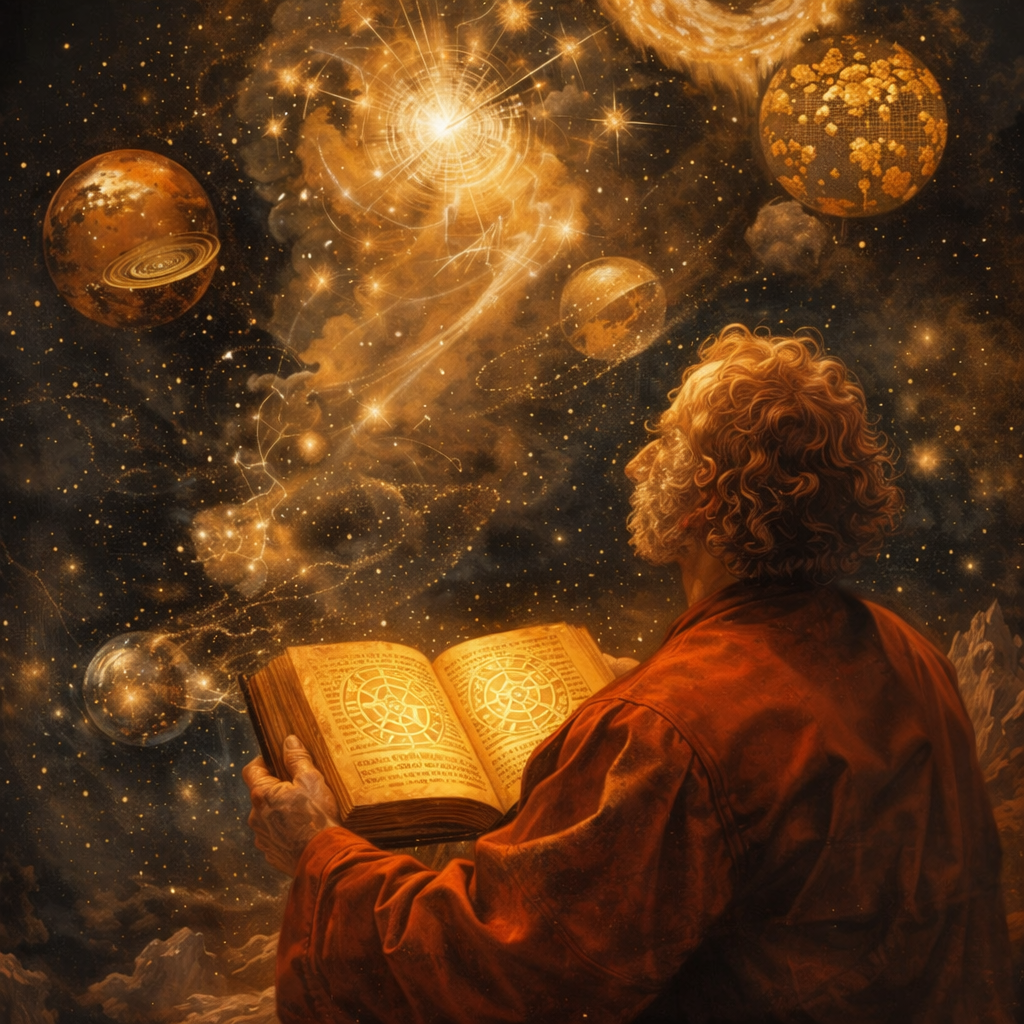

Cassian Rothmann, Senior Critic, Ancient Wisdom — This August 1998 issue of The Theosophical Movement is a compelling exploration of theosophical tenets. It navigates complex metaphysical concepts with clarity, revealing profound insights into spiritual evolution and cosmic order. The publication's strength lies in its ability to distill intricate philosophies into digestible yet potent wisdom, fostering a deeper understanding of universal principles. It is an indispensable resource for dedicated students of theosophy and earnest seekers of truth, offering solace and direction on the spiritual path. The articles within this volume serve as potent catalysts for inner transformation, illuminating the subtle pathways of the soul.
📝 Description
74
The August 1998 issue of The Theosophical Movement, Vol. 68 No. 10, discusses spiritual inquiry.
This August 1998 issue of The Theosophical Movement, volume 68 number 10, presents ideas on spiritual inquiry. It examines the structure of consciousness and fundamental principles that shape the universe. The content invites readers to consider the meanings within everyday existence, referencing symbolism in old writings and how universal rules might apply to daily life. The publication fosters a reflective mood for those seeking understanding and spiritual clarity. It is created for individuals interested in moving beyond ordinary concerns, grasping the connections between all things, and pursuing personal growth with guidance from older philosophies. The volume reflects the continuing influence of theosophical ideas.
This publication belongs to the Theosophical tradition, a movement that began in the late 19th century. Theosophy aims to synthesize knowledge from various religions and philosophies, including Eastern traditions, and to explore spiritual science and the latent powers of humanity. Issues like this one typically engage with concepts such as reincarnation, karma, the nature of the soul, and the evolution of consciousness, often drawing on texts and teachings attributed to ancient wisdom.
💡 Why Read This Book?
Uncover timeless wisdom and esoteric insights that illuminate the path to spiritual awakening. This issue is ideal for seekers of hidden knowledge, students of comparative religion, and practitioners of meditation and occult arts. Explore the interconnectedness of all existence and gain profound understanding of the universe's subtle energies. It offers a unique opportunity to engage with foundational theosophical concepts and their relevance to modern spiritual quests.
⭐ Reader Reviews
Honest opinions from readers who have explored this book.
❓ Frequently Asked Questions
What is Theosophy?
Theosophy is a philosophical and religious movement that seeks to understand the divine or ultimate reality. It often draws upon ancient wisdom traditions, Eastern religions, and Western esoteric philosophies to explore the nature of spirit, consciousness, and the universe.
Who founded Theosophy?
The Theosophical Society was founded in 1875 by Helena Blavatsky, Henry Steel Olcott, and William Quan Judge. Blavatsky, in particular, is considered its most influential figure, authoring seminal works like 'The Secret Doctrine'.
What are the main goals of Theosophy?
Theosophy aims to form a nucleus of the universal brotherhood of humanity without distinction of race, creed, sex, caste, or color. It also encourages the study of comparative religion, philosophy, and science, and the investigation of the unexplained laws of nature and the powers latent in humanity.
Is this issue accessible to beginners?
While the topics are profound, the articles in this issue are generally written with an aim to convey complex ideas clearly. Beginners can approach it with an open mind, perhaps supplementing with introductory theosophical texts.
What kind of 'movement' is the Theosophical Movement?
The Theosophical Movement refers to the collective intellectual, spiritual, and organizational efforts of individuals and groups dedicated to the study and practice of Theosophy. It is a movement of thought and spiritual aspiration.
🔮 Key Themes & Symbolism
The Inner Workings of Consciousness
This volume examines the nature of consciousness, exploring its multi-layered existence beyond the physical form. It investigates the subtle bodies, the astral plane, and the perennial quest for self-realization through introspection and spiritual discipline. The articles illuminate how understanding our inner landscape is paramount to grasping the external world, revealing the interconnectedness of mind, spirit, and the manifested universe. This theme encourages a profound examination of personal awareness and the potential for transformation that lies within.
Cosmic Cycles and Universal Law
The essence of this theme lies in understanding the grand rhythms and underlying principles that govern existence. It explores the concept of cosmic cycles, from the birth and death of worlds to the cyclical nature of human evolution. Discussions often touch upon karma, reincarnation, and the immutable laws of cause and effect that shape individual destinies and the unfolding of cosmic events. This perspective offers a framework for comprehending our place within the vast, intricate range of the universe.
Symbolism as a Key to Esoteric Truth
This theme highlights the vital role of symbolism in conveying profound spiritual and metaphysical truths that transcend ordinary language. It examines how ancient myths, archetypes, and sacred imagery serve as a universal language of the soul, unlocking deeper layers of meaning. Readers are guided to interpret the hidden messages within sacred texts, art, and natural phenomena, recognizing them as reflections of eternal wisdom. The exploration of symbolism provides a powerful tool for accessing esoteric knowledge and fostering intuitive understanding.
💬 Memorable Quotes
Direct passages from the work, attributed to the author.
“Seek not without, but within.”
— An ancient directive emphasizing introspection and self-discovery as the true path to wisdom and spiritual enlightenment, rather than external pursuits.
“The law of correspondence is the key to unlock all mysteries.”
— This refers to the Hermetic principle 'As above, so below,' suggesting that understanding the macrocosm (universe) reveals truths about the microcosm (individual) and vice versa.
“Evolution is not a chance occurrence, but a purposeful unfolding.”
— This challenges deterministic or random views of existence, positing that life and consciousness evolve according to a grand, intelligent design or plan.
“Truth is a living entity, not a dead dogma.”
— This emphasizes the dynamic and evolving nature of spiritual truth, advocating for a personal, living experience of wisdom rather than rigid adherence to doctrines.
💡 Key Ideas
Editorial paraphrase of the work's core concepts — not direct quotes.
The universe is a thought made visible.
This quote suggests that reality is not fundamentally material but rather a manifestation of consciousness or divine thought, implying a deep spiritual underpinning to all existence.
🌙 Esoteric Significance
Tradition
This issue is firmly rooted in the Theosophical tradition, which itself is a syncretic blend drawing heavily from ancient Eastern philosophies (Hinduism, Buddhism), Western Hermeticism, Neoplatonism, and Gnosticism. It seeks to uncover the underlying unity of all religions and philosophies, presenting a universal wisdom that transcends sectarian boundaries. Theosophy posits a complex cosmology and anthropology, focusing on spiritual evolution, karma, reincarnation, and the existence of subtle planes of being.
Symbolism
Theosophy heavily relies on symbolism as a vehicle for esoteric knowledge. This volume likely explores the symbolic language found in ancient myths, scriptures, and natural phenomena. Key symbols often include the ouroboros (eternal cycles), the lotus flower (spiritual unfolding), the tree of life (cosmic order), and the pentagram (humanity's connection to the divine and elemental forces). Understanding these symbols is presented as a method to grasp abstract metaphysical concepts that are difficult to articulate in literal terms.
Modern Relevance
The themes explored in this issue – consciousness, universal interconnectedness, the search for meaning, and the ethical implications of spiritual understanding – remain profoundly relevant in the 21st century. As humanity grapples with global challenges, theosophical insights into universal brotherhood and the interconnectedness of all life offer a compelling vision for a more harmonious existence. Its emphasis on inner development and the cultivation of wisdom provides practical tools for reading through the complexities of modern life and fostering personal growth.
👥 Who Should Read This Book
This volume is a treasure for the dedicated student of esoteric philosophy, offering deep dives into theosophical concepts. Scholars of comparative religion and spiritual history will find valuable historical and philosophical context. Earnest seekers of spiritual truth, particularly those drawn to Eastern wisdom traditions and Western occultism, will discover clear insights and guidance. Practitioners of meditation, yoga, and other contemplative disciplines may find this work enriching, providing a theoretical framework for their inner work and a deeper understanding of universal spiritual laws.
📜 Historical Context
Published in August 1998, this issue of The Theosophical Movement emerges during a period of heightened global interconnectedness and a resurgence of interest in spiritual and philosophical traditions outside the mainstream Western paradigms. The late 20th century saw an increasing desire for meaning and transcendence amidst rapid technological advancement and societal change. Theosophy, with its synthesis of Eastern and Western esoteric thought, its emphasis on universal brotherhood, and its exploration of hidden laws of nature, resonated with many seeking alternative frameworks for understanding existence. This era provided fertile ground for the dissemination of such ideas, as individuals actively sought spiritual insights that offered a sense of purpose and unity in a complex world. The movement itself, though rooted in the late 19th century, continued to evolve, adapting its teachings and outreach to contemporary audiences.
📔 Journal Prompts
Reflect on a symbol that has personally resonated with you and explore its potential deeper meanings.
Consider the concept of 'cosmic cycles' in your own life. Where have you observed patterns of beginning and ending?
How might the principle of 'As above, so below' inform your understanding of a current challenge?
In what ways can you foster a greater sense of 'universal brotherhood' in your daily interactions?
What does 'truth as a living entity' mean to your personal spiritual journey?
🗂️ Glossary
Theosophy
A philosophical and religious movement aiming to understand the divine or ultimate reality, often drawing upon ancient wisdom traditions and esoteric philosophies. It seeks to uncover the underlying unity of religions and spiritual truths.
Gnosis
Spiritual knowledge or insight, particularly that which is intuitive and direct, leading to salvation or enlightenment. It is often associated with esoteric traditions and mystical experiences.
Subtle Bodies
In esoteric traditions, refers to non-physical aspects of a being, such as the astral, mental, and causal bodies, believed to exist alongside the physical body and to be vehicles for consciousness and spiritual experience.
Karma
The spiritual principle of cause and effect where intent and actions of an individual influence their future. In many Eastern traditions, it is believed to determine the circumstances of one's future rebirths.
Hermeticism
A body of philosophical and religious teachings attributed to Hermes Trismegistus, a legendary Hellenistic figure. It emphasizes mystical insights, alchemy, astrology, and the principle of 'As above, so below'.
This book appears in 2 collections
🔮 Readers Also Liked
Browse all →







From the “Theosophy” Collection
View all →


More Free Theosophy & Anthroposophy Books
View all →