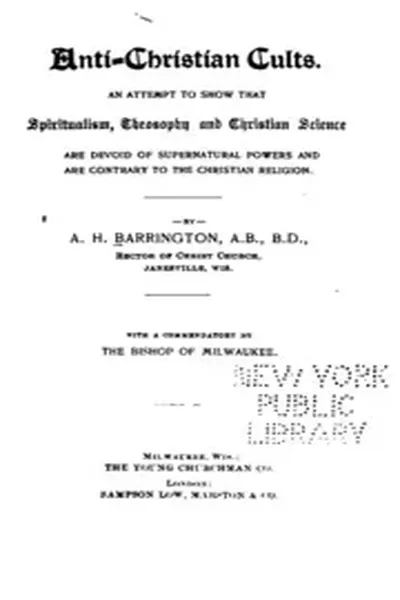
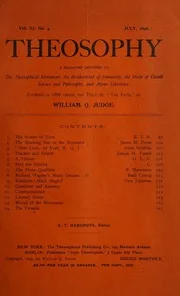
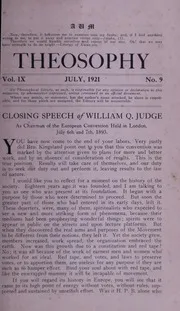
Theosophy Vol-X,No-1,November 1921

 73
73

Theosophy Vol-X,No-1,November 1921

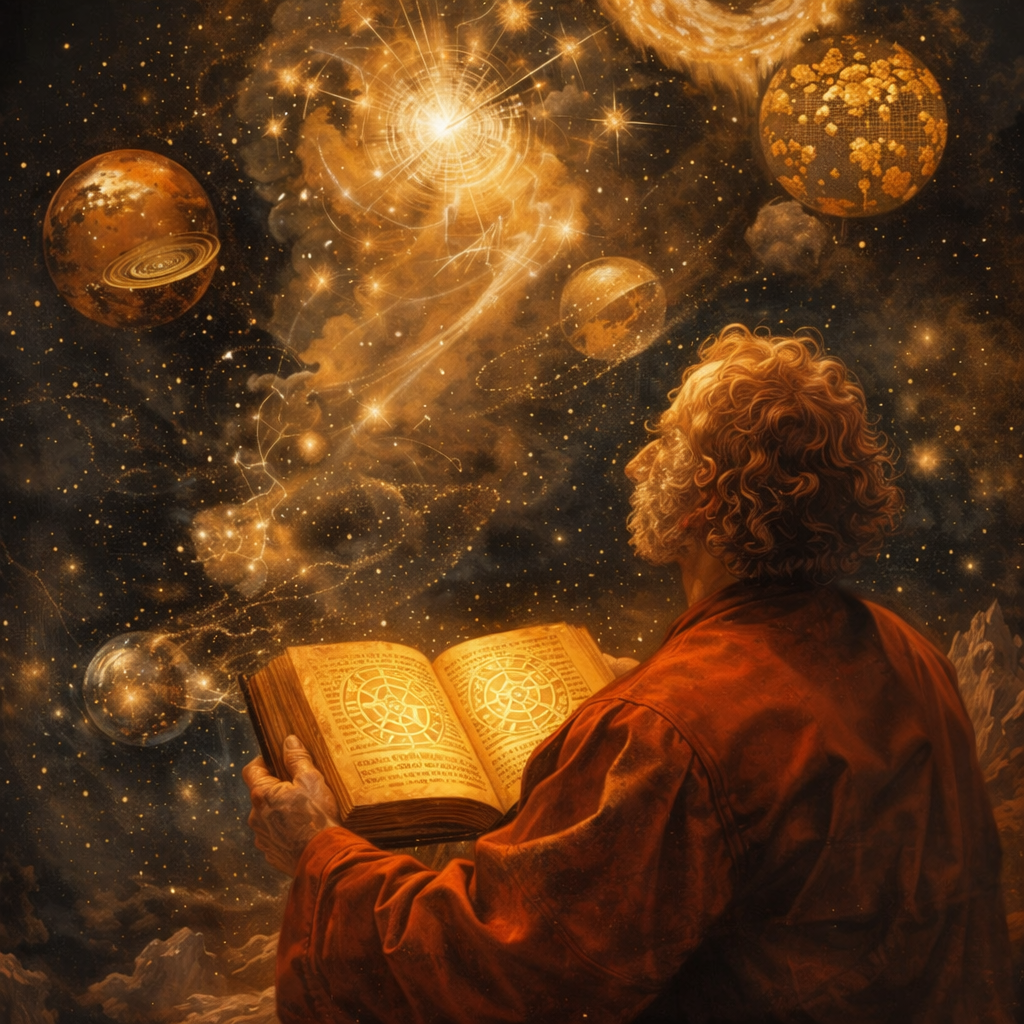

Marcus Thorne (Esoteric Sciences Reviewer) — This November 1921 issue of 'Theosophy' stands as a testament to the enduring power of esoteric inquiry. The anonymous contributors, likely steeped in the teachings of Blavatsky and Steiner, offer profound insights into the nature of consciousness and cosmic law. The articles possess a rare clarity, distilling complex metaphysical ideas into accessible, yet deeply resonant, prose. Its strength lies in its unwavering commitment to exploring the hidden dimensions of reality, making it an invaluable resource for serious students of Theosophy and Anthroposophy. This volume is particularly suited for those who have already begun their spiritual journey and seek to deepen their understanding of universal principles.
📝 Description
73
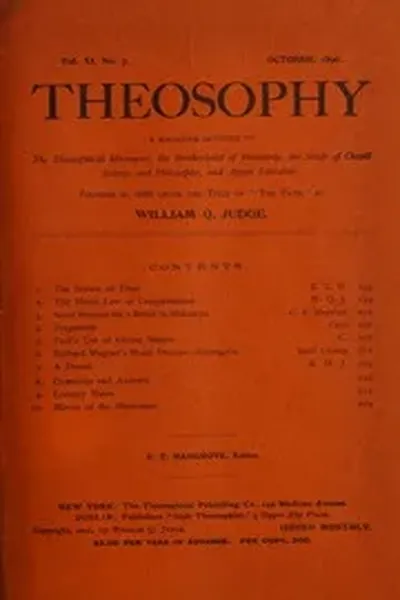
The November 1921 issue of Theosophy magazine presents early 20th-century esoteric thought.
This issue of Theosophy, published in November 1921, contains articles on metaphysical topics relevant to the early Theosophical movement. It addresses doctrines and veiled truths that influenced discussions on consciousness and the relationship between the material and spiritual worlds. The text encourages quiet contemplation and aims to provide philosophical insights for those seeking a deeper understanding of existence. It covers concepts related to cosmic evolution and the structure of reality. The articles challenge conventional thinking and point towards spiritual awakening. The publication invites readers to consider humanity's place within the cosmos.
Published during the early days of the Theosophical Society's influence, this 1921 issue reflects the movement's engagement with Eastern philosophies and Western occult traditions. It addresses concepts like karma, reincarnation, and the nature of the subtle bodies, which were central to Helena Blavatsky's teachings and their subsequent interpretations. The articles likely discuss theosophical interpretations of ancient scriptures and cosmology, aiming to bridge scientific understanding with spiritual insights for its readership.
💡 Why Read This Book?
Unearth foundational Theosophical teachings from a pivotal era. This issue offers direct access to the intellectual and spiritual currents that defined early 20th-century esoteric thought. Ideal for scholars, practitioners, and seekers yearning for a deeper connection to universal wisdom and the hidden mechanics of existence. It provides a unique perspective on timeless metaphysical questions.
⭐ Reader Reviews
Honest opinions from readers who have explored this book.
❓ Frequently Asked Questions
What is Theosophy?
Theosophy is a philosophical and religious system aiming to study and understand the underlying principles of all religions and philosophies, seeking universal truths about the nature of divinity, humanity, and the cosmos.
Who were the key figures in early Theosophy?
Key figures include Helena Blavatsky, Henry Steel Olcott, and William Quan Judge, who founded the Theosophical Society in 1875. Later figures like Annie Besant and Rudolf Steiner also played significant roles.
What is the significance of the 'Vol-X, No-1' designation?
This designation indicates that the publication is the first issue of the tenth volume of a periodical titled 'Theosophy,' published in November 1921.
Is this book suitable for beginners?
While the content is rich and profound, it assumes some familiarity with esoteric concepts. Beginners may find it beneficial to approach with an open mind and perhaps alongside introductory texts on Theosophy.
Where does the knowledge presented originate?
The knowledge presented is rooted in ancient wisdom traditions, Eastern philosophies (particularly Hinduism and Buddhism), and the interpretations and teachings of modern Theosophical figures.
🔮 Key Themes & Symbolism
The Astral Plane and Its Inhabitants
This issue explores the subtle domains of existence, specifically focusing on the astral plane, often described as a bridge between the physical and the higher spiritual worlds. It explores its nature, its layered realities, and the various elemental and thought-forms that populate it. Readers will gain an understanding of how human thoughts and emotions manifest and influence this energetic dimension, offering a glimpse into the unseen forces that shape our experiences and the processes of reincarnation and spiritual evolution.
The Sevenfold Constitution of Man
A core part of Theosophical teaching, this theme examines the intricate, multi-layered structure of human beings, extending beyond the physical body. It breaks down the human constitution into seven principles or vehicles, from the dense physical form to the immortal spiritual monad. Understanding this framework is crucial for grasping the Theosophical perspective on consciousness, karma, and the process of spiritual development, highlighting how each aspect of our being interacts with the universal life force and contributes to our ultimate destiny.
Cosmic Cycles and the Law of Rebirth
This section navigates the vast expanse of cosmic time, exploring the concept of great cycles of manifestation and dissolution that govern the universe. It connects these grand cosmic rhythms to the individual journey of the soul through the law of rebirth (reincarnation). The articles illuminate how karma, the law of cause and effect, operates within these cycles, shaping the destiny of individuals and humanity as a whole, and offering a profound framework for understanding life's purpose and the continuous unfolding of consciousness.
💬 Memorable Quotes
Direct passages from the work, attributed to the author.
“Each thought is a seed sown in the astral garden.”
— This highlights the creative power of thought in the subtle realms, implying that our mental energy actively shapes our environment and future experiences on planes beyond the physical.
“The soul's journey is etched in the stars and within.”
— This points to the interconnectedness of the individual spiritual path with the grand cosmic order, suggesting that destiny is influenced by both universal laws and inner spiritual development.
“Hidden truths await the patient inquirer.”
— This offers encouragement to those engaged in esoteric study, emphasizing that profound knowledge is accessible through persistent and dedicated effort, rather than fleeting glimpses.
“Beyond form lies the eternal essence.”
— This fundamental Theosophical tenet reminds the reader that the true nature of reality and ourselves is spiritual and eternal, transcending the temporary and illusory nature of physical forms.
💡 Key Ideas
Editorial paraphrase of the work's core concepts — not direct quotes.
The veil between worlds grows thin for those who seek.
This quote suggests that diligent spiritual seeking can lead to a perception of realities beyond the ordinary physical senses, thinning the perceived barrier between the material and the unseen.
🌙 Esoteric Significance
Tradition
This publication is deeply rooted in the Modern Theosophical tradition, which emerged in the late 19th century through the work of Helena Blavatsky and the Theosophical Society. It draws heavily upon ancient wisdom traditions, particularly Eastern philosophies like Vedanta and Buddhism, synthesizing them with Western esoteric concepts. Theosophy seeks to reveal the underlying unity of all religions and philosophies, exploring the nature of the universe, humanity's place within it, and the path to spiritual evolution through ethical living and inner development.
Symbolism
The journal employs detailed symbolism inherent to esoteric traditions. Expect references to the 'Seven Rays,' the 'Monad,' the 'planes of existence' (physical, astral, mental, etc.), and symbolic animals or figures representing cosmic forces or stages of evolution. These symbols are not mere decoration but represent profound metaphysical concepts, serving as keys to unlock deeper understanding of the subtle energies and spiritual architecture of reality, guiding the reader through abstract ideas.
Modern Relevance
Despite its age, the philosophical inquiries and spiritual insights presented remain remarkably relevant. In an era grappling with materialism, existential questions, and the fragmentation of knowledge, 'Theosophy Vol-X, No-1' offers a holistic perspective on consciousness, interconnectedness, and the pursuit of wisdom. Its exploration of the unseen realms and the principles of karma and reincarnation provides a framework for personal growth and a deeper understanding of life's challenges, resonating with contemporary seekers of meaning and spiritual awakening.
👥 Who Should Read This Book
This volume is a treasure for the dedicated student of esoteric philosophy. Scholars of comparative religion and mysticism will find invaluable primary source material. Seekers of spiritual truth who are drawn to the foundational texts of Theosophy will discover clear insights into cosmic principles and human potential. Practitioners of meditation and inner work may find guidance on navigating subtle planes and understanding the energetic constitution of being. While accessible, it rewards diligent study and contemplation, offering a doorway into a profound and timeless body of knowledge.
📜 Historical Context
Published in November 1921, this issue of 'Theosophy' emerges from a vibrant period of esoteric revival and philosophical exploration. The world had recently endured the cataclysm of World War I, prompting many to seek deeper meaning and spiritual solace. Theosophy, with its synthesis of Eastern and Western thought, its emphasis on universal brotherhood, and its complex cosmological models, offered a compelling alternative to prevailing materialistic philosophies. Figures like Annie Besant were prominent, leading the movement and engaging in significant public discourse. This era saw a surge in interest in spiritualism, occultism, and alternative ways of understanding consciousness and the universe, making publications like this crucial conduits for disseminating these burgeoning ideas and fostering a community of like-minded seekers.
📔 Journal Prompts
Reflect on a recent thought or emotion: How might it manifest on the astral plane?
Consider your personal definition of the 'sevenfold constitution of man.' What principles resonate most strongly?
How do you perceive the concept of cosmic cycles in your own life or in global events?
What does 'universal brotherhood' mean to you in practical, everyday terms?
Identify one symbol from the text that sparks curiosity and explore its potential meaning further.
🗂️ Glossary
Astral Plane
A subtle plane of existence, often considered the area of emotions, desires, and thought-forms, lying between the physical and the higher spiritual realms. It is a crucial intermediary in the process of reincarnation and spiritual evolution.
Monad
In Theosophy, the Monad represents the eternal, divine spark or spiritual self within each being, the ultimate source of consciousness that journeys through various evolutionary stages across lifetimes.
Karma
The universal law of cause and effect, where actions (causes) inevitably lead to corresponding consequences (effects) across lifetimes, shaping an individual's destiny and experiences.
Reincarnation
The cyclical process by which the soul, or Monad, is reborn into a new physical body after death, continuing its evolutionary journey and working out karmic patterns.
Thought-Form
A manifestation on the astral or mental planes created by focused thought or emotion, often possessing a quasi-independent existence and influencing the environment or individuals.
This book appears in 2 collections
🔮 Readers Also Liked
Browse all →


From the “Theosophy” Collection
View all →


More Free Theosophy & Anthroposophy Books
View all →