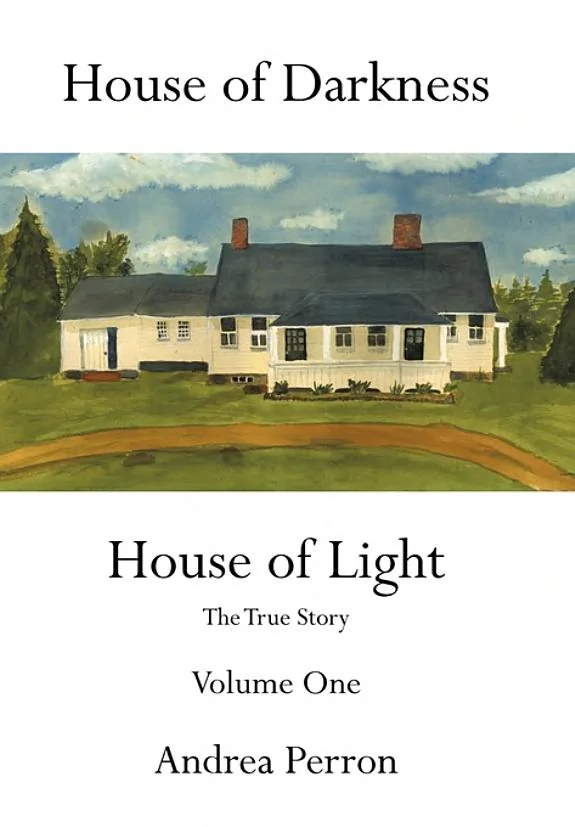
House of Darkness House of Light
 80
80

House of Darkness House of Light
Andrea Perron’s House of Darkness House of Light offers a visceral, unvarnished account of a family’s entanglement with a notoriously haunted property. The strength of the book lies in its raw emotional honesty; Perron doesn't shy away from the fear and bewilderment her family experienced in the Arnold Estate. She details specific encounters with what she describes as demonic entities and spectral presences, painting a vivid picture of a household under siege. A particularly striking passage describes the family’s attempts to reconcile scientific skepticism with undeniable supernatural occurrences, highlighting the profound disorientation such events can induce. However, the narrative sometimes leans heavily on recounting a relentless series of terrifying events without extensive exploration of the underlying spiritual mechanics or philosophical implications, which might leave some readers seeking deeper esoteric analysis wanting. The book succeeds as a compelling personal testimony of enduring profound paranormal adversity.
📝 Description
80
In 1970, the Perron family bought a Rhode Island house and encountered unexplained phenomena.
Andrea Perron recounts her family's experiences after moving into the Arnold Estate in Harrisville, Rhode Island, in 1970. The book details their encounters with a range of paranormal events, suggesting the property acted as a connection point for occurrences spanning different times. This account focuses on confronting the unknown and the difficulties a family faced while living in unusual circumstances.
The story appeals to those interested in personal accounts of hauntings and paranormal research, especially readers who value narratives centered on family relationships under strain. It suits individuals examining the unexplained alongside themes of endurance and spiritual growth. Anyone interested in Rhode Island lore or personal stories of spiritual conflict might find this work relevant.
The Perron family's account became more widely known through their involvement with investigations at the Arnold Estate, a location with many reported hauntings. Their narrative aligns with the rise of ghost hunting and paranormal investigation shows in the late 20th and early 21st centuries, offering a firsthand perspective that predates much of the media's sensationalized coverage of such sites.
This book fits within the broader tradition of spiritualist literature, which often centers on personal testimonies of encounters with the afterlife and unseen forces. It shares common ground with narratives exploring hauntings, mediumship, and the idea that locations can retain residual energies or echoes of past events. The focus on spiritual inheritance and entities interacting with the physical world also connects to concepts found in various occult and metaphysical studies that examine the nature of consciousness and spiritual planes.
💡 Why Read This Book?
• Gain insight into the Perron family's specific claims about the Arnold Estate, including their documented move in 1970 and the nature of the alleged phenomena, offering a unique perspective on a well-known haunted location. • Understand the concept of spiritual warfare as experienced by the family, focusing on their particular interpretations of demonic oppression and their methods of spiritual defense. • Explore the theme of inherited spiritual burdens and how the Perron family navigated a legacy of paranormal activity within their ancestral home, providing a case study in familial resilience.
⭐ Reader Reviews
Honest opinions from readers who have explored this book.
❓ Frequently Asked Questions
What is the primary focus of House of Darkness House of Light?
The book primarily focuses on the Perron family's experiences after moving into the Arnold Estate in Harrisville, Rhode Island, in 1970, detailing their encounters with various paranormal and spiritual phenomena.
Who is Andrea Perron?
Andrea Perron is the author of House of Darkness House of Light and one of the children from the Perron family who lived in the Arnold Estate during the 1970s.
When was House of Darkness House of Light first published?
The book was first published in 2011, recounting events that took place decades earlier.
What kind of phenomena are described in the book?
The book describes a range of phenomena including apparitions, poltergeist activity, demonic manifestations, and experiences suggesting a portal-like nature of the house.
Is the book based on a true story?
Yes, House of Darkness House of Light is presented as a true account of the Perron family's experiences in the Arnold Estate.
What is the significance of the Arnold Estate?
The Arnold Estate, also known as the 'House of Darkness House of Light,' is a property in Harrisville, Rhode Island, notorious for its alleged history of hauntings and paranormal activity.
🔮 Key Themes & Symbolism
Spiritual Warfare
The narrative presents a stark depiction of spiritual warfare, detailing the Perron family's alleged confrontations with malevolent entities. Perron describes these forces not merely as ghosts but as actively hostile spiritual beings intent on causing harm. The book emphasizes the necessity of faith and spiritual fortitude in resisting such influences, framing the family's struggle as a battle for their souls and their home. This theme explores the idea that certain locations can become focal points for intense spiritual conflict.
The Haunted House as a Portal
A central concept is the idea that the Arnold Estate functioned as a 'portal,' a gateway that allowed spirits and energies from other dimensions or times to manifest. Perron suggests the house was not just a site of residual hauntings but an active conduit, blurring the lines between the physical and spiritual realms. This interpretation elevates the house beyond a simple haunted dwelling to a nexus of interdimensional activity, influencing the family's perception of reality.
Family Resilience
Despite the overwhelming and terrifying experiences, a significant theme is the Perron family's resilience. The book chronicles their efforts to maintain normalcy and protect each other amidst constant supernatural disturbances. Their shared ordeal, while traumatic, is portrayed as a catalyst for strengthening their familial bonds and their collective faith. This focus on endurance highlights the human capacity to withstand extreme adversity.
Inherited Trauma and Influence
The text touches upon the notion that negative spiritual influences can be inherited or attached to specific lineages or locations. The Perron family's experiences are sometimes framed within a context of spiritual legacy, suggesting that the house's activity might have been amplified by past events or spiritual conditions. This raises questions about the interconnectedness of generations and the unseen forces that may impact family histories.
💬 Memorable Quotes
Direct passages from the work, attributed to the author.
“The house was a portal to the past and a passage to the future.”
— This statement expresses the core premise of the book, suggesting the Arnold Estate was not merely haunted by residual energy but acted as a nexus where different temporal planes intersected, allowing for manifestations from both history and potential futures.
“We learned that evil could be tangible and that faith was our only shield.”
— This interpretation highlights the Perron family's perceived confrontation with malevolent forces, emphasizing their belief that spiritual entities possessed a physical or impactful presence and that their faith was their primary defense mechanism.
“Living with the unseen tested the very fabric of our reality.”
— This expresses the profound disorientation and psychological strain the family experienced as their understanding of the world was challenged by constant, inexplicable supernatural events.
“Our journey was an eternal quest for understanding and peace.”
— This reflects the enduring nature of the Perron family's struggle, framing their experiences not as a temporary affliction but as a continuous path toward comprehending the paranormal and seeking spiritual solace.
💡 Key Ideas
Editorial paraphrase of the work's core concepts — not direct quotes.
The spirits were not just echoes; they were invaders.
This paraphrase conveys the author's view that the entities encountered were not passive remnants of the past but actively hostile presences seeking to dominate or harm the inhabitants.
🌙 Esoteric Significance
Tradition
While not explicitly aligning with a single established esoteric lineage, the book appeals to elements found in Christian demonology and deliverance ministries, particularly concerning the active malevolence of entities and the need for spiritual warfare. It also touches upon concepts akin to psychic self-defense and the idea of energetic imprints on locations, which can be found in various New Age and occult traditions. The narrative departs from more structured systems like Kabbalah or Hermeticism by focusing on raw, personal experience rather than codified magical practices.
Symbolism
The 'Arnold Estate' itself functions as a potent symbol of a nexus where the veil between worlds is thin, representing a physical manifestation of spiritual conflict. The concept of the 'portal' symbolizes a gateway to other realities or dimensions, suggesting that the house is not just haunted but a point of interdimensional bleed-through. The 'family' acts as a symbol of humanity facing overwhelming, potentially demonic forces, their struggle representing a broader battle between light and darkness.
Modern Relevance
Contemporary discussions on spiritual warfare, deliverance ministry, and personal accounts of high-intensity hauntings often reference the Perron family's experiences. Thinkers and practitioners in fields focusing on paranormal investigation, mediumship, and spiritual healing may draw upon the book as a case study in extreme spiritual adversity. Its narrative continues to inform popular understanding of demonic phenomena and the psychological impact of living in allegedly haunted environments.
👥 Who Should Read This Book
• Individuals fascinated by detailed personal accounts of paranormal phenomena and alleged demonic activity, particularly those interested in the history of the Arnold Estate. • Researchers and enthusiasts of spiritual warfare narratives who seek firsthand testimonies of confronting malevolent entities and the role of faith in such encounters. • Readers exploring themes of family resilience under extreme duress, who appreciate stories of overcoming profound adversity through spiritual or psychological fortitude.
📜 Historical Context
Published in 2011, Andrea Perron's House of Darkness House of Light emerged during a period of heightened public fascination with paranormal investigations, fueled by popular television shows like 'Ghost Hunters' and 'The Dead Files.' The Arnold Estate itself, located in Harrisville, Rhode Island, had already garnered significant notoriety by the early 21st century, often cited in paranormal circles. Perron's account positions itself within the tradition of personal testimony concerning demonic possession and haunted locations, a genre with roots stretching back centuries but which saw a resurgence in the late 20th century. While not directly engaging with academic paranormal research, the book taps into a cultural zeitgeist interested in empirical, albeit anecdotal, evidence of the supernatural. Its narrative style shares commonalities with other contemporary first-hand accounts of hauntings, often emphasizing spiritual struggle and divine intervention.
📔 Journal Prompts
The Perron family's initial purchase of the Arnold Estate in 1970.
The concept of the house as a 'portal' to past and future events.
Personal reflections on the nature of spiritual warfare as described by the author.
The family's methods for coping with paranormal activity.
Interpreting the symbolism of the 'House of Darkness House of Light' in your own spiritual context.
🗂️ Glossary
Arnold Estate
The specific property in Harrisville, Rhode Island, where the Perron family resided and experienced alleged paranormal phenomena, often referred to as the 'House of Darkness House of Light'.
Portal
In the context of the book, a term used to describe the Arnold Estate's alleged ability to act as a gateway or conduit for spirits and energies from other dimensions or time periods.
Spiritual Warfare
The book's framing of the family's experiences as a conflict against malevolent spiritual entities, requiring faith and spiritual strength for defense and protection.
Demonic Manifestations
The overt and often terrifying appearances or actions attributed to evil spirits or demonic forces within the narrative.
Residual Haunting
A type of paranormal phenomenon where past events are believed to be replaying, often seen as energetic imprints, contrasted with the more active 'invaders' described in the book.
Faith as a Shield
The concept that religious belief and spiritual conviction served as the primary protective mechanism for the Perron family against the negative influences in the house.
Interdimensional Travel
The idea that the house facilitated passage or communication between different planes of existence or realities, as suggested by the 'portal' concept.
This book appears in 1 collection
🔮 Readers Also Liked
Browse all →








From the “Ghosts” Collection
View all →







More Free Spiritualism & Afterlife Books
View all →