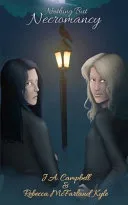
Nothing But Necromancy
 80
80

Nothing But Necromancy
J. A. Campbell and Rebecca McFarland Kyle’s Nothing But Necromancy offers two distinct forays into the unsettling territory of accidental magic. Campbell’s narrative, concerning Harmony Hendricks, introduces a compelling premise: a wish gone awry that resurrects a tormentor, albeit in a state of perpetual performance. The exploration of unintended consequences feels particularly sharp here. McFarland Kyle’s contribution, following Elise Winters, examines the more pervasive, haunting presence of ghosts. While the concept of seeing spirits is familiar, McFarland Kyle grounds it in a palpable sense of dread and psychological strain. A slight limitation is the occasional feeling of narrative acceleration, particularly in the resolution of Elise's spectral encounters. However, the core strength lies in the visceral depiction of characters grappling with forces they barely comprehend. The work effectively captures the disquieting nature of magic when it escapes the practitioner's intent, suggesting that some powers are best left undisturbed.
Verdict: A potent double feature for those who appreciate magic with a dark, psychological edge.
📝 Description
80
Published in 2017, Nothing But Necromancy collects two novellas on accidental magic.
J. A. Campbell and Rebecca McFarland Kyle's collection, Nothing But Necromancy, presents two novellas that weave together stories of unintended magic and supernatural events. The narratives focus on the psychological burden that extraordinary circumstances place on individuals. The book falls into the category of esoteric literature, hinting at an interest in metaphysical and occult subjects.
This work is suitable for readers who appreciate dark fantasy stories with uncanny elements. It especially appeals to those interested in how magic appears in unforeseen and often chaotic ways. The collection explores the boundary between the supernatural and everyday life, and how characters manage powers or events beyond their direct influence. Readers who prefer character-focused narratives with speculative elements will find value here.
Released in 2017, the collection appeared during a time of heightened interest in genre fiction that merged the supernatural with psychological depth. Its combination of modern settings with older magical ideas mirrors a wider trend in speculative fiction that examines the occult within contemporary existence. The stories examine the disruption of ordinary life by these supernatural intrusions.
Nothing But Necromancy engages with themes common in modern occult fiction, particularly concerning unintended consequences of magical acts. The focus on necromancy and spectral entities places it within traditions that explore death, spirits, and the manipulation of life forces. The novellas examine the mental and emotional strain on individuals interacting with these powers, touching on questions of control and sanity when confronted with the otherworldly. This approach reflects a contemporary fascination with the occult as it intersects with psychological realism and the challenges of modern life.
⭐ Reader Reviews
Honest opinions from readers who have explored this book.
❓ Frequently Asked Questions
What is the central theme of Nothing But Necromancy?
The central theme revolves around the dangerous and often chaotic consequences of accidental magic, particularly concerning necromancy and supernatural visitations. It explores how individuals cope with powers they don't fully control.
Who are the authors of Nothing But Necromancy?
The book features contributions from J. A. Campbell and Rebecca McFarland Kyle. It was first published in 2017.
What kind of supernatural elements are present in the book?
The book includes elements of necromancy, such as accidental resurrection, and pervasive ghost sightings that cause psychological distress.
Is this book part of a series?
Nothing But Necromancy is presented as a collection of two novellas and does not appear to be part of a larger series based on its initial 2017 publication.
What is the tone of Nothing But Necromancy?
The tone is generally dark, unsettling, and psychological, focusing on the emotional and mental impact of supernatural events on ordinary characters.
What is the primary focus of Harmony Hendricks' story?
Harmony Hendricks' story centers on a wish that accidentally brings a boy back from the dead, but he returns in a state of perpetual singing, highlighting the unpredictable nature of necromancy.
🔮 Key Themes & Symbolism
Unintended Necromancy
The collection directly confronts the concept of necromancy, not as a deliberate art, but as a force unleashed by careless wishes. Harmony Hendricks' accidental revival of a deceased boy, who continues his earthly existence in a spectral, performative state, serves as a prime example. This theme challenges the notion of control over death and life, suggesting that attempts to undo death can lead to more bizarre and disturbing outcomes than the initial event.
Pervasive Spectral Presence
Elise Winters' narrative explores the exhausting reality of being perpetually haunted. Ghosts are not mere apparitions but intrusive entities that disrupt daily life, from home to school. The presence of her deceased border collie's ghost underscores the intimate and inescapable nature of these visitations, blurring the lines between the living world and the spectral realm, and questioning the protagonist's sanity.
Psychological Toll of the Supernatural
Both novellas emphasize the profound psychological impact of extraordinary events. Harmony's actions and their consequences, coupled with Elise's constant spectral encounters, highlight the mental strain and fear associated with the occult. The work examines how characters grapple with the existential dread and isolation that arise when confronted with death, the afterlife, and forces beyond human comprehension.
The Blurring of Reality
A recurring motif is the erosion of the boundary between the mundane and the supernatural. Whether through a resurrected singer or a house full of ghosts, the characters find their perception of reality challenged. This theme invites readers to consider how the intrusion of the uncanny can destabilize one's understanding of the world and their place within it.
💬 Memorable Quotes
Direct passages from the work, attributed to the author.
“Harmony Hendricks accidentally kills a boy when she wishes he would stop serenading her at school.”
— This opening sets a dark, immediate tone, establishing that magic in this world is not benign. The wish, a common trope, here results in fatal consequences, underscoring the dangerous unpredictability of even seemingly simple desires.
“Then, when she wishes he wasn't dead, he comes back to life at his own funeral, still singing.”
— This exemplifies the 'accidental necromancy' theme. The resurrection is imperfect and bizarre, a spectral echo rather than a true return, highlighting that meddling with death invites unnatural states and perpetual disturbance.
“Elise Winters sees ghosts. They follow her everywhere, wreaking havoc from home to high school.”
— This establishes the pervasive and disruptive nature of the supernatural in Elise's life. The ghosts are not passive observers but active agents of chaos, illustrating the constant imposition of the spectral on the mundane.
“Even her long-dead border collie's ghost can't protect her from a broken leg or the nagging fear that she might be losing her mind.”
— This points to the psychological fragility of Elise and the limitations of even familiar spectral entities. The presence of a beloved pet's ghost offers no comfort, only more unease, emphasizing the personal and isolating nature of her affliction.
“What will help Harmony? Nothing but necromancy.”
— This paradoxical statement frames necromancy not as a solution, but as the inescapable problem itself. It suggests that the only way to deal with the consequences of accidental death magic is to engage further with the very forces that caused the initial disaster.
🌙 Esoteric Significance
Tradition
While not explicitly aligned with a singular esoteric tradition like Hermeticism or Kabbalah, Nothing But Necromancy engages with themes resonant in folk magic and popular occultism. It taps into a broader, modern esoteric fascination with necromancy and spirit communication, often filtered through a lens of psychological horror rather than strict ritualistic practice. The work departs from traditional grimoires by focusing on the chaotic, unintended consequences rather than the controlled invocation of spirits for specific purposes.
Symbolism
The 'singing ghost' in Harmony's narrative serves as a symbol of inescapable torment and the unnatural state resulting from tampering with death. For Elise, the pervasive, everyday ghosts represent the intrusion of the subconscious or the unresolved past into the present, symbolizing repressed anxieties or the inability to let go. The broken leg signifies physical vulnerability amidst supernatural assault, highlighting the characters' fragile mortal existence.
Modern Relevance
Contemporary practitioners and readers interested in psychological horror, folk magic, and the ethics of spirit work find resonance in this collection. Authors exploring the darker side of magic and its impact on mental health, as well as online communities discussing occult themes in fiction, might draw inspiration from its portrayal of uncontrolled supernatural forces and their tangible effects on everyday life.
👥 Who Should Read This Book
['• Readers interested in dark fantasy and supernatural horror who appreciate stories that explore the psychological impact of magic and the uncanny.', '• Students of modern esoteric literature who are examining how occult themes like necromancy are reinterpreted in contemporary fiction.', '• Fans of character-driven narratives that feature speculative elements and focus on protagonists grappling with extraordinary and often terrifying circumstances.']
📜 Historical Context
Nothing But Necromancy, published in 2017, arrived during a period where speculative fiction increasingly explored the darker, more psychological facets of the supernatural. The rise of independent publishing platforms like Amazon Kindle Direct Publishing facilitated the dissemination of niche works that might not have secured traditional publishing deals. This era saw a growing audience for stories that blended contemporary settings with occult themes, moving beyond overt fantasy tropes to examine the personal and societal implications of magic and the paranormal. While not directly engaging with established occult scholars or movements of the past, the book taps into a broader contemporary interest in witchcraft, ghosts, and folk horror that gained traction online and in certain literary circles, influenced by works that had previously pushed boundaries, such as those by Shirley Jackson or modern horror authors exploring psychological dread.
📔 Journal Prompts
Harmony's wish and its unintended necromantic outcome, reflect on the power of spoken desires.
Elise's constant spectral encounters, consider the nature of intrusive thoughts.
The resurrected boy's perpetual singing, analyze symbolic representations of unresolved issues.
The fear of losing one's mind amidst supernatural events, explore personal boundaries of belief.
The notion of 'nothing but necromancy' as a solution, examine paradoxes in problem-solving.
🗂️ Glossary
Necromancy
A form of magic involving the invocation of the dead, typically to predict the future or to gain knowledge. In this context, it specifically refers to the accidental resurrection of a deceased individual.
Spectral Presence
The phenomenon of ghosts or spirits manifesting and interacting with the physical world, often causing disturbances or affecting the mental state of those who perceive them.
Accidental Magic
Magical effects or events that occur unintentionally, often as a result of poorly worded wishes or uncontrolled surges of power, leading to unforeseen and frequently negative consequences.
Psychological Toll
The mental and emotional strain placed upon individuals as a result of traumatic, stressful, or extraordinary experiences, such as constant haunting or dealing with the consequences of supernatural acts.
Wreaking Havoc
To cause widespread destruction or damage. In this context, it refers to the disruptive and chaotic actions of ghosts in Elise's daily life.
Nagging Fear
A persistent, unsettling feeling of anxiety or apprehension, often related to doubts about one's sanity or the reality of their experiences.
Serenading
Singing or playing music for someone, typically in a romantic or public manner. Here, it's presented as an annoying act that triggers a fatal wish.