Vicky angel

 72
72

Vicky angel
Jacqueline Wilson’s Vicky Angel, released in 2008, tackles the weighty subject of childhood mortality with her signature blend of directness and empathy. The narrative’s strength lies in its unflinching portrayal of grief and the spectral world as a place of quiet reflection rather than terror. The bond between Vicky and Angel, two girls meeting in the afterlife, feels authentic, grounded in shared experiences of confusion and nascent friendship. However, the book’s simplicity, while effective for its target audience, might leave older readers or those seeking a more complex exploration of metaphysical concepts wanting. A particularly poignant aspect is the way the girls discuss their former lives, highlighting the mundane details that become precious memories. Wilson avoids easy answers, focusing instead on the emotional processing of loss and the quiet continuation of connection. It’s a gentle, accessible introduction to profound themes.
📝 Description
72
Jacqueline Wilson's 2008 novel, Vicky Angel, tackles death and the afterlife for young readers.
Vicky Angel, published in 2008, tells the story of Vicky, a girl who dies in a road accident. She meets Angel, another girl who has also passed away, and they form a friendship. Together, they navigate their new existence and come to terms with their deaths. Wilson uses direct language to make difficult subjects like loss and grief accessible to children. The book is written for readers aged 9 to 12, offering a sensitive portrayal of mortality and remembrance. It aims to help young people discuss death and change without fear, blending emotional depth with supernatural elements.
The narrative offers comfort and companionship to those experiencing loss. It addresses complex emotional experiences in a way that young audiences can understand. Parents, educators, and counselors can use the book to start conversations about death and remembrance. Its straightforward approach to difficult subjects makes it suitable for readers who appreciate stories with emotional depth and a touch of the supernatural.
While not overtly occult, Vicky Angel engages with themes common in spiritual and afterlife literature through a child's perspective. It mirrors traditions that explore the soul's transition and existence beyond physical life, often depicted in folklore and spiritualist writings. The book simplifies these concepts, presenting a non-threatening view of what happens after death. It aligns with narratives that seek to ease anxieties surrounding the unknown, framing the afterlife as a place of continued connection rather than an ending.
💡 Why Read This Book?
• Gain a compassionate perspective on navigating grief and loss, understanding how the bond between Vicky and Angel offers solace in the face of tragedy, mirroring the power of friendship. • Explore the concept of an afterlife as a space for processing and connection, rather than a definitive end, drawing parallels to philosophical ideas of consciousness continuation. • Appreciate how Jacqueline Wilson, in her 2008 work, uses simple language to address complex emotional experiences, making the abstract nature of death and remembrance tangible for young readers.
⭐ Reader Reviews
Honest opinions from readers who have explored this book.
❓ Frequently Asked Questions
What is the main theme of Vicky Angel by Jacqueline Wilson?
The main themes of Vicky Angel, published in 2008, revolve around death, grief, friendship, and the transition to an afterlife. It explores how young people cope with sudden loss and find connection even after passing.
Who are the main characters in Vicky Angel?
The principal characters are Vicky, a girl who dies in an accident, and Angel, another young girl who has also passed away. Their developing friendship forms the emotional core of the narrative.
What is the setting of Vicky Angel?
The story is set primarily in a spectral or transitional realm after the characters' deaths. It's depicted as a place where they can reflect on their lives and interact with each other.
Is Vicky Angel a sad book?
While Vicky Angel deals with sad themes like death and loss, it is also a story of friendship and finding comfort. Jacqueline Wilson aims for a hopeful and empathetic tone, making it accessible rather than purely tragic.
What makes Vicky Angel unique for a children's book?
Its uniqueness lies in its direct and sensitive handling of childhood mortality, presenting the afterlife not as frightening but as a space for understanding. Published in 2008, it offered a gentle way to discuss these difficult subjects.
What age group is Vicky Angel recommended for?
Vicky Angel is generally recommended for middle-grade readers, typically ages 9 to 12, who can engage with themes of loss and friendship on an emotional level.
🔮 Key Themes & Symbolism
The Spectral Realm as Transition
The work explores the concept of an afterlife not as a fixed destination but as a fluid space for processing. Vicky and Angel exist in a realm that allows reflection on their past lives and the formation of new connections. This interpretation moves away from traditional religious depictions, presenting a more psychological and emotional transition. The focus is on the girls' immediate experiences and their evolving understanding of existence beyond corporeal form, suggesting a continuous, albeit altered, state of being.
Friendship as an Anchor
The narrative strongly emphasizes the power of companionship in navigating difficult circumstances. The bond that forms between Vicky and Angel serves as their primary source of comfort and strength in the spectral world. This friendship helps them confront their pasts and their current reality, demonstrating that connection can transcend even death. It highlights how shared experiences, empathy, and mutual support are crucial for emotional well-being, regardless of one's state of existence.
Memory and Enduring Impact
Vicky Angel touches upon the idea that a person's essence and impact can persist beyond their physical life. The characters recall memories of their lives, and the narrative suggests that the positive influence of their presence, their kindness, and their spirit continues. This theme offers a comforting perspective on remembrance, implying that those who have passed leave behind a legacy of love and experience that shapes the lives of those who remember them.
Acceptance of Change and Fate
A significant aspect of the story is the characters' journey towards accepting their circumstances. Both Vicky and Angel must come to terms with their deaths and their new reality. The book portrays this acceptance not as resignation, but as a process of understanding and moving forward within their altered existence. This theme is crucial for young readers grappling with change, illustrating the importance of adapting to new situations and finding peace.
💬 Memorable Quotes
Direct passages from the work, attributed to the author.
“Angel said that when you die you went to a place where you could see everything that had happened to you.”
— This interpretation of a concept highlights the narrative's exploration of an afterlife as a space for reflection and understanding. It suggests a process of reviewing one's life, coming to terms with experiences, and finding meaning.
💡 Key Ideas
Editorial paraphrase of the work's core concepts — not direct quotes.
We weren't supposed to die, were we?
This line captures the shock and confusion of Vicky and Angel upon realizing their altered state. It speaks to the unexpected nature of death, particularly for young individuals, and the profound sense of 'wrongness' they feel.
It's not like they forget you when you're dead.
This paraphrased concept addresses the enduring nature of memory and connection. It suggests that even after death, individuals continue to exist in the minds and hearts of those they left behind, offering a comforting perspective on mortality.
It was like a dream, but it was real.
This paraphrased concept reflects the surreal yet tangible nature of the spectral realm as depicted in the book. It captures the characters' disorientation and their gradual adaptation to an existence that defies normal understanding.
We can still be friends, can't we?
This quote underscores the central theme of friendship as a powerful, life-affirming force that persists beyond physical existence. It highlights the characters' need for connection and their hope for continued companionship.
🌙 Esoteric Significance
Tradition
While not explicitly tied to a formal esoteric tradition, Vicky Angel engages with themes common in spiritualist and Gnostic thought regarding the nature of the soul, the afterlife, and the process of spiritual transition. It presents an afterlife as a place of learning and emotional processing, echoing concepts found in some spiritualist beliefs that emphasize continued existence and personal growth beyond physical death. The departure from traditional religious doctrines aligns with a more modern, individualistic approach to spirituality, where personal experience and emotional truth take precedence over dogma.
Symbolism
The spectral realm itself functions as a primary symbol, representing a liminal space between life and whatever follows. The act of remembering past lives symbolizes the enduring nature of consciousness and identity. The developing friendship between Vicky and Angel can be seen as a symbol of hope and connection, demonstrating that even in the face of ultimate separation, the need for companionship and mutual understanding persists, offering a form of spiritual continuity.
Modern Relevance
The book's empathetic approach to death and grief finds resonance in contemporary discussions surrounding mental health and emotional literacy for young people. Modern spiritual counselors and educators might draw upon its narrative as a gentle tool to initiate conversations about loss. Its depiction of an afterlife as a place of personal reflection aligns with contemporary New Age philosophies that often de-emphasize rigid religious structures in favor of more personalized spiritual journeys and concepts of energy or consciousness persistence.
👥 Who Should Read This Book
• Young readers aged 9-12 who are experiencing or learning about loss, seeking a story that offers comfort and understanding without being frightening. • Parents, educators, and counselors looking for a sensitive and accessible text to facilitate conversations about death, grief, and the afterlife with children. • Fans of Jacqueline Wilson's work who appreciate her direct yet compassionate exploration of challenging emotional themes within relatable narratives.
📜 Historical Context
Jacqueline Wilson's Vicky Angel, published in 2008, entered a literary landscape where children's authors were increasingly willing to tackle complex themes like death and grief. While authors like C.S. Lewis explored allegorical afterlives in his *Chronicles of Narnia* (which began publication in 1950), Wilson’s approach in 2008 was distinct for its direct, contemporary, and psychologically grounded portrayal of childhood mortality. The early 21st century saw a growing cultural fascination with the paranormal and spiritualism, often manifesting in adult fiction. Wilson’s contribution was to translate these profound existential questions into a narrative accessible to young readers, focusing on emotional realism rather than overt supernatural horror or theological dogma. The book's reception was generally positive, appreciated for its sensitivity, though some critics might have viewed its straightforwardness as less artistically ambitious than more complex works engaging with similar themes. It stood apart from the more fantastical or overtly moralistic tales of earlier eras.
📔 Journal Prompts
Vicky and Angel's transition to the spectral realm.
The evolving friendship between Vicky and Angel.
Reflections on memories of life before passing.
The concept of enduring impact after death.
Accepting unexpected changes in one's existence.
🗂️ Glossary
Spectral Realm
A term used in the book to describe the transitional space or afterlife where characters exist after death. It is depicted as a place for reflection and continued connection rather than a fixed destination.
Transition
The process of moving from one state to another. In Vicky Angel, this refers to the journey from physical life to an altered state of existence after death, involving emotional and cognitive adjustment.
Mortality
The state of being subject to death. The book addresses childhood mortality directly, exploring its impact on the individuals involved and those left behind.
Grief
Deep sorrow, especially that caused by someone's death. The narrative explores the experience of grief from the perspective of those who have passed and implicitly for those left behind.
Continuity of Consciousness
The idea that one's awareness or consciousness persists beyond physical death. This concept underlies the characters' continued existence and interactions in the spectral realm.
Liminal Space
A transitional or in-between state or place. The spectral realm in Vicky Angel functions as a liminal space between life and the unknown after death.
Legacy
The lasting impact of a person's life or work. The book touches on how individuals continue to influence others even after their death through memory and spirit.
🔮 Readers Also Liked
Browse all →









More by Jacqueline Wilson
All books →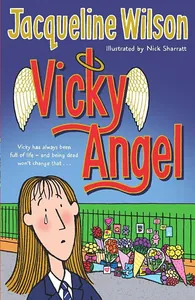
More Free Spiritualism & Afterlife Books
View all →