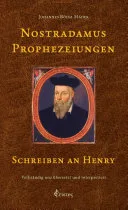
Nostradamus Prophezeiungen - Schreiben an Henry
 74
74

Nostradamus Prophezeiungen - Schreiben an Henry
Johannes Böhm-Mäder’s effort to decipher the 'letter to Henry' attributed to Nostradamus is commendable, particularly in its focus on a less-trodden path beyond the famous quatrains. The author’s core argument—that interpretive barriers are often temporal, not textual—provides a fresh angle. Böhm-Mäder’s strength lies in situating this prose piece within the broader context of prophetic literature, moving beyond mere historical cataloging. However, the analysis occasionally feels constrained by its own premise; at times, the prose itself seems to resist the very clarity the author seeks to impose. A particularly striking section is the examination of how the text allegedly addresses 'the Kurzsichtigkeit' (short-sightedness) of past interpreters, a concept that highlights the work's ambition. While the interpretation offers a valuable perspective for dedicated students of Nostradamiana, it may leave readers seeking definitive answers feeling somewhat adrift. Ultimately, this is an academic exercise in textual archaeology, offering more questions than conclusive pronouncements.
📝 Description
74
Johannes Böhm-Mäder examines a prose text attributed to Nostradamus, presented as a 'letter to Henry.'
This book focuses on a prose text believed to be from Nostradamus, addressed as a letter to Henry. Unlike his famous cryptic quatrains, this missive was intended for a different kind of understanding. Böhm-Mäder suggests its obscurity arises not from its complexity, but from a lack of suitable interpretive methods in the past. The author aims to make this text understandable for modern readers by providing the necessary tools.
Readers who are serious students of prophetic literature and historical occultism will find value here. It is particularly suited for those familiar with Nostradamus's *Centuries* but who wish for a more direct interpretation of his less common writings. The book also appeals to those interested in how prophetic figures are historically received, the development of esoteric thought, and the difficulties inherent in interpreting texts. Engaging with the historical background and esoteric methods is required.
Michel de Nostredame, known for his *Propheties* published in 1555, wrote in a complex style mixing languages and employing anagrams. While his quatrains are widely studied for predictions, the "letter to Henry" represents a less explored aspect of his work. This text, if authentic, may offer a more personal or direct communication than his public prophecies. Böhm-Mäder's analysis places this letter within the broader tradition of prophetic literature, suggesting that specific interpretive keys unlock its meaning, a common theme in esoteric studies where hidden knowledge requires specialized understanding.
💡 Why Read This Book?
• Gain insight into a lesser-known prose work attributed to Nostradamus, moving beyond the famous quatrains to understand potential personal communications or direct prophetic statements. • Understand the concept of 'time-locked' esoteric texts and how Johannes Böhm-Mäder argues that interpretive clarity depends on historical context and reader preparedness, as discussed in the analysis of the "letter to Henry." • Explore the challenges of prophetic interpretation, considering how different eras and intellectual frameworks shape our understanding of texts originating from figures like Michel de Nostredame in the 16th century.
⭐ Reader Reviews
Honest opinions from readers who have explored this book.
❓ Frequently Asked Questions
What is the 'Nostradamus Prophezeiungen - Schreiben an Henry' about?
This book by Johannes Böhm-Mäder focuses on interpreting a prose text attributed to Nostradamus, presented as a 'letter to Henry.' It argues this text, unlike his famous quatrains, has been misunderstood due to the limitations of past interpreters.
When was this specific work by Nostradamus supposedly written?
While Nostradamus's *Centuries* were published starting in 1555, the specific prose 'letter to Henry' analyzed by Böhm-Mäder is the subject of interpretation within the book, not a precisely dated historical artifact in the same way.
Is this book a translation of the original 'letter'?
The book by Johannes Böhm-Mäder is primarily an analysis and interpretation of the prose text. It offers the author's perspective on its meaning rather than being a direct, unadorned translation.
Who was Henry in Nostradamus's 'letter'?
The identity of 'Henry' is a key interpretive point within Böhm-Mäder's analysis. It is suggested that the letter might be addressed to a figure of historical significance, possibly within the French court of the 16th century.
How does this text differ from Nostradamus's famous quatrains?
The primary difference lies in form and presumed intent. The quatrains are poetic and deliberately enigmatic, whereas the 'letter to Henry' is in prose and, according to Böhm-Mäder's thesis, intended for a more direct, though still historically contingent, understanding.
What does 'Kurzsichtigkeit' mean in the context of this book?
'Kurzsichtigkeit' translates to 'short-sightedness.' Böhm-Mäder uses it to describe the limited perspective or interpretive frameworks of previous generations, which he believes hindered the understanding of Nostradamus's prose writings.
🔮 Key Themes & Symbolism
The Temporal Nature of Prophecy
The book posits that prophetic texts are not universally comprehensible but are instead 'time-locked.' Johannes Böhm-Mäder argues that the 'letter to Henry' has remained obscure not due to its inherent complexity, but because the intellectual climate and interpretive tools of past centuries were insufficient for its decipherment. This suggests prophecy requires a specific historical moment for its full meaning to be revealed, aligning with certain esoteric philosophies of cyclical time and evolving consciousness.
Beyond the Quatrains
This work pivots from the widely recognized four-line verses of Nostradamus to a less-studied prose document. It challenges the assumption that all of Nostradamus's prophetic output must conform to the enigmatic style of the *Centuries*. By focusing on the 'letter to Henry,' Böhm-Mäder explores the possibility of a more direct, perhaps personal, prophetic communication from Michel de Nostredame, prompting a re-evaluation of his complete body of work and its intended audience.
The Interpreter's Lens
A central theme is the critical role of the interpreter and their historical context. Böhm-Mäder critiques the 'short-sightedness' of previous generations who failed to grasp the prose text. This highlights the esoteric principle that understanding is not solely an intellectual act but is deeply influenced by the prevailing worldview, cultural paradigms, and philosophical assumptions of the interpreter's era. The book itself becomes an act of re-interpretation for the 21st century.
💬 Memorable Quotes
“His prophecies from the 16th century challenged generations of analysts and fueled fantasies.”
— This statement underscores the enduring fascination and difficulty surrounding Nostradamus's work, acknowledging its impact on both scholarly inquiry and popular imagination throughout history.
“The quatrains had to remain enigmatic.”
— This highlights the intentional obscurity of Nostradamus's most famous poetic prophecies, suggesting a deliberate design to withhold full comprehension until a future, perhaps more receptive, era.
“Nostradamus prophesied that they could only be deciphered in the mid-21st century.”
— This points to a specific claim about the temporal nature of understanding his prophecies, positioning the current era as potentially the one for which the full revelation was intended.
“The prose missive remained obscure, but this was solely due to the short-sightedness of...”
— This paraphrased concept directly addresses the core thesis of Böhm-Mäder's work: that the obscurity of the 'letter to Henry' is a fault of the past interpreters, not the text itself, implying a new interpretive key is now available.
“Okultisten verehren ihn, Christen verteufeln ihn, Materialisten belächeln ihn.”
— This opening sentiment captures the polarized reception Nostradamus has historically received across different belief systems and philosophical outlooks, setting the stage for a nuanced examination.
🌙 Esoteric Significance
Tradition
Nostradamus's work is situated within the broad tradition of Western esotericism, particularly drawing from Hermeticism and Renaissance Neoplatonism, which sought to understand the cosmos through symbolic correspondences and divine inspiration. His astrological knowledge and prophetic claims align with divinatory practices that have roots in ancient Chaldea and Egypt, filtered through medieval and Renaissance European occult thought. The 'letter to Henry,' as interpreted by Böhm-Mäder, potentially fits into a lineage of direct spiritual communication or channeled prophecy, distinct from purely intellectual or philosophical systems.
Symbolism
While the quatrains are rich in symbolic language, the prose 'letter to Henry' may employ a more direct, though still allegorical, symbolism. If the text engages with themes of kingship, destiny, or divine providence, its symbols would likely relate to monarchical power (e.g., crowns, sceptres), cosmic order (stars, celestial events), or spiritual illumination (light, divine intervention). The interpretation of 'short-sightedness' itself acts as a symbolic barrier, representing limited perception or the inability to grasp higher truths without the correct spiritual or intellectual lens.
Modern Relevance
Contemporary interest in Nostradamus persists, fueled by events that seem to echo his predictions. Modern esotericists and historical researchers continue to analyze his work, seeking patterns and insights into geopolitical shifts, societal changes, and the nature of prophecy itself. Thinkers exploring synchronicity, archetypal psychology (as applied to historical events), and the cyclical nature of history may find Böhm-Mäder's approach to the 'letter to Henry' relevant for understanding how ancient prophecies can speak to contemporary concerns.
👥 Who Should Read This Book
• Students of Renaissance esotericism seeking to move beyond the most famous prophetic verses of Nostradamus to explore lesser-known texts and interpretive methodologies. • Researchers of historical divination and occultism interested in the reception and analysis of prophetic literature across different historical periods. • Individuals fascinated by the challenges of textual interpretation, particularly how historical context and the 'interpreter's lens' influence our understanding of seemingly obscure or time-bound writings.
📜 Historical Context
Michel de Nostredame, a physician and reputed seer, published his *Propheties* in Lyon in 1555, amidst the intellectual ferment of the Renaissance and the anxieties of the Reformation. His work, written in cryptic quatrains, drew upon diverse sources including classical mythology, biblical prophecy, and astrological lore, reflecting a syncretic approach common in Renaissance esotericism. While figures like Paracelsus were exploring alchemical and medical theories, Nostradamus focused on historical and political forecasting. His prophecies were quickly embraced by some, including Catherine de' Medici, while others, wary of divination, viewed them with suspicion. The 16th century saw a complex interplay between burgeoning scientific inquiry and a persistent belief in the supernatural, with figures like Nostradamus occupying a unique space. His reception has varied dramatically, from veneration by occultists to dismissal by skeptics, a dynamic that has continued for centuries, impacting how his writings, including less-known prose works, are approached.
📔 Journal Prompts
The concept of 'Kurzsichtigkeit' in interpreting prophetic texts.
How might the historical context of 16th-century France shape the meaning of Nostradamus's 'letter to Henry'?
Reflecting on the idea that prophetic texts are 'time-locked' for understanding.
Analyzing the difference between poetic prophecy (quatrains) and prose prophecy (the letter).
Consider the enduring appeal of Nostradamus across different groups (occultists, Christians, materialists).
🗂️ Glossary
Quatrain
A stanza or poem of four lines, most famously used by Nostradamus in his *Centuries* for his prophetic verses, characterized by its brevity and often cryptic nature.
Sendeschreiben
German for 'epistle' or 'message,' referring to a letter or missive. In this context, it denotes a prose text attributed to Nostradamus, distinct from his poetic prophecies.
Kurzsichtigkeit
German for 'short-sightedness.' Used by Böhm-Mäder to describe the limited interpretive capacity or historical perspective of past generations regarding Nostradamus's prose writings.
Esotericism
Systems of thought or practice concerned with inner, spiritual knowledge, often distinct from exoteric or public doctrines. Includes traditions like Hermeticism, Kabbalah, and alchemy.
Prophecy
Forecasting or prediction of future events, often attributed to divine inspiration or supernatural insight. Nostradamus's work is a prominent example of historical prophetic literature.
16th Century
The period from 1501 to 1600, a time of significant change in Europe including the Renaissance, the Reformation, and the early development of modern science, during which Nostradamus lived and wrote.
Interpretation
The act of explaining the meaning of something. In the context of prophetic texts like Nostradamus's, interpretation is crucial but often debated and varies greatly depending on the interpreter's framework.