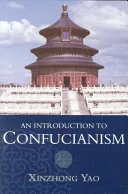
An Introduction to Confucianism
 82
82

An Introduction to Confucianism
Xinzhong Yao’s *An Introduction to Confucianism* navigates the vast landscape of a tradition that has shaped East Asian civilization for millennia. The author commendably anchors the discussion in both classical doctrines and contemporary adaptations, moving beyond a purely historical account. A notable strength is the attention paid to ritual and sacred geography, which often get overlooked in purely philosophical treatments. However, the book occasionally struggles to fully convey the *lived* experience of Confucian practice, sometimes leaning towards academic exposition. The section detailing the concept of *Ren* (仁), while accurate, could benefit from more illustrative examples of its application in daily life, as presented in texts like the *Analects*. For those seeking a solid academic grounding in Confucian thought, this work provides a valuable, if sometimes dry, resource. It serves as a dependable primer on a complex and influential worldview.
📝 Description
82
### What It Is An Introduction to Confucianism offers a comprehensive overview of a philosophical and religious tradition originating in China with Confucius (551 BC–479 BC). The work examines Confucianism as a distinct system of thought and practice, detailing its core doctrines, the evolution of its various schools, and its ritualistic components.
### Who It's For This book is suited for scholars of Eastern philosophy, comparative religion students, and individuals seeking to understand the foundational principles of Confucian thought. It caters to those interested in how Confucianism has been interpreted and adapted across both Eastern and Western contexts, particularly in modern times.
### Historical Context The text situates Confucianism within its extensive historical trajectory, tracing its development from ancient China. It acknowledges the tradition's deep roots while also investigating its contemporary manifestations and transformations. The book addresses the scholarly and popular engagement with Confucianism across different geographical and temporal landscapes.
### Key Concepts Central to the discussion are Confucianism's ethical frameworks, social order principles, and metaphysical underpinnings. The work explores key terminology and sacred sites associated with the tradition, providing context for its enduring influence and ongoing evolution in the 21st century.
💡 Why Read This Book?
• Gain a foundational understanding of Confucianism's doctrines and schools, directly engaging with the historical development initiated by Confucius himself (551 BC–479 BC), offering a clear framework for further study. • Explore the practical dimensions of Confucianism, including its rituals and sacred places, moving beyond abstract philosophy to grasp its tangible expressions and cultural impact. • Understand the modern adaptations and transformations of Confucianism, providing context for its relevance and evolution in contemporary Eastern and Western societies.
⭐ Reader Reviews
Honest opinions from readers who have explored this book.
❓ Frequently Asked Questions
What is the historical origin of Confucianism?
Confucianism originated in China, founded by Confucius (551 BC–479 BC). It developed over centuries, becoming a foundational philosophical and religious tradition that significantly influenced East Asian culture and governance.
Does the book cover Confucianism outside of China?
Yes, *An Introduction to Confucianism* pays attention to the tradition's presence and adaptations in both the West and the East, highlighting its global reach and varied interpretations.
What key elements of Confucianism are discussed?
The book focuses on core doctrines, different schools of thought within Confucianism, its ritual practices, sacred geography, and essential terminology, alongside modern transformations.
Who is the author, Xinzhong Yao?
Xinzhong Yao is a scholar specializing in Confucian studies. His work aims to provide a comprehensive introduction to this influential Chinese philosophical and religious tradition.
When was An Introduction to Confucianism first published?
The first edition of *An Introduction to Confucianism* by Xinzhong Yao was published on February 13, 2000.
Is this book suitable for beginners?
Yes, the title 'An Introduction' suggests it is designed for those new to the subject, offering a foundational overview of Confucianism's history, doctrines, and practices.
🔮 Key Themes & Symbolism
Core Doctrines
The work systematically unpacks the fundamental tenets of Confucianism, moving beyond superficial understandings to explore concepts like *Ren* (benevolence), *Li* (propriety), and *Xiao* (filial piety). It traces how these ethical principles form the bedrock of social harmony and personal cultivation within the tradition, examining their philosophical underpinnings and practical implications for governance and family life across dynasties.
Schools and Evolution
This section details the diverse intellectual currents and schools that emerged from Confucius's teachings, such as Neo-Confucianism. It highlights how the tradition was not static but underwent significant transformations and reinterpretations over centuries, adapting to new philosophical challenges and societal changes, particularly in response to Buddhism and Daoism.
Rituals and Sacred Places
Beyond abstract philosophy, the book emphasizes the performative and spatial dimensions of Confucianism. It discusses the importance of ritual (*Li*) in maintaining social order and expressing respect, detailing ceremonies and practices. Furthermore, it touches upon sacred sites associated with Confucius and his lineage, grounding the tradition in specific geographical and devotional contexts.
Modern Adaptations
The text addresses the contemporary relevance of Confucianism, exploring how its principles are being re-examined and adapted in modern East Asia and globally. It considers new thinking and transformations, demonstrating that Confucianism is a living tradition that continues to evolve and engage with 21st-century challenges in philosophy, ethics, and social organization.
💬 Memorable Quotes
“Confucianism is primarily a philosophical and religious tradition.”
— This statement establishes the book's core thesis, positioning Confucianism not merely as a historical philosophy but as a living system with spiritual and devotional aspects that continue to shape beliefs and practices.
“The tradition's doctrines, schools, rituals, sacred places and terminology.”
— This phrase encapsulates the comprehensive scope of the introduction, promising an exploration of Confucianism's multifaceted nature, from its foundational ideas to its physical manifestations and specific language.
“Paying attention to Confucianism in both the West and the East.”
— This highlights the book's comparative approach, indicating an interest in how Confucian ideas have traveled, been received, and transformed across different cultural and intellectual landscapes globally.
“Stressing the adaptations, transformations and new thinking taking place in modern times.”
— This emphasizes the book's commitment to presenting Confucianism as a dynamic and evolving tradition, rather than a static historical relic, acknowledging its ongoing relevance and development.
“Initiated in China by Confucius (551 BC–479 BC).”
— This provides a crucial historical anchor, firmly placing the origins of Confucianism within a specific time and place, and crediting its founder, Confucius, thereby establishing the historical context for the entire tradition.
🌙 Esoteric Significance
Tradition
While Confucianism is primarily classified as a humanistic ethical system, its emphasis on cosmic harmony, ancestor veneration, and the cultivation of virtue for societal benefit aligns with certain esoteric traditions focused on inner transformation and alignment with universal principles. It shares common ground with Hermeticism's focus on 'as above, so below' in its view of the interconnectedness of individual conduct and cosmic order.
Symbolism
Key symbols in Confucianism, such as the *Li* (礼) representing rites and propriety, function esoterically as pathways to order and harmony, both within the self and the community. The concept of *Tian* (天), often translated as Heaven, represents a supreme, impersonal cosmic force, akin to the 'All' in some esoteric cosmologies, guiding ethical conduct and destiny. Ancestor veneration, a core practice, signifies a connection to the spiritual lineage and the unseen forces influencing the living.
Modern Relevance
Contemporary thinkers and spiritual practitioners, particularly within the burgeoning fields of comparative spirituality and ethical philosophy, draw upon Confucianism. Its emphasis on ethical governance, social responsibility, and the cultivation of character offers a counterpoint to more individualistic modern ideologies. Schools focusing on virtue ethics and integral spirituality often reference Confucian principles as a practical guide for living a meaningful and ordered life.
👥 Who Should Read This Book
• Students of comparative religion and philosophy seeking to understand foundational East Asian traditions beyond Buddhism and Daoism. • Scholars and practitioners interested in ethical frameworks and social harmony, looking for historical and philosophical models of societal organization. • Individuals exploring the intersection of philosophy, ritual, and daily life, wanting to grasp how belief systems manifest in tangible practices and cultural norms.
📜 Historical Context
Published in 2000, *An Introduction to Confucianism* emerged during a period of renewed academic and popular interest in Eastern philosophies, particularly in the West. The late 20th century saw significant scholarly work re-evaluating Confucianism beyond Western sinocentric perspectives, moving past earlier critiques that often dismissed it as feudalistic or incompatible with modernity. The book’s focus on both classical doctrines and contemporary adaptations reflects this evolving scholarly landscape. It engaged with a tradition deeply intertwined with Chinese history, often contrasted with the intellectual currents of Legalism and Daoism in ancient China. Its reception likely benefited from increased globalization and cross-cultural dialogue, providing a much-needed accessible overview for students and general readers.
📔 Journal Prompts
Confucian concepts of *Ren* and *Li* in daily interactions.
The historical evolution of Confucian schools.
Modern interpretations of filial piety (*Xiao*).
Sacred places associated with Confucius.
The balance between philosophical doctrine and ritual practice.
🗂️ Glossary
Confucius
The founder of Confucianism (551 BC–479 BC), whose teachings emphasized ethics, social harmony, and good governance, forming the core of this influential Chinese tradition.
Ren (仁)
Often translated as benevolence, humaneness, or goodness. It is a core virtue in Confucianism, representing the ideal relationship between people and the cultivation of empathy.
Li (礼)
Encompasses rites, rituals, propriety, and social etiquette. It is crucial for maintaining social order and expressing respect, guiding human interactions according to established norms.
Xiao (孝)
Filial piety, referring to the respect, obedience, and care owed by children to their parents and elders. It is a fundamental virtue for family and societal stability.
Analects
A collection of sayings and ideas attributed to Confucius and his contemporaries, traditionally believed to have been compiled by Confucius's followers. It is a primary source for Confucian philosophy.
Neo-Confucianism
A philosophical movement that emerged in China during the Tang dynasty and became prominent in the Song dynasty, synthesizing Confucianism with elements of Daoism and Buddhism.
Tian (天)
Literally 'Heaven,' often understood as a supreme, impersonal cosmic force or principle that governs the universe and influences human destiny and morality.