Hinduism
 75
75

Hinduism
H. L. Richard's "Hinduism" attempts a difficult task: to distill a tradition spanning millennia and encompassing hundreds of millions into a brief, accessible volume. Its primary strength lies in its glossary and straightforward explanations of core concepts like Dharma and Karma, which are indeed helpful for newcomers. Richard successfully presents a panoramic view without getting bogged down in excessive detail. However, the book’s brevity sometimes leads to an oversimplification. For instance, the discussion on the various schools of Vedanta, while present, feels somewhat cursory, lacking the depth needed to fully appreciate their distinct philosophical contributions. The section on scriptures also provides a rapid tour, leaving the reader with an overview rather than a substantive understanding of texts like the Upanishads. Ultimately, "Hinduism" serves as a functional primer, useful for initial orientation but insufficient for those seeking a nuanced appreciation of its spiritual depths.
📝 Description
75
H.L. Richard's "Hinduism" arrived in 2007, aiming to simplify a vast religious tradition.
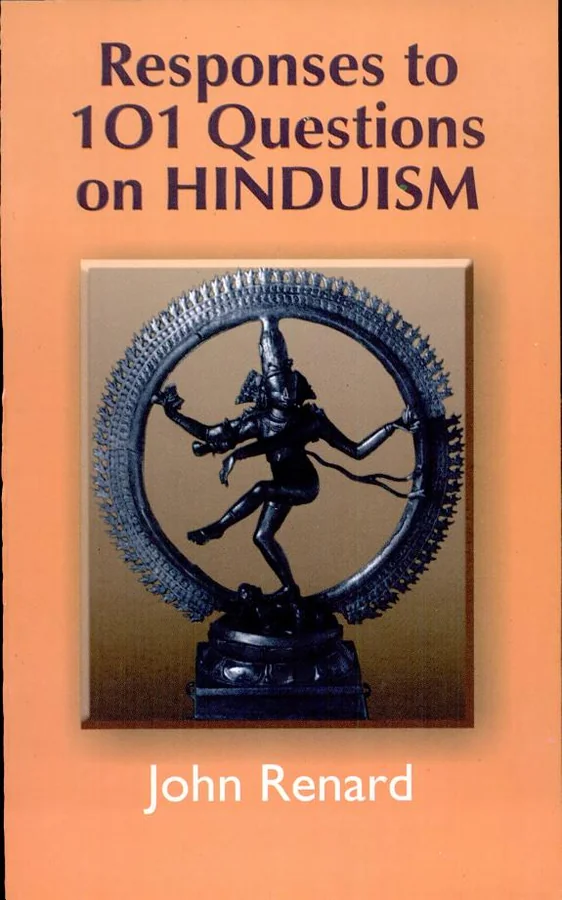
H.L. Richard's "Hinduism," published in June 2007, distills one of the world's oldest religions for a general audience. The book serves as an introductory primer, covering core scriptures, major philosophical schools, and important terminology. Its deliberate brevity makes it an accessible starting point for understanding the complex beliefs and practices of Hinduism. This work is for individuals seeking a basic grasp of Hindu tenets and their cultural importance, without requiring extensive academic study. Readers interested in comparative religion, world philosophies, or global cultures will find its concise overview valuable as a quick, informative reference for the beliefs of roughly 900 million people. The book addresses a growing global interest in Eastern traditions evident in the early 21st century, offering a focused perspective amid more extensive scholarly and popular works.
Published in 2007, Richard's "Hinduism" entered a period marked by increased global interest in Eastern religions. It contributes to a trend of making spiritual texts more accessible, offering a condensed view of a tradition often perceived as complex. The book provides a focused introduction to concepts like Dharma, Karma, and the nature of divinity within Hinduism, situating it within the broader study of world religions.
💡 Why Read This Book?
• Gain a foundational grasp of Hindu scriptures like the Vedas and Upanishads, understanding their role in shaping the tradition since their early composition. • Comprehend the interconnected concepts of Dharma and Karma, learning how these principles influence the ethical and spiritual frameworks of daily life for Hindus. • Utilize the comprehensive glossary to demystify specific Hindu terminology, enabling clearer comprehension of philosophical ideas and practices presented in the book.
⭐ Reader Reviews
Honest opinions from readers who have explored this book.
❓ Frequently Asked Questions
When was H. L. Richard's book on Hinduism first published?
H. L. Richard's "Hinduism" was first published on June 1, 2007. This edition serves as an introduction to the complex beliefs and practices of the Hindu tradition.
What core philosophical concepts does the book cover?
The book covers fundamental philosophical concepts such as Dharma, the principle of cosmic order and duty, and Karma, the law of cause and effect governing reincarnation and spiritual progression.
How does the book explain the Hindu scriptures?
Richard's work provides a concise tour of major Hindu scriptures, including the Vedas and Upanishads, outlining their significance within the tradition without delving into exhaustive textual analysis.
Who is the intended audience for this book?
The book is intended for visitors and newcomers to Hinduism, offering a brief yet insightful overview for those seeking to understand the beliefs of the world's 900 million Hindus.
What is the main benefit of the glossary in this book?
The comprehensive glossary helps readers understand specific Hindu terminology, making the exploration of esoteric and practical issues within Hinduism more accessible and clear.
Does the book discuss Hindu deities?
Yes, the book addresses the Hindu pantheon, explaining that various deities are often viewed as manifestations of a single, supreme divine essence known as Brahman.
🔮 Key Themes & Symbolism
Dharma and Karma
Richard's "Hinduism" elucidates the foundational concepts of Dharma and Karma. Dharma is presented not merely as religious duty but as the inherent order of the universe and individual righteousness. Karma, intricately linked, explains the law of cause and effect, where actions in this life influence future existences. Understanding these principles is presented as crucial for grasping the ethical and spiritual framework that guides the lives of millions within the tradition, influencing their actions and aspirations across lifetimes.
The Nature of Brahman
A central theme explored is the concept of Brahman, the ultimate reality or supreme cosmic spirit. The book guides readers to understand that the diverse array of Hindu deities—such as Vishnu, Shiva, and Devi—are often interpreted as manifold manifestations or aspects of this singular, all-pervading divine essence. This perspective helps to reconcile the apparent polytheism of popular worship with the underlying monistic or pantheistic philosophical currents within Hinduism, offering a glimpse into its complex theological landscape.
Scriptural Foundations
Richard's work provides an overview of the significant scriptural texts that form the bedrock of Hindu thought and practice. It touches upon the ancient Vedas, considered the oldest sacred texts, and the philosophical Upanishads, which examine profound metaphysical questions about existence and consciousness. By referencing these primary sources, the book offers readers a glimpse into the historical and intellectual lineage of Hinduism, illustrating how these foundational writings continue to shape contemporary beliefs and rituals.
Cyclical Cosmology
The book introduces the Hindu understanding of time as cyclical rather than linear. This cosmological view posits vast epochs of creation, preservation, and dissolution, repeating in an endless cycle. This concept underpins the doctrines of reincarnation (samsara) and liberation (moksha). Richard's explanation helps readers appreciate the long-term perspective inherent in Hindu philosophy, where individual lives and even cosmic eras are part of a grand, repeating cosmic drama.
💬 Memorable Quotes
Direct passages from the work, attributed to the author.
“The work addresses both esoteric and practical issues.”
— This statement highlights the book's dual focus, aiming to explain not only the deeper philosophical and mystical dimensions of Hinduism but also its tangible expressions in daily life and ritual practice.
“Richard takes us on a quick tour of the Hindu scriptures.”
— This suggests the book offers a brief, guided exploration of key religious texts, providing an accessible introduction to their importance without demanding extensive prior knowledge from the reader.
“The book includes a comprehensive glossary of Hindu terminology.”
— This indicates that a valuable resource for understanding specialized concepts and terms associated with Hinduism is provided, aiding readers in reading through the subject matter.
“Visitors to the world of Hinduism seldom probe its complex system.”
— This observation sets the stage for the book's purpose: to encourage a deeper, more informed engagement with Hinduism beyond superficial encounters with its diverse beliefs and practices.
“If you want to better understand the 900 million Hindus of the world...”
— This phrase directly addresses the reader, framing the book as an essential tool for gaining insight into the lives and spiritual perspectives of a significant portion of the global population.
🌙 Esoteric Significance
Tradition
While not strictly adhering to a single Western esoteric lineage like Theosophy or Hermeticism, Richard's "Hinduism" engages with concepts that deeply inform many esoteric traditions. It touches upon ideas of cosmic cycles, the interconnectedness of all existence (Brahman), and the law of karma, which find echoes in various mystical and occult philosophies. The book serves as a bridge, offering explanations of these concepts as understood within their original Indic context, making them accessible to those exploring broader metaphysical frameworks.
Symbolism
Key symbols discussed include the Om (Aum), representing the primordial sound and the totality of consciousness, and the Lotus flower, symbolizing purity, spiritual awakening, and creation emerging from primordial waters. The book likely touches upon the multi-headed representations of deities, signifying their manifold powers and aspects, and the concept of the third eye, associated with spiritual perception and inner vision, all of which carry significant esoteric weight.
Modern Relevance
Contemporary spiritual seekers and practitioners of yoga and meditation often draw directly or indirectly from the concepts Richard outlines. Thinkers in the New Age movement and proponents of consciousness studies frequently reference Hindu philosophical ideas concerning Brahman, karma, and reincarnation. Modern mindfulness practices also echo the meditative techniques and philosophical underpinnings found within Hindu traditions, demonstrating the enduring influence of these ancient ideas on contemporary spiritual exploration.
👥 Who Should Read This Book
• Beginning students of comparative religion seeking a clear overview of a major world faith. • Individuals curious about the philosophical underpinnings of yoga and meditation practices. • Travelers or expatriates planning to visit or live in regions with a significant Hindu population.
📜 Historical Context
Published in June 2007, H. L. Richard's "Hinduism" entered a literary landscape already populated with numerous introductions to the subject. The early 21st century witnessed a sustained global interest in Eastern religions, partly fueled by increased globalization and the accessibility of information. Academic circles were engaged in robust debates on the nature of religious syncretism and the historical development of Hindu philosophy, with scholars like Wendy Doniger publishing influential works. While Richard's book is not an academic treatise, its appearance reflects a broader cultural trend of seeking accessible knowledge about diverse spiritual traditions. It positioned itself as a concise guide, distinct from more exhaustive scholarly tomes or purely devotional texts, aiming to serve a general audience curious about the beliefs of approximately 900 million people worldwide.
📔 Journal Prompts
Reflection on the concept of Dharma.
Mapping personal understanding of Karma.
Exploring the significance of Om.
Contrasting linear vs. cyclical time perception.
Identifying the role of scriptures in personal belief.
🗂️ Glossary
Brahman
The ultimate reality, the supreme cosmic spirit, and the source of all existence in Hinduism. Often considered the underlying unity behind the universe's diversity.
Dharma
A complex concept encompassing duty, righteousness, cosmic law, and the inherent nature of things. It guides ethical conduct and one's place in the universe.
Karma
The principle of cause and effect governing all actions and their consequences, influencing an individual's present life and future rebirths within the cycle of Samsara.
Samsara
The continuous cycle of birth, death, and rebirth (reincarnation) driven by karma, from which spiritual liberation is sought.
Moksha
Liberation or release from the cycle of Samsara. It represents the ultimate spiritual goal in Hinduism, achieving union with Brahman or eternal peace.
Vedas
The oldest and most foundational scriptures of Hinduism, considered divine revelations, containing hymns, rituals, and philosophical insights.
Upanishads
Philosophical texts within the Vedas that explore profound concepts of reality, consciousness, and the nature of the self, forming the basis of Vedanta philosophy.