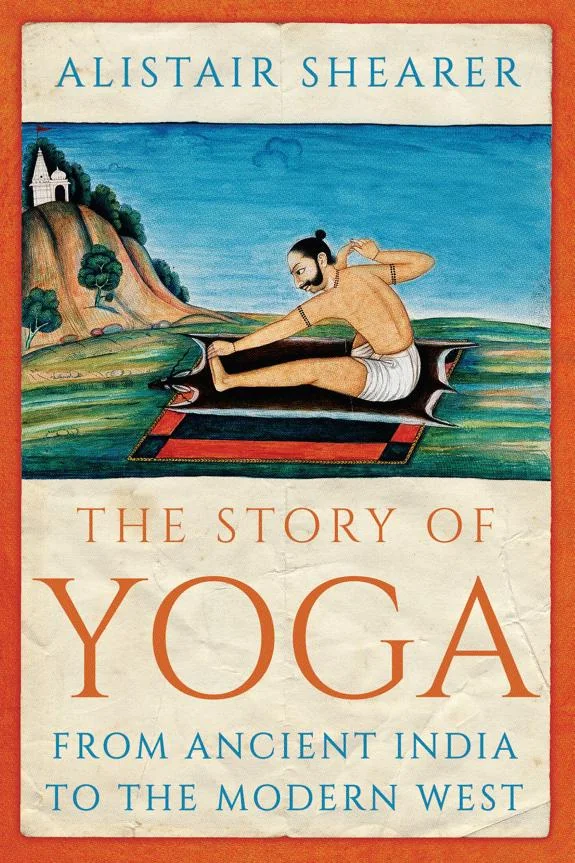
The Story of Yoga
 76
76

The Story of Yoga
Shearer’s "The Story of Yoga" offers a much-needed corrective to the often-ahistorical narratives surrounding the practice. It meticulously charts yoga's migration from the Indian subcontinent, detailing its encounters with disparate Western cultural currents. The author’s strength lies in his ability to connect seemingly distant phenomena, such as the influence of muscular Christianity on early Western yoga instructors and the integration of yoga into medical rehabilitation. However, the sheer scope can occasionally feel overwhelming, with the narrative sometimes rushing through crucial centuries. A particularly striking passage details the impact of the 1960s counterculture on popularizing yoga, a vital bridge between its esoteric past and its current mainstream presence. The book provides essential context for anyone seeking to understand yoga beyond the yoga mat. It’s a critical survey that demands careful reading.
📝 Description
76
Alistair Shearer's 2020 book chronicles yoga's shift from ancient spiritual practice to global wellness industry.
Published in 2020, Alistair Shearer's "The Story of Yoga" traces the transformation of an ancient Indian spiritual discipline into a worldwide wellness phenomenon. The book examines yoga's progression from its beginnings in ascetic traditions and sacred texts to its current widespread presence in Western societies. Shearer places yoga's development within larger global cultural shifts, detailing its interactions with different religious movements and philosophical thought.
The narrative highlights the contrast between yoga's deep philosophical roots and its commercialization. It discusses concepts such as Hatha Yoga's physical postures (asanas), meditation, and the philosophical goal of liberation (moksha). These are set against contemporary interpretations that often focus on physical fitness and stress relief. The book considers yoga's early encounters with Westerners, including Swami Vivekananda's 1893 arrival in America, and its later incorporation into physical culture and therapeutic methods.
This book examines yoga's historical trajectory, a path that has seen its subtle philosophical and spiritual dimensions frequently overshadowed by more accessible physical and therapeutic applications. It acknowledges yoga's origins within Indic traditions that sought liberation (moksha) through practices like asana, pranayama, and meditation. By detailing its encounter with Western cultures, the book implicitly addresses how these deeper esoteric goals have been reinterpreted, and sometimes lost, in the context of modern consumerism and wellness trends.
💡 Why Read This Book?
• Understand yoga's pivot from spiritual discipline to global wellness phenomenon, learning about the specific historical shifts that occurred, such as its popularization in the West following figures like Swami Vivekananda in the late 19th century. • Gain insight into the philosophical underpinnings of yoga, contrasting classical concepts like *moksha* with modern applications and the influence of movements like Hatha Yoga. • Appreciate yoga's complex cultural journey, recognizing how it adapted and was reinterpreted across different continents and eras, including its integration into physical culture in the early 20th century.
⭐ Reader Reviews
Honest opinions from readers who have explored this book.
❓ Frequently Asked Questions
When was "The Story of Yoga" by Alistair Shearer first published?
Alistair Shearer's "The Story of Yoga" was first published on February 15, 2020, marking a recent exploration into the historical trajectory of this ancient practice.
What is the main focus of Alistair Shearer's book on yoga?
The book focuses on how an ancient Indian spiritual discipline evolved into a global wellness industry, tracing its path from sages' caves to modern gyms and hospitals.
Does "The Story of Yoga" discuss the commercialization of yoga?
Yes, a central theme is the transformation of yoga from its spiritual and ascetic roots into a multi-billion dollar global wellness industry, examining this shift critically.
Which historical figures or movements are discussed in "The Story of Yoga"?
The book touches upon figures like Swami Vivekananda and movements such as muscular Christianity, exploring their impact on yoga's reception and evolution in the West.
Is "The Story of Yoga" suitable for beginners interested in yoga history?
Absolutely. It provides a comprehensive historical and cultural context, making it ideal for beginners seeking to understand yoga's origins and its diverse modern interpretations.
What distinguishes "The Story of Yoga" from other books on yoga history?
It sets yoga within its global cultural context for the first time, analyzing its journey from arcane rituals and medieval body-magic to its current mainstream status.
🔮 Key Themes & Symbolism
Spiritual Roots vs. Modern Wellness
The work critically examines the divergence of yoga from its origins as a profound spiritual discipline aimed at liberation (*moksha*) to its current manifestation as a multi-billion dollar global wellness industry. It contrasts the ascetic practices and philosophical depth found in texts like the Yoga Sutras of Patanjali with the focus on physical fitness, stress reduction, and commercial appeal prevalent in contemporary yoga studios and health centers.
Cultural Transplantation and Adaptation
Shearer details yoga's complex journey across continents, particularly its reception and reinterpretation in the West. The book highlights how Western cultural currents, including physical culture movements and even religious adaptations like muscular Christianity, influenced the forms yoga took, moving away from its original Indian context and esoteric traditions.
The Evolution of Asana and Practice
A significant theme is the transformation of yoga's physical postures, or *asanas*. The narrative traces how these practices, originally secondary to meditation and philosophical inquiry in many traditions, became central to Western yoga, often emphasizing athletic prowess and aesthetic form over their traditional spiritual purpose.
Yoga's Esoteric and Arcane Past
The book studies the lesser-known aspects of yoga's history, including its connections to medieval body-magic, tantric practices, and esoteric rituals. It seeks to provide a more comprehensive understanding by acknowledging these often-overlooked dimensions, setting them against the backdrop of its eventual mainstreaming.
💬 Memorable Quotes
Direct passages from the work, attributed to the author.
“How did an ancient Indian spiritual discipline turn into a $20+ billion-a-year mainstay of the global wellness industry?”
— This framing question sets the stage for the book's central inquiry: the dramatic economic and cultural shift yoga has undergone, moving from sacred practice to global commodity.
“What happened along yoga's winding path from the caves and forests of the sages to the gyms, hospitals and village halls of the modern West?”
— This highlights the vast geographical and institutional displacement of yoga, emphasizing the contrast between its traditional settings and its current, diverse, and often secularized locations.
“This comprehensive history sets yoga in its global cultural context for the first time.”
— This assertion underscores the book's unique contribution: a holistic approach that integrates yoga's evolution with broader international social, religious, and cultural trends, moving beyond purely Indian or Western perspectives.
“It leads us on a fascinating journey across the world, from arcane religious rituals and medieval body-magic, through muscular Christianity and the Br”
— This snippet points to the book's broad scope, promising exploration of yoga's deeper, sometimes obscure, historical roots and its unexpected encounters with various religious and cultural movements worldwide.
“The history of yoga is inseparable from the history of religion, philosophy, and medicine.”
— Interpretation: Shearer posits that yoga's development cannot be understood in isolation, but rather as deeply intertwined with parallel evolutions in major fields of human thought and practice across cultures.
🌙 Esoteric Significance
Tradition
This work aligns with the Hermetic tradition's interest in tracing the transmission and transformation of ancient wisdom across cultures. While not strictly a Hermetic text, it examines how a practice originating in Indian philosophical and ascetic traditions underwent significant metamorphosis, absorbing and influencing various esoteric and exoteric streams globally. It fits within the broader Hermetic goal of understanding universal principles through diverse historical manifestations.
Symbolism
The book implicitly engages with symbols of transformation and journey. The recurring motif of the serpent (often associated with Kundalini energy in Tantric traditions) can be seen as a symbol of coiled, dormant power awakening and ascending. The contrast between the 'cave and forest' of sages and the 'gym and hospital' symbolizes the shift from inner spiritual cultivation to external, material application and commodification.
Modern Relevance
Contemporary thinkers and practitioners interested in decolonizing yoga or reclaiming its spiritual depth draw heavily on historical accounts like Shearer's. It informs discussions within modern spiritual movements seeking authentic lineage and critiques the superficiality often found in mainstream yoga studios. Scholars of comparative religion and cultural studies also utilize its findings to understand religious syncretism and globalization.
👥 Who Should Read This Book
['• Students of religious studies and comparative mythology seeking to understand the cross-cultural transmission of spiritual practices and their evolution.', '• Yoga practitioners curious about the historical journey of their discipline beyond modern interpretations and its roots in Indian philosophy.', '• Cultural historians and sociologists interested in the globalization of practices and the dynamics of cultural appropriation and adaptation.']
📜 Historical Context
Published in 2020, "The Story of Yoga" arrived at a moment of intense global engagement with yoga, often divorced from its historical roots. The book situates itself against a backdrop where yoga was primarily understood through the lens of Western fitness and wellness culture, a stark contrast to its esoteric origins. Shearer engages with the legacy of figures like Swami Vivekananda, whose 1893 Chicago address introduced Vedantic philosophy, including aspects of yoga, to America. The work also implicitly addresses the popularization efforts of figures like Paramahansa Yogananda in the mid-20th century. Crucially, the book examines yoga's encounter with Western religious thought, particularly the concept of 'muscular Christianity,' which shaped early perceptions of physical discipline and spiritual practice, offering a counterpoint to purely spiritual or ascetic interpretations. While not facing direct censorship, the book implicitly challenges the sanitized, often secularized, narratives prevalent in contemporary yoga instruction.
📔 Journal Prompts
The transformation of yoga's spiritual aims into a global wellness industry.
The influence of Western cultural currents on the adaptation of yogic practices.
Contrasting the esoteric dimensions of yoga with its modern, physical applications.
Yoga's journey from sacred texts and ascetic practices to contemporary commercial settings.
The concept of *moksha* versus modern interpretations of yoga's benefits.
🗂️ Glossary
Asana
Originally meaning 'seat' or posture for meditation, *asana* in modern yoga typically refers to the physical postures practiced for health, flexibility, and spiritual development.
Hatha Yoga
A branch of yoga that emphasizes physical postures (*asanas*) and breathing techniques (*pranayama*) to prepare the body and mind for higher states of meditation and spiritual realization.
Moksha
A Sanskrit term signifying liberation, release, or emancipation, particularly from the cycle of birth and death (samsara) in Indian religions; the ultimate goal in many yogic traditions.
Muscular Christianity
A 19th-century movement emphasizing physical strength, manliness, and wholesome sport as essential components of Christian character and spiritual well-being.
Tantric Practices
A diverse set of esoteric traditions originating in India, often involving rituals, meditation, and the use of mantras and visualizations to achieve spiritual transformation, sometimes employing practices considered unconventional.
Vedantic Philosophy
A school of Hindu philosophy concerned with the nature of ultimate reality (Brahman) and the self (Atman), emphasizing knowledge and wisdom as paths to liberation.
Swami Vivekananda
A key disciple of Ramakrishna, he introduced Vedanta and yoga philosophy to the West at the 1893 Parliament of Religions in Chicago, significantly influencing Eastern-Western spiritual dialogue.