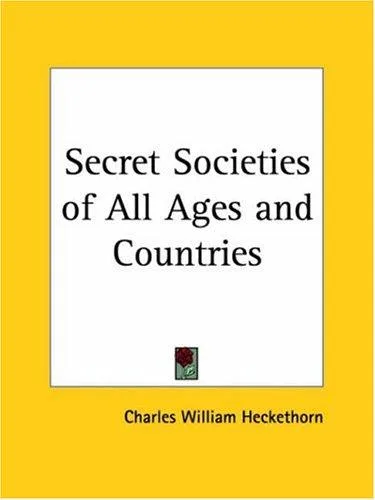
The Secret Societies of All Ages and Countries
 75
75

The Secret Societies of All Ages and Countries
Heckethorn's compilation is a sprawling, if sometimes credulous, attempt to chart the landscape of secret societies. Its strength lies in its sheer breadth, cataloging groups from the Eleusinian Mysteries to the Carbonari. The author's reliance on secondary sources and a certain uncritical acceptance of legendary claims represent its primary limitation. For instance, the treatment of the Knights Templar often leans into popular myth rather than strict historical analysis. However, the detailed accounts of Masonic rites and their symbolism provide a valuable snapshot of late 19th-century esoteric thought. The work offers a comprehensive overview for those seeking to understand the historical fascination with hidden orders. It remains a significant, if flawed, historical document for the study of Western Esotericism.
📝 Description
75
Charles William Heckethorn published "The Secret Societies of All Ages and Countries" in 1897.
This 1897 volume by Charles William Heckethorn offers a historical survey of clandestine groups, detailing their origins, rituals, and stated aims. It compiles information on a wide array of organizations, from ancient mystery cults to more recent fraternal orders.
Heckethorn's work emerged during a period of intense fascination with spiritualism, Freemasonry, and the occult in Victorian England. It draws on earlier antiquarian and esoteric writings, reflecting the prevailing interest in hidden histories. The text examines initiation rites, the symbolic language used by secret societies, and the transmission of esoteric knowledge across generations. It investigates alleged lineages and philosophical underpinnings of groups such as the Knights Templar, the Rosicrucians, and various Masonic rites, presenting them as part of a continuous tradition of hidden wisdom.
Heckethorn's book was written during a resurgence of interest in spiritualism and occultism in the late 19th century. This era saw figures like Helena Blavatsky and the rise of Theosophy, alongside renewed attention to Rosicrucian and Templar legends. The author compiled existing esoteric and antiquarian writings, placing his research within this context of revived fascination with hidden histories and secret traditions.
💡 Why Read This Book?
• Gain an understanding of the historical scope of clandestine organizations, as detailed in Heckethorn's survey of groups from ancient Egypt to the 19th century, offering a comparative perspective unavailable in single-focus studies. • Explore the concept of symbolic language and initiation rituals, as presented in the book's chapters on Freemasonry and Rosicrucianism, providing concrete examples of esoteric communication methods. • Discover the alleged historical lineages of groups like the Knights Templar, allowing for critical engagement with the narratives that have shaped esoteric traditions for centuries.
⭐ Reader Reviews
Honest opinions from readers who have explored this book.
❓ Frequently Asked Questions
When was Charles William Heckethorn's 'The Secret Societies of All Ages and Countries' first published?
The original publication date for Charles William Heckethorn's "The Secret Societies of All Ages and Countries" was in 1875. This reproduction makes the classic text available again.
What kind of organizations does Heckethorn cover in his book?
Heckethorn covers a wide range of organizations, including ancient mystery cults, medieval chivalric orders like the Knights Templar, Freemasonry, Rosicrucianism, and various other fraternal and revolutionary societies.
Is 'The Secret Societies of All Ages and Countries' based on primary research?
While Heckethorn presents his findings as historical accounts, the work is largely a compilation of existing literature and legends from his time. It reflects the esoteric and antiquarian interests of the late 19th century.
What is the general tone of Heckethorn's writing?
Heckethorn's tone is generally descriptive and encyclopedic, aiming to document the history and practices of various secret societies. He often adopts a stance that accepts the narratives he presents without extensive critical debunking.
Can this book be considered an academic historical text?
While valuable for understanding the history of esoteric thought and popular interest in secret societies during the 19th century, it is not a strictly academic historical text due to its reliance on legend and lack of rigorous source criticism.
Where can I find information on specific Masonic rites mentioned in the book?
Heckethorn dedicates significant portions of his work to detailing various Masonic rites, such as the Scottish Rite and the York Rite, providing historical context and descriptions of their rituals and degrees.
🔮 Key Themes & Symbolism
Lineages of Esoteric Knowledge
Heckethorn traces the purported continuous transmission of esoteric wisdom through various secret societies, suggesting an unbroken chain from antiquity to his present day. He examines how groups like the Rosicrucians and Freemasons claimed descent from older traditions, seeking to preserve hidden philosophical and spiritual teachings. This theme highlights the importance of lineage and historical continuity within esoteric movements, a concept central to understanding their self-perception and the preservation of their doctrines across centuries.
Symbolism and Ritual
The book extensively details the symbolic language and intricate rituals employed by secret societies. Heckethorn illustrates how these elements serve not only as markers of membership but also as vehicles for imparting complex philosophical and spiritual concepts. From the allegorical dramas of Masonic degrees to the enigmatic symbols of ancient cults, the work underscores the crucial role of ritual and symbolism in the practice and perpetuation of esoteric traditions.
The Mystical Quest
At its core, Heckethorn's work is about the human drive to seek hidden truths and achieve spiritual enlightenment through organized, often clandestine, means. He presents secret societies as frameworks designed to facilitate this quest, offering initiatory paths that promise deeper understanding of the universe and the self. This theme connects the diverse societies discussed to a universal aspiration for transcendence and gnosis.
Historical Influence of Clandestine Groups
Heckethorn explores the impact, both overt and covert, that secret societies have had on historical events and societal development. He posits that these organizations, while often operating in the shadows, have played significant roles in shaping political landscapes, philosophical discourse, and cultural movements. The book provides accounts that link groups like the Carbonari to revolutionary activities, underscoring their perceived power and influence.
💬 Memorable Quotes
“The Rosicrucians were said to possess secrets of alchemy and medicine.”
— This highlights the practical and mystical knowledge attributed to the Rosicrucians, portraying them as inheritors of ancient wisdom capable of manipulating physical and spiritual realms.
“Freemasonry's rituals are allegorical dramas designed to impart moral and philosophical lessons.”
— This interpretation emphasizes the didactic purpose of Masonic ceremonies, suggesting they are not mere social gatherings but carefully constructed narratives meant to educate initiates on profound truths.
“The Knights Templar were rumored to have guarded esoteric knowledge from the East.”
— This points to the legend of the Templars as custodians of hidden wisdom, possibly acquired during their crusades, fueling centuries of speculation about their secret doctrines.
“Many secret societies trace their origins back to the ancient mystery schools.”
— This concept underscores the belief in an ancient, unbroken tradition of esoteric knowledge, with modern societies seeing themselves as successors to figures like the initiates of Eleusis or Samothrace.
“The Carbonari aimed to achieve political reform through clandestine organization.”
— This illustrates the intersection of secret societies with political activism, showing how groups organized in secret could influence or challenge established power structures during periods of unrest.
🌙 Esoteric Significance
Tradition
Heckethorn's work sits within the tradition of 19th-century Western Esotericism, particularly antiquarian studies of hidden orders. It aligns with the Hermetic and Kabbalistic interests prevalent at the time, attempting to synthesize diverse traditions under the umbrella of secret knowledge passed down through initiatory lineages. While not strictly a practitioner's manual, it serves as a historical repository for those exploring the genealogy of esoteric thought, connecting ancient mystery cults to later fraternal organizations.
Symbolism
The book frequently touches upon the symbolic language central to esoteric traditions. For example, the square and compasses in Freemasonry are presented not merely as tools but as symbols representing moral rectitude and the divine architect. Similarly, alchemical symbolism, often associated with the Rosicrucians, is discussed as a means of representing spiritual transformation and the pursuit of higher knowledge, linking material processes to inner change.
Modern Relevance
Contemporary researchers and practitioners of Western Esotericism continue to reference Heckethorn for its historical overview. It remains a foundational text for understanding the popular and scholarly perception of secret societies in the late 19th century. Thinkers and groups interested in the historical development of Masonic symbolism, Rosicrucian lore, and the broader narrative of hidden traditions often consult its pages as a primary source for understanding historical esoteric discourse.
👥 Who Should Read This Book
• Researchers of 19th-century occultism and Victorian spiritualism seeking primary source material on popular esoteric beliefs and organizations. • Students of comparative religion and mythology interested in the historical narratives surrounding ancient mystery cults and their alleged connections to later secret societies. • Enthusiasts of fraternal orders and historical clandestine groups looking for a broad, albeit sometimes uncritical, survey of organizations like Freemasonry, the Knights Templar, and the Rosicrucians.
📜 Historical Context
Charles William Heckethorn's "The Secret Societies of All Ages and Countries" was published in 1875, a period rife with occult revivalism and burgeoning interest in spiritualism and comparative mythology. The Victorian era saw figures like Helena Blavatsky founding the Theosophical Society (1875) and a renewed fascination with Freemasonry, Rosicrucianism, and Templar legends. Heckethorn's work engaged with and contributed to this milieu, drawing upon earlier antiquarian texts and esoteric literature. It existed alongside popular works exploring ancient mysteries and critiques of secret societies, reflecting a societal tension between fascination and suspicion. While not directly engaging with contemporaries like Éliphas Lévi in France, Heckethorn's compilation reflects a similar drive to systematize and document esoteric traditions for a growing readership interested in hidden histories.
📔 Journal Prompts
The concept of lineage in secret societies: how does tracing ancestry, real or symbolic, contribute to a group's perceived legitimacy?
Reflection on Masonic allegory: analyze the potential moral or philosophical lessons embedded within the rituals described for the Scottish Rite.
The role of symbolism: consider how symbols like the Ouroboros, mentioned in relation to ancient mysteries, function to convey complex ideas.
The pursuit of hidden knowledge: how did the quest for esoteric truths shape the formation and practices of groups like the Rosicrucians?
Historical reception of secret societies: examine the societal fascination and suspicion surrounding groups like the Carbonari in the 19th century.
🗂️ Glossary
Rosicrucians
A legendary secret order said to have been founded in the early 17th century, associated with alchemy, mysticism, and the pursuit of hidden knowledge, particularly concerning spiritual and physical regeneration.
Knights Templar
A medieval Catholic military order founded in 1119, known for its military prowess during the Crusades and later shrouded in legends of secret knowledge and hidden treasures, influencing many later esoteric groups.
Freemasonry
A fraternal organization with origins in stonemason guilds, emphasizing moral and spiritual teachings through allegorical rituals and symbolism, often divided into various rites and degrees.
Carbonari
A secret revolutionary society active in Italy in the early 19th century, known for its opposition to monarchy and its role in the Italian unification movement (Risorgimento).
Mystery Cults
Ancient religious groupings, such as those of Eleusis or Dionysus, characterized by secret initiation rites and the promise of spiritual enlightenment or a better afterlife, often involving symbolic narratives.
Alchemy
An ancient proto-scientific and philosophical tradition aimed at purifying, maturing, and perfecting certain objects, often interpreted as a symbolic path toward spiritual transformation and enlightenment.
Initiation
A formal ceremony or ritual marking a person's entry into a society, order, or role, often involving symbolic actions, oaths, and the imparting of secret knowledge or responsibilities.