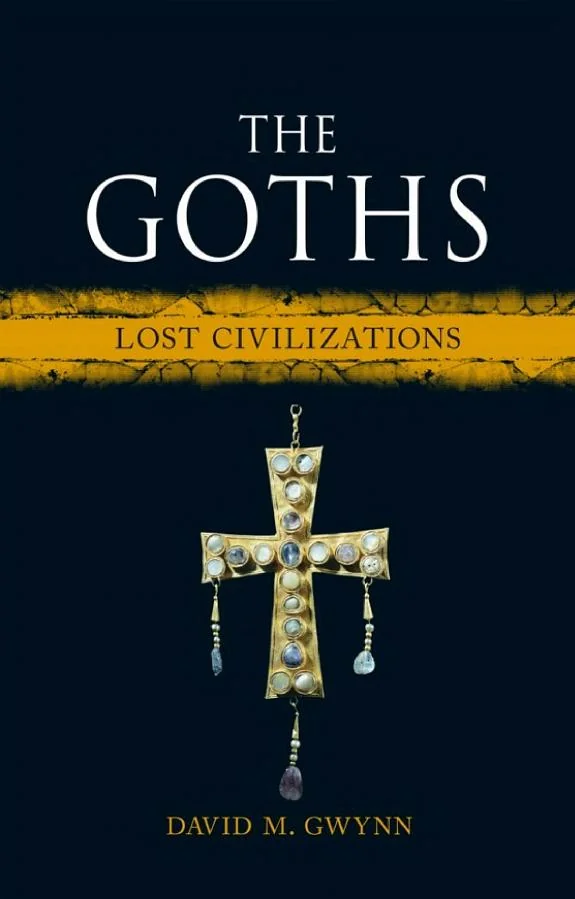
The Goths
 72
72

The Goths
David M. Gwynn's *The Goths* offers a focused account of a people whose historical footprint is undeniable yet whose distinct identity seems to have evaporated. The work excels in detailing the administrative and military complexities of the Ostrogothic and Visigothic kingdoms. Gwynn meticulously charts their interactions with the collapsing Roman Empire, particularly highlighting the Visigothic sack of Rome in 410 CE as a catastrophic symbolic moment. A minor limitation is the book's tendency to remain strictly within established historical discourse, sometimes eschewing deeper speculative or esoteric interpretations that might align with the Esoteric Library's broader scope. However, the clarity with which Gwynn presents the political fragmentation of the post-Roman West, especially in his sections on Theodoric the Great's Italy, provides a solid foundation for understanding this transitional epoch. The book's strength lies in its precise, factual reconstruction of political events and dynastic shifts. Ultimately, *The Goths* serves as an authoritative, if conventional, historical primer on a pivotal Germanic people.
📝 Description
72
### What It Is The Goths by David M. Gwynn examines the historical trajectory of the Gothic peoples, tracing their rise from nomadic tribes to dominant forces in early medieval Europe. The book details their impactful presence, from the sack of Rome in 410 CE to the establishment of Ostrogothic and Visigothic kingdoms in Italy and Spain. It explores their eventual assimilation and disappearance as a distinct political entity after the fall of the last Gothic kingdom over a millennium ago.
### Who It's For This work is for readers interested in the societal and political transformations of late antiquity and the early Middle Ages, particularly those seeking to understand the precise role of the Goths beyond common historical narratives. It appeals to students of classical history, early medieval studies, and those intrigued by the formation and dissolution of ancient kingdoms and civilizations. It also serves those curious about the ethno-cultural dynamics that shaped the transition from the Roman Empire to the medieval world.
### Historical Context Gwynn situates the Goths within a tumultuous period marked by the decline of Roman authority. The late 4th and 5th centuries witnessed massive migrations and the establishment of Germanic kingdoms on former Roman soil. The Visigoths, under Alaric, famously sacked Rome in 410 CE, a pivotal event that shattered the myth of Roman invincibility. Later, the Ostrogoths, under Theodoric the Great, established a kingdom in Italy around 493 CE, attempting to synthesize Roman administrative structures with Gothic rule. The book delves into this complex era of cultural exchange and conflict.
### Key Concepts The text explores the concept of the 'Gothic kingdom' not as a monolithic entity but as a series of evolving political structures. It examines the relationship between Gothic warbands, Roman institutions, and the Christian Church. The narrative addresses the challenges of reconstructing Gothic identity and culture after their political structures dissolved, highlighting how historical memory often fades or merges with dominant narratives. The book interrogates what it means for a people to 'disappear' from the historical record as an independent force.
💡 Why Read This Book?
• Gain specific insights into the Visigothic kingdom's establishment in Spain, understanding its governmental structures and societal integration from 418 CE onwards, a detail often overlooked in broader Roman decline narratives. • Grasp the strategic significance of the Ostrogothic occupation of Italy under Theodoric the Great, learning how Gothic rulers attempted to blend Roman administrative practices with their own legal and military systems. • Understand the historical processes that led to the 'disappearance' of the Goths as a distinct political entity, moving beyond simplistic notions of conquest to explore assimilation and cultural fusion over centuries.
⭐ Reader Reviews
Honest opinions from readers who have explored this book.
❓ Frequently Asked Questions
When did the Goths sack Rome, and what was the significance?
The Visigoths, led by Alaric, sacked Rome in 410 CE. This event was profoundly significant as it shattered the millennia-old perception of Rome's invincibility, marking a critical psychological and symbolic blow during the Western Roman Empire's decline.
What were the two main Gothic kingdoms mentioned in the book?
The book primarily focuses on the Visigothic kingdom, which eventually established itself in Hispania (modern Spain), and the Ostrogothic kingdom, which rose to prominence in Italy under Theodoric the Great.
How did the Goths influence early medieval Europe?
Gothic rulers established powerful kingdoms in former Roman territories, particularly in Italy and Spain. They adopted and adapted Roman administrative, legal, and cultural practices, playing a crucial role in the transition from Roman rule to the fragmented political landscape of the early Middle Ages.
What happened to the Goths after their kingdoms fell?
After the fall of their last independent kingdoms over a thousand years ago, the Goths gradually assimilated into the populations of the regions they had ruled. Traces of their distinct civilization and political identity faded, merging into the broader cultural currents of medieval Europe.
Did the Goths have a unique writing system?
While the Goths adopted and adapted the Latin alphabet for their own language, their original script, the Gothic alphabet, was developed by Bishop Ulfilas in the 4th century CE. This alphabet was used primarily to translate the Bible into Gothic.
What is the primary historical period covered by The Goths?
The book primarily covers the period from the Goths' emergence as a significant force in the late Roman Empire through the establishment and eventual decline of the Ostrogothic and Visigothic kingdoms, spanning roughly from the 4th to the 6th centuries CE.
🔮 Key Themes & Symbolism
The Gothic State
Gwynn details the formation and administration of Gothic kingdoms, particularly the Ostrogothic rule in Italy under Theodoric the Great (c. 493-526 CE). This theme explores how Gothic leaders attempted to synthesize Roman bureaucratic structures with their own Germanic legal traditions and societal organization, often maintaining Roman infrastructure while asserting Gothic authority. The work examines the precarious balance these rulers maintained between integrating into the Roman world and preserving their own distinct identity, ultimately questioning the sustainability of such hybrid political entities.
Roman Decline and Gothic Ascendancy
This theme centers on the Goths' pivotal role in the Western Roman Empire's fragmentation. The book highlights the sack of Rome in 410 CE by the Visigoths under Alaric as a symbolic turning point, demonstrating the diminished imperial power. It analyzes how migrations and military successes by various Gothic groups contributed to the collapse of Roman central authority, leading to the establishment of independent Gothic polities on former imperial lands. The narrative underscores the interconnectedness of Roman decline and Gothic rise, showing one enabled the other.
Cultural Assimilation and Memory
The work addresses the complex process by which Gothic civilization faded as an independent force. Gwynn investigates the eventual assimilation of Gothic peoples into the broader populations of Italy, Spain, and elsewhere. This theme probes the challenges of reconstructing Gothic identity and culture from fragmented historical records, exploring how their distinctiveness dissolved over centuries. It questions what constitutes a 'lost' civilization and how historical memory can obscure or transform the legacy of a people once they cease to exist as a political entity.
The Gothic Bible and Language
While not solely a linguistic study, the book touches upon the cultural impact of Bishop Ulfilas's translation of the Bible into the Gothic language using the Gothic alphabet in the 4th century. This act of script creation and translation represents a significant effort to codify Gothic culture and facilitate Christianization within Gothic society. It stands as a rare tangible artifact of Gothic intellectual and religious life, providing a crucial, albeit limited, window into their worldview and linguistic heritage.
💬 Memorable Quotes
“The Goths disappeared as an independent people after their last kingdom fell.”
— This statement encapsulates the central enigma of the book: the vanishing of a significant historical group. It prompts reflection on the nature of statehood, identity, and how populations can be absorbed into larger historical currents, leaving behind more archaeological and fragmented textual evidence than a continuous narrative.
“Ostrogothic and Visigothic kings ruled over Italy and Spain, dominating early medieval Europe.”
— This highlights the substantial political power wielded by Gothic monarchs, illustrating their critical role in shaping the post-Roman political map. It underscores that early medieval Europe was not solely a continuation of Roman traditions but was actively molded by new Germanic leadership and kingdoms.
“Ancient Gothic tribes sacked the imperial city of Rome and set in motion the decline and fall of the western Roman empire.”
— This points to the Goths' disruptive impact on the established order. The sack of Rome in 410 CE is presented not just as a military event but as a catalyst, accelerating the disintegration of Roman authority and signaling a profound shift in the geopolitical landscape of the ancient world.
“Over the centuries that followed, as traces of Gothic civilization vanished, its people...”
— This unfinished thought from the original blurb emphasizes the elusiveness of Gothic historical presence. It suggests a gradual effacement, where distinct cultural markers receded, leaving historians to piece together a narrative from faint vestiges and the records of successor cultures.
“The Goths are truly a 'lost civilization.'”
— This opening assertion frames the book's core investigation. It suggests that despite their undeniable impact on Roman history, the Goths as a distinct cultural and political entity have been largely forgotten or subsumed, making their study a process of rediscovery.
🌙 Esoteric Significance
Tradition
While *The Goths* is primarily a historical text, its exploration of a 'lost civilization' resonates with esoteric traditions that seek to uncover hidden histories and forgotten peoples. Within lineages like Theosophy or certain branches of occult history, the Goths might be viewed as a people whose energetic imprint or spiritual legacy persists despite their political dissolution. The book provides factual grounding for later speculative interpretations concerning their supposed connections to ancient migratory patterns or forgotten lineages.
Symbolism
The Goths themselves can be seen as symbolic figures representing the dissolution of empire and the emergence of new forms of social and political organization. Their migration from the north symbolizes forces of change originating from the periphery impacting established centers of power. The act of sacking Rome symbolizes the shattering of old paradigms and the inevitable decay of dominant structures, paving the way for emergent spiritual or cultural forms, however ephemeral.
Modern Relevance
Contemporary esoteric thinkers interested in ancestral memory, the cyclical nature of civilizations, or the hidden currents of history might draw upon Gwynn's work. The narrative of a people who rise to prominence and then seemingly vanish offers a compelling case study for exploring themes of collective consciousness, cultural cycles, and the persistence of lineage beyond political boundaries. It provides a historical counterpoint to more abstract esoteric theories about fallen empires or lost golden ages.
👥 Who Should Read This Book
• Students of late antiquity and early medieval history seeking a focused account of the Gothic peoples' political and military impact. • Readers interested in the foundational narratives of European state formation, particularly concerning the interactions between Germanic tribes and the Roman Empire. • Individuals curious about the historical processes of cultural assimilation and the challenges of reconstructing the identity of peoples who cease to exist as distinct political entities.
📜 Historical Context
David M. Gwynn's *The Goths* emerges within a scholarly landscape grappling with the transition from Roman antiquity to the early Middle Ages. Published in 2017, it builds upon centuries of historical inquiry into the so-called 'barbarian invasions.' The era it covers, roughly the 4th to 6th centuries CE, was characterized by immense upheaval, including the aforementioned sack of Rome in 410 CE by the Visigoths under Alaric and the subsequent establishment of Gothic kingdoms. Key figures like Theodoric the Great, who ruled the Ostrogothic Kingdom in Italy from 493 to 526 CE, represent the complex interplay between Germanic leadership and Roman administrative legacies. Contemporary scholarship often debated the extent to which these Germanic peoples were agents of destruction versus inheritors and transformers of Roman civilization. While not directly engaging with competing schools of thought like Neo-Gothicism or specific archaeological interpretations in great detail, Gwynn's work implicitly addresses the ongoing challenge of reconstructing the Goths' identity and political structures from fragmented sources, a task complicated by the relative scarcity of direct Gothic written records compared to Roman ones.
📔 Journal Prompts
The Visigothic sack of Rome in 410 CE: its symbolic weight.
Theodoric the Great's attempt to blend Roman and Gothic governance.
Reconstructing the identity of a 'lost civilization'.
The Goths' role in the fragmentation of the Western Roman Empire.
Echoes of Gothic presence in modern Europe.
🗂️ Glossary
Visigoths
A branch of the Goths who formed a kingdom in southwestern Europe, initially in southwestern Gaul and later in Hispania (modern Spain and Portugal), from the 5th to the 8th centuries CE.
Ostrogoths
Another branch of the Goths, who established a kingdom in Italy and the surrounding regions under leaders like Theodoric the Great, lasting from the late 5th to the mid-6th centuries CE.
Sack of Rome (410 CE)
The event where the Visigoths, led by Alaric, entered and plundered the city of Rome. It was a significant psychological and symbolic blow to the prestige of the Western Roman Empire.
Theodoric the Great
King of the Ostrogoths (ruled 493–526 CE), who established a significant kingdom in Italy. He is known for his efforts to integrate Gothic and Roman populations and administrative systems.
Gothic Alphabet
A script created by Bishop Ulfilas in the 4th century CE for the purpose of translating the Bible into the Gothic language. It was used primarily for religious texts.
Late Antiquity
A period of historical transition bridging the ancient world and the Middle Ages, generally considered to span from the 3rd to the 8th century CE, marked by significant political, social, and religious changes.
Early Middle Ages
The period in European history following the fall of the Western Roman Empire, typically from the 5th to the 10th century CE, characterized by the formation of successor kingdoms and the development of feudalism.