Phenomena
 84
84

Phenomena
Jacobsen's "Phenomena" offers a rigorously researched account of the U.S. government's long-standing, often bizarre, engagement with psychic research. Her strength lies in synthesizing declassified documents and interviews into a coherent, if unsettling, narrative. The sheer scope, detailing programs from the 1950s through the early 2000s, is impressive. A particularly striking element is the description of the Stanford Research Institute's work on remote viewing, where individuals were tasked with sketching locations based solely on psychic impressions, a concept detailed with objective clarity. However, the book sometimes feels overly focused on the mechanics of the programs, occasionally at the expense of exploring the profound philosophical questions raised about consciousness and reality. The constant flux of program funding and shifting governmental priorities, while historically accurate, can lead to a slightly fragmented reading experience. Despite this, "Phenomena" stands as a crucial, evidence-based examination of a shadowy aspect of American history, demystifying rather than sensationalizing the subject.
📝 Description
84
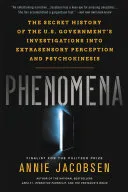
Annie Jacobsen's 2017 book, "Phenomena," details the U.S. government's secret pursuit of psychic abilities.
Annie Jacobsen's "Phenomena" documents the U.S. government's long-standing, covert efforts to understand and utilize psychic phenomena. The book covers decades of research into extrasensory perception (ESP) and remote viewing, focusing on the involvement of military and intelligence agencies. It examines the motivations, methods, and individuals connected to projects that sought to weaponize or gain strategic advantages from mental powers. The narrative extends from the Cold War into the 21st century, showing a continuous, though often concealed, interest in the unexplained.
This work is suited for readers interested in suppressed histories and those open-minded about the connection between national security and the paranormal. It will appeal to individuals who question official accounts and look for documented evidence of unconventional research. Scholars of Cold War espionage, military history, and belief systems will find significant material here. It also suits anyone curious about documented, though debated, attempts by institutions to explore the limits of human consciousness and its potential uses.
The U.S. government's engagement with psychic phenomena, particularly during the Cold War, reflects a broader historical tendency across cultures to investigate altered states of consciousness and purported psychic abilities as potential tools. This interest was often driven by geopolitical competition, as seen with perceived Soviet advancements in parapsychology. While distinct from traditional spiritual or mystical traditions, these governmental programs shared a focus on the potential for extraordinary human capacities beyond conventional scientific understanding, seeking practical applications for what was often considered fringe science.
💡 Why Read This Book?
• Understand the concrete historical trajectory of U.S. government research into psychic abilities, from its Cold War origins in the 1950s to its continued exploration, providing a factual basis for understanding these clandestine efforts. • Learn about specific methodologies like remote viewing, a technique detailed in the book, and the scientific protocols (however flawed) employed by institutions like the Stanford Research Institute (SRI) to study it. • Grasp the complex interplay between national security concerns and the investigation of paranormal phenomena, particularly how events like the intense Soviet-US rivalry spurred governmental interest in ESP for intelligence gathering.
⭐ Reader Reviews
Honest opinions from readers who have explored this book.
❓ Frequently Asked Questions
What specific government agencies were involved in psychic research discussed in "Phenomena"?
Annie Jacobsen's "Phenomena" details involvement from various U.S. agencies, including the CIA, DIA, and Army intelligence. The book highlights how these organizations funded and directed research into extrasensory perception (ESP) and other psychic phenomena from the 1950s onwards.
Did "Phenomena" uncover evidence of successful psychic espionage?
The book presents findings from government-sponsored projects, such as those at Stanford Research Institute (SRI), that showed statistically significant results in remote viewing experiments. However, Jacobsen maintains a critical distance, detailing the claims and controversies surrounding the efficacy and practical application of these psychic abilities for intelligence.
What is remote viewing as described in Annie Jacobsen's "Phenomena"?
Remote viewing, as explored in "Phenomena," is a purported psychic ability where individuals can acquire information about a distant or unseen target solely through mental means. The book documents government-funded experiments attempting to develop and utilize this skill for intelligence gathering.
How does "Phenomena" relate to Annie Jacobsen's previous work like "Area 51"?
"Phenomena" builds upon Jacobsen's established investigative style, similar to "Area 51" and "The Pentagon's Brain." While "Area 51" focused on UFOs and advanced aircraft, "Phenomena" shifts the focus to the government's exploration of human consciousness and psychic phenomena, revealing another layer of secret research.
What was the primary motivation behind the U.S. government's interest in psychic powers according to "Phenomena"?
The primary motivation, as detailed in "Phenomena," was rooted in Cold War anxieties. The U.S. government sought to understand and potentially counter any perceived advantages the Soviet Union might gain from psychic research, aiming to develop similar capabilities for intelligence and strategic purposes.
Does "Phenomena" discuss the ethical implications of government psychic research?
Yes, "Phenomena" touches upon the ethical dimensions by examining the treatment of individuals involved in these programs, the potential for misuse of psychic abilities, and the secrecy surrounding the research. It questions the morality of using human consciousness in clandestine intelligence operations.
🔮 Key Themes & Symbolism
Governmental ESP Operations
The core of "Phenomena" lies in its detailed exposé of clandestine U.S. government programs dedicated to exploring Extrasensory Perception (ESP). Jacobsen meticulously documents how agencies like the CIA and DIA, driven by Cold War paranoia and a desire for strategic advantage, invested significant resources into understanding and potentially weaponizing psychic abilities. The book traces the evolution of these projects, from early explorations of telepathy and clairvoyance to more structured initiatives like remote viewing, providing a factual counterpoint to popular conspiracy theories by grounding the narrative in declassified documents and insider accounts.
Remote Viewing Protocols
A significant portion of "Phenomena" is dedicated to the development and study of remote viewing, a psychic discipline where individuals attempt to perceive distant or unseen targets. Jacobsen examines the structured methodologies employed, particularly at institutions like the Stanford Research Institute (SRI), detailing the protocols designed to elicit and record psychic impressions. The book critically assesses the scientific rigor, the statistical analyses, and the ultimate utility of these programs, highlighting both the intriguing results and the persistent challenges in validating and applying remote viewing for intelligence purposes.
The Psychic Arms Race
Jacobsen frames much of the government's engagement with psychic phenomena within the context of a "psychic arms race" during the Cold War. The belief that the Soviet Union was making significant advancements in parapsychology spurred the U.S. to initiate and expand its own research to avoid falling behind. "Phenomena" illustrates how this geopolitical tension fueled a persistent, albeit often hidden, governmental interest in exploring the potential of human consciousness, driving funding and research into the paranormal as a potential national security asset.
Secrecy and Skepticism
A pervasive theme in "Phenomena" is the inherent tension between the clandestine nature of government research and the scientific establishment's skepticism towards paranormal claims. Jacobsen explores how secrecy both enabled and hindered these programs, shielding them from public scrutiny but also complicating efforts at objective validation. The book reveals the internal debates, the bureaucratic hurdles, and the eventual declassification processes that brought these hidden chapters of military and intelligence history to light, showcasing the complex interplay of belief, evidence, and national security.
💬 Memorable Quotes
Direct passages from the work, attributed to the author.
“The U.S. government has researched extrasensory perception for over forty years.”
— This statement expresses the long-term, systematic governmental commitment to exploring psychic abilities, suggesting a persistent belief in their potential utility despite secrecy and controversy.
“A team of scientists and psychics with top-secret clearances.”
— This highlights the unusual and privileged nature of the individuals involved in government psychic research, underscoring the high stakes and the classified environment in which these investigations took place.
“Using it in attempts to locate hostages, fugitives, secret bases, and downed fighter jets.”
— This illustrates the practical, intelligence-driven applications envisioned for psychic powers, demonstrating the tangible goals behind the otherwise esoteric research.
“To divine other nations' secrets.”
— This points to the espionage and counter-intelligence motivations driving the government's investment in psychic phenomena, positioning it as a tool for strategic advantage.
“The definitive history of the military's decades-long investigation into mental powers.”
— This assertion frames the book as an authoritative and comprehensive account of a hidden aspect of military history, promising a thorough and factual exploration.
🌙 Esoteric Significance
Tradition
While not strictly an esoteric text itself, "Phenomena" functions as a historical exposé of governmental engagement with phenomena often discussed within esoteric circles, such as extrasensory perception and remote viewing. It bridges the gap between the hidden lore of psychic abilities and the documented reality of institutional interest, offering a secular, albeit factual, perspective on subjects traditionally explored through Hermetic, Gnostic, or Theosophical frameworks. The book clarifies these concepts by presenting them as subjects of scientific and military inquiry, rather than purely spiritual or metaphysical pursuits.
Symbolism
The book's central 'symbol' is the human mind itself, posited as a potential frontier for intelligence gathering and strategic advantage. The concept of 'remote viewing' acts as a motif, symbolizing the attempt to transcend physical limitations through consciousness. The recurring motif of declassified documents symbolizes the unveiling of hidden knowledge, a process akin to initiation, where formerly secret information becomes accessible, albeit through a bureaucratic and governmental lens rather than a mystical one.
Modern Relevance
Jacobsen's "Phenomena" remains highly relevant today for contemporary thinkers and practitioners interested in consciousness studies, parapsychology, and the intersection of science and the unexplained. It provides a crucial historical backdrop for modern discussions on intuition, precognition, and the potential of the human mind, as explored in various New Age and consciousness-raising movements. The book serves as a factual reference for those investigating the documented, albeit controversial, applications of psychic abilities, informing fields ranging from cognitive science to fringe military research.
👥 Who Should Read This Book
• Investigators of U.S. intelligence history, particularly those interested in the Cold War era, will gain concrete details on previously classified research into psychic phenomena. • Skeptical but curious readers seeking factual accounts of paranormal research will appreciate the book's document-driven approach and critical analysis. • Students of parapsychology and consciousness studies can use "Phenomena" as a resource to understand the historical governmental investment in ESP and remote viewing.
📜 Historical Context
Published in 2017, Annie Jacobsen's "Phenomena" emerged at a time when public interest in declassified government secrets and the paranormal remained high. The book's extensive research into psychic phenomena by U.S. intelligence agencies taps into a lineage of inquiry that gained significant momentum during the Cold War. Fueled by fears of Soviet parapsychological advancements, American programs sought to harness ESP and remote viewing for intelligence purposes, a period that saw figures like psychologist J.B. Rhine conducting early academic research into psychic abilities. Jacobsen's work contrasts with the more sensationalized narratives surrounding UFOs and extraterrestrials, offering a grounded, document-driven history of a different kind of clandestine exploration. While not directly engaging with contemporaries in the same vein, the book implicitly acknowledges the broader cultural fascination with the unexplained that also captivated authors like Jacques Vallee and later informed figures in ufology.
📔 Journal Prompts
The concept of remote viewing as a tool for intelligence gathering.
Governmental motivation for exploring psychic phenomena during the Cold War.
The ethical considerations surrounding the use of psychics in military operations.
Scientific validation challenges for extrasensory perception (ESP).
The role of secrecy in government research into the paranormal.
🗂️ Glossary
Extrasensory Perception (ESP)
The purported ability to acquire information by means not using the known human senses. This includes telepathy, clairvoyance, and precognition, all areas explored in government research documented in "Phenomena."
Remote Viewing
A specific technique studied by the U.S. government where individuals attempt to perceive distant or unseen targets using only their minds. "Phenomena" details the protocols and results of these experiments.
Project MKUltra
A clandestine CIA project involving illegal human experiments within the scope of mind control and psychological manipulation. While distinct from ESP research, it shared the context of secret government exploration of consciousness.
Stanford Research Institute (SRI)
A research institute that conducted significant government-funded studies on remote viewing and other psychic phenomena, as detailed extensively in "Phenomena."
Parapsychology
The study of alleged psychic phenomena and other paranormal claims, including ESP and psychokinesis. "Phenomena" examines how governmental bodies engaged with this field.
Cold War
A period of geopolitical tension between the United States and the Soviet Union and their respective allies, which significantly fueled government interest in psychic research for intelligence purposes.
DIA (Defense Intelligence Agency)
An intelligence agency of the United States Department of Defense. "Phenomena" discusses its involvement in funding and directing research into psychic abilities.