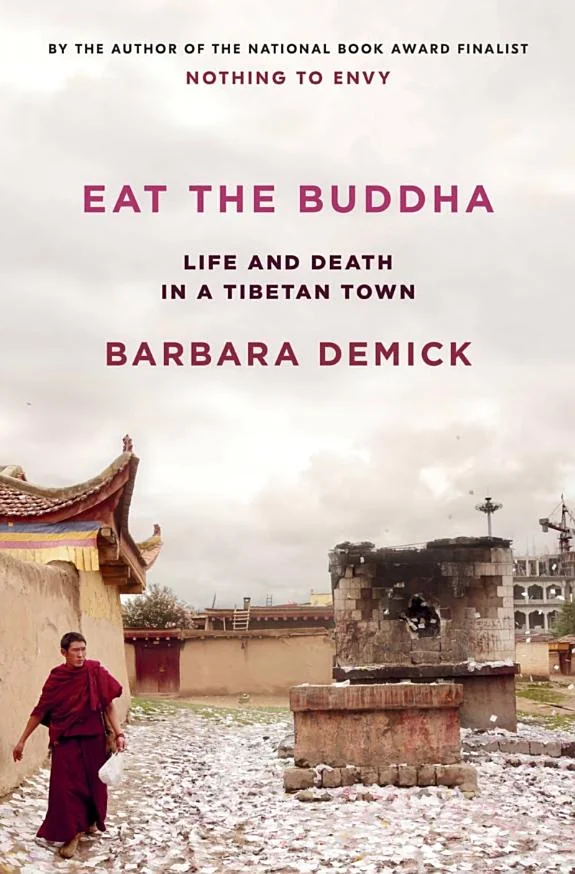
Eat the Buddha
 76
76

Eat the Buddha
Demick's "Eat the Buddha" offers a stark, unvarnished look at the human cost of North Korea's rigid ideology. The book excels in its detailed, empathetic portrayal of individuals like Kang Chol-hwan, who endured the Yodok political prison camp. While the journalistic rigor is commendable, the narrative sometimes feels overly focused on recounting hardship without fully exploring the subterranean currents of resistance or philosophical coping mechanisms that might exist within such a closed society. A particularly striking passage details the pervasive hunger and the desperate measures taken to survive, illustrating the fragility of human dignity under duress. This is essential reading for understanding the lived reality behind the headlines, even if it leaves the reader yearning for more overt glimmers of hope or agency.
📝 Description
76
Barbara Demick's 2020 book examines North Korean life through the experiences of its citizens.
Barbara Demick's "Eat the Buddha" offers a close look at life in North Korea, focusing on the experiences of average people under the Kim dynasty. The book moves past broad political analysis to share personal stories of individuals facing immense hardship and state oversight. It is for readers who want to understand the human side of totalitarian governments, particularly the endurance and pain of those living under strict systems. The work provides detailed, on-the-ground views of modern history and how political beliefs affect everyday life.
The story unfolds against North Korea's isolationist policies and the long rule of the Kim family, which began in 1948. Demick uses interviews and thorough research to shed light on the years after the Korean War and the economic difficulties that marked the late 20th century and continue today. The book addresses themes of survival, memory, state propaganda, and the mental strain of living in a society with tight information control. It looks at how people create their own understandings of reality and keep their self-respect despite constant watching and ideological training.
While the book is primarily journalistic, its focus on the psychological and spiritual resilience of individuals under extreme ideological control touches upon themes often found in esoteric traditions concerned with the inner life amidst external conformity. It examines how personal meaning and dignity are constructed when outward expression is dictated by the state. This aligns with esoteric inquiries into the nature of consciousness and selfhood when faced with overwhelming external forces, particularly in the context of cults of personality and enforced belief systems.
💡 Why Read This Book?
• Gain an intimate understanding of survival tactics under extreme political repression, as illustrated by the detailed accounts of citizens like Kang Chol-hwan and his family. • Comprehend the psychological impact of pervasive state propaganda and surveillance, drawing parallels to the concept of 'mind control' explored through personal testimonies. • Appreciate the journalistic dedication required to extract and present these narratives, highlighting the challenges faced by defectors and researchers alike in accessing verifiable information about North Korea.
⭐ Reader Reviews
Honest opinions from readers who have explored this book.
❓ Frequently Asked Questions
What does the title 'Eat the Buddha' refer to in Barbara Demick's book?
The title "Eat the Buddha" is a metaphorical reference to the extreme circumstances and desperate measures individuals in North Korea might resort to for survival, challenging fundamental beliefs and societal norms.
What time period does Barbara Demick's 'Eat the Buddha' primarily cover?
While the book addresses the ongoing reality of North Korea, it extensively details events and experiences from the latter half of the 20th century, particularly the post-Korean War era and its lingering effects.
Are the stories in 'Eat the Buddha' based on real people?
Yes, the book is based on extensive interviews and research, featuring the documented experiences of North Korean defectors and individuals who lived through the described periods and conditions.
What is the main focus of 'Eat the Buddha'?
The book's primary focus is on the personal lives, struggles, and resilience of ordinary North Korean citizens, offering a ground-level view of life within the isolated state.
How does 'Eat the Buddha' differ from typical political analyses of North Korea?
'Eat the Buddha' prioritizes individual human stories and lived experiences over broad geopolitical or military analyses, providing a more intimate and empathetic perspective.
What does the book reveal about the Kim dynasty's rule?
The work illustrates the long-term impact of the Kim dynasty's authoritarian rule on the daily lives, economic conditions, and psychological well-being of the North Korean populace since 1948.
🔮 Key Themes & Symbolism
The Cult of Personality
The work meticulously details the pervasive and systematic construction of the Kim dynasty's cult of personality, beginning with Kim Il-sung. It explores how this ideology infiltrates every aspect of life, from mandatory portraits in homes to the indoctrination of children. Demick illustrates how this manufactured devotion serves as a central to state control, shaping individual identity and public discourse, and demanding absolute loyalty that overrides personal experience or objective reality.
Survival and Resilience
Central to the book is the theme of survival against overwhelming odds. Demick presents harrowing accounts of individuals enduring extreme famine, political imprisonment, and constant surveillance. The narratives highlight the ingenuity and sheer will required to subsist, often through illicit means or by adhering to state dogma even when it conflicts with personal truth. This resilience is not presented as heroic defiance but as a fundamental human drive to persist.
Memory and Truth
The book grapples with the nature of memory in a state that actively rewrites history and controls information. Defectors often carry fragmented or conflicting memories, shaped by years of propaganda and trauma. Demick examines how individuals reconstruct their pasts, seeking personal truths amidst official narratives. The act of recounting these experiences, even years later, becomes a form of resistance and a way to reclaim agency over one's own history.
The Divided Peninsula
While focusing on the North, the book inherently touches upon the legacy of the Korean War (1950-1953) and the enduring division of the peninsula. It provides context for North Korea's isolationist stance and its perpetual state of readiness. Demick implicitly contrasts the experiences of those in the North with potential realities in the South, underscoring the profound divergence in societal development and human freedom resulting from the geopolitical division.
💬 Memorable Quotes
Direct passages from the work, attributed to the author.
“Every citizen was expected to perform loyalty, even when their hearts held doubt.”
— This interpretation highlights the coercive nature of the North Korean regime, where outward displays of devotion are paramount, creating a chasm between public persona and private thought.
“Information was a scarce commodity, rationed and weaponized by the state.”
— This interpretation captures the book's depiction of information control, where access to truth is severely restricted and manipulated to maintain political power and societal order.
💡 Key Ideas
Editorial paraphrase of the work's core concepts — not direct quotes.
The hunger was a physical presence, a constant ache that defined their days.
This paraphrased concept emphasizes the visceral and all-consuming nature of starvation described in the book, illustrating how basic survival needs overshadow all other aspects of life.
Children learned to see the leaders not as men, but as divine figures.
This paraphrased concept points to the intense indoctrination process, where the cult of personality is instilled from infancy, replacing rational understanding with quasi-religious reverence.
Memory became a dangerous act, a private rebellion against the official record.
This paraphrased concept underscores the risks involved for individuals in holding onto personal recollections that contradict the state-sanctioned history, framing memory as a form of quiet dissent.
🌙 Esoteric Significance
Tradition
While "Eat the Buddha" is a work of journalism, its depiction of extreme ideological control and the psychological mechanisms of survival within a totalitarian state can be viewed through esoteric lenses. The pervasive cult of personality and the manipulation of consciousness echo themes found in Gnostic discussions of the Archons or the illusionary nature of the material world. The relentless pursuit of survival under duress, stripping away external comforts, forces an internal reckoning that can align with ascetic traditions seeking spiritual liberation through hardship.
Symbolism
The title itself, "Eat the Buddha," is a potent symbol. In Buddhist traditions, the Buddha represents enlightenment and compassion. To 'eat' such a figure implies a radical act of transgression, a devouring of the sacred or the ideal out of desperation or a complete breakdown of societal norms. Another significant motif is the ubiquitous portrait of the Kims, functioning as icons demanding worship, akin to religious relics, symbolizing the state's appropriation of spiritual authority.
Modern Relevance
Contemporary thinkers exploring authoritarianism, mass psychology, and the impact of digital surveillance on consciousness find resonance in Demick's work. The book serves as a case study for understanding how belief systems are constructed and maintained, relevant to discussions in critical theory and social psychology. Practices focusing on mindfulness and psychological resilience, often drawing from both Eastern and Western traditions, can use the extreme examples in "Eat the Buddha" to underscore the importance of inner fortitude and critical awareness.
👥 Who Should Read This Book
• Readers interested in the human cost of totalitarian regimes, seeking detailed accounts beyond political headlines. • Students of comparative politics and history who need ground-level perspectives on 20th and 21st-century authoritarian states. • Individuals exploring themes of survival, memory, and psychological resilience in the face of extreme adversity.
📜 Historical Context
Barbara Demick's "Eat the Buddha" arrived in 2020, a period marked by ongoing international concern over North Korea's nuclear program and its human rights record. The book's genesis lies in Demick's earlier reporting for The Los Angeles Times, including her time stationed in Beijing, which provided access to defectors. Published during a time of heightened geopolitical tension and limited direct access to North Korea, the work offered a crucial, albeit retrospective, humanizing perspective. It engaged with the historical narrative of the Kim dynasty's rule, which began in earnest after the Korean War's armistice in 1953. Demick's approach stands in contrast to more politically focused analyses prevalent at the time, such as those by figures like Victor Cha, by centering individual testimonies. While not directly censored, the subject matter itself is inherently sensitive, and the reception often focused on its stark portrayal of suffering, drawing comparisons to earlier works like Kang Chol-hwan's "The Aquariums of Pyongyang."
📔 Journal Prompts
The pervasive hunger described by Kang Chol-hwan.
The state's manipulation of memory and truth.
The performance of loyalty under duress.
The concept of 'eating the Buddha' in extremis.
Daily life within the 'Juche' ideology.
🗂️ Glossary
Juche
The official state ideology of North Korea, emphasizing self-reliance, nationalistic pride, and absolute loyalty to the leader. It permeates all aspects of society and governance.
Kims
Refers to the ruling Kim dynasty of North Korea, including Kim Il-sung, Kim Jong-il, and Kim Jong-un, who have governed the country since its inception in 1948.
Defector
An individual who leaves their country, especially to live in another, often under difficult or clandestine circumstances, as described by many individuals interviewed in the book.
Political Prison Camp (Kwanliso)
Harsh labor camps in North Korea where political prisoners and their families are incarcerated, often under brutal conditions and for extended periods, such as Yodok mentioned in the book.
Cult of Personality
An intense public adoration and devotion to a political leader, often promoted through state-controlled media and propaganda, creating an image of infallibility and near-divine status.
Propaganda
Information, especially of a biased or misleading nature, used to promote or publicize a particular political cause or point of view, as heavily utilized by the North Korean state.
Yodok
A specific political prison camp in North Korea notorious for its severe conditions and high mortality rate, detailed through the experiences of defectors like Kang Chol-hwan.
This book appears in 1 collection
🔮 Readers Also Liked
Browse all →







From the “Buddhism” Collection
View all →





More Free Esoteric History & Biography Books
View all →