The awakening of Zen

 79
79

The awakening of Zen
Daisetsu Teitaro Suzuki’s ‘The Awakening of Zen’ offers a lucid, if somewhat academic, gateway into the heart of Zen Buddhism. Suzuki’s primary strength lies in his ability to translate the often-impenetrable language of Zen into terms comprehensible to a Western philosophical framework. He excels at dissecting the paradoxes inherent in concepts like satori, presenting them not as mystical pronouncements but as accessible states of awareness. For instance, his treatment of the koan 'What is the sound of one hand clapping?' moves beyond mere novelty to explore its function in breaking down dualistic thinking.
However, the work occasionally suffers from an over-reliance on scholarly discourse, which might leave readers seeking a more direct, experiential guide feeling somewhat distanced. While Suzuki’s erudition is undeniable, the prose can sometimes feel dense, requiring dedicated focus. Despite this, the book remains a valuable resource for understanding the philosophical architecture of Zen. It provides a solid foundation for further inquiry into the practice and thought of this influential school of Buddhism.
📝 Description
79
Daisetsu Teitaro Suzuki published 'The Awakening of Zen' in 2000 to explain Zen Buddhist philosophy.
Daisetsu Teitaro Suzuki's 'The Awakening of Zen' clarifies core Zen Buddhist ideas for a Western audience. Suzuki, a key figure in introducing Eastern thought to the West, carefully explains difficult concepts. The book looks at Zen's philosophical basis, using original texts and practices.
This work is for students of comparative religion, philosophy, and anyone wanting a deeper look at Buddhist thought. It suits those interested in how Eastern philosophies apply to Western life. Readers who like clear explanations of complex subjects will find value. It is especially helpful for those who have heard Buddhist terms but need a structure to understand them.
Published in 2000, 'The Awakening of Zen' continues Daisetsu Teitaro Suzuki's lifelong project of bridging Eastern and Western thought. His earlier work, starting in the early 20th century, engaged with figures like Carl Jung, introducing concepts such as 'satori' and 'koan' to Western intellectual circles. This book refines those explanations for a modern audience facing similar existential questions.
💡 Why Read This Book?
• Gain a clearer understanding of 'satori' and its role as a sudden, intuitive realization, moving beyond intellectual grasp, as detailed in Suzuki's explanations. • Learn how 'koans' function as paradoxical tools to dismantle conventional, dualistic thinking, a concept Suzuki elaborates upon with historical examples. • Grasp the non-nihilistic interpretation of 'sunyata' (emptiness) as a state of interdependency and potential, a core philosophical pillar Suzuki meticulously unpacks.
⭐ Reader Reviews
Honest opinions from readers who have explored this book.
❓ Frequently Asked Questions
What is the primary goal of 'The Awakening of Zen'?
The book aims to demystify Zen Buddhist philosophy for a Western audience by explaining core concepts like satori and koans in a philosophically rigorous yet accessible manner.
Who was Daisetsu Teitaro Suzuki and why is he important?
Suzuki (1870-1966) was a prolific Japanese scholar who was instrumental in introducing Zen Buddhism and other Eastern philosophies to the Western world, influencing thinkers and artists.
Does the book focus on Zen meditation practices?
While it discusses the philosophical underpinnings that inform Zen practice, the book's primary focus is on the conceptual and philosophical aspects rather than detailed instructions on meditation techniques.
What does 'satori' mean in the context of this book?
Suzuki explains 'satori' as a sudden, intuitive awakening or enlightenment, an experiential understanding that transcends ordinary rational thought and perception.
How does Suzuki explain 'koans'?
The book describes koans as paradoxical riddles or questions used in Zen practice to exhaust the rational mind and provoke a breakthrough in understanding, often illustrated with classic examples.
Is 'The Awakening of Zen' suitable for complete beginners to Buddhism?
Yes, it serves as an excellent introduction for those new to Buddhist philosophy, offering a structured approach to complex Zen concepts without assuming prior knowledge.
🔮 Key Themes & Symbolism
The Nature of Satori
This theme explores the concept of 'satori', often translated as enlightenment or awakening. Suzuki meticulously explains it not as a gradual intellectual accumulation of knowledge, but as a sudden, intuitive leap of understanding. He emphasizes that satori is an experiential realization, a direct apprehension of reality that bypasses the limitations of discursive thought. The work illustrates how this state is cultivated through diligent practice and is central to the Zen path of direct experience.
The Function of Koans
The book examines the role of 'koans'—enigmatic riddles or questions used in Zen practice, such as the famous 'sound of one hand clapping'. Suzuki presents koans not as mere puzzles, but as potent pedagogical tools designed to exhaust the analytical mind. By presenting logical impossibilities, koans aim to break down the practitioner's habitual patterns of thought, thereby opening a space for non-conceptual insight and the realization of emptiness.
Understanding Sunyata
Suzuki offers a nuanced interpretation of 'sunyata', or emptiness, a central to Mahayana Buddhist philosophy. He clarifies that sunyata is not nihilistic nothingness but rather the absence of inherent, independent existence. This concept highlights the interdependent nature of all phenomena, suggesting that reality is fluid and relational. Understanding sunyata is presented as crucial for transcending attachment to fixed concepts and experiencing the world more directly.
Intuition Over Intellect
A recurring theme is the primacy of intuition and direct experience over purely intellectual or rational understanding in the pursuit of Zen realization. Suzuki argues that the analytical mind, while useful in certain contexts, ultimately creates dualities and limitations that obscure the true nature of reality. The book champions a mode of knowing that arises from direct engagement with the present moment, often facilitated by practices that challenge conventional cognitive processes.
💬 Memorable Quotes
Direct passages from the work, attributed to the author.
“The awakening of Zen is not an intellectual achievement but an experiential one.”
— This statement captures Suzuki's core message: that true understanding in Zen comes not from acquiring knowledge through study alone, but from a direct, transformative realization of reality.
“Koans are designed to make us question the very foundations of our logic.”
— This highlights the function of koans as paradoxical tools meant to disrupt our reliance on conventional reasoning, forcing a confrontation with the limits of our intellectual frameworks.
“Emptiness (sunyata) does not mean nothingness, but rather the lack of self-existence.”
— This interpretation clarifies a common misunderstanding of a key Buddhist concept, emphasizing that emptiness points to interdependence rather than annihilation.
“Satori is a sudden glimpse into the nature of reality.”
— This concisely defines satori as an immediate, intuitive perception of truth, distinct from a gradual process of learning or contemplation.
“Direct experience is the ultimate authority in Zen.”
— This emphasizes the importance of personal, lived experience over doctrine or dogma in the Zen tradition, positioning it as the final arbiter of truth.
🌙 Esoteric Significance
Tradition
While Zen Buddhism is a distinct school within Mahayana Buddhism, Suzuki's presentation often intersects with broader esoteric and mystical traditions that seek direct, non-dualistic experience. His emphasis on intuition, direct apprehension, and the transcendence of conceptual thought aligns with perennialist philosophies that seek universal truths across diverse spiritual paths. His work provided a bridge for Westerners exploring mystical psychology and Eastern spirituality, positioning Zen as a path to inner transformation comparable to Western contemplative practices.
Symbolism
Key symbols explored include the 'koan', which functions metaphorically as a key designed to unlock the cage of rational thought, and 'emptiness' (sunyata), representing not a void but the boundless potentiality inherent in all things. The concept of the 'Buddha-mind' is also central, symbolizing an inherent, pure consciousness accessible to all beings, often obscured by habitual thinking. These symbols serve as focal points for contemplation and practice, guiding the practitioner towards direct insight.
Modern Relevance
Suzuki's interpretations continue to influence contemporary mindfulness movements, secular Buddhist thought, and contemplative psychology. Thinkers and practitioners in fields ranging from transpersonal psychology to the study of consciousness draw upon his explanations of non-dual awareness and the transformative power of direct experience. His work remains foundational for anyone seeking to understand the philosophical underpinnings of practices that aim to cultivate present-moment awareness and insight into the nature of the self.
👥 Who Should Read This Book
• Students of comparative religion and philosophy: Gain a structured understanding of a major Eastern tradition, including its core concepts and historical context. • Individuals exploring mindfulness and contemplative practices: Discover the philosophical roots of practices that emphasize direct experience and non-conceptual awareness. • Seekers of alternative perspectives on consciousness: Engage with a framework that challenges Western rationalism, offering insights into intuition and direct realization.
📜 Historical Context
Daisetsu Teitaro Suzuki's work, including 'The Awakening of Zen' (first published in 2000, building on his earlier seminal texts), arrived at a crucial juncture in the early 20th century and continued to shape discourse. Suzuki was a prolific writer whose efforts from the 1910s onwards were important in introducing Zen Buddhism to the West. He engaged with intellectual currents influenced by figures like William James and later, notably, Carl Jung, who wrote an influential preface to Suzuki's 'An Introduction to Zen Buddhism' in 1934. Suzuki's writings provided accessible philosophical frameworks for concepts like 'satori' and 'koan' that resonated with Westerners seeking alternatives to traditional religious and philosophical systems. His work offered a counterpoint to the prevailing Western rationalism and materialism, presenting a spiritual tradition that emphasized direct experience and intuition. While some scholars of Buddhism, like Edward Conze, later offered more critical academic analyses of Zen texts, Suzuki's accessible approach solidified Zen's presence in Western thought.
📔 Journal Prompts
The function of koans in disrupting linear thought.
Experiential realization versus intellectual knowledge of satori.
The implications of sunyata for understanding self and reality.
Direct experience as the ultimate authority in Zen.
Cultivating intuition beyond discursive reasoning.
🗂️ Glossary
Satori
A Japanese Buddhist term for sudden enlightenment or awakening. It signifies a direct, intuitive experience of reality that transcends ordinary rational understanding and dualistic thinking.
Koan
A paradoxical anecdote or riddle used in Zen Buddhism to provoke doubt and test a student's progress in Zen practice. It is intended to break down reliance on logical reasoning.
Sunyata
A central concept in Mahayana Buddhism, often translated as emptiness or voidness. It refers to the lack of inherent, independent existence in all phenomena, highlighting their interdependent nature.
Buddha-mind
The inherent potential for enlightenment or awakening within all sentient beings. It represents a pure, fundamental consciousness that is often obscured by defilements and habitual thinking.
Dukkha
A fundamental concept in Buddhism, typically translated as suffering, dissatisfaction, or stress. It refers to the inherent unsatisfactoriness of conditioned existence.
Anatta
The doctrine of 'non-self' or 'no-soul' in Buddhism. It asserts that there is no permanent, unchanging, independent self or essence in living beings.
Mahayana
One of the two major branches of Buddhism. It emphasizes the Bodhisattva ideal, aiming for enlightenment for all sentient beings, and often incorporates a rich philosophical and cosmological system.
🔮 Readers Also Liked
Browse all →![A high-school algebra wallet-sized proof, of the Bieberbach conjecture After L. Weinstein]](/img/thumb/a-high-school-algebra-wallet-sized-proof-of-the-bieberbach-conjecture-after-l-weinstein-shalosh-b-ekhad.webp)









More by Daisetsu Teitaro Suzuki
All books →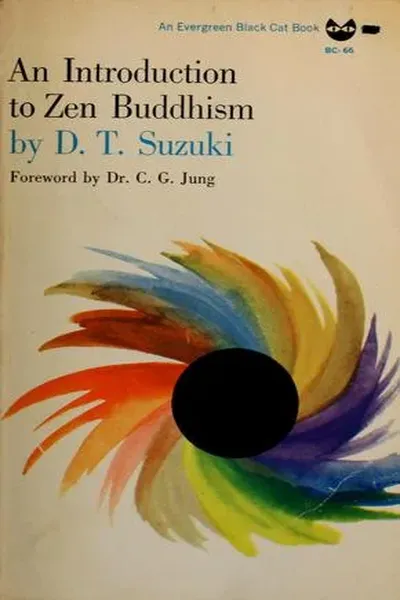





More Free Occult Philosophy Books
View all →