Zen Buddhism

 80
80

Zen Buddhism
D.T. Suzuki’s “Zen Buddhism” remains a crucial, if occasionally dated, introduction to the subject. His strength lies in his erudition and palpable enthusiasm for conveying the essence of Zen to a Western audience, a task he undertook with remarkable success in the mid-20th century. The section detailing the historical transmission of Zen from China to Japan, for instance, is particularly illuminating, providing a narrative arc for complex philosophical developments. However, the book’s primary limitation is its inherent focus on intellectual exposition over lived practice. While Suzuki discusses *zazen* and *kensho*, the text occasionally feels more like a philosophical treatise than a guide to embodied realization. A passage discussing the *koan* system, while informative, might leave a practitioner wishing for more direct engagement with the experiential hurdles such practices present. Despite this, Suzuki’s work is an indispensable historical document for understanding how Zen entered Western consciousness, offering a scholarly lens on a tradition often shrouded in mystique.
📝 Description
80
Daisetsu Teitaro Suzuki's Zen Buddhism, published in 1956, introduces Mahayana Buddhist concepts.
Daisetsu Teitaro Suzuki's "Zen Buddhism," first published in 1956, serves as an intellectual and philosophical introduction to this Mahayana Buddhist tradition. It is not a guide for practice but rather an explanation of Zen's core principles and historical path. Suzuki, instrumental in sharing Eastern philosophy with the West, connects academic study with an understanding of Zen's experiential dimension.
The book aims to clarify concepts often seen as obscure by examining historical events, philosophical arguments, and significant figures. It is best suited for readers already interested in comparative religion, philosophy, or Eastern thought. The volume addresses those curious about Zen Buddhism's origins and its spread beyond monastic settings, particularly its influence on Western intellectual discussions in the mid-20th century. Students of philosophy, theology, and cultural history will find Suzuki's placement of Zen within global intellectual movements valuable.
Published in 1956, "Zen Buddhism" arrived during a time of growing Western interest in Eastern spiritual paths. Suzuki's work contributed to making Zen, already gaining attention from artists and writers, more accessible. The book situates Zen within the context of Chinese Mahayana Buddhism and its transmission to Japan, referencing figures like Bodhidharma. This period also saw Zen studied alongside philosophies such as Taoism, with Suzuki's writings playing a part in this comparative intellectual engagement.
💡 Why Read This Book?
• Gain a foundational understanding of Zen Buddhist philosophy as articulated by a key 20th-century interpreter, exploring concepts like *kensho* and *zazen* that Suzuki extensively details. • Appreciate the historical transmission of Zen Buddhism from China to Japan, a process Suzuki elucidates, understanding its development through key figures and movements. • Grasp the function of *koans* in Zen practice, a specific pedagogical tool Suzuki introduces, and their role in transcending rational thought.
⭐ Reader Reviews
Honest opinions from readers who have explored this book.
❓ Frequently Asked Questions
When was Daisetsu Teitaro Suzuki's "Zen Buddhism" first published?
Daisetsu Teitaro Suzuki's seminal work "Zen Buddhism" was first published in 1956, making it a key text in the mid-20th century introduction of Zen to Western readers.
What is the significance of *kensho* in Zen Buddhism as discussed by Suzuki?
Suzuki explains *kensho* as the sudden awakening or direct experience of one's true nature, a central goal in Zen practice that transcends conceptual understanding.
How does Suzuki explain the role of *zazen*?
Suzuki presents *zazen* (seated meditation) as the core practice in Zen, emphasizing its importance for stilling the mind and facilitating the insights leading to *kensho*.
What is a *koan* according to Suzuki's "Zen Buddhism"?
A *koan* is described by Suzuki as a paradoxical question or statement used in Rinzai Zen to exhaust the intellect and provoke a breakthrough in understanding beyond logic.
Which historical figures are important in the Zen lineage discussed by Suzuki?
Suzuki highlights figures such as Bodhidharma, the traditional founder of Zen in China, and various masters instrumental in transmitting Zen to Japan, shaping its development.
Did Suzuki's work influence Western perceptions of Zen?
Yes, Suzuki was a primary conduit for introducing Zen Buddhism to the West, and his writings, including "Zen Buddhism" (1956), significantly shaped intellectual and spiritual discourse.
🔮 Key Themes & Symbolism
The Nature of Awakening
Suzuki explores *kensho*, the sudden glimpse of enlightenment, as the important moment in Zen practice. This is not a gradual accumulation of knowledge but a direct, intuitive apprehension of reality, unmediated by discursive thought. The work emphasizes that this awakening is not an end in itself but a realization of one's inherent Buddha-nature, which then informs all actions and perceptions. The esoteric angle lies in viewing this awakening as a direct encounter with the ultimate reality, often described as emptiness (*sunyata*), which is simultaneously the ground of all existence.
Meditation and the Mind
Central to Zen is *zazen*, seated meditation, presented not merely as a relaxation technique but as the primary vehicle for cultivating insight. Suzuki details how disciplined sitting trains the mind to observe its own workings, gradually releasing attachment to conceptual frameworks and dualistic thinking. The esoteric significance resides in *zazen*'s capacity to purify consciousness, enabling practitioners to perceive reality as it is, free from the distortions of ego and conditioned perception. This practice is the gateway to the direct experiential understanding that Zen champions.
The Paradoxical Path
The book examines the use of *koans*, enigmatic questions or statements designed to break down the intellect's reliance on logic. These paradoxical tools, exemplified by cases from Zen masters, serve to jolt the practitioner out of conventional modes of thinking. The esoteric nature of *koans* lies in their function as spiritual catalysts, pushing the student beyond rational comprehension into a area of intuitive knowing. By confronting the unanswerable, the mind is forced to seek a different kind of understanding, one that aligns with the non-dualistic tenets of Zen.
Historical Transmission and Lineage
Suzuki traces the historical lineage of Zen Buddhism, beginning with its introduction to China, traditionally attributed to Bodhidharma. He outlines its subsequent development through influential masters and its transmission to Japan, highlighting the crucial role of direct teacher-student relationships in preserving and propagating the authentic teachings. This emphasis on lineage underscores the esoteric principle of *parampara*—the unbroken chain of transmission from enlightened mind to enlightened mind, ensuring the integrity of the spiritual path.
💬 Memorable Quotes
Direct passages from the work, attributed to the author.
“Zen is the direct experience of the truth, not a theory or a doctrine.”
— This statement captures Suzuki's core message: Zen is fundamentally experiential. It prioritizes direct insight and realization over intellectual assent to dogma, positioning it as a path of lived truth.
“The *koan* is meant to make us realize the inadequacy of our logical thinking.”
— Suzuki highlights the function of the *koan* as a tool for deconstruction. Its paradoxical nature serves to expose the limitations of rational intellect, preparing the mind for a non-conceptual understanding.
“*Zazen* is the practice of sitting, of being present with oneself.”
— Suzuki defines *zazen* in its essential form: a practice of mindful, upright sitting. This simple yet profound posture is the foundation upon which Zen's deeper insights are built.
“The essence of Zen lies in its emphasis on self-reliance and direct perception.”
— This concept points to Zen's focus on individual awakening. It encourages practitioners to trust their own direct experience and inner realization rather than relying solely on external authority or scripture.
💡 Key Ideas
Editorial paraphrase of the work's core concepts — not direct quotes.
Enlightenment is not something to be attained, but something to be realized.
This paraphrased concept emphasizes that enlightenment is not an external achievement but an uncovering of what is already present. It's a recognition of one's inherent nature, not the acquisition of something new.
🌙 Esoteric Significance
Tradition
While Zen Buddhism is a distinct Mahayana tradition, Suzuki's presentation often aligns with esoteric principles found across various contemplative disciplines. His emphasis on direct experience, the inadequacy of language, and the realization of an immanent truth speaks to Gnostic and Hermetic traditions that seek immediate gnosis or direct apprehension of the divine. The focus on inner transformation and the uncovering of inherent potential can be seen as a parallel to Western mystical paths aiming for unitive experience.
Symbolism
Key symbols in Zen, as explored by Suzuki, include the Bodhi tree, representing the place of awakening, and the Dharma wheel, signifying the Buddha's teachings. The often-used symbol of an empty cup signifies the mind ready to receive wisdom without preconceived notions. In an esoteric context, these symbols point towards the emptying of the self, the direct transmission of enlightened understanding, and the realization that ultimate truth is often found in apparent void or absence.
Modern Relevance
Contemporary thinkers and practitioners in fields ranging from mindfulness and secular Buddhism to transpersonal psychology and even certain strands of modern art and design draw heavily on Suzuki’s articulation of Zen. His work continues to inform discussions on consciousness, perception, and the nature of reality, bridging Eastern contemplative practices with Western philosophical inquiry. Schools of mindfulness meditation, in particular, often trace their lineage or conceptual roots back to the Zen principles Suzuki popularized.
👥 Who Should Read This Book
• Students of comparative religion and philosophy seeking an accessible yet scholarly introduction to Zen Buddhism, particularly its historical development and core concepts like *kensho*. • Western readers interested in the history of ideas and how Eastern philosophies were introduced and received in the mid-20th century, with Suzuki as a key figure. • Contemplative practitioners curious about the theoretical underpinnings of meditation practices such as *zazen* and the role of *koans* in spiritual development.
📜 Historical Context
Daisetsu Teitaro Suzuki’s "Zen Buddhism," published in 1956, arrived at an important moment for cross-cultural intellectual exchange. The post-war era saw a surge in Western interest in Eastern philosophies, with Zen gaining particular prominence among intellectuals, artists, and spiritual seekers. Suzuki himself, having lectured extensively in the United States since the 1930s, was instrumental in this dissemination. His work provided a bridge between the complexities of Mahayana Buddhism, particularly its Chan (Zen) manifestation in China and Japan, and a Western audience often unfamiliar with its nuances. The book emerged in a climate where figures like Carl Jung were exploring Eastern thought, and Zen was being considered alongside Western psychological and philosophical systems. While popularizing Zen, Suzuki’s interpretations sometimes differed from more traditional Japanese academic or monastic perspectives, sparking ongoing scholarly discussion about the authenticity and presentation of Zen to the West.
📔 Journal Prompts
The concept of *kensho* as a direct, non-conceptual realization.
The function of *koans* in challenging intellectual assumptions.
The practice of *zazen* as a method for cultivating insight.
Bodhidharma's role in transmitting Zen from India to China.
The relationship between Zen and Taoist philosophical currents.
🗂️ Glossary
Zen
A school of Mahayana Buddhism that originated in China as Chan, emphasizing meditation and direct experience of enlightenment rather than reliance on scriptures.
*Kensho*
A Japanese Buddhist term referring to the experience of seeing into one's true nature; a sudden awakening or glimpse of enlightenment.
*Zazen*
The practice of seated meditation, considered the central to Zen Buddhist training, aimed at cultivating stillness and insight.
*Koan*
A paradoxical anecdote or riddle used in Zen Buddhism (particularly Rinzai school) to provoke doubt, test understanding, and ultimately lead to enlightenment.
Bodhidharma
A semi-legendary Buddhist monk who is credited with transmitting Zen Buddhism from India to China around the 5th or 6th century CE.
Mahayana Buddhism
One of the two major branches of Buddhism, emphasizing the path of the Bodhisattva and the concept of emptiness (*sunyata*).
Dharma
In Buddhism, the teachings of the Buddha, the cosmic law and order, or the ultimate truth; also refers to the transmission of these teachings.
🔮 Readers Also Liked
Browse all →









More by Daisetsu Teitaro Suzuki
All books →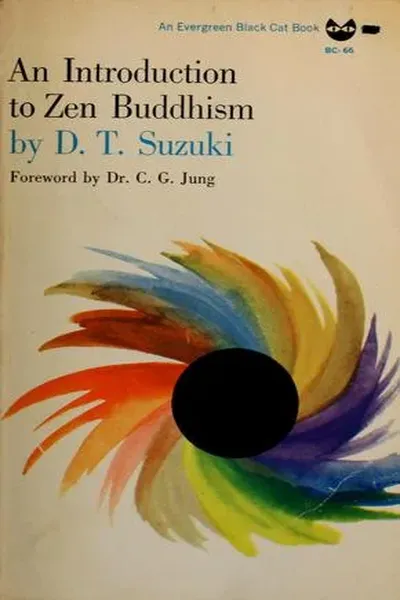





More Free Occult Philosophy Books
View all →