Zen Buddhism: Japan
 78
78

Zen Buddhism: Japan
Dumoulin's meticulous research into Zen's Japanese evolution is evident throughout this volume. He excels at charting the lineage of masters and the subtle shifts in doctrine and practice as Zen took root in Japan. The detailed exposition of concepts like *zazen* and the *kōan* system, particularly as elaborated by figures like Hakuin Ekaku in the 18th century, provides significant clarity. A minor limitation, however, is the book's academic density, which may prove challenging for readers less accustomed to scholarly historical analysis. The section detailing the influence of Zen on Japanese arts, while informative, could benefit from more visual examples. Nevertheless, Dumoulin offers an authoritative account of Zen's profound impact on Japanese culture and spirituality.
📝 Description
78
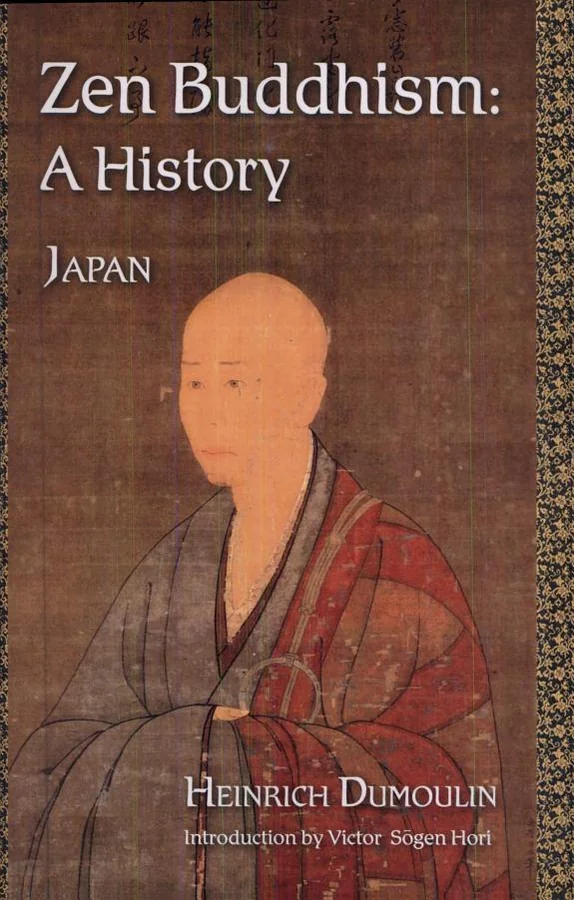
Heinrich Dumoulin's 2005 work traces Zen Buddhism's distinct evolution in Japan.
Heinrich Dumoulin's "Zen Buddhism: Japan" examines the development of Zen within the Japanese archipelago. The book details how Zen, originating in China, took on unique characteristics and practices on Japanese soil. Dumoulin traces the lineage of Zen masters, the evolution of its core philosophical ideas, and the impact of Zen monasteries and their teachings on society. It covers this history from Zen's early introduction to later periods.
The volume is aimed at serious students of Buddhism, particularly those interested in Zen's historical and philosophical aspects. Scholars of East Asian religions, comparative religion, and Japanese cultural history will find it valuable. This is not a simple introduction but a rigorous academic study for readers with some existing knowledge or a strong academic interest in the subject.
Zen's development in Japan, as presented by Dumoulin, spans centuries and is closely linked with the nation's political and artistic changes. Early introductions, such as those by Eisai in the 12th century, established its foundation. Later, Zen gained favor with the samurai class, influencing aesthetics, martial arts, and the tea ceremony. The book places Zen within the broader Japanese religious context, often comparing its practices to other Buddhist schools and Shinto.
This book situates Zen Buddhism within the broader mystical and contemplative traditions of East Asia. It details how Zen, a school of Mahayana Buddhism, emphasizes direct experience and personal realization over dogma or scripture. Dumoulin specifically focuses on how this tradition, originating in China as Chan, adapted and transformed within Japan, developing distinct practices and philosophical interpretations. The book examines concepts like zazen meditation and the koan, which are central to Zen's contemplative path toward understanding the nature of reality and achieving enlightenment.
💡 Why Read This Book?
• Gain a nuanced understanding of *zazen* and its historical implementation in Japanese Zen, moving beyond superficial descriptions. • Explore the philosophical underpinnings of the *kōan* system as developed by figures like Hakuin Ekaku, appreciating its role in breaking conceptual barriers. • Comprehend Zen's deep integration into Japanese society, understanding its influence on aesthetics and the warrior class from the Kamakura period onward.
⭐ Reader Reviews
Honest opinions from readers who have explored this book.
❓ Frequently Asked Questions
When was Zen Buddhism first introduced to Japan according to Dumoulin's work?
Dumoulin's "Zen Buddhism: Japan" details the initial introductions of Zen to Japan, with significant early efforts attributed to figures like Eisai around the late 12th century, though earlier, less sustained contacts are also discussed.
What is the primary difference between Chinese Chan and Japanese Zen explored in the book?
The book explains that while rooted in Chinese Chan, Japanese Zen developed distinct practices and philosophical emphases, including a more formalized approach to meditation (zazen) and the pedagogical use of the kōan system.
Which Japanese Zen schools are prominently featured in Dumoulin's history?
Dumoulin's work focuses significantly on the development and characteristics of the Rinzai and Sōtō schools, tracing their lineages and doctrinal divergences within Japan.
How did Zen Buddhism influence Japanese samurai culture?
The book illustrates Zen's profound impact on the samurai class, shaping their ethics, discipline, and martial philosophy through an emphasis on mindfulness, decisiveness, and detachment.
Is "Zen Buddhism: Japan" suitable for absolute beginners to Zen?
While comprehensive, the book is written for a scholarly audience. Beginners might find it dense; however, it offers unparalleled depth for those dedicated to understanding Zen's historical and philosophical evolution in Japan.
What role does the concept of 'satori' play in the Japanese Zen context discussed?
Dumoulin examines 'satori,' or sudden enlightenment, as a central experiential goal within Japanese Zen, exploring its interpretation and pursuit through various meditative and kōan practices.
🔮 Key Themes & Symbolism
Zen Lineage and Transmission
Dumoulin meticulously charts the unbroken lineage of Zen masters, from their introduction to Japan through figures like Eisai and Dōgen, to the establishment of distinct schools. This transmission is not merely historical but emphasizes the direct, experiential passing of wisdom, a core tenet distinguishing Zen from purely academic study. The work details how this lineage shaped the institutional and doctrinal development of Rinzai and Sōtō Zen, ensuring the continuity of practice and insight across generations.
Meditation and Enlightenment (Zazen & Satori)
Central to Dumoulin's analysis is the practice of *zazen* (seated meditation) as the primary vehicle for realizing enlightenment (*satori*). The book elaborates on how *zazen* evolved in Japan, becoming a core part of both Rinzai and Sōtō traditions. It explores the experiential nature of *satori*, often described as a sudden awakening, and the methods employed, including rigorous discipline and the use of *kōan* (paradoxical riddles), to facilitate this profound shift in consciousness.
Zen's Cultural Integration
This volume demonstrates how Zen Buddhism became deeply interwoven with Japanese culture, extending far beyond monastic walls. Dumoulin illustrates Zen's influence on the samurai ethos, fostering discipline, equanimity, and strategic thinking. Furthermore, it examines Zen's wide impact on Japanese arts, including calligraphy, ink painting, garden design, and the tea ceremony, revealing how aesthetic principles reflected Zen's emphasis on simplicity, impermanence, and mindful presence.
The Kōan System
Dumoulin provides a detailed examination of the *kōan* system, particularly its development and application within the Rinzai school under masters like Hakuin Ekaku. The *kōan* is presented not as a philosophical puzzle but as a tool designed to exhaust the discriminating intellect and provoke a direct, intuitive realization of emptiness. The work clarifies the pedagogical function of *kōan* study in the training of Zen practitioners.
💬 Memorable Quotes
Direct passages from the work, attributed to the author.
“Meditation is the very heart of Zen practice.”
— This statement captures the centrality of *zazen* (seated meditation) in Zen Buddhism. It signifies that the sustained practice of mindful awareness while seated is the fundamental method through which Zen practitioners aim to achieve insight and awakening.
“The kōan challenges the limits of rational thought.”
— This interpretation points to the function of the *kōan* (a paradoxical question or statement) as a tool to disrupt conventional, linear thinking. By presenting insoluble logical problems, the *kōan* aims to push the practitioner beyond intellectual reliance towards intuitive understanding.
“Zen's influence permeated Japanese aesthetics and martial arts.”
— This concept illustrates the broad cultural impact of Zen beyond religious practice. It suggests that Zen principles, such as simplicity, discipline, and mindfulness, were integrated into the development of Japanese art forms and the ethos of warriors.
💡 Key Ideas
Editorial paraphrase of the work's core concepts — not direct quotes.
The essence of Zen lies in the direct experience of enlightenment.
This paraphrased concept highlights Zen's emphasis on experiential realization over intellectual understanding. It underscores that true insight into the nature of reality is not gained through study alone but through direct, often transformative, personal experience.
The transmission of Zen is a direct passing from mind to mind.
This paraphrased idea emphasizes the lineage-based nature of Zen transmission, where understanding is conveyed directly from teacher to student, often bypassing written or verbal explanations, focusing on intuitive insight.
🌙 Esoteric Significance
Tradition
While Zen Buddhism is primarily a Mahayana Buddhist tradition, its emphasis on direct experience, mind-to-mind transmission, and the cultivation of non-dual awareness places it within a broader esoteric context. Its focus on inner transformation and the realization of inherent Buddha-nature can be seen as paralleling esoteric aims in other traditions, such as Hermeticism or Gnosticism, which also seek direct apprehension of ultimate reality beyond conventional perception.
Symbolism
Key symbols in Zen, as explored in Dumoulin's work, include the *ensō* (a hand-drawn circle representing enlightenment, strength, elegance, and the void) and the *kōan* (paradoxical riddles designed to break discursive thought). The *ensō* symbolizes the totality of existence and the potential for perfect enlightenment, while the *kōan* functions as a symbolic key to unlock deeper, non-rational understanding, representing the journey beyond conceptual limitations.
Modern Relevance
Contemporary thinkers and practitioners continue to draw upon Dumoulin's detailed historical and philosophical accounts of Japanese Zen. His work informs modern mindfulness movements, secularized meditation practices, and academic studies in comparative religion and East Asian philosophy. Psychologists and therapists exploring contemplative practices also reference the methods and goals of Zen as described in his scholarship, highlighting its enduring relevance for humanistic and psychological inquiry.
👥 Who Should Read This Book
["• Advanced students of Buddhism: Those seeking a comprehensive historical and philosophical account of Zen's development specifically within Japan, beyond introductory texts.", '• Scholars of East Asian religions: Researchers needing detailed information on the Rinzai and Sōtō schools, key figures like Eisai and Hakuin, and the evolution of Zen doctrines and practices.', '• Cultural historians: Individuals interested in understanding the deep influence of Zen on Japanese arts, samurai ethics, and the broader cultural landscape from the medieval period onwards.']
📜 Historical Context
Heinrich Dumoulin's "Zen Buddhism: Japan" emerged from a mid-20th century academic environment increasingly interested in Eastern philosophies. The book's first publication date, August 16, 2005, reflects its culmination after decades of scholarly work, building upon earlier research into Buddhism. This period saw a growing Western engagement with Zen, partly spurred by post-war cultural exchange and a search for alternative spiritual paths. Dumoulin positions Zen within the broader Japanese religious landscape, implicitly contrasting its emphasis on meditation and direct experience with the more scholastic or ritualistic practices of other Buddhist schools like Pure Land Buddhism. His work engaged with and expanded upon the foundational scholarship of figures like D.T. Suzuki, who had introduced Zen to the West, but Dumoulin offered a more detailed historical and doctrinal analysis specific to Japan. While not subject to censorship, the academic rigor of Dumoulin's work placed it firmly within scholarly circles rather than popular discourse.
📔 Journal Prompts
The significance of *zazen* as depicted by Dumoulin.
Hakuin Ekaku's use of the *kōan* and its purpose.
Zen's influence on the Kamakura period samurai.
The concept of direct mind-to-mind transmission.
The symbolic meaning of the *ensō* in Japanese Zen.
🗂️ Glossary
Zazen
Literally 'seated meditation,' the core practice in Zen Buddhism. It involves specific posture and mindful awareness, serving as the primary method for achieving insight and enlightenment.
Kōan
A paradoxical anecdote or riddle used in Zen practice, particularly Rinzai Zen, to break down the practitioner's reliance on logical reasoning and provoke a direct, intuitive awakening.
Satori
A Japanese Buddhist term for enlightenment or sudden awakening. It refers to a deep, intuitive understanding of the nature of reality, often experienced as a profound and transformative moment.
Rinzai
One of the two major schools of Zen Buddhism in Japan, known for its emphasis on the *kōan* system and the pursuit of sudden enlightenment.
Sōtō
The other major school of Zen Buddhism in Japan, traditionally emphasizing silent illumination and gradual cultivation through *zazen*.
Ensō
A hand-drawn circle, often used in Zen calligraphy, symbolizing enlightenment, emptiness, the universe, and the totality of existence. It represents a moment of creative freedom and absolute clarity.
Eisai
A prominent Japanese Buddhist monk (1141–1215) credited with introducing the Rinzai school of Zen and the practice of tea to Japan from China.
This book appears in 1 collection
🔮 Readers Also Liked
Browse all →









From the “Zen Buddhism” Collection
View all →









More Free Occult Philosophy Books
View all →