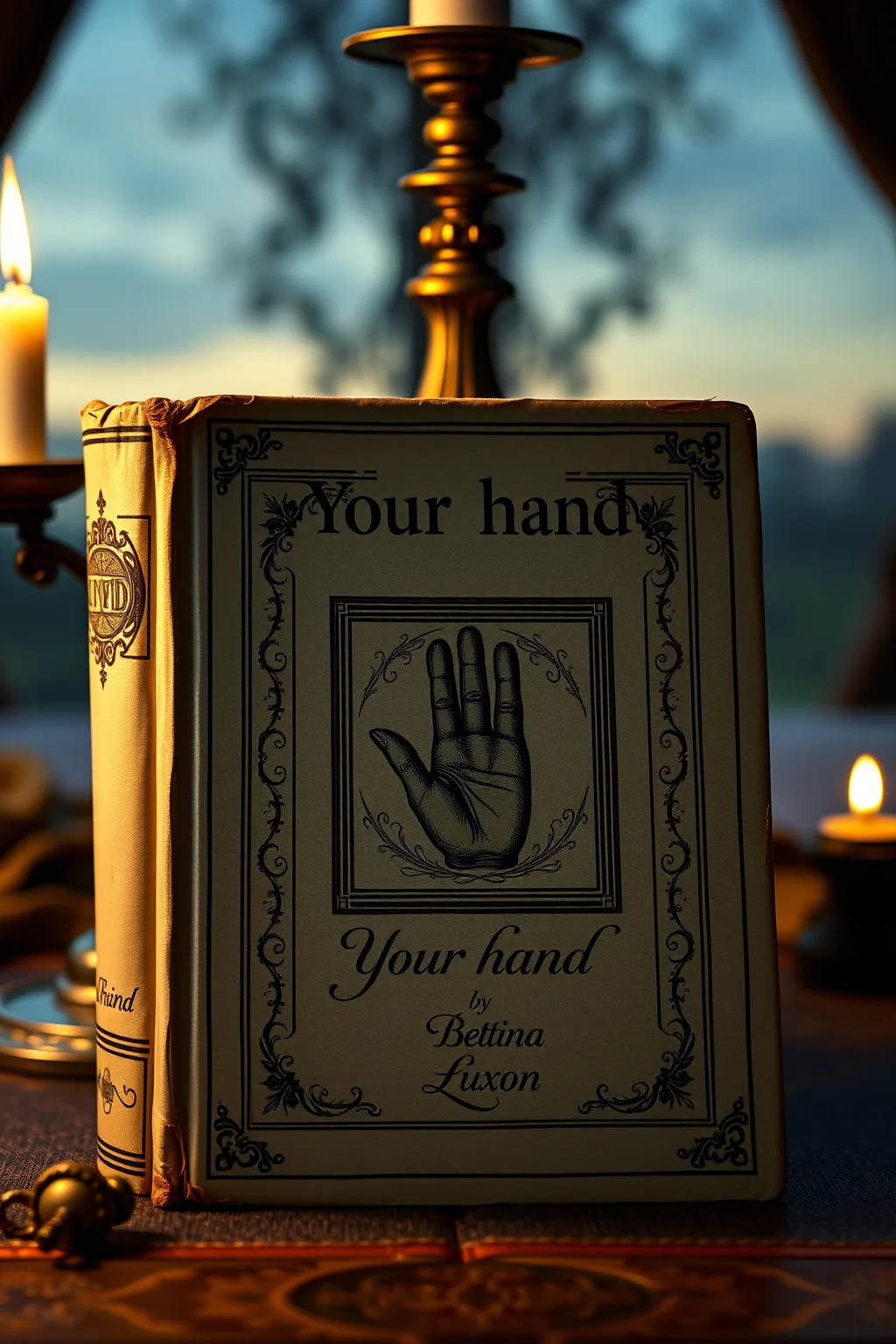
Your hand
 75
75

Your hand
Bettina Luxon's 'Your Hand' offers a surprisingly methodical approach to palmistry, a subject often clouded by vague pronouncements. Luxon grounds her interpretations in specific observations, such as the precise angle of the Head Line or the relative lengths of the fingers, moving past generalized fortune-telling. The book's strength lies in its detailed cataloging of hand features and their associated meanings, providing a practical framework for analysis. However, its 1984 publication date means it sometimes lacks the broader psychological integration found in more recent esoteric texts. A particularly insightful section details the subtle differences in interpreting a faint versus a deep Life Line, emphasizing nuance over definitive prediction. While not a revolutionary text, 'Your Hand' serves as a solid, accessible manual for anyone wishing to understand the basic language of the palm.
📝 Description
75
Bettina Luxon's 'Your Hand', published in 1984, details the structured practice of chiromancy.
This book serves as a guide to chiromancy, or palmistry. Luxon details how to read the hand by examining its lines, mounts, and finger shapes. The work presents a structured method for interpreting these features as indicators of character, potential, and life events. It moves beyond simple explanations to offer a systematic approach to understanding the hand's map. The book is suitable for those interested in esoteric studies and self-discovery through symbolic systems. Beginners will find a clear introduction, while experienced practitioners can deepen their knowledge. Those curious about the connection between physical appearance and inner disposition will find it a useful resource. Luxon's approach links physical attributes to psychological traits and possible life paths. The core of the book involves detailed mapping of the palm, including primary lines like the Life, Head, and Heart lines. Secondary lines and the significance of various mounts are also explained. The meaning of finger shapes, nail characteristics, and overall hand structure are covered, connecting these elements to personality and life trajectories.
Published in 1984, 'Your Hand' appeared during a resurgence of interest in esoteric philosophies. At a time when many works addressed broader spiritual concepts, Luxon's book focused specifically on the traditional art of palmistry. It helped popularize chiromancy as a tool for personal insight, fitting into the occult revival publications of that era. The book connects the physical form of the hand to an individual's inner disposition and potential life experiences.
💡 Why Read This Book?
• Learn to identify and interpret the primary hand lines (Life, Head, Heart) and their variations, gaining insight into how Bettina Luxon connects these to character in 'Your Hand'. • Understand the significance of the hand's mounts (e.g., Mount of Venus, Mount of Jupiter) as detailed in the book, offering a symbolic map of personal energies. • Explore the meanings attributed to different finger shapes and lengths as presented in the 1984 edition, providing a concrete visual language for self-analysis.
⭐ Reader Reviews
Honest opinions from readers who have explored this book.
❓ Frequently Asked Questions
What is the primary focus of Bettina Luxon's 'Your Hand'?
'Your Hand' focuses on the detailed practice of chiromancy, or palmistry. It systematically explains how to read the lines, mounts, and shapes of the hand to understand character and life potentials, as first published in 1984.
Is 'Your Hand' suitable for beginners in palmistry?
Yes, the book is structured to guide beginners through the fundamentals of palm reading, offering clear explanations of key concepts like the major lines and mounts.
Does the book predict the future?
While exploring life potentials, 'Your Hand' emphasizes character analysis and inherent tendencies rather than strict future prediction, aligning with a more psychological approach to palmistry.
What makes Luxon's approach to palmistry unique?
Luxon's method is notable for its systematic cataloging and detailed descriptions, providing a structured framework for interpretation beyond generalized notions often associated with palmistry.
When was 'Your Hand' by Bettina Luxon originally published?
The book 'Your Hand' by Bettina Luxon was first published in 1984.
Does the book cover hand shapes and finger types?
Yes, 'Your Hand' dedicates sections to analyzing various hand shapes (e.g., square, spatulate) and finger types, linking their characteristics to personality traits.
🔮 Key Themes & Symbolism
The Hand as a Cartographical System
Luxon presents the palm not merely as a surface, but as a complex map. Each line, from the prominent Life Line to the subtler Heat Line, is treated as a distinct cartographical feature denoting specific energies, potential experiences, or psychological tendencies. The mounts, like the expansive Jupiter or the communicative Mercury, are viewed as geographical regions on this map, influencing the character and expression of the lines passing through or resting upon them. This systematic approach frames palmistry as a precise symbolic language for understanding the self.
Lines of Character and Destiny
The primary focus is on the interpretation of the major lines: the Life Line, Head Line, and Heart Line. Luxon details how the length, depth, clarity, and formations (like chains or islands) of these lines offer insights into vitality, mental processes, and emotional patterns. The book emphasizes that these lines are not rigid dictates of fate but rather indicators of inherent potentials and the individual's relationship with their own life path. Understanding these lines is presented as a key to self-awareness.
The Significance of Mounts and Fingers
Beyond the lines, 'Your Hand' meticulously explores the mounts—the fleshy pads at the base of fingers and palm. Each mount, associated with a planet and its corresponding traits (e.g., Venus for love and passion, Apollo for creativity), is analyzed for its prominence and influence. Similarly, the shape and length of the fingers are examined, with Luxon detailing how different finger types correlate with specific personality characteristics, adding further layers to the comprehensive reading of the hand.
Palmistry as Self-Knowledge
The underlying philosophy of 'Your Hand' positions palmistry as a tool for profound self-understanding rather than simple fortune-telling. By learning to read the hand, individuals are encouraged to recognize their innate strengths, potential challenges, and patterns of behavior. This knowledge, according to Luxon's framework, empowers individuals to make more conscious choices and to better navigate their personal journeys, fostering personal growth and self-acceptance.
💬 Memorable Quotes
Direct passages from the work, attributed to the author.
“The hand is a complex map of the individual.”
— This statement captures the book's core premise: that the palm's features are not random but form a coherent symbolic system reflecting a person's inner landscape and potential.
“Observe the clarity and depth of the Life Line.”
— This highlights a specific diagnostic technique within palmistry, focusing on a key line and suggesting that its physical characteristics directly correlate with vitality and life force.
“Finger length relative to palm size is significant.”
— This indicates that the book examines not just palm lines but also proportional relationships, such as finger length, as crucial elements in a comprehensive palm reading.
“The Head Line reveals mental tendencies and communication style.”
— This interpretation focuses on a primary line's function, suggesting that its reading provides insight into cognitive processes, intellectual capacity, and how one expresses thoughts.
💡 Key Ideas
Editorial paraphrase of the work's core concepts — not direct quotes.
Each mount carries planetary associations influencing character.
This paraphrased concept points to the astrological underpinnings of palmistry, where the raised areas of the palm are linked to specific planets and their archetypal influences.
🌙 Esoteric Significance
Tradition
Luxon's work is firmly rooted in the Western tradition of chiromancy, which has historical links to ancient Greek and Roman practices, as well as influences from Hellenistic astrology and Renaissance physiognomy. It aligns with Hermetic principles of correspondence ('as above, so below'), viewing the physical hand as a reflection of the individual's energetic and psychological makeup. While not explicitly Kabbalistic or Theosophical, it shares the broader esoteric goal of using symbolic systems to access hidden knowledge about the self and the cosmos.
Symbolism
Key symbols in 'Your Hand' include the major lines (Life, Head, Heart) representing core aspects of human experience: vitality, intellect, and emotion. The mounts, named after planets (Jupiter, Saturn, Apollo, etc.), symbolize different facets of personality and potential, such as leadership, discipline, creativity, and communication. Finger shapes also carry symbolic weight, with different forms suggesting distinct character types, such as the practical earth type or the intellectual air type.
Modern Relevance
Contemporary practitioners of esoteric psychology and somatic awareness often draw upon the foundational principles of palmistry, as exemplified by works like Luxon's. While modern interpretations may integrate more psychological or neuroscientific perspectives, the core symbolic language of lines, mounts, and hand shapes remains relevant. Thinkers exploring embodied cognition and the body's role in self-knowledge can find value in the detailed mapping provided in 'Your Hand'.
👥 Who Should Read This Book
• Aspiring palmists seeking a structured, detailed manual for learning the art of reading hands, moving beyond superficial interpretations. • Individuals interested in physiognomy and symbolic systems who wish to understand how physical characteristics are traditionally linked to personality traits. • Students of Western esoteric traditions looking for accessible resources on traditional divination practices and their historical methodologies.
📜 Historical Context
Bettina Luxon's 'Your Hand,' first published in 1984, arrived during a vibrant period for esoteric studies in the West. Following the spiritual explorations of the 1960s and 70s, there was a significant public appetite for practical divination and self-help tools rooted in ancient traditions. While figures like Fritjof Capra were exploring the intersection of science and mysticism in works like 'The Tao of Physics' (1975), Luxon focused on a specific, tangible practice: palmistry. Unlike the more philosophical or theoretical New Age literature, 'Your Hand' offered a detailed, instructional manual. It contributed to the ongoing revival of interest in Western esoteric arts, providing a structured alternative to more occult or ceremonial magic texts that also saw a resurgence. The book's clear, systematic approach made palmistry accessible, helping to solidify its place as a popular divinatory art.
📔 Journal Prompts
Analyze the length and curvature of your own Head Line as described in 'Your Hand'.
Reflect on the prominence of your Mount of Venus and its potential influence on your relationships.
Compare the characteristics of your finger shapes to the archetypes presented in Luxon's work.
Map the intersections and breaks on your Heart Line and consider their possible meanings.
Consider the relationship between your dominant hand's mounts and your primary life goals.
🗂️ Glossary
Chiromancy
The practice of divining character and predicting the future through the study of the palm, including lines, mounts, and hand shape. Also known as palmistry.
Life Line
The major arc on the palm extending from near the thumb around the base of the palm towards the wrist. It is traditionally associated with vitality, physical health, and major life events.
Head Line
A horizontal line across the palm, typically below the Heart Line. It is interpreted as representing mental faculties, intellect, learning style, and communication patterns.
Heart Line
The uppermost of the major horizontal lines, running across the palm below the fingers. It relates to emotional capacity, romantic relationships, and overall emotional well-being.
Mounts
The fleshy, raised pads on the palm, typically located at the base of the fingers and below the thumb. Each mount is associated with a specific planet and its corresponding attributes.
Spatulate Hand
A hand shape characterized by fingers that are broad or flared at the tips, often associated with an energetic, active, and inventive personality type.
Islands (on lines)
A formation on a palm line appearing as an oval or circular break, often interpreted as a period of weakness, difficulty, or stagnation related to the line's meaning.
🔮 Readers Also Liked
Browse all →








More by Bettina Luxon
All books →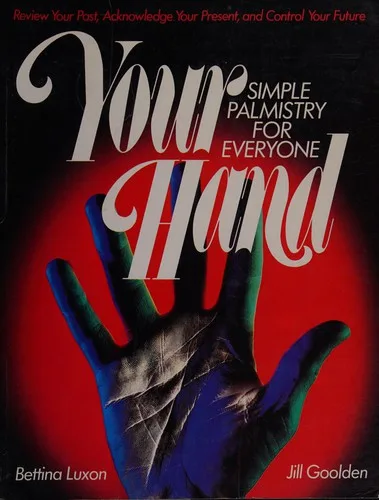

More Free Occult Philosophy Books
View all →








![[ Alexander W. Dray] The Infernal Path Dark Harvest ( Occult Publishers 2012)](/img/thumb/alexander-w-dray-the-infernal-path-dark-harvest-occult-publishers-2012-alexander-w-dray.webp)

