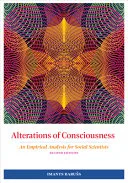
Alterations of Consciousness
 76
76

Alterations of Consciousness
Imants Barušs approaches the manifold states of consciousness with a commendable academic rigor in "Alterations of Consciousness." Rather than resorting to sensationalism, the 2020 second edition offers a systematic breakdown of phenomena like sleep, dreaming, and hallucination. The work's strength lies in its clear, dispassionate analysis, providing a valuable reference for students and researchers. However, for those seeking a more experiential or comparative exploration of esoteric traditions, the book’s focus remains strictly empirical, sometimes at the expense of the phenomenological richness found in other texts. The detailed discussion of hypnotic states, for instance, is informative but lacks the evocative quality of firsthand accounts. Barušs’s methodical categorization is a significant asset, but it occasionally renders the subjective experience of altered states somewhat detached. It is a precise, if not always deeply engaging, survey of cognitive variations.
📝 Description
76
Imants Barušs's 2020 book examines diverse states of human awareness, from sleep to hallucinations.
Imants Barušs's "Alterations of Consciousness," first published in 2020, offers a systematic look at various states of human awareness. The book moves beyond simple labels to investigate the cognitive experiences that shape our mental lives. Barušs dissects phenomena like sleep, dreams, hypnosis, and trance states. He also addresses more unusual experiences, such as hallucinations and perceptions near death.
The work presents a structured way to understand states that differ from ordinary waking consciousness. Barušs uses empirical observation and theoretical ideas to clarify these experiences. He looks at altered states brought on by different methods, searching for commonalities and differences. The author focuses on clear, systematic analysis, giving readers a solid set of concepts.
Barušs connects his study to the long history of thinking about the mind. The investigation of consciousness stretches back through philosophy and early psychology. This book adds a modern view to that tradition, built on scientific and philosophical discussions. It acknowledges the continuing effort to chart subjective experience.
This book engages with traditions that have long pondered the nature of consciousness beyond the everyday. While grounded in empirical study, it touches upon states often explored in spiritual and mystical practices. Barušs's analysis of altered perceptions and subjective realities aligns with inquiries found in Gnosticism, certain schools of Buddhism, and Western esotericism, which all investigate the mind's capacity to transcend ordinary limitations and perceive different dimensions of existence.
💡 Why Read This Book?
• Gain a structured understanding of diverse mental states, moving from ordinary waking awareness to sleep, dreams, hypnosis, and hallucinations, grounded in Barušs's 2020 analysis. • Learn to differentiate between various altered states by examining their cognitive and phenomenological characteristics, as detailed in the book's systematic classifications. • Appreciate the scientific and philosophical context of consciousness studies, recognizing how Barušs’s work engages with historical inquiries into the mind.
⭐ Reader Reviews
Honest opinions from readers who have explored this book.
❓ Frequently Asked Questions
What specific types of altered states does Imants Barušs discuss in 'Alterations of Consciousness'?
The book systematically covers states including sleep, dreaming, hypnosis, trance, hallucinations, and experiences associated with dying, providing a comprehensive overview of cognitive variations.
When was the second edition of 'Alterations of Consciousness' published?
The second edition of Imants Barušs's "Alterations of Consciousness" was published in 2020, offering updated perspectives on the nature of cognitive reality.
Does the book explore mystical or spiritual experiences?
While the book focuses on empirical and psychological analysis of altered states like hallucinations and trance, it provides a foundation for understanding experiences often deemed mystical or spiritual.
Is 'Alterations of Consciousness' suitable for beginners in psychology?
Yes, the book's clear structure and systematic approach make it accessible for beginners interested in understanding the spectrum of human consciousness.
What is the author's primary approach to studying consciousness?
Imants Barušs employs an empirical and theoretical framework, aiming for systematic analysis and demystification of various conscious states rather than purely subjective interpretation.
How does the book relate to traditional esoteric studies?
It provides a scientific and psychological lens through which to examine phenomena often explored in esoteric traditions, offering a framework for understanding their cognitive underpinnings.
🔮 Key Themes & Symbolism
Spectrum of Awareness
Barušs posits that consciousness exists on a spectrum rather than a binary of 'normal' or 'abnormal.' The book details various points on this spectrum, from the mundane experience of waking life to the profound shifts during near-death experiences or intense hallucinations. This perspective challenges rigid definitions of self and reality, suggesting that our baseline awareness is just one possibility among many. The exploration includes the neurobiological and psychological underpinnings, providing a scientific grounding for these diverse states.
Cognitive Architecture of Dreams
The book dedicates significant attention to the nature of dreaming, analyzing its unique logic, emotional intensity, and narrative structures. Barušs examines how dream consciousness differs from waking consciousness, focusing on the altered perceptual and cognitive processes at play. This section considers the psychological functions of dreaming, its relationship to memory consolidation, and the subjective experience of living within a dream narrative. The work aims to explain the dream state, presenting it as a complex cognitive process.
Hypnosis and Suggestibility
Barušs investigates hypnosis not as a magical state, but as a condition of heightened suggestibility and focused attention. The text explores the psychological mechanisms underlying hypnotic phenomena, including dissociation and the role of expectation. It differentiates between various levels of hypnotic depth and their associated cognitive effects. This analysis provides a framework for understanding how external suggestion can alter subjective experience and behavior, bridging the gap between ordinary awareness and more profound alterations.
Perception Near Death
A particularly compelling aspect of the book involves the examination of altered perceptions reported by individuals in proximity to death. Barušs approaches these accounts with a critical, analytical eye, exploring potential psychological and physiological explanations. The work discusses phenomena such as out-of-body experiences, life reviews, and encounters with luminous beings, treating them as significant alterations of consciousness that warrant serious investigation within a scientific framework.
💬 Memorable Quotes
Direct passages from the work, attributed to the author.
“The phenomena of consciousness are diverse, spanning from ordinary waking states to extraordinary experiences.”
— This statement expresses the book's central thesis: that the human mind is capable of a vast array of experiences that extend far beyond typical daily awareness, forming a continuum of altered states.
“Dreaming involves a distinct cognitive architecture, different from waking reality.”
— This highlights Barušs's analytical approach to dreams, viewing them not as random neural firings but as structured mental events with their own internal logic and processes.
“Hypnosis represents a state of focused attention and increased responsiveness to suggestion.”
— This definition clarifies the psychological basis of hypnosis, moving away from popular misconceptions and emphasizing its role as a scientifically observable alteration of consciousness.
“Experiences reported near death challenge our understanding of subjective reality.”
— This points to the profound and often inexplicable nature of end-of-life experiences, suggesting they are significant data points for the study of consciousness.
“Hallucinations alter sensory perception and cognitive processing.”
— This concise observation frames hallucinations as a disruption of normal sensory input and mental interpretation, a key focus for understanding altered states.
🌙 Esoteric Significance
Tradition
While Barušs's work is primarily empirical and psychological, it provides a crucial scientific framework for understanding phenomena often explored within esoteric traditions like Hermeticism, Gnosticism, and various forms of shamanism. It offers a non-dogmatic lens through which practitioners and scholars of these traditions can analyze the cognitive and perceptual shifts associated with mystical or altered states, distinguishing between subjective interpretation and observable psychological processes.
Symbolism
The book implicitly engages with symbols by dissecting the experiences they represent. For instance, the 'luminous beings' reported in near-death experiences can be seen as symbolic representations of ego dissolution or spiritual guides. Hallucinatory imagery, often rich with archetypal symbols as explored by Carl Jung, is analyzed here in terms of altered sensory processing. The very concept of 'trance' itself functions as a symbolic gateway to non-ordinary realities within many esoteric systems.
Modern Relevance
Barušs's rigorous approach is highly relevant to contemporary discussions in neuroscience, philosophy of mind, and even therapeutic applications of psychedelics and mindfulness. Thinkers and practitioners in fields like neuro-enhancement, virtual reality immersion, and advanced meditation techniques can use his framework to understand the underlying cognitive mechanisms. His work serves as a vital bridge between subjective reports and scientific inquiry in the 21st century.
👥 Who Should Read This Book
• Students of psychology and neuroscience seeking a comprehensive overview of altered mental states beyond standard textbooks. • Researchers investigating phenomena such as dreams, hypnosis, and near-death experiences from an empirical perspective. • Individuals interested in understanding the scientific basis of subjective experiences often discussed in philosophical or spiritual contexts.
📜 Historical Context
Published in 2020, Imants Barušs's "Alterations of Consciousness" arrives in an era where consciousness studies have seen a resurgence, bridging philosophy, neuroscience, and psychology. The book builds upon a long history, from William James's early explorations of the stream of consciousness in the late 19th century to the psychedelic research of the 1960s and the subsequent "consciousness wars." Barušs's work engages with the scientific materialist tradition, which often contrasts with more spiritual or esoteric interpretations of consciousness. Unlike contemporaries who might lean into Jungian archetypes or transpersonal psychology without rigorous empirical grounding, Barušs prioritizes a systematic, analytical framework. The reception of such works often involves debates between those who emphasize subjective experience and those who seek objective, measurable correlates, a tension evident in the ongoing dialogue surrounding altered states.
📔 Journal Prompts
The cognitive architecture of dreams: Analyze a recurring dream's internal logic.
Hypnotic suggestibility: Reflect on the power of expectation in shaping your perceptions.
Hallucinatory phenomena: Consider how sensory input can be fundamentally altered.
Near-death experiences: Explore the subjective meaning of encountering 'luminous beings.'
The spectrum of awareness: Map your own typical shifts in consciousness throughout a day.
🗂️ Glossary
Altered State of Consciousness (ASC)
Any mental state significantly different from the normal waking state, characterized by distinct changes in perception, cognition, emotion, and behavior.
Cognitive Reality
The subjective experience of reality as constructed by an individual's mind, including perceptions, beliefs, and interpretations.
Hallucination
A perception in the absence of external stimulus that has the qualities of a real perception, often associated with sensory and cognitive alterations.
Hypnosis
A state of human consciousness involving focused attention and reduced peripheral awareness characterized by an enhanced capacity for response to suggestion.
Trance
A state of altered consciousness characterized by profound abstraction or absorption, often accompanied by reduced awareness of the external environment.
Lucid Dreaming
A type of dream during which the dreamer becomes aware that they are dreaming, potentially allowing for some control over the dream's content.
Phenomenology
The philosophical study of the structures of experience and consciousness from the first-person perspective.