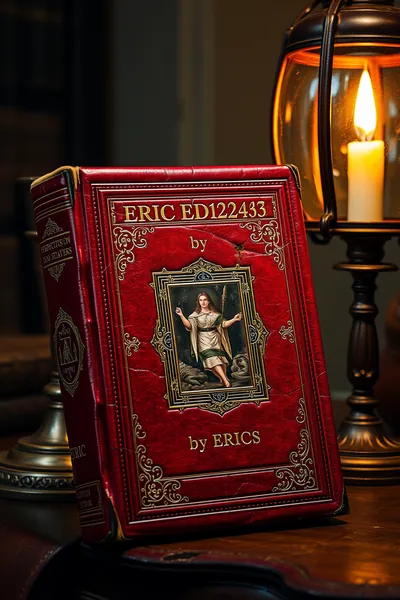
Shadowhog (Flying Foxes)

 81
81

Shadowhog (Flying Foxes)
Sandra Ann Horn's Shadowhog (Flying Foxes) presents a challenging, if sometimes opaque, look at the interplay between the unseen and the perceived. The book’s strength lies in its refusal to shy away from speculative territory, particularly its examination of chiropteran symbolism as a conduit for liminal energies. Horn’s approach is commendable for its directness, attempting to map out conceptual territories often left to vague pronouncements. However, a significant limitation is the lack of explicit grounding for some of its more ambitious claims. For instance, the section discussing the archetypal 'shadow self' in relation to nocturnal flying mammals feels underdeveloped, leaving the reader to bridge substantial conceptual gaps. While the work offers intriguing avenues for thought, it occasionally feels like a sketch of a larger, unarticulated cosmology. It is a text for those who enjoy piecing together complex ideas from fragmented insights.
📝 Description
81
Sandra Ann Horn's Shadowhog (Flying Foxes), published in 2001, examines concepts on the fringes of esoteric thought.
Shadowhog (Flying Foxes) is not a history or a standard philosophical text. Instead, it engages with ideas typically classified as fringe or alternative. Horn's approach seeks to illuminate phenomena outside conventional scientific or religious understandings. The book's style is direct, aiming to clarify complex subjects without excessive jargon, though familiarity with esoteric concepts is beneficial for full comprehension.
The work is suited for those already involved in esoteric studies, comparative mythology, or speculative philosophy. It addresses readers undeterred by challenging established paradigms. Individuals interested in broadening their knowledge of non-traditional belief systems or the symbolic aspects of seemingly unrelated phenomena will find value within its pages. It assumes a prior engagement with alternative spiritual or philosophical ideas, rather than serving as an entry point for complete novices.
Published in the early 2000s, Shadowhog emerged during a period of renewed interest in esoteric traditions, often influenced by New Age movements and increased online access to obscure texts. This era followed the late 20th-century popularization of occult ideas, drawing from figures like Helena Blavatsky and Aleister Crowley. Horn's book contributes to ongoing discussions about non-material realities and consciousness, a conversation with ancient roots.
💡 Why Read This Book?
• Gain a unique perspective on chiropteran symbolism as a mediator of liminal states, a concept explored extensively in the book's analysis of 'shadow' phenomena. • Understand the esoteric concept of 'liminality' beyond simple thresholds, as Horn frames it as an active domain influencing consciousness. • Discover how folklore and mythology, specifically concerning flying foxes, can be interpreted as symbolic representations of psychic or energetic realities.
⭐ Reader Reviews
Honest opinions from readers who have explored this book.
❓ Frequently Asked Questions
When was Shadowhog (Flying Foxes) first published?
Shadowhog (Flying Foxes) was first published in 2001, placing it within the early 21st-century wave of esoteric literature that sought to reinterpret ancient symbols and concepts for a contemporary audience.
What is the primary esoteric lineage or tradition that Shadowhog (Flying Foxes) engages with?
While not strictly confined, the book engages with themes common in Hermeticism and Gnosticism, particularly concerning hidden knowledge, intermediary beings, and the exploration of non-physical realms.
What does the 'shadow' represent in the context of Shadowhog (Flying Foxes)?
In Shadowhog, the 'shadow' is presented not merely as an absence of light but as a distinct domain of influence, consciousness, or energetic reality that exists alongside the perceived world.
Are there specific symbols discussed in Shadowhog (Flying Foxes) beyond the flying fox?
While the flying fox is central, the book likely explores other nocturnal or liminal symbols, drawing parallels between their folkloric meanings and esoteric interpretations of hidden forces or states of being.
Who is Sandra Ann Horn, and what is her background?
Information on Sandra Ann Horn's specific background is not widely publicized, typical of many authors in specialized esoteric fields. Her work, including Shadowhog, suggests a deep engagement with comparative mythology and esoteric philosophy.
What kind of reader would most appreciate Shadowhog (Flying Foxes)?
Readers interested in speculative philosophy, comparative mythology, and esoteric studies, particularly those comfortable with unconventional interpretations of symbols and phenomena, would find this book engaging.
🔮 Key Themes & Symbolism
Liminality and Thresholds
Shadowhog posits liminality not as a static state but as an active, influential domain. This concept, central to many esoteric traditions, is explored through the lens of nocturnal creatures. The book suggests that these thresholds between worlds—waking and dreaming, life and death, the known and the unknown—are populated by distinct forces or entities. The work examines how these liminal spaces are often symbolized by creatures of the night, thereby offering a framework for understanding the unseen architecture of reality and consciousness.
Chiropteran Symbolism
The flying fox, or chiropteran form, is a primary motif in Shadowhog. It is presented as more than a biological entity; it functions as a potent symbol representing the 'shadow' aspect of existence. This symbolism connects to ancient myths and esoteric lore where bats or similar creatures are seen as guides, omens, or inhabitants of the underworld. Horn's work seeks to decode this ancient symbolism, proposing that these creatures represent mediators or manifestations of energies that operate at the edges of human perception and understanding.
The Nature of the 'Shadow'
In this text, the 'shadow' is elaborated as a fundamental aspect of existence, distinct from mere absence. It is theorized as a realm or a force with its own properties and inhabitants, often associated with the night, the unconscious, and the hidden dimensions of reality. Shadowhog explores the relationship between this 'shadow' domain and the 'light' or manifest world, suggesting a dynamic interplay. The book encourages a re-evaluation of what is considered dark or unknown, framing it as an integral part of a larger, unified cosmic structure.
Consciousness and Perception
The book inherently questions the limits of ordinary human perception. By focusing on liminal states and symbolic representations like the flying fox, Horn suggests that our everyday awareness captures only a fraction of reality. The work implies that understanding these esoteric concepts can expand one's consciousness, allowing for a more comprehensive grasp of existence. It challenges readers to consider alternative ways of knowing and perceiving, moving beyond purely rational or empirical frameworks to embrace a more holistic, symbolic comprehension.
💬 Memorable Quotes
Direct passages from the work, attributed to the author.
“Liminal spaces are not barriers, but active conduits for subtle energies.”
— This interpretation frames liminality not as a mere boundary, but as a dynamic interface. It suggests that these transitional zones are vital for the flow of esoteric forces, impacting both the external world and internal states of being.
“To understand the night is to begin to understand the greater cosmos.”
— This idea suggests that the nocturnal, the hidden, and the seemingly unknown aspects of existence are intrinsically linked to the totality of the universe. It encourages a revaluation of darkness and mystery as essential components of cosmic understanding.
“Perception is shaped by what we allow ourselves to encounter.”
— This concept underscores the book's emphasis on expanding consciousness. It implies that our current understanding of reality is limited by our willingness to engage with less conventional or hidden aspects of existence.
💡 Key Ideas
Editorial paraphrase of the work's core concepts — not direct quotes.
The shadow is not empty, but a domain teeming with its own form of existence.
This quote highlights a core tenet of the book: that 'shadow' represents a substantive, active realm rather than a void. It suggests a parallel reality or dimension that possesses its own inherent life and dynamics, inviting contemplation of what lies beyond the visible.
Chiropteran forms serve as keys to the thresholds between awareness.
This paraphrase emphasizes the symbolic role of flying creatures in the text. It positions them as crucial intermediaries or guides, facilitating passage or understanding between different states of consciousness or planes of existence.
🌙 Esoteric Significance
Tradition
Shadowhog engages with themes resonant within Hermeticism and Gnosticism, particularly the exploration of hidden realms, intermediary beings, and the nature of subjective reality. It departs from strict adherence by focusing on symbolism derived from natural phenomena, like chiropteran forms, as direct conduits to esoteric understanding. While not a formal grimoire or philosophical treatise in the classical sense, it functions as a speculative text that maps conceptual territory often explored in esoteric psychology and comparative mythology, suggesting a unified symbolic language for the hidden aspects of existence.
Symbolism
The central symbol is the 'flying fox' (chiropteran), representing not just a creature but a mediator between the manifest and the shadow realms. Its nocturnal nature and association with darkness signify its role in accessing hidden knowledge and liminal states. The 'shadow' itself is a key motif, presented as a substantive domain rather than an absence, embodying the unconscious, the unknown, and the potentially powerful forces that lie beyond ordinary perception. These symbols collectively point to a cosmology where the hidden is as vital as the visible.
Modern Relevance
Contemporary practitioners of depth psychology and those exploring Jungian archetypes may find Horn's symbolic interpretations of the 'shadow' and liminal beings particularly relevant. The work also speaks to modern esotericists interested in animism and the symbolic life of nature, offering a framework for understanding the spiritual significance of creatures often overlooked or feared. Its focus on alternative modes of perception and the exploration of non-ordinary states of consciousness aligns with current interests in consciousness studies and psychedelic-assisted therapy explorations, albeit from a more traditional symbolic perspective.
👥 Who Should Read This Book
• Students of comparative mythology and esoteric symbolism seeking to understand the archetypal significance of nocturnal creatures and the concept of the 'shadow'. • Speculative philosophers and consciousness researchers interested in alternative frameworks for understanding reality and perception beyond empirical science. • Individuals engaged in personal esoteric development who are exploring the interplay between the conscious and unconscious mind, and the symbolic range of the hidden self.
📜 Historical Context
Published in 2001, Sandra Ann Horn's Shadowhog emerged during a period of burgeoning interest in esoteric studies, fueled by increased internet access to diverse texts and a wider cultural acceptance of alternative spirituality. This era saw a significant resurgence of interest in occult philosophy, comparative mythology, and speculative metaphysics, building upon trends from the late 20th century. The intellectual landscape was marked by a synthesis of ancient wisdom traditions with modern psychological and philosophical concepts. Horn's work can be situated alongside contemporary explorations by authors who, like her, sought to bridge the gap between folklore, symbolism, and the study of consciousness. While specific contemporary figures like Jacques Vallee were investigating similar themes of anomalous phenomena and their symbolic interpretations, Horn’s approach focuses more intensely on the archetypal and psychological dimensions of these 'shadow' domains, distinguishing it from more scientific or ufological investigations. The reception of such works often occurred within niche communities, with limited mainstream academic engagement, though they contributed to a broader cultural dialogue on the nature of reality.
📔 Journal Prompts
The symbolic role of chiropteran forms as mediators.
The nature of the 'shadow' as a distinct domain.
Encountering liminality in waking life.
The perception of nocturnal symbolism.
Expanding awareness beyond ordinary thresholds.
🗂️ Glossary
Chiropteran
Referring to the order of mammals that includes bats and flying foxes. In the context of Shadowhog, it carries significant symbolic weight related to night, liminality, and hidden domains.
Liminality
The quality of being in or at a transitional or initial stage of process. In esoteric thought, it refers to thresholds between states of being, consciousness, or reality, often associated with potent symbolic activity.
Shadow Domain
A conceptual space or realm within esoteric thought, representing the hidden, unconscious, or less manifest aspects of existence. In Shadowhog, it is depicted as a substantive and active territory.
Archetype
In Jungian psychology and related esoteric fields, a universal, archaic pattern and image that derives from the collective unconscious and is inherited. It often manifests in symbols and myths.
Esoteric
Intended for or likely to be understood by only a small number of people with a specialized knowledge or interest. It pertains to hidden or secret knowledge, often of a spiritual or mystical nature.
Symbolic Representation
The use of images, figures, or likenesses to represent abstract ideas, qualities, or concepts. In Shadowhog, natural forms like the flying fox serve as symbolic vehicles for deeper meanings.
Perception
The ability to see, hear, or become aware of something through the senses. Esoterically, it also encompasses intuitive or non-ordinary ways of knowing and understanding reality.
🔮 Readers Also Liked
Browse all →







More Free Occult Philosophy Books
View all →