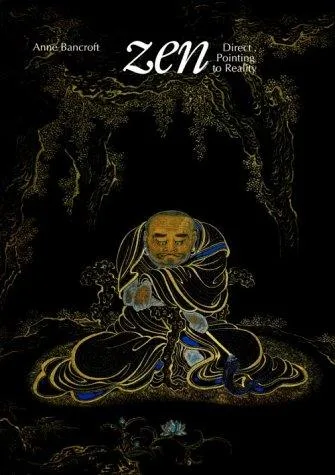
Zen
 73
73

Zen
Anne Bancroft’s "Zen" presents a notably thorough and accessible introduction to the subject, especially considering its original publication in 1987. The strength of the book lies in its systematic approach, moving logically from historical origins to core practices and philosophical underpinnings. Bancroft avoids jargon where possible, making complex ideas like non-duality and the function of koans comprehensible to a Western audience. A particularly insightful section details the development of Chan Buddhism in China, highlighting the crucial Taoist influences that shaped its unique character. However, the book occasionally feels a touch dry, prioritizing comprehensive explanation over evocative description. While it meticulously outlines the 'what' and 'how' of Zen, the 'why'—the experiential transformation—is left more to the reader's inference than explicitly conveyed. Bancroft's "Zen" serves as a robust, scholarly foundation for understanding this profound tradition.
📝 Description
73
Anne Bancroft's "Zen" published in 1989 details the core tenets of Zen Buddhism.
Anne Bancroft’s "Zen" offers a thorough look at the principles and practices of Zen Buddhism. The book goes beyond simple definitions to examine the central ideas that characterize this major school of Mahayana Buddhism. Bancroft covers the philosophical foundations, historical evolution, and practical methods of Zen meditation and thought, presenting it as a way of life rather than solely a religion.
This work is useful for those wanting a clear understanding of Zen. It is suited for students of Eastern philosophy, meditation practitioners seeking deeper theoretical knowledge, and anyone interested in comparative religion. Readers who value detailed historical accounts and straightforward explanations of complex philosophical ideas will find "Zen" especially valuable. It also serves general readers curious about significant world spiritual traditions.
Bancroft places Zen within its larger Buddhist context, tracing its path from India through China to Japan. The book notes the substantial influence of Taoism on the development of Chan Buddhism in China, which later became Zen. Understanding this historical progression is important for recognizing the distinct qualities of Zen compared to other Buddhist schools.
Zen Buddhism, originating from Chan Buddhism in China, represents a distinct path within Mahayana traditions. Its emphasis on direct experience, meditation (zazen), and the transmission of insight from master to disciple places it within esoteric streams that prioritize experiential realization over purely intellectual dogma. The use of koans and the pursuit of satori reflect methods aimed at transcending ordinary conceptual thought, aligning with practices found in various mystical traditions that seek immediate apprehension of ultimate reality.
💡 Why Read This Book?
• Gain a structured understanding of Zen's origins and development, tracing its path from Indian Buddhism through Chinese Chan to Japanese Zen, a historical arc crucial for appreciating its distinctiveness. • Grasp the function and significance of core Zen practices like zazen and koans, moving beyond superficial definitions to understand their role in cultivating direct experience. • Understand the non-dualistic philosophy underpinning Zen, learning how it challenges conventional perception and emphasizes immediate, intuitive insight over abstract reasoning.
⭐ Reader Reviews
Honest opinions from readers who have explored this book.
❓ Frequently Asked Questions
When was Anne Bancroft's book "Zen" first published?
Anne Bancroft's "Zen" was first published in 1987, making it a significant early work in the Western discourse on the subject.
What is the primary focus of Anne Bancroft's "Zen"?
The book primarily focuses on the foundational principles, historical development, and core practices of Zen Buddhism, aiming for a comprehensive and accessible introduction.
Does "Zen" by Anne Bancroft discuss meditation techniques?
Yes, the book extensively discusses meditation techniques, particularly zazen (seated meditation), explaining its practice and importance within the Zen tradition.
Is "Zen" by Anne Bancroft suitable for beginners?
Yes, "Zen" is widely considered suitable for beginners due to its clear explanations and structured approach to complex philosophical and practical concepts.
What historical influences are discussed in Bancroft's "Zen"?
The book discusses key historical influences, including the development of Chan Buddhism in China and the significant impact of Taoist philosophy on its formation.
What is a koan according to Anne Bancroft's "Zen"?
According to Bancroft's "Zen", a koan is a paradoxical riddle or question used in Zen practice to exhaust the rational mind and provoke direct, intuitive understanding.
🔮 Key Themes & Symbolism
The Practice of Zazen
Central to Zen is the practice of zazen, or seated meditation. Bancroft details how this is not merely relaxation but a rigorous discipline aimed at cultivating present-moment awareness and insight. The book explains the posture, breathing, and mental focus required, emphasizing that zazen is the direct gateway to understanding the nature of mind, free from conceptual overlay. It’s presented as the bedrock upon which all other Zen understanding is built, a continuous process rather than a goal to be achieved.
The Role of Koans
Koans, paradoxical questions or statements, are presented as crucial tools in the Zen practitioner's arsenal. Bancroft explains their purpose: to short-circuit logical reasoning and awaken intuitive understanding, often referred to as satori. The book explores famous koans and the dialogues between masters and disciples surrounding them, illustrating how these seemingly nonsensical puzzles are designed to push the mind beyond its ordinary limits, forcing a breakthrough in perception.
Non-Duality and Emptiness
A core philosophical concept explored is non-duality, the understanding that perceived separations (self/other, mind/body, sacred/profane) are illusory. Bancroft elucidates how Zen points towards an interconnected, undivided reality. This is closely linked to the concept of emptiness (sunyata), not as nihilism, but as the lack of inherent, independent existence in all phenomena, which paradoxically allows for their arising and interrelation.
Historical Lineage and Transmission
The book emphasizes the importance of lineage and direct transmission of understanding in Zen. Bancroft traces the historical flow of the teaching from the Buddha, through Bodhidharma to China (as Chan), and then to Japan (as Zen). This historical narrative highlights the role of enlightened masters passing down the essence of the teaching directly, person to person, often outside of formal scriptures, underscoring the experiential nature of Zen realization.
💬 Memorable Quotes
Direct passages from the work, attributed to the author.
“Zazen is not a means to an end, but the end itself.”
— This interpretation emphasizes that the practice of seated meditation, zazen, is not merely a tool to achieve enlightenment, but is considered the direct expression of one's enlightened nature in the present moment.
“A koan is a hammer to break the cage of the rational mind.”
— This metaphorical interpretation explains the function of koans as paradoxical challenges designed to dismantle the limitations of logical thinking, thereby liberating the mind for direct, intuitive insight.
“In Zen, the master’s role is to point the way, not to carry the student.”
— This captures the essence of the teacher-student dynamic in Zen, where the master acts as a guide, encouraging self-reliance and direct experience rather than providing answers or solutions.
💡 Key Ideas
Editorial paraphrase of the work's core concepts — not direct quotes.
The aim of Zen is not to teach you something new, but to help you realize what you already are.
This paraphrased concept highlights Zen's focus on uncovering inherent nature rather than acquiring external knowledge. It suggests that enlightenment is a process of self-discovery, stripping away illusions to reveal the true self that has always been present.
Understanding Zen is less about intellectual assent and more about embodied realization.
This paraphrased concept stresses that true understanding in Zen arises from direct, lived experience and practice, rather than from merely agreeing with philosophical propositions or doctrines intellectually.
🌙 Esoteric Significance
Tradition
While Zen Buddhism is a major school within Mahayana Buddhism, its emphasis on direct experience, mind-to-mind transmission, and the dissolution of dualistic perception aligns it with certain esoteric currents. Its lineage, particularly the emphasis on a master's direct guidance outside of scripture, shares structural similarities with esoteric transmissions found in Gnostic or Hermetic traditions, focusing on gnosis (direct knowledge) through practice rather than doctrine.
Symbolism
Key symbols in Zen include the Bodhi tree, representing enlightenment and the realization of Buddhahood, and the Dharma wheel, symbolizing the Buddha's teachings and the path to liberation. The simple act of zazen, with its specific posture, can be seen as symbolic of centeredness, stability, and the direct confrontation with one's own mind. The koan itself functions as a symbolic challenge, representing the ultimate mystery that logic cannot penetrate.
Modern Relevance
Contemporary mindfulness movements, secularized meditation practices, and certain schools of psychotherapy (like ACT - Acceptance and Commitment Therapy) draw heavily on Zen principles, particularly its emphasis on present-moment awareness and acceptance. Thinkers and practitioners exploring consciousness studies, contemplative science, and non-dual philosophies continue to reference foundational Zen texts and concepts as frameworks for understanding subjective experience and achieving psychological well-being.
👥 Who Should Read This Book
• Aspiring Zen practitioners seeking a foundational text to understand the philosophy and methods before or during formal practice. • Students of comparative religion and Eastern philosophy looking for a clear, historically grounded overview of a major Buddhist school. • Individuals interested in mindfulness and meditation who wish to explore the deeper roots and conceptual framework of these practices beyond secular applications.
📜 Historical Context
Published in 1987, Anne Bancroft's "Zen" emerged during a period of heightened Western fascination with Eastern philosophies and spiritual practices. The late 20th century saw numerous translations and introductions to Buddhism, yet Bancroft's work distinguished itself with its systematic and scholarly approach. This era was marked by significant cross-cultural intellectual exchange, influenced by figures like D.T. Suzuki, whose earlier writings had already introduced Zen concepts to the West. Competing schools of thought, such as Transcendentalism and various New Age movements, also vied for attention, but "Zen" offered a more grounded, historical, and practice-oriented perspective. While not met with significant controversy, its reception was part of a broader academic and popular engagement with Buddhism that aimed to move beyond romanticized notions towards a deeper comprehension of its diverse traditions.
📔 Journal Prompts
The concept of "emptiness" (sunyata) in Zen and its implications for perceived reality.
Your personal understanding of the purpose and effect of zazen practice.
Reflecting on a koan and the potential insights it might provoke.
The role of a spiritual teacher in the context of direct transmission.
How the Zen emphasis on non-duality contrasts with everyday dualistic thinking.
🗂️ Glossary
Zazen
Literally 'seated meditation', the core practice in Zen Buddhism. It involves precise posture, breath awareness, and mental focus, aimed at cultivating insight and present-moment awareness.
Koan
A paradoxical anecdote, riddle, or question used in Zen practice to challenge the rational mind, provoke doubt, and lead to intuitive awakening (satori).
Satori
A Japanese Buddhist term for a sudden, intuitive enlightenment or awakening. It signifies a deep, direct realization of the nature of reality, often experienced as a profound shift in perception.
Sunyata
A central concept in Mahayana Buddhism, often translated as 'emptiness'. It refers to the lack of inherent, independent existence of all phenomena, emphasizing interdependence and impermanence.
Bodhidharma
Considered the founder of Chan Buddhism in China, believed to have brought meditation practices from India. He is a key figure in the lineage of Zen masters.
Chan Buddhism
The Chinese precursor to Japanese Zen Buddhism. It developed unique meditation techniques and philosophical interpretations influenced by Taoism and Mahayana Buddhism.
Non-duality
The philosophical or spiritual understanding that reality is ultimately a unified whole, and that perceived distinctions (like self/other, mind/matter) are illusory or conventional.
🔮 Readers Also Liked
Browse all →









More Free Occult Philosophy Books
View all →