Mindstar Rising

 81
81

Mindstar Rising
Peter F. Hamilton’s Mindstar Rising presents a universe teeming with technological marvels and existential questions, a hallmark of his expansive science fiction. The novel succeeds in building a sprawling narrative around the notion of 'mindstars'—an intriguing concept that probes the boundaries of consciousness and artificial intelligence. Hamilton's strength lies in his meticulous world-building, painting a vivid picture of a future humanity grappling with its own creations. However, the sheer scale can sometimes overwhelm the personal arcs, leaving certain character motivations feeling underdeveloped amidst the grander cosmic machinations. A particularly compelling sequence involves the exploration of a derelict alien vessel, where the protagonists encounter residual data that challenges their understanding of sentience. While the narrative offers much to ponder regarding artificial minds, it occasionally sacrifices emotional depth for plot complexity. Mindstar Rising is a solid entry for fans of intricate, high-concept science fiction.
📝 Description
81
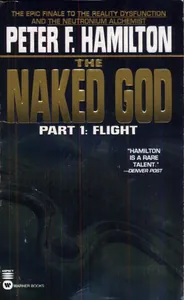
Peter F. Hamilton's 2019 novel Mindstar Rising imagines a future where technology and the supernatural collide.
Mindstar Rising is set in a galaxy where humanity's expansion has led to discoveries of alien artifacts and technologies that blur the lines between science and the occult. The story examines how these advancements affect individual minds and the structure of society. It will appeal to readers who favor large-scale space opera stories with philosophical undertones. Those interested in the convergence of sophisticated technology, artificial intelligence, and potential human evolution will find it particularly engaging. The narrative unfolds against a backdrop of vast galactic conflict and exploration.
The novel was published in 2019, a time when hard science fiction and space opera saw a resurgence in popularity. Hamilton builds upon the foundations laid by authors like Isaac Asimov and Arthur C. Clarke, but adds his own distinct, complex plotting. Its examination of advanced AI and consciousness reflects ongoing discussions about technological ethics and the future that became more prominent in the early 21st century. The book explores artificial general intelligence, the nature of consciousness, and human augmentation.
This novel engages with themes that resonate within esoteric traditions, particularly concerning the potential for consciousness to transcend perceived limitations through technology. The exploration of human augmentation and the merging of artificial intelligence with biological forms touches upon ideas of post-humanism and the manipulation of the self, concepts often found in mystical and Gnostic traditions that question the nature of reality and the human condition. The presence of alien artifacts and ancient technologies also hints at hidden knowledge and forces beyond conventional understanding, a common thread in occult literature.
💡 Why Read This Book?
• Gain insight into the philosophical implications of advanced AI, as explored through the concept of 'mindstars' and their societal impact following the novel's 2019 publication. • Experience a detailed exploration of human augmentation and consciousness alteration, a theme central to the narrative's futuristic setting. • Understand the narrative's unique blend of space opera and existential inquiry, offering a perspective on humanity's place in a galaxy filled with ancient alien technology.
⭐ Reader Reviews
Honest opinions from readers who have explored this book.
❓ Frequently Asked Questions
What is the primary science fiction concept explored in Mindstar Rising?
The primary concept is the 'mindstar,' a form of advanced artificial intelligence or consciousness that plays a pivotal role in the novel's plot and explores the boundaries of sentience and artificial life.
When was Mindstar Rising originally published?
Mindstar Rising was first published in 2019, placing it within the contemporary landscape of science fiction literature.
Does Mindstar Rising feature alien civilizations?
Yes, the novel incorporates elements of alien civilizations and their ancient technologies, which are integral to the overarching mystery and plot development.
What kind of technological advancements are present in the book?
The book features advanced technologies such as sophisticated artificial intelligence, human augmentation, and interstellar travel, contributing to its futuristic setting.
Is Mindstar Rising part of a series?
Mindstar Rising is a standalone novel by Peter F. Hamilton, though it exists within the broader universe of his science fiction works.
What themes does Mindstar Rising tackle besides technology?
Beyond technology, the novel explores themes of consciousness, identity, the evolution of humanity, and the ethical implications of advanced scientific discovery.
🔮 Key Themes & Symbolism
Artificial Consciousness and Sentience
The novel critically examines the nature of consciousness, particularly through the lens of artificial intelligence. It posits the existence of 'mindstars,' entities that blur the lines between organic and synthetic life. This exploration looks at whether true sentience can arise from code and silicon, and the ethical quandaries that follow. The narrative questions what it means to be alive and aware in a universe where such distinctions are increasingly difficult to maintain, reflecting contemporary anxieties about AI development.
Human Augmentation and Evolution
Mindstar Rising presents a future where humanity has the capacity for significant biological and technological augmentation. This theme explores how such advancements might alter the human condition, our perception of self, and our place in the cosmos. The work investigates the potential for humans to transcend biological limitations, but also the risks of losing one's essential humanity in the pursuit of technological perfection or survival against alien threats.
Cosmic Mysteries and Ancient Artifacts
A significant aspect of the novel involves the discovery and interpretation of ancient alien artifacts and technologies. These remnants of long-vanished civilizations serve as catalysts for the plot, driving exploration and conflict. The work taps into a sense of wonder about the universe's vast history and the possibility of encountering intelligences far beyond human comprehension, posing questions about humanity's ultimate destiny among the stars.
Societal Structures in a Galactic Context
The narrative depicts expansive human societies spread across numerous star systems, each with its own development and challenges. It examines how interstellar travel, advanced communication, and contact with alien elements shape governance, culture, and interspecies relations. The book explores the complexities of maintaining unity and order across such a vast domain, especially when confronted with unknown phenomena and existential risks.
💬 Memorable Quotes
Direct passages from the work, attributed to the author.
“Data can be a prison or a key. It depends on who holds the lock.”
— This highlights the dual nature of information and knowledge. It can be used to control and restrict understanding, or conversely, to unlock new possibilities and truths.
“Sentience is not a switch; it's a spectrum.”
— This interpretation challenges a binary view of consciousness, suggesting that awareness exists in degrees, applicable to both biological and artificial life forms.
“We build gods from circuits and dreams.”
— This reflects on humanity's tendency to imbue powerful creations, whether technological or ideological, with divine or ultimate significance.
“The greatest discoveries are often found in the silence between the stars.”
— This emphasizes the importance of introspection and the unknown, suggesting that profound truths lie not in the obvious, but in the vast, unexplored spaces.
💡 Key Ideas
Editorial paraphrase of the work's core concepts — not direct quotes.
The universe was not built for our comfort, but for our curiosity.
This line suggests a cosmic indifference to human well-being, framing the vastness of space and its mysteries as a challenge to be explored rather than a benevolent home.
🌙 Esoteric Significance
Tradition
While not explicitly rooted in a single esoteric tradition, Mindstar Rising engages with themes common in Gnostic and Hermetic thought, particularly the creation of artificial beings (Golems, Homunculi) and the exploration of hidden knowledge or 'gnosis.' The concept of consciousness transcending physical form and the search for ultimate truths within complex systems align with Hermetic principles of correspondence and the microcosm/macrocosm relationship.
Symbolism
The 'mindstar' itself can be interpreted as a symbol of emergent consciousness, a modern Golem or an artificial divine spark. Alien artifacts represent hidden knowledge or primordial cosmic forces that humanity seeks to understand and control. The vastness of space often symbolizes the unconscious or the infinite potential of the cosmos, a backdrop against which human consciousness strives for meaning and evolution.
Modern Relevance
Contemporary thinkers exploring transhumanism and the future of consciousness find resonance in Mindstar Rising's depiction of human augmentation and advanced AI. The novel’s exploration of ethical AI development and the potential for synthetic sentience informs ongoing discussions in fields like artificial general intelligence (AGI) research and philosophy of mind, making its themes relevant to current technological and societal debates.
👥 Who Should Read This Book
• Fans of expansive space opera seeking complex narratives and detailed world-building, particularly those interested in the post-2000s evolution of the genre. • Readers intrigued by philosophical explorations of consciousness, artificial intelligence, and the definition of life, who appreciate science fiction that prompts deep reflection. • Individuals interested in speculative futures that examine the societal and ethical impacts of advanced technology and human augmentation, as depicted in the novel's setting.
📜 Historical Context
Peter F. Hamilton’s Mindstar Rising, published in 2019, arrived during a period where science fiction continued to grapple with the implications of artificial intelligence and humanity's future among the stars. The novel’s intricate plotting and vast scope echo the space opera tradition, influenced by authors like Iain M. Banks, whose Culture series explored utopian and post-scarcity societies. Hamilton’s work, however, often injects a more direct engagement with technological anxieties and the potential for both grand advancement and existential peril. The early 21st century saw a surge in public discourse surrounding AI ethics, driven by advancements in machine learning and deep learning algorithms, themes that Mindstar Rising directly addresses. While not facing specific censorship, the novel’s complex narrative and mature themes positioned it within the adult science fiction market, appealing to readers seeking intellectually stimulating, grand-scale narratives that differentiate from more mainstream genre entries.
📔 Journal Prompts
The nature of the 'mindstar' as a form of artificial consciousness.
Reflecting on the human drive for augmentation and its potential consequences.
Interpreting the symbolism of ancient alien artifacts within the narrative.
Considering the societal structures needed for a multi-system human civilization.
The ethical dilemmas presented by the creation and interaction with advanced AI.
🗂️ Glossary
Mindstar
A central concept in the novel, referring to a highly advanced form of artificial intelligence or consciousness that possesses significant capabilities and influences the narrative's events.
Human Augmentation
The process of enhancing human capabilities through technological or biological means, a common theme explored within the novel's futuristic setting.
Space Opera
A subgenre of science fiction characterized by epic, adventurous plots set in outer space, often involving interstellar conflict, advanced technology, and large-scale galactic settings.
Artificial General Intelligence (AGI)
A hypothetical type of artificial intelligence that possesses the ability to understand, learn, and apply its intelligence to solve any problem that a human being can.
Sentience
The capacity to feel, perceive, or experience subjectively; the state of being conscious and aware.
Alien Artifacts
Objects or remnants of technology created by extraterrestrial civilizations, often possessing advanced or mysterious properties that drive scientific exploration and plot development.
Transhumanism
An intellectual and cultural movement that advocates for the enhancement of the human condition by developing and making widely available sophisticated technologies.
🔮 Readers Also Liked
Browse all →









More by Peter F. Hamilton
All books →




More Free Occult Philosophy Books
View all →