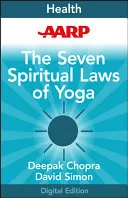
AARP The Seven Spiritual Laws of Yoga
 77
77

AARP The Seven Spiritual Laws of Yoga
Deepak Chopra's "The Seven Spiritual Laws of Yoga" attempts to distill yogic philosophy into a digestible, actionable framework, a task it largely achieves through its clear enumeration of principles. The strength lies in its accessibility; Chopra simplifies complex spiritual concepts, making them feel immediately applicable to modern life. However, this very accessibility can sometimes feel reductive. The connection between the "Seven Spiritual Laws" and the specific practices of yoga, while present, occasionally feels more asserted than deeply explored. For instance, the discussion of the Law of Pure Potentiality, while inspiring, might leave a seasoned yogi wanting more direct linkage to specific meditations or asanas. The limitation is a slight disconnect between the grand pronouncements of spiritual law and the granular details of yogic practice. Despite this, the book offers a valuable, if simplified, entry point into integrating yogic wisdom beyond the mat. It serves as a competent guide for those seeking a structured approach to personal growth through spiritual principles.
📝 Description
77
Deepak Chopra's 1998 book, "The Seven Spiritual Laws of Yoga," frames yoga as a path to conscious living.
This book presents yoga as more than a physical practice, grounding it in seven core principles for conscious living. The authors aim to guide readers toward greater self-awareness, inner peace, and success by integrating yogic philosophy into daily life. Consistent, mindful application of these laws is intended to unlock individual potential.
The seven spiritual laws serve as fundamental tenets for a more fulfilling existence. Each law is explained through yogic practices and philosophy, offering a clear path for personal transformation. The book demystifies these concepts, making them accessible for practical use beyond the physical postures of asana.
While acknowledging yoga's physical benefits, the text emphasizes its power to cultivate mental clarity, emotional resilience, and spiritual connection. Adhering to the seven laws, the authors suggest, leads to a deeper sense of purpose and well-being that extends beyond the physical body. The core message advocates for integrating yogic wisdom into everyday life, equipping readers with tools to foster creativity, enhance capacity for love, and promote success.
This work draws from Vedanta philosophy, a prominent school of Hindu thought, to articulate its seven spiritual laws. It adapts concepts like karma, dharma, and the nature of consciousness, which are central to yogic and broader Indian spiritual traditions. The book aims to make these ancient principles relatable to a contemporary audience seeking personal growth and inner peace, framing them as universal laws applicable to modern life.
💡 Why Read This Book?
• Gain a structured understanding of seven core yogic principles for daily application, as presented in the 2012 edition, enabling you to systematically cultivate inner peace. • Learn how to unlock your creative potential and capacity for love by consciously applying the principles, moving beyond physical yoga to spiritual integration. • Discover practical techniques for finding success in all life areas, directly linked to the "Seven Spiritual Laws of Yoga" and their mindful practice.
⭐ Reader Reviews
Honest opinions from readers who have explored this book.
❓ Frequently Asked Questions
What are the seven spiritual laws of yoga as presented by Deepak Chopra?
The book outlines seven laws: Pure Potentiality, Givingness, Causality (Karma), Least Effort, Intention & Desire, Detachment, and Dharma. Each law is presented as a principle for achieving spiritual and material success.
Is this book suitable for beginners in yoga?
Yes, this book is designed for accessibility. It focuses on the spiritual and philosophical aspects of yoga, making it suitable for individuals new to the practice or those seeking to deepen their understanding beyond physical postures.
What is the original publication year of 'AARP The Seven Spiritual Laws of Yoga'?
The book was first published on April 17, 2012, as indicated by the AARP Digital Editions release.
How does this book connect yoga with everyday life?
It bridges the gap by explaining how yogic philosophy, embodied in the seven laws, can be applied to daily challenges and aspirations, fostering a more conscious and fulfilling existence.
What are the benefits of practicing the Seven Spiritual Laws of Yoga?
Practitioners can expect enhanced creativity, improved relationships, greater success, increased inner peace, and a deeper sense of purpose by adhering to these principles.
Who is the intended audience for this book?
The book is aimed at adults, particularly those associated with AARP, seeking practical guidance on spiritual growth and well-being through the lens of yoga and Chopra's philosophy.
🔮 Key Themes & Symbolism
Law of Pure Potentiality
This law posits that our essential nature is pure consciousness, the source of all possibilities. By connecting with this inner silence, practitioners can tap into infinite creativity and access their true potential. The book suggests that within this stillness lies the answer to any problem, encouraging a shift from a reactive to a responsive mode of being, a central to yogic self-mastery.
Law of Givingness
Contrary to a scarcity mindset, this law emphasizes that the universe operates on a principle of abundance through giving and receiving. It suggests that the flow of energy, affection, and material possessions is cyclical. By freely giving what one wishes to receive, practitioners create space for greater abundance to enter their lives, aligning with the concept of selfless action in yogic traditions.
Law of Karma (Causality)
This is the law of cause and effect, where every action generates a consequence. The book interprets Karma not as punishment, but as a natural process of creation. Consciously choosing actions that bring happiness to oneself and others leads to positive karmic outcomes, fostering a sense of responsibility and mindful engagement with the world.
Law of Least Effort
This principle advocates for living in harmony with nature, embracing ease and avoiding unnecessary struggle. It suggests that when we act with love, acceptance, and awareness, our efforts become effortless, and we achieve more with less resistance. This appeals to yogic ideals of surrender and flow, moving away from forceful striving.
💬 Memorable Quotes
Direct passages from the work, attributed to the author.
“The benefits of yoga hint at the extraordinary power of this deeply spiritual practice.”
— This statement highlights that the physical improvements from yoga are merely the surface level of its true, profound spiritual impact. It suggests that the deeper benefits are far more significant and transformative.
“When adhered to and practiced mindfully, yoga can unlock readers’ full creative potential.”
— This points to the idea that consistent and conscious engagement with yoga's principles, not just its physical forms, is key to accessing and unleashing innate creativity. It emphasizes the mind-body-spirit connection.
“Yoga can unlock... their capacity for love and compassion.”
— This emphasizes yoga's role in fostering emotional and interpersonal growth. It suggests that the practice cultivates empathy and the ability to connect with others on a deeper, more loving level.
“Yoga can unlock... their ability to find success in all areas of their lives.”
— This interpretation suggests that yoga's influence extends to practical achievements and well-being in various life domains, implying a holistic approach to success driven by spiritual principles.
“AARP Digital Editions offer you practical tips, proven solutions, and expert guidance.”
— This framing indicates that the content within this edition is curated for actionable advice and reliable methods, directly addressing the needs of the reader for tangible results and knowledgeable support.
🌙 Esoteric Significance
Tradition
While not strictly adhering to a single esoteric lineage, this work draws heavily from the Vedanta tradition of Hinduism, particularly the Upanishads and Bhagavad Gita, which form the philosophical bedrock of yoga. It interprets these ancient texts through a modern, accessible lens, akin to Theosophical attempts to synthesize Eastern and Western spiritual ideas. The emphasis on 'laws' reflects a Hermetic influence, seeking universal principles governing existence, though presented without the symbolic language typical of Hermeticism.
Symbolism
The core 'laws' themselves function as symbolic frameworks rather than overt imagery. 'Karma' (Causality) symbolizes the interconnectedness of action and consequence, a fundamental principle in many esoteric systems. 'Dharma' represents one's unique purpose or path, a concept central to understanding one's role within the cosmic order. The 'Law of Least Effort' symbolically advocates for aligning with natural flows, akin to the Taoist concept of Wu Wei.
Modern Relevance
Chopra's work continues to influence contemporary wellness culture, mindfulness movements, and self-help literature. Its principles are echoed in secular mindfulness programs and positive psychology, albeit often stripped of their original spiritual context. Thinkers and practitioners in fields ranging from positive psychology to coaching psychology often engage with similar concepts of intention, cause-and-effect, and finding flow, demonstrating the enduring appeal of these distilled spiritual laws.
👥 Who Should Read This Book
["• Adults seeking a structured, principle-based approach to spiritual growth beyond physical yoga, particularly those familiar with Deepak Chopra's work.", '• Individuals interested in integrating ancient yogic philosophy into their daily lives for enhanced well-being and success, looking for actionable guidance.', '• Readers exploring comparative spirituality and self-help literature who want to understand the foundational concepts of yoga in an accessible format.']
📜 Historical Context
Published in 2012, "AARP The Seven Spiritual Laws of Yoga" emerges within a landscape where mind-body practices had gained significant mainstream traction since the late 20th century. Deepak Chopra himself rose to prominence in the early 1990s, popularizing Ayurvedic principles and quantum spirituality, often drawing parallels between ancient Indian wisdom and modern physics. This work follows a lineage of popularizers like Paramahansa Yogananda and Swami Vivekananda, who introduced yogic philosophy to the West. The 2012 publication date places it after the initial wave of New Age spiritualism and into an era where wellness and self-help were deeply integrated into consumer culture, often via platforms like AARP targeting an older demographic seeking vitality and meaning. While not directly engaging with academic critiques of Western yoga or specific philosophical schools like Advaita Vedanta, it operates within the broader discourse influenced by thinkers such as Fritjof Capra who sought to bridge science and spirituality.
📔 Journal Prompts
Reflect on moments where you experienced the Law of Least Effort, identifying actions that felt effortless yet yielded significant results.
How does the principle of Dharma, as explored in the book, inform your current life path and daily choices?
Consider the Law of Givingness: What might you offer more freely to enhance the flow of abundance in your life?
Identify a situation where applying the Law of Karma (Causality) consciously could shift your approach and outcomes.
Explore the connection between your essential nature and Pure Potentiality, as described in the text.
🗂️ Glossary
Dharma
In yogic philosophy, Dharma refers to one's unique purpose in life, their essential nature, and the righteous path or duty one is meant to follow.
Karma
The spiritual principle of cause and effect, where intentional actions (karma) create future consequences, shaping an individual's experiences and destiny.
Pure Potentiality
The fundamental state of consciousness described as the source of all possibilities, infinite creativity, and the silent, unbounded self.
Givingness
The principle that the universe thrives on circulation and abundance; giving freely what one wishes to receive fosters a continuous flow of energy and resources.
Least Effort
The practice of acting in harmony with nature and life's natural flow, minimizing struggle and resistance to achieve goals with ease and grace.
Detachment
Releasing emotional ties to outcomes, allowing for freedom from the need to control events, and fostering a state of non-judgmental observation.
Intention & Desire
The power of focused intention, combined with desire, to manifest outcomes; the book emphasizes clarity and consciousness in setting intentions.