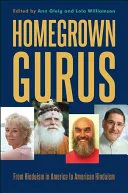
Homegrown Gurus
 80
80

Homegrown Gurus
Ann Gleig and Lola Williamson’s *Homegrown Gurus* effectively charts a critical transition in American religious history. The book’s strength lies in its sociological focus, detailing the shift from imported spiritual authority to indigenous leadership within American Hinduism. The essays collectively demonstrate how Hindu traditions are not merely transplanted but actively cultivated and reshaped by North American-born practitioners and leaders. A notable limitation is the occasional unevenness in essay depth, though this is characteristic of edited collections. The exploration of how these "American" gurus navigate the complexities of both inherited tradition and local cultural contexts, particularly in the discussions surrounding leadership succession and doctrinal interpretation, is compelling. It offers a nuanced view of religious evolution. *Homegrown Gurus* provides a vital snapshot of religious indigenization.
📝 Description
80
Homegrown Gurus (2013) examines the rise of American-born spiritual leaders in Hinduism.
This collection of essays analyzes a significant development in American Hinduism: the emergence of spiritual leaders born and raised in North America. Moving past the initial phase where Indian gurus adapted teachings for Westerners, the book details how American Hinduism has matured into its own distinct tradition. It investigates the leadership and networks that have developed from within the United States and Canada, focusing on a generation of leaders who inherited and indigenized their spiritual heritage.
The book considers the "indigenization" of Hinduism in America, charting its transition from an imported religion to a distinctly "American" one. It highlights the rise of "homegrown gurus," individuals born in North America who now lead established Hindu traditions or new movements derived from them. The essays look at the organizational structures of these networks, how these leaders translate religious concepts for a North American audience, and the formation of unique identities within American religious pluralism.
Published in 2013, *Homegrown Gurus* addresses the later stages of the transmission and adaptation of Eastern religious traditions in the West. It moves beyond the initial period of Indian teachers establishing ashrams and centers in America during the mid-to-late 20th century. The book focuses on the subsequent development where practitioners and leaders born in North America began to shape these traditions from within, creating forms of Hinduism that reflect the local religious and cultural landscape.
💡 Why Read This Book?
• Learn about the concept of "American Hinduism" as a distinct tradition, moving beyond its import origins, as detailed in the book's central thesis. • Understand the specific phenomenon of "homegrown gurus" – North American-born leaders who have become central figures, a key focus of the 2013 publication. • Gain insight into the networks and organizational structures that support these emerging religious leaders, as explored through case studies within the essays.
⭐ Reader Reviews
Honest opinions from readers who have explored this book.
❓ Frequently Asked Questions
When was Homegrown Gurus first published?
Homegrown Gurus was first published on October 29, 2013, marking a significant point in the study of religious indigenization in America.
Who are the main authors of Homegrown Gurus?
The primary authors and editors of Homegrown Gurus are Ann Gleig and Lola Williamson.
What is the main argument of Homegrown Gurus?
The book argues that Hinduism in America has evolved from an imported religion into its own distinct tradition, now led by North American-born spiritual leaders, or 'homegrown gurus'.
What kind of leaders does the book focus on?
The book focuses on leaders born in North America who have come to lead Hindu communities or movements, differentiating them from the earlier generation of Indian gurus.
What academic field does Homegrown Gurus contribute to?
It significantly contributes to the academic fields of religious studies, sociology of religion, and American cultural studies, particularly concerning the diaspora of Eastern religions.
What does 'indigenization' mean in the context of Homegrown Gurus?
Indigenization refers to the process by which a religion, like Hinduism, becomes rooted and adapted within a new cultural context, developing its own unique forms and leadership, as explored in the book.
🔮 Key Themes & Symbolism
Religious Indigenization
The central theme is the "indigenization" of Hinduism in America, a process where the religion ceases to be solely an imported faith and begins to develop distinct characteristics and leadership indigenous to the North American continent. This involves adaptation, translation, and the formation of new spiritual networks that reflect the local cultural landscape, moving beyond the initial phase of welcoming Indian gurus.
Emergence of New Leadership
The book critically examines the rise of "homegrown gurus" – individuals born and raised in North America who now lead established Hindu traditions or new spiritual movements. It analyzes their unique positionality, navigating both inherited traditions and the expectations of a Western-born congregation, and how this leadership shapes the future trajectory of these religions.
Transnational Networks
Homegrown Gurus investigates the intricate webs of connection that link spiritual leaders, communities, and institutions across North America and potentially globally. These networks are crucial for the dissemination of teachings, the formation of identity, and the sustainability of religious movements, particularly as they adapt to diverse socio-cultural environments.
American Hinduism Identity
The collection probes the very definition of "American Hinduism," arguing that it has matured into a distinct tradition rather than simply an offshoot of Indian religious practices. This involves exploring how religious identities are constructed, negotiated, and expressed within the pluralistic American religious landscape by both leaders and followers.
💬 Memorable Quotes
Direct passages from the work, attributed to the author.
“Americans welcomed Indian gurus who adjusted their teachings to accommodate the New World context.”
— This observation highlights the initial dynamic where Eastern spiritual traditions were adapted for Western audiences, setting the stage for the later development explored in the book.
“"American Hinduism" can now rightly be called its own tradition rather than an imported religion.”
— This is the core thesis, asserting that the religion has transformed significantly, developing unique characteristics and leadership distinct from its origins in India.
“This spiritual path is now headed by leaders born in North America.”
— This directly points to the central subject: the rise of indigenous leadership within the Hindu diaspora in the United States and Canada.
“Homegrown Gurus explores this phenomenon in essays about these figures and their networks.”
— This statement clearly defines the book's methodology and focus: examining the individuals and the organizational structures that characterize this new phase of American Hinduism.
“After a century of experimentation during which Americans welcomed Indian gurus...”
— This frames the historical trajectory discussed, placing the emergence of homegrown leaders within a longer arc of Hindu spiritual influence and adaptation in America.
🌙 Esoteric Significance
Tradition
While Hinduism itself is a vast and diverse religious tradition, *Homegrown Gurus* engages with its presence within the broader context of Western esoteric and New Age movements that gained traction in the 20th century. It examines how Hindu concepts and practices have been integrated, adapted, and sometimes reinterpreted within North American spiritual frameworks, leading to unique syncretic forms and leadership structures that depart from orthodox lineages.
Symbolism
The book implicitly touches upon the symbolism associated with gurus and spiritual leadership within Hinduism, such as the guru-disciple relationship and the transmission of spiritual authority. While not examining specific esoteric symbols in a traditional Western sense, it explores the symbolic weight carried by these new North American leaders as representatives of both tradition and innovation within their communities.
Modern Relevance
Contemporary thinkers and practitioners exploring the evolution of global religions, the sociology of spiritual movements, and the impact of cultural adaptation on religious practice find this work invaluable. It directly informs discussions on religious pluralism in North America, the challenges of maintaining tradition amidst secularization, and the ongoing development of hybrid spiritual identities that blend Eastern philosophies with Western cultural sensibilities.
👥 Who Should Read This Book
• Scholars of religious studies and sociology of religion interested in the diaspora of Eastern traditions and the formation of new religious movements. • Individuals exploring the evolution of spirituality in North America and the concept of religious "indigenization." • Practitioners and students of Hinduism seeking to understand the contemporary leadership and identity of the tradition in the United States and Canada.
📜 Historical Context
When *Homegrown Gurus* was published in 2013, the range of American religious studies was increasingly grappling with the complexities of globalization and diaspora. The preceding decades had seen a significant influx of Indian spiritual teachers—such as Swami Prabhupada, founder of ISKCON, in the 1960s, and Maharishi Mahesh Yogi with Transcendental Meditation—who had established enduring institutions. These figures represented the first wave of "imported" religious authority. Gleig and Williamson's work arrived as a critical examination of the subsequent generation, focusing on leaders who emerged organically from within American society. This marked a shift from studying the reception of foreign traditions to analyzing their indigenization and the development of distinct, locally-rooted leadership. The book's approach implicitly engaged with scholars like Diana Eck, whose work on "American religions" broadly considered the impact of new immigrant communities and spiritual movements on the nation's religious fabric.
📔 Journal Prompts
The emergence of "homegrown gurus" signifies a transformation in American Hinduism.
Analyze the concept of "American Hinduism" as a distinct tradition.
Reflect on the role of networks in supporting indigenous religious leadership.
Consider the adaptation of teachings for a "New World context."
Explore the balance between inherited tradition and local cultural influence for North American-born leaders.
🗂️ Glossary
Homegrown Gurus
Spiritual leaders of Hindu traditions or movements who were born and raised in North America, rather than immigrating from India.
American Hinduism
A term used to describe the unique evolution and expression of Hindu traditions within the United States and Canada, marked by adaptation and indigenous leadership.
Indigenization
The process by which a religion or spiritual tradition becomes rooted and adapted within a specific local culture, developing distinct characteristics and leadership.
Diaspora
The scattering of a people or community from their original homeland, often leading to the adaptation and transformation of their cultural and religious practices in new environments.
New World context
Refers to the cultural, social, and religious range of North America, distinct from the historical contexts of the countries from which immigrant religions originated.
Spiritual Networks
The interconnected relationships, institutions, and communication channels that support the development and dissemination of religious teachings and practices.