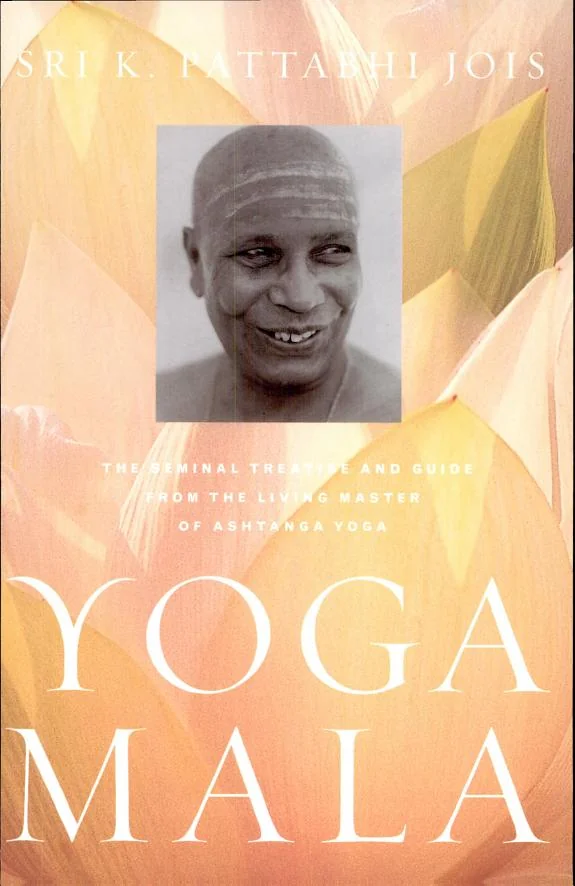
Yoga mala
 81
81

Yoga mala
Yoga Mala offers a stark, unadorned presentation of Pattabhi Jois’s Ashtanga Vinyasa system. It eschews lyrical prose for direct instruction, which is both its strength and its potential limitation. The book functions as a detailed anatomical map of the Primary Series, emphasizing the mechanics of the poses and the flow between them. One finds clear directives on breath count and drishti, crucial elements often glossed over in less rigorous texts. A passage detailing the precise vinyasa count between the standing sequence and the seated postures, for instance, highlights the system's meticulous design. However, the absence of extensive commentary on the philosophical underpinnings or the subtler energetic effects can leave practitioners seeking deeper meaning feeling somewhat adrift. It presents the ‘what’ and ‘how’ with authority, but less of the ‘why’ beyond the stated therapeutic aims. It’s an essential technical manual, not a philosophical treatise.
📝 Description
81
First published in 2017, Yoga Mala details Sri K. Pattabhi Jois's Ashtanga Vinyasa Yoga system.
Yoga Mala presents the Ashtanga Vinyasa Yoga system as taught by Sri K. Pattabhi Jois. This edition, published in 2017, details the series of postures and the role of breath and gaze (drishti) in practice. It serves as a text for understanding the structure and flow of this yoga lineage. The work is a systematic exposition of a rigorous physical and mental discipline.
This volume is intended for dedicated practitioners of Ashtanga Vinyasa Yoga, particularly those who have begun the primary series and seek a deeper reference. It is also for yoga teachers wishing to solidify their understanding of Jois's method and its precise sequences. Students of comparative spiritual practices, especially those interested in the physical and meditative disciplines that emerged from India in the 20th century, will find it informative.
Sri K. Pattabhi Jois (1915-2009) was instrumental in bringing Ashtanga Vinyasa Yoga to a global audience from the 1970s onward. His teaching in Mysore, India, became a site for Western students. The development and popularization of this yoga style occurred during a period of increased Western interest in Eastern philosophies and practices. Jois's method, with its fixed sequences, contrasted with more fluid or individually tailored approaches to Hatha Yoga prevalent at the time.
Sri K. Pattabhi Jois's Ashtanga Vinyasa Yoga system, detailed in Yoga Mala, represents a specific transmission within the broader Hatha Yoga tradition. Originating in the 20th century, it systematized classical Hatha Yoga techniques into fixed sequences, emphasizing the synchronization of breath (pranayama) with movement (asana). This method, taught in Mysore, India, became a significant point of reference for modern yoga practice, integrating physical discipline with meditative focus through techniques like Ujjayi breath and specific drishti. It reflects a lineage that codified and disseminated practices rooted in older Indian yogic texts.
💡 Why Read This Book?
• Gain an authoritative understanding of the Ashtanga Vinyasa Yoga Primary Series as codified by Sri K. Pattabhi Jois, learning the precise vinyasa counts and sequences directly from the source. • Understand the integral role of Ujjayi breath and Drishti (gazing points) within Jois's method, learning how these elements are intended to cultivate internal heat and focus during practice. • Appreciate the historical significance of Ashtanga Vinyasa Yoga's popularization in the late 20th century, recognizing this text as a key document from that era of global yoga transmission.
⭐ Reader Reviews
Honest opinions from readers who have explored this book.
❓ Frequently Asked Questions
What is the 'Primary Series' in Yoga Mala?
The 'Primary Series,' also known as Yoga Chikitsa or Yoga Therapy, is the first sequence of postures detailed in Yoga Mala. It is designed as a therapeutic practice to purify the body and mind through precise movements synchronized with breath.
Who was Sri K. Pattabhi Jois and why is his teaching significant?
Sri K. Pattabhi Jois (1915-2009) was a renowned Indian yoga master who popularized the Ashtanga Vinyasa system worldwide. His teachings, rooted in traditional Indian yoga, became highly influential from the latter half of the 20th century onwards.
What is 'vinyasa' according to Yoga Mala?
In Yoga Mala, 'vinyasa' refers to the synchronized method of linking breath with movement. It describes the specific sequence of inhalations and exhalations that transitions practitioners between different yoga postures.
What does 'drishti' mean in the context of this book?
'Drishti' signifies the specific gazing point used during each posture in Ashtanga Vinyasa Yoga, as outlined in Yoga Mala. It is considered a key element for developing concentration and directing the mind's focus.
Is Yoga Mala suitable for absolute beginners to yoga?
While Yoga Mala provides the foundational structure of Ashtanga Vinyasa, its detailed and rigorous nature makes it most suitable for practitioners who have already begun the Primary Series and seek an authoritative reference.
When was Yoga Mala first published?
The edition of Yoga Mala authored by Sri K. Pattabhi Jois that we reference was first published in 2017, making it a relatively recent compilation of his teachings.
🔮 Key Themes & Symbolism
The Vinyasa System
Yoga Mala meticulously details the 'vinyasa' system, the dynamic flow that synchronizes breath with movement. This is not merely a series of poses but a continuous, flowing practice designed to build internal heat (tapas) and purify the body. Each transition between asanas is prescribed with specific inhalations and exhalations, creating a moving meditation. The text emphasizes that understanding and correctly executing these sequences is fundamental to the Ashtanga Vinyasa method taught by Jois, distinguishing it from static Hatha yoga practices.
Breath and Gaze as Tools
Central to the practice described in Yoga Mala are Ujjayi breath and Drishti (gazing points). Ujjayi breath, often described as an oceanic sound produced in the throat, is presented as a means to regulate the internal temperature and maintain focus. Drishti directs the practitioner's gaze to specific points, such as the tip of the nose or the space between the eyebrows, fostering intense concentration and preventing the mind from wandering. These elements are not supplementary but integral components of the Ashtanga Vinyasa discipline.
Asana Sequences and Therapy
The book lays out the 'Primary Series' (Yoga Chikitsa), which translates to 'yoga therapy'. This specific, ordered sequence of postures is presented not just as a physical exercise but as a therapeutic tool for addressing physical ailments and mental imbalances. The precise arrangement of poses within the series is designed to systematically detoxify the body, strengthen the nervous system, and bring about a state of equilibrium. The text serves as an authoritative guide to performing these sequences correctly.
Dissemination of Ashtanga Vinyasa
Yoga Mala represents a key textual output from Sri K. Pattabhi Jois, documenting the Ashtanga Vinyasa Yoga system that he extensively taught and popularized globally from the mid-20th century onwards. The book serves as a reference for the method he transmitted, often through intensive workshops and extended study periods in Mysore. Its publication reflects the growing Western engagement with Indian yoga traditions and the establishment of distinct, highly structured lineages like Jois's Ashtanga.
💬 Memorable Quotes
Direct passages from the work, attributed to the author.
“The series of asanas is called Vinyasa.”
— This concise statement highlights the core of the Ashtanga Vinyasa system, defining the practice not just by individual postures but by the flowing sequence that connects them, emphasizing movement and breath.
“Ujjayi is the breath.”
— A simple yet profound assertion, this points to the central role of Ujjayi breath in Ashtanga Vinyasa. It signifies that the specific breathing technique is not an add-on but a fundamental component of the practice.
“Ashtanga Yoga is a difficult thing.”
— This observation, often attributed to Jois, acknowledges the rigorous nature of the system. It suggests that dedication, discipline, and perseverance are necessary to engage with and benefit from the practice.
“The Primary Series is Yoga Chikitsa.”
— This directly links the initial sequence of Ashtanga Vinyasa to its therapeutic purpose. It frames the practice as a method for healing and balancing both the body and the mind.
💡 Key Ideas
Editorial paraphrase of the work's core concepts — not direct quotes.
Drishti is the point where the eyes look.
This quote underscores the importance of focused gaze in Jois's method. Drishti is presented as a crucial element for cultivating concentration and anchoring the mind during the physical practice.
🌙 Esoteric Significance
Tradition
Yoga Mala is rooted in the Hatha Yoga tradition, specifically the lineage of Ashtanga Vinyasa as transmitted by Sri K. Pattabhi Jois. While Hatha Yoga itself has esoteric dimensions involving subtle body energies (prana, nadis, chakras), Jois's method, as presented in this text, emphasizes the physical practice (asana) and breath control (pranayama) as primary means to achieve mental discipline and purification. It can be seen as a modern, highly systematized application of yogic principles, focusing on the physical body as a vehicle for spiritual development.
Symbolism
The 'vinyasa' itself functions as a powerful symbol of cyclical time and the interconnectedness of all phenomena. The precise breath counts linking each movement represent the rhythm of the universe. 'Ujjayi' breath, with its 'oceanic' sound, symbolizes the primordial vibration or the inner life force. 'Drishti,' the focused gaze, represents the concentration required to perceive the underlying unity behind apparent diversity, moving from external observation to internal awareness.
Modern Relevance
Contemporary yoga practitioners and teachers worldwide continue to draw directly from the teachings documented in Yoga Mala. Many modern studios offering Ashtanga Vinyasa adhere strictly to the sequences and principles laid out by Jois. Thinkers and practitioners interested in the historical development of 20th-century yoga, the transmission of Indian spiritual practices to the West, and the efficacy of highly structured physical disciplines for mental well-being often reference Jois and this text.
👥 Who Should Read This Book
• Dedicated Ashtanga Vinyasa practitioners seeking to deepen their understanding of the Primary Series, including precise vinyasa counts and drishti points. • Yoga teachers of any lineage looking to study a specific, influential method of Hatha Yoga and its historical context. • Students of comparative spiritual practices interested in the systematization of yogic techniques in the 20th century and their global dissemination.
📜 Historical Context
Sri K. Pattabhi Jois (1915-2009) became a central figure in the global spread of Hatha Yoga, particularly through his Ashtanga Vinyasa system. His teachings gained significant traction in the West from the 1970s onward, a period marked by a burgeoning interest in Eastern spiritual and physical disciplines. This followed earlier waves of Indian yogis, like Paramahansa Yogananda and Swami Vivekananda, who introduced various yogic and Vedantic concepts to Western audiences in the early 20th century. Jois's method, with its fixed sequences and emphasis on vinyasa, presented a distinct approach compared to the more eclectic or spiritually focused yoga prevalent at the time. His school in Mysore became a focal point for Western students seeking direct instruction. While the reception was largely enthusiastic among practitioners, some scholars and teachers debated the authenticity and historical lineage claims of such rigidly structured systems versus more adaptable Hatha Yoga practices.
📔 Journal Prompts
The methodical structure of the Primary Series in Yoga Mala.
The role of Ujjayi breath in building internal heat and focus.
The significance of Drishti as a point of concentration.
Pattabhi Jois's contribution to global yoga dissemination.
The therapeutic aim of Yoga Chikitsa as presented.
🗂️ Glossary
Asana
A physical posture or position, particularly one in Hatha Yoga designed for strength, flexibility, and meditation. Yoga Mala details specific asanas within the Ashtanga Vinyasa sequence.
Drishti
A specific gazing point used during yoga practice to cultivate concentration and focus the mind. Yoga Mala outlines nine distinct drishtis for various postures and transitions.
Ujjayi
A diaphragmatic breathing technique characterized by a gentle constriction in the throat, producing a soft, oceanic sound. It is used in Ashtanga Vinyasa to build internal heat and maintain focus.
Vinyasa
The synchronization of breath with movement. In Ashtanga Vinyasa, it refers to the specific sequences of inhalations and exhalations that link one asana to the next.
Yoga Chikitsa
Literally 'yoga therapy.' In the context of Ashtanga Vinyasa, it refers to the Primary Series, believed to purify the body and mind and alleviate ailments.
Primary Series
The first sequence of postures in the Ashtanga Vinyasa system, as taught by Sri K. Pattabhi Jois. It is designed as a foundational therapeutic practice.
Surya Namaskara
Sun Salutations, a series of foundational poses typically performed at the beginning of Ashtanga Vinyasa sequences to warm the body and build energy.
🔮 Readers Also Liked
Browse all →









More by Sri K. Pattabhi Jois
All books →

More Free Occult Philosophy Books
View all →