Yoga Mala
 80
80

Yoga Mala
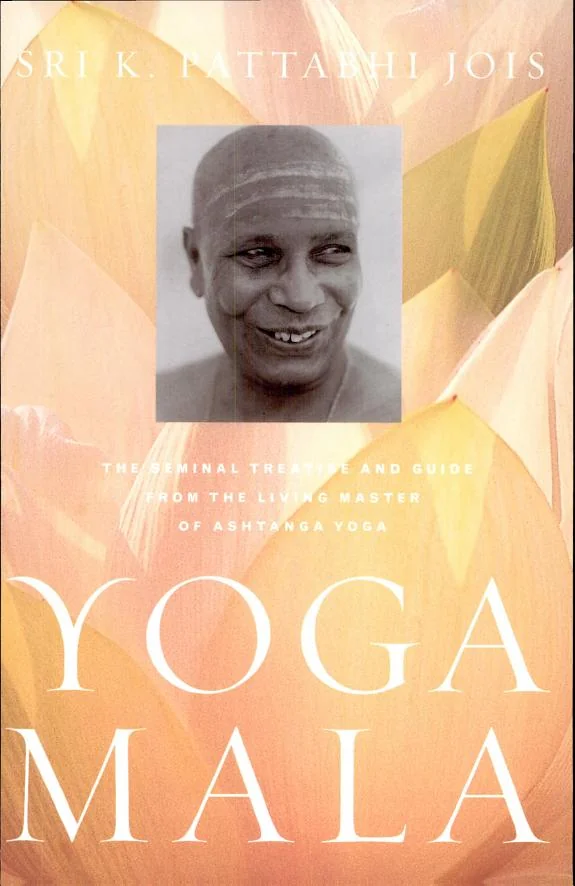
Sri K. Pattabhi Jois's Yoga Mala offers a direct transmission of the Ashtanga Vinyasa system, eschewing flowery prose for authoritative instruction. The book's strength lies in its systematic presentation of the primary series, complete with Jois's own authoritative voice guiding the practitioner through the vinyasas, asanas, and drishti. The inclusion of 67 photographs, while dated by contemporary standards, provides clear visual cues for the sequences. A notable limitation is the relative brevity of its philosophical sections; while it touches upon the Yamas and Niyamas, a deeper exploration of these ethical underpinnings, as found in Patanjali's Yoga Sutras, is not the primary focus. The section detailing the Vinyasa count for each posture is particularly valuable for serious students aiming for precision. Ultimately, Yoga Mala serves as an indispensable, if somewhat austere, manual for those committed to mastering the Ashtanga path.
📝 Description
80
Published in 2002, Yoga Mala documents Sri K. Pattabhi Jois's Ashtanga Vinyasa Yoga system.
Yoga Mala presents the Ashtanga Vinyasa Yoga system as taught by Sri K. Pattabhi Jois. The book details the sequence of postures, known as asanas, and the role of breath (pranayama) and gazing points (drishti) within the practice. It explains the basic principles that support the discipline, treating it as more than just physical exercise and instead as a complete method for well-being.
This volume is for serious students of Ashtanga Vinyasa Yoga who want to understand the system directly from its originator. It is also useful for practitioners of other yoga styles interested in the roots and ideas that have greatly influenced contemporary yoga. Those who study Eastern philosophies or comparative religion will find useful observations about a significant modern spiritual movement. Sri K. Pattabhi Jois was important in bringing Ashtanga Vinyasa Yoga to the West starting in the late 1970s. His teachings offered a structured and demanding system, different from the more individual or therapeutic yoga methods becoming popular in America then. Yoga Mala came from many years of dedicated practice and instruction, securing Ashtanga's position in the global yoga world.
The book systematically introduces the primary series of Ashtanga Yoga, detailing the specific movements that connect each posture. It highlights the importance of Ujjayi breath, Bandhas (energy locks), and Drishti (focus points) as key elements that refine and strengthen the body and mind. The ethical guidelines, Yamas and Niyamas, are also covered as the philosophical basis of the practice.
Ashtanga Vinyasa Yoga, as codified by Sri K. Pattabhi Jois, represents a structured approach to Hatha Yoga. It emphasizes the Vinyasa system, a flowing sequence of postures synchronized with breath. This method aims to build internal heat, purify the body, and focus the mind, aligning with yogic traditions that view physical practice as a means to spiritual development. The inclusion of Bandhas (energy locks) and Drishti (gazing points) points to tantric influences, where the body is a vehicle for transforming energy and consciousness.
💡 Why Read This Book?
• Gain direct instruction on the Ashtanga Vinyasa system from its primary proponent, Sri K. Pattabhi Jois, understanding the specific vinyasa counts and sequences that define the practice. • Grasp the foundational role of Ujjayi breath and Bandhas in purifying the body and mind, concepts central to Jois's teachings and integral to Ashtanga's energetic structure. • Understand the ethical framework of Yamas and Niyamas as presented by Jois, recognizing their importance as the philosophical bedrock supporting the physical discipline.
⭐ Reader Reviews
Honest opinions from readers who have explored this book.
❓ Frequently Asked Questions
What is the original publication year of Yoga Mala by Sri K. Pattabhi Jois?
Yoga Mala was first published in 2002, presenting Sri K. Pattabhi Jois's comprehensive teachings on the Ashtanga Vinyasa Yoga system.
What are the core components of Ashtanga Vinyasa Yoga as explained in Yoga Mala?
Yoga Mala details the Ashtanga Vinyasa system's core components: the specific sequences of postures (asanas), the linking breaths (pranayama), and the focal points (drishti).
Does Yoga Mala cover the philosophy behind Ashtanga Yoga?
Yes, Yoga Mala outlines the ethical principles and philosophy underlying Ashtanga Yoga, including discussions on the Yamas and Niyamas, which form the discipline's foundation.
How many photographs are included in Yoga Mala?
The book includes 67 photographs, offering visual guidance for the postures and sequences within the Ashtanga Vinyasa system.
Who is Sri K. Pattabhi Jois?
Sri K. Pattabhi Jois was a renowned Indian yoga teacher who is credited with popularizing Ashtanga Vinyasa Yoga in the West, beginning in the late 1970s.
Is Yoga Mala suitable for beginners to yoga?
While Yoga Mala provides foundational information, its detailed approach to Ashtanga Vinyasa makes it most suitable for dedicated students seeking to deepen their practice of this specific style.
🔮 Key Themes & Symbolism
The Ashtanga Vinyasa Sequence
Yoga Mala meticulously details the Primary Series of Ashtanga Vinyasa Yoga, emphasizing the precise flow (vinyasa) that links each posture. This systematic approach underscores the practice's inherent intelligence and kinetic sequencing, moving beyond static poses to create a dynamic, moving meditation. The book breaks down the count for each vinyasa, providing a rigorous structure for practitioners aiming for fidelity to Jois's original method.
Breath and Energy Locks
Central to the Ashtanga system presented in Yoga Mala is the Ujjayi breath, described as the victorious breath, which generates internal heat and purifies the body. Equally important are the Bandhas, subtle energy locks within the body that are engaged to channel and conserve vital life force (prana). The book illustrates how the coordinated use of breath and Bandhas elevates the physical practice into a profound energetic discipline.
Drishti and Mental Focus
The discipline of Drishti, or focused gazing, is a key element highlighted in Yoga Mala. Each posture in the Ashtanga sequence is associated with a specific point of focus for the eyes. This practice cultivates concentration, stills the mind, and integrates the physical action with mental awareness, preventing distraction and deepening the yogic experience. It transforms a physical exercise into a practice of internal observation.
Yamas and Niyamas
Beyond the physical and energetic aspects, Yoga Mala addresses the ethical precepts known as Yamas (restraints) and Niyamas (observances). These form the philosophical foundation of Ashtanga Yoga, guiding practitioners toward right living and inner discipline. Jois presents them as essential components for cultivating a balanced and integrated life, demonstrating that true yoga extends far beyond the mat.
💬 Memorable Quotes
Direct passages from the work, attributed to the author.
“The practice of Ashtanga Yoga is the practice of Vinyasa.”
— This statement underscores the fundamental importance of the synchronized breath and movement system that defines Ashtanga. It suggests that the essence of the practice lies not just in the individual postures but in the dynamic flow that connects them.
“Drishti is the concentration of the mind.”
— This highlights the role of focused gazing in Ashtanga Yoga. It points to how directing the eyes to specific points helps to anchor the mind, cultivate stillness, and deepen the practitioner's internal awareness.
“The Ujjayi breath purifies the body.”
— This emphasizes the physiological and energetic benefits of the Ujjayi breath. It suggests that this specific breathing technique is a primary tool for internal cleansing and the generation of vital energy within the practice.
“Bandhas are important for energy.”
— This concise statement points to the critical function of energetic locks in the Ashtanga system. It implies that engaging the Bandhas is essential for channeling and controlling the flow of prana throughout the practice.
“Yama and Niyama are the foundation.”
— This positions the ethical principles of yoga as paramount. It indicates that the external practices of Ashtanga are built upon a strong base of moral and ethical conduct, essential for true spiritual development.
🌙 Esoteric Significance
Tradition
Ashtanga Vinyasa Yoga, as presented in Yoga Mala, draws heavily from the classical Hatha Yoga traditions of India, particularly as transmitted through the lineage of Tirumalai Krishnamacharya. While not strictly aligned with Western Hermeticism or Kabbalah, its emphasis on internal energetic control (pranayama, bandhas), purification, and disciplined practice shares common ground with esoteric systems focused on the transformation of the human organism.
Symbolism
The primary symbolism in Yoga Mala resides in the Ujjayi breath, representing the vital life force (prana) and the internal fire (agni) that purifies the body. The Vinyasa itself acts as a symbolic bridge, linking the individual soul to the universal consciousness through rhythmic movement. The Drishti, or focused gaze, symbolizes the inward turning of the mind, essential for achieving concentration and detachment from external stimuli.
Modern Relevance
Contemporary yoga practitioners and teachers worldwide continue to draw directly from Yoga Mala, particularly those committed to the Ashtanga Vinyasa lineage. Thinkers and practitioners focused on somatic practices, embodied cognition, and the intersection of physical discipline with mental clarity find its structured approach highly relevant. Its influence is evident in the many studios worldwide dedicated to teaching Jois's system.
👥 Who Should Read This Book
• Dedicated Ashtanga Vinyasa Yoga practitioners seeking to refine their understanding of the Primary Series directly from Sri K. Pattabhi Jois's teachings. • Students of comparative yoga studies interested in the historical development and transmission of a major modern yoga system from its key proponent. • Individuals exploring disciplined somatic practices who wish to understand the integration of breath, posture, and focused attention as presented in a systematic method.
📜 Historical Context
Sri K. Pattabhi Jois's introduction of Ashtanga Vinyasa Yoga to the West, beginning in the late 1970s, occurred during a period of burgeoning interest in Eastern spiritual practices. As yoga gained traction in America, it diversified into numerous styles, from the more therapeutic approaches of Iyengar to the increasingly popular Viniyoga. Jois's system, with its demanding physical sequences and strict adherence to vinyasa, offered a distinct and rigorous path. Yoga Mala, published in 2002, arrived as Ashtanga had already established a significant global following, solidifying its position as a major force in modern yoga. Unlike some contemporaries who focused on philosophical texts or eclectic blending, Jois presented a highly structured, lineage-based practice rooted in Mysore, India, emphasizing direct transmission from guru to student.
📔 Journal Prompts
The role of the Vinyasa in linking breath and movement.
How the engagement of Bandhas influences the flow of prana.
The practice of Drishti and its effect on mental focus.
Reflections on the ethical principles of Yamas and Niyamas.
The internal heat generated by the Ujjayi breath.
🗂️ Glossary
Asana
A physical posture in yoga, intended to be held with steady awareness and breath. Yoga Mala details the specific asanas within the Ashtanga Vinyasa sequence.
Vinyasa
The synchronized system of breath and movement that links one posture to the next in Ashtanga Yoga. The term implies a specific flow and rhythm.
Pranayama
The practice of breath control, often involving specific techniques to regulate the intake and outflow of breath, believed to influence vital energy (prana).
Ujjayi Breath
A specific breathing technique in yoga characterized by a gentle constriction of the glottis, producing an audible oceanic sound. It is central to Ashtanga Vinyasa.
Bandha
A 'lock' or energetic seal within the body, typically involving the contraction of specific muscle groups to control and direct the flow of prana. Key Bandhas include Mula Bandha and Uddiyana Bandha.
Drishti
A specific point of focused gaze used during yoga practice to cultivate concentration and internal awareness. Each posture in Ashtanga has a designated Drishti.
Yama
Ethical restraints or disciplines that guide conduct in relation to others. The five Yamas are non-violence, truthfulness, non-stealing, continence, and non-possessiveness.
Niyama
Observances or disciplines that guide self-conduct. The five Niyamas are purity, contentment, austerity, self-study, and surrender to a higher power.
This book appears in 1 collection
🔮 Readers Also Liked
Browse all →








From the “Hatha Yoga” Collection
View all →







More Free Occult Philosophy Books
View all →