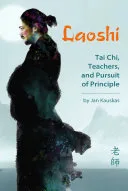
Laoshi: Tai Chi, Teachers, and Pursuit of Principle
 76
76

Laoshi: Tai Chi, Teachers, and Pursuit of Principle
Jan Kauskas's "Laoshi: Tai Chi, Teachers, and Pursuit of Principle" offers a refreshing departure from typical martial arts memoirs. Instead of focusing solely on physical prowess, Kauskas uses his experiences under a Tai Chi teacher, Laoshi, as a lens for examining fundamental principles. The book excels in its transparent depiction of the learning process, illustrating how abstract concepts like yielding and rooting can manifest in everyday interactions. A particularly effective passage describes the author's struggle to apply a Tai Chi principle during a mundane conflict, highlighting the book's core thesis. However, the semifictional approach sometimes blurs the line between memoir and narrative, occasionally leaving the reader wishing for more unvarnished personal reflection. Despite this, the work's strength lies in its accessible philosophical inquiry, making it a valuable read for anyone interested in applying inner discipline to outer life. It's a solid examination of learning as a lifelong pursuit.
📝 Description
76
Jan Kauskas's 2014 book, Laoshi, uses Tai Chi to examine the search for fundamental principles.
Laoshi: Tai Chi, Teachers, and Pursuit of Principle is a semifictional memoir by Jan Kauskas, published in 2014. The book follows the author's experiences with Tai Chi and other martial arts. While written with a narrative style akin to a novel, its content centers on practical applications for daily life. The core idea extends beyond martial arts to the universal quest for core principles.
This book is for anyone interested in personal growth, philosophy, or how to apply fundamental principles to everyday challenges. Readers who enjoy introspective stories and seek wisdom that crosses different life areas will find it valuable. It is not solely for Tai Chi practitioners but for those drawn to understanding deeper connections in life.
Published in 2014, the book is situated within a period of growing Western interest in Eastern philosophies, especially martial arts and mindfulness practices. Kauskas's work connects to the transmission lineage of Zheng Manqing's Tai Chi. It exists alongside the broader surge in popularity of contemplative traditions like Zen Buddhism during the late 20th and early 21st centuries. The book examines how disciplined practice can illuminate universal truths.
💡 Why Read This Book?
• Gain practical wisdom on applying core principles from Tai Chi to everyday life, as demonstrated through the author's dialogues with his teacher, Laoshi. • Understand the teacher-student dynamic in martial arts and its parallels to other learning environments, drawing from the 2014 publication context. • Explore the concept of 'pursuit of principle' beyond martial arts, using the author's personal accounts as a guide to finding substance in daily experiences.
⭐ Reader Reviews
Honest opinions from readers who have explored this book.
❓ Frequently Asked Questions
What is the primary focus of Jan Kauskas's "Laoshi: Tai Chi, Teachers, and Pursuit of Principle"?
The book's primary focus is the author's personal journey in Tai Chi and martial arts, framed as a semifictional memoir. It explores the universal theme of pursuing fundamental principles in everyday life, using the teacher-student relationship with 'Laoshi' as a central narrative device.
Is "Laoshi: Tai Chi, Teachers, and Pursuit of Principle" only for Tai Chi practitioners?
No, the book is designed for a wider audience. While rooted in Tai Chi experiences, its core message about applying principles to daily life makes it relevant for anyone interested in self-reflection and personal development.
Who was Zheng Manqing mentioned in relation to the book's Tai Chi exploration?
Zheng Manqing was a renowned Tai Chi master whose teachings influenced many, including potentially the author's lineage. His approach to Tai Chi is a significant element within the book's exploration of the art's principles.
What is the significance of the term 'Laoshi' in the book?
'Laoshi' is the term used in the book to refer to the teacher, a direct translation from Mandarin Chinese. It signifies the respected role of the instructor in guiding the student's learning and philosophical development.
When was "Laoshi: Tai Chi, Teachers, and Pursuit of Principle" first published?
The book was first published on May 1, 2014, positioning it within contemporary discussions on Eastern philosophies and personal growth.
What makes the narrative style of "Laoshi" unique?
The book employs a semifictional narrative style. While based on Kauskas's real experiences in pursuing Tai Chi, it flows like a novel, integrating philosophical substance and personal reflection within a story-driven format.
🔮 Key Themes & Symbolism
The Art of Laoshi
The term 'Laoshi' itself, meaning teacher in Mandarin, is central. This theme examines the profound influence of a guiding figure in the esoteric and practical pursuit of knowledge. Kauskas illustrates how a dedicated teacher imparts not just techniques but a philosophy for living, using his own experiences with his Tai Chi instructor as a prime example. The interactions highlight the subtle yet powerful ways wisdom is transferred through dialogue and embodied practice.
Principle Over Form
This theme contrasts the superficial practice of martial arts with the deeper 'pursuit of principle'. Kauskas argues that the true value of disciplines like Tai Chi lies not in mastering movements but in understanding and applying the underlying principles to all facets of existence. The book uses specific Tai Chi concepts, such as yielding and rooting, as metaphors for navigating life's challenges, emphasizing internal cultivation over external display.
Semifictional Memoir as Pedagogy
Kauskas employs a unique narrative structure, blending personal memoir with fictionalized elements to create a more engaging and accessible exploration of complex ideas. This approach allows for a narrative flow akin to a novel while retaining the authenticity and depth of lived experience. The 'semifictional' aspect serves as a pedagogical tool, making the esoteric pursuit of principle relatable and applicable to a broader readership.
Tai Chi as a Microcosm
The practice of Tai Chi serves as a microcosm for understanding broader life principles. The book details how the slow, deliberate movements, the focus on balance, and the internal energy cultivation inherent in Tai Chi reflect fundamental laws of nature and human interaction. By dissecting the martial art, Kauskas unveils universal truths that extend far beyond the training hall, offering a framework for personal growth.
💬 Memorable Quotes
Direct passages from the work, attributed to the author.
“The pursuit of principle extends beyond the training hall into the fabric of daily existence.”
— This core idea suggests that the lessons learned in disciplines like Tai Chi are not confined to physical practice but are meant to inform and guide all aspects of one's life, from relationships to decision-making.
“Dialogue with Laoshi revealed the deeper meaning behind the movements.”
— This highlights the importance of the teacher-student relationship in esoteric learning. Direct interaction and explanation from an experienced guide are crucial for moving beyond superficial understanding to grasp profound concepts.
“Applying yielding in a disagreement felt as challenging as any Tai Chi form.”
— This interpretation emphasizes the practical difficulty of integrating abstract principles into real-world situations, showing that inner development requires conscious effort and constant application.
“The narrative flows like a novel but is built on solid, applicable reality.”
— This speaks to the book's unique structure, aiming to engage readers with a story-like quality while ensuring the content offers genuine, practical wisdom for anyone, regardless of their background.
“Seeking fundamental truths through martial arts training.”
— This concisely captures the book's essence: using the structured discipline of martial arts as a vehicle for philosophical inquiry and the discovery of universal, fundamental truths.
🌙 Esoteric Significance
Tradition
While not explicitly aligning with a single Western esoteric tradition like Hermeticism or Kabbalah, "Laoshi" draws heavily from Taoist principles embedded within Tai Chi. Its exploration of balance, yielding, and natural flow connects it to the broader spectrum of philosophies that seek harmony with universal forces. The emphasis on internal cultivation and the teacher-student dynamic also echoes Gnostic and mystical traditions where direct transmission of knowledge is paramount.
Symbolism
The primary symbol is Tai Chi itself, representing duality (Yin and Yang), balance, and the cyclical nature of existence. The concept of 'Laoshi' (teacher) symbolizes the guiding principle or inner wisdom one seeks. The movements of Tai Chi, such as 'pushing hands' or 'single whip', become symbolic representations of how to navigate interpersonal conflicts and life's challenges with grace and principle.
Modern Relevance
Contemporary thinkers and practitioners in fields ranging from embodied cognition to mindfulness-based stress reduction can find resonance in Kauskas's work. The book's emphasis on integrating physical practice with philosophical understanding is relevant to modern approaches to holistic wellness and personal development. Its exploration of the teacher-student dynamic also speaks to current discussions on mentorship and effective knowledge transfer in both academic and practical settings.
👥 Who Should Read This Book
• Long-term Tai Chi practitioners seeking to deepen their understanding beyond physical form and explore the philosophical underpinnings of their art. • Readers interested in Eastern philosophies and their application to Western daily life, particularly those drawn to Taoist principles and self-cultivation. • Individuals exploring the dynamics of mentorship and the process of learning complex skills, appreciating narratives that blend personal experience with practical wisdom.
📜 Historical Context
Published in 2014, Jan Kauskas's "Laoshi" emerged during a period of continued Western interest in Eastern philosophies and practices, particularly martial arts like Tai Chi. This era saw a growing market for memoirs and self-help books that bridged physical disciplines with spiritual or philosophical inquiry. Kauskas's exploration of Zheng Manqing's Tai Chi lineage situates the work within a specific, influential branch of traditional Chinese martial arts transmission that had gained significant traction globally. While Kauskas's work focuses on personal experience, it exists in dialogue with a broader cultural trend that embraced mindfulness, contemplative practices, and the search for meaning in a rapidly changing world. The book's semi-fictional approach aligns with contemporary literary trends that blur genre boundaries to explore complex themes, offering a more engaging narrative than a purely academic treatise.
📔 Journal Prompts
The author's pursuit of principle through Tai Chi.
Reflecting on the role of 'Laoshi' in personal growth.
Applying the principle of yielding in a challenging situation.
Connecting Tai Chi movements to everyday life challenges.
The author's journey of seeking fundamental truths.
🗂️ Glossary
Laoshi
Mandarin Chinese term for 'teacher,' used in the book to denote the author's Tai Chi instructor and the role of a guiding figure in learning.
Tai Chi
A Chinese martial art practiced for both defense training and its health benefits, characterized by slow, flowing movements and deep breathing.
Pursuit of Principle
The central theme of the book, referring to the ongoing effort to understand and apply fundamental truths and guiding laws to all aspects of life, not just a specific discipline.
Zheng Manqing
A significant 20th-century Tai Chi master whose teachings and interpretations of the art have had a profound influence on its practice worldwide.
Semifictional Memoir
A narrative style that blends factual personal experiences with fictional elements, often used to enhance storytelling or explore themes more effectively.
Yielding
A core principle in Tai Chi and other martial arts, involving redirecting an opponent's force rather than meeting it head-on, emphasizing adaptability and non-resistance.
Rooting
In Tai Chi, the concept of maintaining a stable, grounded posture, essential for balance and power generation, symbolizing stability and connection in the face of external forces.