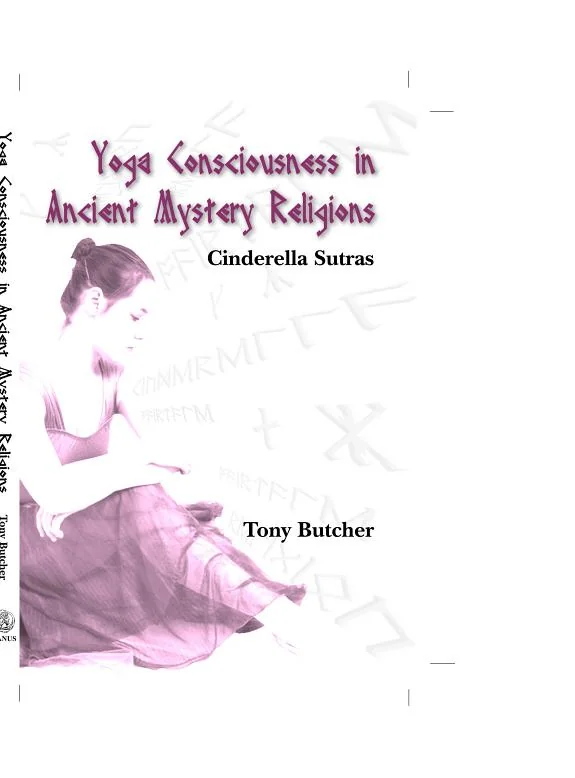
Yoga Consciousness in Ancient Mystery Religions
 83
83

Yoga Consciousness in Ancient Mystery Religions
Tony Butcher’s *Yoga Consciousness in Ancient Mystery Religions* attempts an ambitious synthesis, connecting the seemingly disparate worlds of fairy tales, ancient mystery cults, and Maharishi Mahesh Yogi's Transcendental Meditation. The strength of the book lies in its novel premise: that folklore serves as a repository for initiatory knowledge. Butcher highlights specific parallels, such as the symbolic journey of the hero in tales mirroring the spiritual aspirant’s path, a concept present in the Eleusinian Mysteries. However, the work occasionally strains to force connections, particularly when applying the specific mechanics of TM to vastly different historical contexts without sufficient textual evidence from those earlier periods. The argument feels most compelling when discussing the general principles of consciousness expansion common to many esoteric paths. Ultimately, Butcher offers a unique, if sometimes overly enthusiastic, perspective on the hidden wisdom within common stories.
📝 Description
83
Tony Butcher's 2006 book argues fairy tales conceal esoteric meanings linking to mystery religions.
Tony Butcher's *Yoga Consciousness in Ancient Mystery Religions*, published in 2006, proposes that traditional fairy tales carry deeper esoteric significance. The author connects these narratives directly to the teachings of ancient mystery schools and to the modern Transcendental Meditation movement, citing Maharishi Mahesh Yogi. Butcher posits that a universal 'yoga consciousness' state, accessible through various spiritual disciplines, forms the core of these traditions. He uses this concept to interpret fairy tale motifs as allegories for spiritual growth.
The book appeals to those interested in comparative mythology, esoteric studies, and the philosophical foundations of ancient wisdom traditions. Readers seeking to find hidden meanings in folklore or to understand historical links between Eastern yogic philosophies and Western mystery cults will find Butcher's analysis valuable. It addresses both academics and lay practitioners curious about perennial philosophies found within cultural narratives.
This work situates itself within a late 20th and early 21st-century academic and popular resurgence of interest in esoteric traditions. It engages with scholarship that sought to synthesize Eastern and Western mystical thought, a current exemplified by figures like Helena Blavatsky and the Theosophical Society. These traditions often explored connections between ancient mythologies, yogic practices, and altered states of consciousness, themes Butcher revisits through the lens of fairy tales and mystery cults.
💡 Why Read This Book?
• Understand how ancient mystery religions encoded spiritual teachings through allegory, providing a framework to decipher symbols within traditional fairy tales. • Explore the philosophical lineage connecting Maharishi Mahesh Yogi's Transcendental Meditation movement to Hellenistic mystery cults and their emphasis on consciousness expansion. • Gain a new interpretive method for analyzing folklore, moving beyond surface-level narratives to uncover deeper psychological and spiritual dimensions present since at least the Eleusinian Mysteries.
⭐ Reader Reviews
Honest opinions from readers who have explored this book.
❓ Frequently Asked Questions
What is the primary thesis of Tony Butcher's Yoga Consciousness in Ancient Mystery Religions?
The book's central argument is that traditional fairy tales are allegorical representations of spiritual journeys and consciousness states, mirroring the teachings preserved within ancient mystery religions and the practices of yoga.
What specific ancient traditions does the book reference?
It references the teachings of ancient mystery schools, particularly drawing parallels with Hellenistic mystery cults and the philosophical underpinnings of yogic traditions.
How does Maharishi Mahesh Yogi fit into the book's argument?
Butcher uses Maharishi Mahesh Yogi's teachings on Transcendental Meditation as a modern framework to understand and interpret the consciousness-altering techniques and goals found in ancient mystery religions and yogic practices.
What is 'yoga consciousness' as presented in the book?
'Yoga consciousness' refers to a state of expanded awareness and inner peace attainable through specific contemplative and meditative practices, which Butcher argues is a common goal across various ancient spiritual disciplines.
Does the book provide practical guidance for spiritual development?
While not a direct how-to manual, the book offers interpretive guidance by showing how ancient narratives and teachings can inform a reader's understanding of their own spiritual development and consciousness exploration.
When was Yoga Consciousness in Ancient Mystery Religions first published?
The book was first published in 2006.
🔮 Key Themes & Symbolism
Folklore as Esoteric Text
Butcher posits that familiar fairy tales are not mere children's stories but encoded wisdom traditions. He argues these narratives function as allegories for spiritual progression, mirroring the initiatory paths found within ancient mystery schools. This perspective recontextualizes folklore as a vital, albeit veiled, repository of esoteric knowledge, designed to guide the seeker toward higher states of consciousness, much like the teachings transmitted during the Eleusinian Mysteries.
Yoga Consciousness and Meditation
The book establishes 'yoga consciousness' as a universal state of awareness achievable through disciplined practice. Butcher draws explicit connections between ancient yogic techniques and the meditative practices advocated by Maharishi Mahesh Yogi, particularly Transcendental Meditation. This theme explores how both ancient traditions and modern movements aim to cultivate inner peace and expanded perception, suggesting a continuity of human spiritual aspiration across millennia.
Mystery Religions and Initiation
This theme focuses on the role of ancient mystery religions, such as those practiced in Hellenistic Greece, as conduits for esoteric teachings. Butcher examines how these cults used rituals, symbols, and narrative to facilitate spiritual transformation and impart knowledge about consciousness. The book suggests that the structure and symbolism within these ancient cults find echoes in the archetypal journeys depicted in folklore and in the methods of contemporary contemplative practices.
Symbolic Interpretation of Narratives
Butcher applies symbolic hermeneutics to deconstruct fairy tales and myths, revealing their deeper psychological and spiritual layers. This approach treats narrative elements not as literal events but as metaphors for internal states and processes. The book demonstrates how understanding these symbols, often rooted in ancient cosmologies and yogic principles, can lead to profound personal insights and a richer appreciation of cultural heritage.
💬 Memorable Quotes
Direct passages from the work, attributed to the author.
“Fairy tales are not merely fanciful stories, but rather symbolic maps of consciousness.”
— This statement captures Butcher's core argument that traditional folklore serves as a coded guide to spiritual development, mirroring the profound teachings found in ancient mystery traditions and yogic philosophy.
“The journey of the hero in myth parallels the aspirant's path through the mystery schools.”
— Here, the work highlights a key interpretive framework: the archetypal hero's quest in stories is presented as an allegory for the spiritual seeker's process of initiation and transformation within ancient esoteric orders.
“Initiation rites were designed to induce altered states, much like advanced yogic practices.”
— This interpretation points to the book's comparison of the transformative experiences sought in ancient mystery cults with the profound shifts in consciousness potentially achieved through dedicated yogic discipline.
💡 Key Ideas
Editorial paraphrase of the work's core concepts — not direct quotes.
Maharishi's technique offers a modern key to unlock ancient states of awareness.
This paraphrase emphasizes the book's bridge between contemporary practices, specifically Transcendental Meditation, and the pursuit of elevated consciousness understood to be central to ancient mystery religions and yoga.
The symbolism of the fairy tale reflects the cosmic principles taught in esoteric traditions.
This paraphrased concept suggests that the recurring motifs and characters in folklore are not arbitrary but deeply connected to the universal laws and structures of reality as understood by ancient esoteric philosophies.
🌙 Esoteric Significance
Tradition
This work aligns with the broader esoteric tradition of perennial philosophy, which posits a single, universal spiritual truth underlying all religions and mystical practices. It specifically bridges Eastern yogic traditions with Western mystery schools, suggesting a shared lineage and common goal of consciousness expansion. Butcher's approach departs from purely historical scholarship by applying modern contemplative frameworks, particularly Transcendental Meditation, as interpretive keys to ancient practices.
Symbolism
Key symbols explored include the archetypal hero's journey, prevalent in both folklore and initiatory narratives, representing the aspirant's progression through spiritual stages. The concept of 'inner light' or 'divine consciousness' is also central, interpreted as the ultimate goal of both yogic practice and mystery school initiation. Butcher also examines motifs of transformation and rebirth, common in myths and central to the transformative experiences promised by esoteric disciplines.
Modern Relevance
Butcher's work finds resonance with contemporary practitioners of mindfulness, meditation, and comparative spirituality. Thinkers and groups interested in the psychological applications of ancient wisdom, such as proponents of Integral Theory or Jungian psychology applied to spirituality, may find his synthesis relevant. It speaks to a modern audience seeking practical applications of ancient esoteric knowledge for personal growth and understanding consciousness.
👥 Who Should Read This Book
• Students of comparative mythology and folklore seeking alternative interpretive frameworks for analyzing traditional stories. • Practitioners of meditation and yoga interested in the historical and philosophical roots of consciousness exploration in ancient traditions. • Researchers and enthusiasts of Western esotericism and mystery religions curious about the links between Eastern philosophies and ancient Mediterranean cults.
📜 Historical Context
Tony Butcher's *Yoga Consciousness in Ancient Mystery Religions* (2006) emerged during a period of significant public and academic interest in comparative spirituality and the resurgence of esoteric thought. The book engages with the legacy of 19th and 20th-century figures like Helena Blavatsky and the Theosophical Society, who also sought to synthesize Eastern mysticism with Western traditions. Butcher's work can be seen as a continuation of this lineage, specifically focusing on the perceived connections between yogic principles and Hellenistic mystery cults. While academic discourse on mystery religions was robust, Butcher's approach, linking them directly to modern meditation techniques and fairy tales, occupied a more niche, popular-esoteric sphere. The work did not generate significant academic controversy but contributed to the growing body of literature exploring consciousness and ancient wisdom for a general audience, distinct from strictly academic historical analyses.
📔 Journal Prompts
The hero's journey in fairy tales as an allegory for spiritual progression.
Connections between Maharishi Mahesh Yogi's techniques and ancient mystery school goals.
Symbolism of transformation within the context of yoga consciousness.
Interpreting folklore through the lens of mystery religion teachings.
The concept of 'yoga consciousness' across different historical periods.
🗂️ Glossary
Yoga Consciousness
A state of expanded awareness, inner peace, and heightened perception cultivated through yogic practices, interpreted by Butcher as a universal goal shared with ancient mystery religions.
Mystery Religions
Ancient religious cults, particularly prominent in the Hellenistic period, characterized by secret initiatory rites and teachings concerning salvation and the afterlife, often involving symbolic narratives.
Transcendental Meditation (TM)
A specific form of silent mantra meditation developed by Maharishi Mahesh Yogi, aimed at achieving a state of restful alertness and accessing deeper levels of consciousness.
Allegory
A narrative in which characters, events, and settings represent abstract ideas or spiritual truths, used by Butcher to interpret the deeper meanings of fairy tales and myths.
Initiation
A ritual or process of admission into a group or society, often involving symbolic instruction and transformative experiences, central to the functioning of ancient mystery religions.
Perennial Philosophy
The concept that all major religious traditions share a common metaphysical core or essential truth about ultimate reality, a perspective underpinning Butcher's comparative approach.
Archetype
A universal, archaic pattern or image derived from the collective unconscious and appearing in literature, myths, and dreams, such as the hero's journey.
This book appears in 1 collection
🔮 Readers Also Liked
Browse all →









From the “Mystery Schools” Collection
View all →






More Free Occult Philosophy Books
View all →