I Ching
 84
84

I Ching
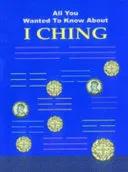
Vijaya Kumar's rendition of the I Ching offers a clear, accessible entry point into this ancient Chinese oracle. The strength of this edition lies in its straightforward presentation of the hexagrams and their associated judgments, making the often-dense text more manageable for newcomers. The inclusion of the Ten Wings, though paraphrased, provides essential context for understanding the philosophical underpinnings. However, the work occasionally sacrifices the poetic nuance of earlier translations for brevity, which might leave seasoned practitioners wanting more depth. A particularly stark example is the interpretation of Hexagram 1 (The Creative), where the profound cosmic generative power feels somewhat demystified. Kumar’s approach is commendably practical, focusing on actionable advice derived from the hexagrams. It serves well as an introductory text for those unfamiliar with Chinese divination systems.
📝 Description
84
The I Ching, originating from the Western Zhou Dynasty, is an ancient Chinese text on divination and philosophy.
This edition presents the I Ching, also known as the Book of Changes. Its history stretches from the Western Zhou Dynasty (c. 1046–771 BCE) through centuries of development into a sophisticated system. The text uses 64 hexagrams, each built from six lines, either broken (yin) or solid (yang). These hexagrams serve as a guide for understanding life's changes and making choices.
Each hexagram comes with a specific judgment, an image, and line statements that offer counsel. This book is for anyone interested in a structured method for divination and philosophical thought. It will appeal to readers drawn to classical Chinese philosophy, comparative mythology, and consulting oracles for personal insight. Students of Eastern philosophy will appreciate its systematic structure, as will those interested in the connections between texts, rituals, and self-awareness.
The I Ching occupies a unique position as both a foundational text for Chinese philosophy and a practical tool for divination. Its layered history, with early interpretations attributed to figures like King Wen and later commentaries like the Ten Wings credited to Confucius and his disciples, shows a progression from oracle to ethical framework. This evolution influenced later schools of thought, including Neo-Confucianism. Its continued study across dynasties highlights its deep cultural and spiritual significance within Chinese esoteric traditions.
💡 Why Read This Book?
• Gain a structured method for decision-making by learning to interpret the 64 hexagrams and their evolving lines, as detailed in the primary I Ching text. • Understand the foundational principles of Yin and Yang, and their manifestation in cyclical change, a core concept explored throughout the book's philosophical commentaries. • Develop a practice of consulting an oracle for personal insight, drawing upon the divinatory traditions dating back to the Western Zhou Dynasty, as presented in this edition.
⭐ Reader Reviews
Honest opinions from readers who have explored this book.
❓ Frequently Asked Questions
When was the I Ching first published in this specific edition by Vijaya Kumar?
Vijaya Kumar's edition of the I Ching was first published on December 1, 2003, making it a relatively modern interpretation of the ancient text.
What are the primary components of an I Ching hexagram?
Each hexagram in the I Ching is composed of six stacked lines, which can be either solid (representing Yang) or broken (representing Yin). These combinations form 64 distinct figures.
Who is traditionally credited with adding significant commentaries to the I Ching?
While the origins are ancient, the influential 'Ten Wings' commentaries are traditionally attributed to Confucius and his disciples, dating to around the 5th century BCE.
How does the I Ching help with decision-making?
By casting hexagrams (often using coins or yarrow stalks) and consulting the associated judgments and line statements, users receive symbolic guidance for understanding situations and potential outcomes.
Is the I Ching only for divination or does it have philosophical value?
The I Ching began as a divinatory tool but evolved into a profound philosophical and ethical text, exploring concepts of change, balance, and cosmic order, influencing Eastern thought for millennia.
What is the relationship between Yin and Yang in the I Ching?
Yin and Yang are fundamental, complementary forces depicted in the I Ching. Their dynamic interplay and transformation are central to understanding the text's depiction of the ever-changing nature of reality.
🔮 Key Themes & Symbolism
The Dynamics of Change
Central to the I Ching is the understanding that all things are in a state of flux. The 64 hexagrams are not static symbols but rather snapshots of ongoing transformations, illustrating how situations evolve and shift. This theme encourages practitioners to adapt to circumstances rather than resist them, recognizing that even periods of difficulty contain the seeds of future progress, mirroring the cyclical nature of existence observed since the Western Zhou Dynasty.
Balance of Opposites
The fundamental forces of Yin (passive, dark, feminine) and Yang (active, light, masculine) are the building blocks of the hexagrams. Their interplay represents the necessary balance required in all aspects of life. The text guides readers to recognize when to be assertive (Yang) and when to be receptive (Yin), promoting harmony by aligning actions with the natural cosmic order, a concept deeply embedded in Chinese philosophy.
Divination as Guidance
The I Ching functions as a sophisticated oracle, providing symbolic counsel for specific questions. By casting hexagrams, individuals receive metaphorical insights into their current situation, potential challenges, and the most auspicious course of action. This process, refined over centuries, encourages introspection and thoughtful consideration of one's path, moving beyond simple fortune-telling to a form of wisdom seeking.
Philosophical and Ethical Framework
Beyond its divinatory use, the I Ching offers a comprehensive worldview. The commentaries, particularly the Ten Wings attributed to Confucius's school, imbue the hexagrams with ethical implications and philosophical depth. It explores themes of virtue, perseverance, leadership, and the cultivation of wisdom, presenting a moral compass rooted in the observation of natural patterns and cosmic principles.
💬 Memorable Quotes
Direct passages from the work, attributed to the author.
“The superior man acts according to the time.”
— This aphorism highlights the I Ching's emphasis on situational awareness and adaptability. It suggests that true wisdom lies not in rigid adherence to a single course of action, but in discerning the opportune moment and aligning one's behavior with the prevailing conditions.
“Seek harmony, not victory.”
— This interpretation emphasizes the I Ching's guidance towards balance and integration rather than conflict or domination. It promotes a path of understanding and cooperation that aligns with natural forces.
“The Creative makes things happen.”
— This refers to Hexagram 1, Qian. It signifies the potent, initiating force that drives creation and action in the universe, representing the active, masculine principle.
💡 Key Ideas
Editorial paraphrase of the work's core concepts — not direct quotes.
Change is the only constant.
This paraphrased concept captures the core philosophy of the I Ching. It underscores the dynamic nature of reality, urging acceptance and understanding of impermanence as a fundamental principle of existence.
What is unchanging is the Way.
While circumstances shift, the underlying principles governing change, often referred to as the 'Tao' or 'Way,' remain consistent. This quote points to the eternal laws of the universe that the I Ching seeks to illuminate.
🌙 Esoteric Significance
Tradition
The I Ching occupies a unique position, bridging ancient Chinese cosmology and philosophical inquiry with later esoteric interpretations. While not strictly Hermetic or Gnostic, its emphasis on understanding cosmic patterns, cyclical change, and the interplay of complementary forces (Yin/Yang) speaks to broader esoteric principles found across traditions. It serves as a foundational text for Taoist practices and has been studied by Western occultists seeking universal archetypes of transformation and consciousness.
Symbolism
Key symbols include the unbroken Yang line and the broken Yin line, representing fundamental dualities in the universe. Their six-line stacking creates 64 hexagrams, each a symbolic representation of archetypal situations and energies. The trigrams (three-line figures) are also significant, forming the basis of the hexagrams and carrying their own symbolic meanings related to elements, family members, and natural phenomena.
Modern Relevance
Contemporary thinkers and practitioners across various fields draw upon the I Ching. Jungian psychology, for instance, found resonance in its concept of synchronicity. Modern practitioners of esoteric arts, including some forms of Western magic and meditation, use the hexagrams for divination, self-reflection, and understanding universal archetypes. Its principles of change and balance continue to inform systems of philosophy, psychology, and even strategic thinking.
👥 Who Should Read This Book
• Students of Eastern philosophy seeking to understand the foundational texts of Chinese thought, particularly those interested in Confucianism and Taoism. • Individuals engaged in personal development or spiritual practices who wish to consult a time-tested oracle for guidance and self-reflection. • Comparative religion scholars and historians of ideas looking to explore the evolution of ancient Chinese cosmology and its influence on subsequent philosophical traditions.
📜 Historical Context
The I Ching's textual history is a remarkable journey through Chinese intellectual evolution. While its divinatory roots reach back to the Western Zhou Dynasty (c. 1046–771 BCE), its transformation into a philosophical cornerstone is largely due to the commentaries added during the Spring and Autumn period and the Warring States period (771–256 BCE). The "Ten Wings," traditionally ascribed to Confucius and his disciples, are crucial, reinterpreting the hexagrams through a Confucian ethical and cosmological lens. This period saw intense intellectual ferment, with figures like Lao Tzu and the development of Taoism offering a contrasting philosophical current. The I Ching's integration into the Confucian canon, however, cemented its status, making it a foundational text for scholars and rulers alike. Its reception was overwhelmingly positive within the scholarly elite, becoming a central text in education and statecraft, although its divinatory aspects were sometimes viewed with caution by later Neo-Confucian orthodoxy.
📔 Journal Prompts
The concept of the hexagram's 'ruling line' and its potential influence on the situation.
How the interplay of Yin and Yang is represented in Hexagram 1 (Qian).
The image associated with Hexagram 2 (Kun) and its symbolic meaning for receptivity.
Reflecting on a past decision through the lens of the 'Book of Changes' philosophy.
Considering the advice offered by a specific hexagram's judgment in your current life.
🗂️ Glossary
Hexagram
A figure composed of six stacked horizontal lines, each either solid (Yang) or broken (Yin). There are 64 unique hexagrams in the I Ching, representing various archetypal situations and states of change.
Yin
In the I Ching, Yin represents the passive, dark, feminine, receptive, and yielding principle. It is symbolized by a broken line (--) in the hexagrams.
Yang
In the I Ching, Yang represents the active, light, masculine, creative, and assertive principle. It is symbolized by a solid line (—) in the hexagrams.
Trigram
A figure composed of three stacked lines (Yin or Yang). The eight trigrams form the building blocks of the 64 hexagrams and have individual symbolic meanings.
Ten Wings
A set of ten commentaries traditionally attributed to Confucius and his disciples, which significantly expanded the philosophical and ethical interpretations of the I Ching's original text.
Judgment
A brief statement accompanying each hexagram, offering an assessment of the situation it represents and advice on how to act or what to expect.
Line Statement
Specific commentary associated with each of the six lines within a hexagram, providing detailed guidance relevant to that particular level of the situation.