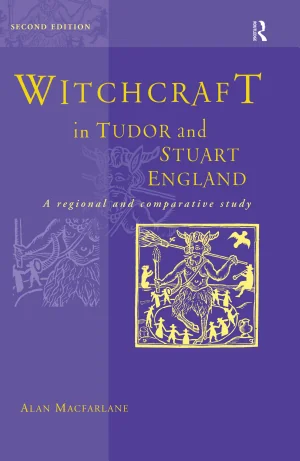
Witchcraft in Tudor and Stuart England
 71
71

Witchcraft in Tudor and Stuart England
MacFarlane's "Witchcraft in Tudor and Stuart England" remains a significant scholarly intervention, though its statistical rigor can sometimes feel detached from the human drama it dissects. The book's strength lies in its systematic, quantitative approach, transforming the study of witchcraft from a collection of anecdotes into a socio-historical problem. The meticulous analysis of Essex cases, for instance, provides a concrete foundation for broader claims. However, the sheer volume of data, while impressive, occasionally overshadows the lived experiences of those accused. A notable passage detailing the economic pressures leading to accusations reveals the book's analytical power, but one wishes for more direct engagement with the individual narratives. While its anthropological framework opened new avenues, its conclusions regarding a direct correlation between social stress and witchcraft accusations, though influential, warrant continued critical examination in light of later scholarship. It is a vital resource for understanding historical methodology in this field.
📝 Description
71
Alan MacFarlane's 2002 book examines witchcraft accusations in Tudor and Stuart England using quantitative analysis.
Published in 2002, Alan MacFarlane's "Witchcraft in Tudor and Stuart England" offers a statistical look at accusations of witchcraft in early modern Europe. It moves beyond simple stories, using data to find patterns and understand the societal reasons behind these accusations. The book focuses heavily on Essex as a main example, using detailed statistics and comparisons between different areas.
This study is for historians of early modern Europe, especially those interested in social history, cultural practices, and beliefs. Scholars of folklore, anthropology, and legal history will also find it useful for understanding the social forces that led to witchcraft accusations. Researchers looking into how history is studied, particularly how numbers are used in humanities research, will find this work particularly helpful.
MacFarlane's research sits within a late 20th and early 21st century academic effort to re-examine witchcraft. His work arrived when witchcraft studies were looking for solid evidence, moving away from more sensational accounts. His method, using extensive statistics and comparative ethnography, differed from interpretations that relied only on texts or theology. His approach engages with scholars like Keith Thomas but provides a distinct viewpoint through its quantitative method.
While not strictly an esoteric text, MacFarlane's work contributes to understanding historical belief systems that often intersect with esoteric traditions. By analyzing the social and psychological factors behind witchcraft accusations, the book sheds light on how communities perceived and reacted to perceived supernatural forces. It examines the mechanics of belief, accusation, and social control in a period where the boundaries between the natural and supernatural were understood differently. This quantitative approach offers a framework for understanding the historical context of practices and beliefs that modern esoteric traditions may draw upon or react against.
💡 Why Read This Book?
• Understand the quantitative methodology MacFarlane applied to witchcraft studies, learning how he used statistical analysis of Essex cases from the 16th and 17th centuries to identify societal patterns. • Grasp the socio-economic drivers behind accusations by examining MacFarlane's arguments regarding the role of social stress and economic hardship, as detailed in his comparative regional analysis. • Appreciate the shift in historical inquiry by exploring how MacFarlane's anthropological approach influenced the study of cultural history, moving beyond purely textual analysis of early modern England.
⭐ Reader Reviews
Honest opinions from readers who have explored this book.
❓ Frequently Asked Questions
What period does MacFarlane's "Witchcraft in Tudor and Stuart England" primarily cover?
The book primarily focuses on the Tudor and Stuart periods in England, roughly spanning the late 15th century through the mid-17th century, with a particular emphasis on the years between 1558 and 1660.
What is the significance of Essex in MacFarlane's study?
Essex is used as a key case study due to the availability of extensive records concerning witchcraft accusations. MacFarlane's detailed analysis of this region allows for comparative insights into broader patterns across early modern England.
What is MacFarlane's main argument about the causes of witchcraft accusations?
MacFarlane's central argument posits that witchcraft accusations were often rooted in social and economic stresses within communities. He suggests that increased social tension and specific community structures were significant factors contributing to the prevalence of such accusations.
How does MacFarlane's methodology differ from earlier studies of witchcraft?
MacFarlane's approach is distinguished by its quantitative and anthropological methodology. He employs statistical analysis and comparative regional studies, moving beyond purely anecdotal or theological interpretations to examine societal structures and pressures.
Who were some contemporaries or influences on MacFarlane's work in witchcraft studies?
While MacFarlane developed a unique quantitative approach, his work engaged with broader scholarship in the field, including figures like Keith Thomas, whose studies explored belief systems and social change in early modern England.
What does "Witchcraft in Tudor and Stuart England" reveal about the social function of witchcraft accusations?
The book suggests that witchcraft accusations often served a social function, acting as a mechanism to manage deviance, resolve disputes, or express anxieties within communities. The work explores how the social structure influenced who was targeted.
🔮 Key Themes & Symbolism
Quantitative Social Analysis
MacFarlane pioneers a statistical approach to the history of witchcraft, moving beyond qualitative descriptions to analyze patterns in accusations across regions like Essex. This methodology treats witchcraft not just as a belief system but as a social phenomenon measurable through data. By cataloging and analyzing variables such as the gender, social status, and alleged magical practices of the accused, MacFarlane seeks to identify the underlying social and economic pressures that fueled accusations during the Tudor and Stuart periods.
Socio-Economic Stressors
A core argument is that witchcraft accusations correlate with periods of heightened social and economic stress. The work explores how community tensions, economic hardship, and shifts in social relationships created an environment where accusations could proliferate. MacFarlane examines specific instances where disputes over resources, social standing, or personal grievances led to accusations, suggesting that the 'witch' often became a scapegoat for deeper societal anxieties and instabilities prevalent in early modern England.
Comparative Regional Study
The book utilizes a comparative framework, using Essex as a primary case study but drawing parallels and contrasts with other English regions. This allows MacFarlane to explore variations in the prosecution of witchcraft and the social factors contributing to these differences. By comparing patterns across different geographical and social landscapes, the study aims to understand the localized nature of witchcraft beliefs and accusations, highlighting how regional social structures influenced the phenomenon.
Anthropological Lens on History
MacFarlane applies an anthropological perspective to historical inquiry, viewing witchcraft through the lens of belief systems, social structures, and cultural practices. This approach treats the phenomenon as integral to the understanding of early modern society, rather than an aberration. By examining the social roles and interactions within communities, the work seeks to explain the function and persistence of witchcraft accusations as a form of social control and conflict resolution.
💬 Memorable Quotes
Direct passages from the work, attributed to the author.
“The work explores the relationship between social stress and witchcraft accusations.”
— This highlights MacFarlane's central thesis that periods of instability, economic hardship, or community tension were fertile ground for witchcraft accusations, suggesting a societal rather than purely individualistic cause.
“Essex provides a crucial case study for understanding regional patterns.”
— This points to the methodological importance of the Essex region in MacFarlane's analysis, emphasizing how detailed local investigation can illuminate broader trends in early modern English witchcraft.
“The book employs quantitative methods to analyze historical data.”
— This emphasizes MacFarlane's innovative use of statistics and systematic data collection, distinguishing his approach from more traditional historical narratives of witchcraft.
“Accusations often arose from personal disputes and social friction.”
— This interpretation focuses on the micro-level social dynamics that MacFarlane identifies as significant triggers for witchcraft accusations, linking them to everyday conflicts within communities.
“The study examines the social and cultural context of belief.”
— This underscores the anthropological dimension of MacFarlane's work, indicating that he sought to understand not just the facts of accusations but the cultural framework and belief systems that made them comprehensible and actionable.
🌙 Esoteric Significance
Tradition
While not strictly within a defined esoteric lineage like Hermeticism or Kabbalah, MacFarlane's work is crucial for understanding the historical context of beliefs that often intersect with esoteric practices. It provides an empirical grounding for examining the societal anxieties and persecutions that affected individuals whose practices might have bordered on or been misconstrued as folk magic or forbidden arts. The study offers a critical, secular perspective on phenomena that are often mythologized in esoteric circles.
Symbolism
The work implicitly deals with symbols of 'the witch' as an outsider, a figure of fear, and a manifestation of societal anxieties. While not focused on symbolic interpretation in an esoteric sense, the analysis of accusations reveals how certain social roles, behaviors, or misfortunes (like crop failure or illness) became symbolic markers of witchcraft. The 'devil's mark' and pacts with demons, though often literal beliefs at the time, function symbolically within the narrative of societal transgression and punishment.
Modern Relevance
Contemporary scholars of social history, cultural studies, and even certain branches of folk magic and paganism draw upon MacFarlane's foundational research. His quantitative approach remains a benchmark for analyzing historical social phenomena. Modern practitioners seeking to understand the historical roots of witchcraft, its persecution, and its societal perception often consult his work to contextualize their own practices and beliefs within a framework of historical reality, rather than myth.
👥 Who Should Read This Book
• Historians of early modern Europe seeking to understand the social and economic drivers of witchcraft accusations, moving beyond anecdotal accounts. • Anthropologists and sociologists interested in the study of belief systems, social control, and community anxieties within historical contexts. • Students of historical methodology who wish to explore the application of quantitative and comparative analysis to cultural and social history.
📜 Historical Context
Alan MacFarlane's "Witchcraft in Tudor and Stuart England," first published in 2002, emerged from a rich scholarly tradition of studying early modern European witchcraft. While building on earlier works that explored the theological and psychological aspects of the phenomenon, MacFarlane distinguished himself through his rigorous quantitative and anthropological methodology. He engaged with contemporaries like Keith Thomas, whose "Religion and the Decline of Magic" (1971) provided a broad cultural backdrop, but MacFarlane's focus on statistical analysis of cases, particularly from Essex, offered a different analytical lens. The era of its publication saw continued debate about the socio-economic factors driving witch hunts, and MacFarlane's work contributed significantly to this discussion, proposing correlations between social stress and accusation rates. His approach was influential in shaping subsequent social history research, demonstrating how empirical data could be applied to understand belief systems and social anxieties.
📔 Journal Prompts
The patterns of witchcraft accusations in Essex, as analyzed by MacFarlane.
The link between social stress and the prevalence of witchcraft accusations.
How quantitative data can illuminate historical belief systems.
The function of witchcraft accusations within Tudor and Stuart communities.
Comparative regional analysis of witchcraft prosecution in England.
🗂️ Glossary
Witchcraft Accusation
A formal or informal charge leveled against an individual, alleging they possessed supernatural powers used for malevolent purposes, often leading to social ostracization or legal prosecution in early modern England.
Quantitative Analysis
A research method involving the collection and statistical analysis of numerical data to identify patterns, relationships, and trends, applied by MacFarlane to witchcraft records.
Social Stress
Periods of heightened tension, conflict, or hardship within a community, which MacFarlane suggests were correlated with an increase in witchcraft accusations.
Comparative Regional Study
An analytical approach that examines similarities and differences between multiple geographical areas to understand variations in a particular phenomenon, used here for English counties.
Tudor Period
The historical era in England ruled by the Tudor dynasty, from 1485 to 1603, a significant period for witchcraft legislation and accusations.
Stuart Period
The historical era in England ruled by the Stuart monarchs, from 1603 to 1714, which continued to see witchcraft trials and societal anxieties.
Anthropological Approach
Studying historical phenomena through the lens of human societies, cultures, and their development, focusing on beliefs, practices, and social structures.