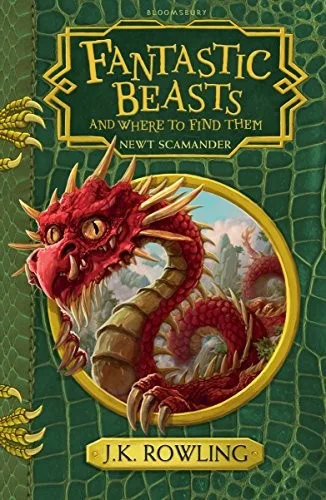
Fantastic Beasts and Where to Find Them
 83
83

Fantastic Beasts and Where to Find Them
Rowling’s "Fantastic Beasts" operates as a meticulously crafted in-universe field guide, a clever expansion of the Wizarding World’s zoological underpinnings. Its strength lies in the sheer breadth of imagination poured into each creature’s description, from the mundane to the utterly bizarre. The alphabetical format, while functional, occasionally feels like a missed opportunity for more narrative flow, but this is a quibble given the text's intended purpose as a reference. A standout element is the entry for the Niffler, a creature whose penchant for shiny objects is both amusing and illustrative of the book's blend of the whimsical and the practical. The limitation, if one can call it that, is its inherent nature as a supplementary text; it provides depth but not the narrative drive of the main series. It succeeds admirably as a detailed encyclopedia for those already invested in the lore.
📝 Description
83
Published in 2016, Fantastic Beasts and Where to Find Them is a textbook by fictional magizoologist Newt Scamander.
This work functions as a compendium of magical creatures, detailing their habits, habitats, and properties. Newt Scamander cataloged hundreds of fantastical species, structuring the text alphabetically. It mimics a field guide, complete with classifications and threat levels, creating a pseudo-scientific framework for its subjects. The book appeals to readers interested in world-building, speculative zoology, and lore. It is especially suited for those who appreciate detailed encyclopedias that expand fictional universes. Readers who enjoy cataloging and classification systems will find satisfaction here. The book also enriches a larger narrative or simply offers a window into a richly imagined world.
Emerging in 2016, this book followed the conclusion of the main Harry Potter series. Fans sought further engagement with its lore, and this title, alongside its cinematic adaptation, expanded the established magical canon. It arrived when expanded universes and spin-off content grew prevalent in popular culture. It builds upon earlier fantasy encyclopedias and bestiaries that codified the unknown.
While presented as a fictional artifact, the book taps into a long tradition of bestiaries and compendiums cataloging the unknown and the marvelous. From medieval illuminated manuscripts depicting mythical beasts to early modern natural histories that blended observation with folklore, such works have always sought to give order to creatures beyond ordinary experience. Fantastic Beasts applies this impulse to a magical context, treating its invented fauna with a seriousness that mirrors historical attempts to understand and categorize the world's wonders, both real and imagined.
💡 Why Read This Book?
• Understand the principles of magizoology, the dedicated study of magical creatures, as presented in the 2016 compendium, to gain insight into how fictional worlds organize their fantastical fauna. • Learn about the classification system for magical beasts, such as the XXXX rating for dangerous creatures, to appreciate the detailed taxonomy Rowling employs for world-building. • Discover the unique characteristics and behaviors of specific creatures like the Niffler, understanding their ecological niche within the Wizarding World's lore.
⭐ Reader Reviews
Honest opinions from readers who have explored this book.
❓ Frequently Asked Questions
When was Fantastic Beasts and Where to Find Them first published?
Fantastic Beasts and Where to Find Them was first published in 2016. This edition serves as a companion piece to the broader Wizarding World narrative, expanding upon its established lore.
Who is the author of Fantastic Beasts and Where to Find Them?
The author credited is J.K. Rowling. The book is presented as a fictional textbook written by the character Newt Scamander within the Wizarding World.
What is the primary purpose of the book Fantastic Beasts and Where to Find Them?
Its primary purpose is to serve as an in-universe encyclopedia or field guide detailing magical creatures, their habitats, and behaviors within the Wizarding World established by J.K. Rowling.
What kind of creatures are featured in Fantastic Beasts and Where to Find Them?
The book features a wide array of magical creatures, ranging from the relatively harmless like the Niffler to the highly dangerous, with each categorized by threat level and described in detail.
Is Fantastic Beasts and Where to Find Them a novel or a reference book?
It is structured as a reference book or encyclopedia, presented as a textbook within the fictional universe. It does not follow a traditional narrative plot like a novel.
What does the XXXX classification mean for a creature?
The XXXX classification in Fantastic Beasts and Where to Find Them signifies that a creature is considered dangerous, a menace, and requires specialist knowledge or extreme caution to handle.
🔮 Key Themes & Symbolism
Magizoological Classification
The work meticulously categorizes numerous magical creatures, assigning them threat levels and specific attributes. This system, mirroring real-world zoology, provides a framework for understanding the diverse fauna of the Wizarding World. Concepts like the XXXX rating for dangerous beasts highlight the practical dangers and the need for specialized knowledge among wizards. It underscores the importance of observation and documentation in comprehending even the most extraordinary life forms, reflecting a desire to impose order on the fantastical.
Wizard-Creature Relations
Fantastic Beasts explores the complex interactions between wizards and the magical creatures they share their world with. Entries detail how humans might encounter, manage, or be endangered by these beings. It touches upon the ethics of magical creature husbandry and conservation, implicitly advocating for respect and understanding. The text suggests that such relationships are not always harmonious, with some creatures posing significant threats that require careful study and containment, a recurring theme in Rowling's broader work.
The Nature of the Unknown
As a bestiary of fictional creatures, the book embodies the exploration of the unknown and the fantastical. Each entry represents a discovery or a cataloged mystery within the Wizarding World. It encourages readers to contemplate the existence of beings beyond ordinary comprehension, fostering a sense of wonder and curiosity. The very act of documenting these creatures serves to clarify them to some extent, while also celebrating their inherent magical qualities and the vastness of imagination.
Lore Expansion
This text functions as a significant expansion of J.K. Rowling's established Wizarding World. Published in 2016, it adds depth and detail to the magical universe previously explored in the Harry Potter series. By focusing on magizoology, it provides a specialized lens through which to view the magical society, introducing new elements and reinforcing existing lore. It caters to fans seeking a deeper understanding of the world's intricacies and the natural history of its magical inhabitants.
💬 Memorable Quotes
Direct passages from the work, attributed to the author.
“The Ministry of Magic's Department for the Regulation and Control of Magical Creatures.”
— This highlights the institutional approach within the Wizarding World to manage and understand magical fauna, suggesting a structured society that acknowledges and attempts to govern even its most fantastical elements.
“Classification: XXXX - Known wizard killer / impossible to train or domesticate.”
— This classification signifies extreme danger, underscoring that not all magical creatures are benign. It implies a level of risk and the necessity for caution and expertise when encountering such entities.
“Nifflers are drawn to shiny objects.”
— A simple yet effective description of a creature's core behavior, illustrating the book's focus on the specific, often quirky, traits that define each magical beast.
“The Blast-Ended Skrewt is a hybrid creature.”
— This points to the genetic manipulation or unusual breeding that can occur within the magical world, suggesting more complex biological phenomena than simple natural evolution.
“Occamy: A plumed, two-legged, winged, five-eyed creature whose beak resembles that of a Kookaburra.”
— This demonstrates the detailed, almost zoological descriptions provided for each beast, combining familiar elements with fantastical additions to create unique beings.
🌙 Esoteric Significance
Tradition
While not explicitly tied to a single historical esoteric tradition, Fantastic Beasts draws parallels with medieval bestiaries and early natural philosophy. These traditions often sought to catalog and understand the natural (and supernatural) world through observation and symbolic interpretation. The book's systematic classification and description of creatures echo the encyclopedic impulse found in works like the writings of Paracelsus or even earlier alchemical texts that sought to map correspondences between the terrestrial and the hidden realms.
Symbolism
The creatures themselves can be viewed as symbolic representations. For instance, the Niffler's obsession with shiny objects might symbolize avarice or the allure of the material world, a common theme in spiritual teachings. The classification system, particularly the threat levels, can be interpreted as a symbolic mapping of dangers and challenges one might face on any path of knowledge or self-discovery, requiring discernment and appropriate caution.
Modern Relevance
Contemporary fantasy literature and role-playing games frequently employ detailed bestiaries and creature compendiums, showing a clear lineage from this work and similar foundational texts. The concept of meticulously cataloging fantastical elements continues to be a popular method for enriching fictional worlds. Modern practitioners of world-building, whether in literature, film, or gaming, often reference or emulate the detailed approach to creature design and classification exemplified here.
👥 Who Should Read This Book
• Aspiring authors and world-builders seeking practical examples of how to create and categorize fantastical elements within a fictional universe. • Fans of J.K. Rowling's Wizarding World looking to deepen their understanding of its magical zoology and lore beyond the main narrative. • Students of comparative mythology and folklore interested in how modern fantasy literature constructs its own bestiaries and magical taxonomies.
📜 Historical Context
Published in 2016, Fantastic Beasts and Where to Find Them arrived during a period of intense fan engagement with J.K. Rowling's Wizarding World, following the conclusion of the main Harry Potter series in 2007. This era saw a significant trend in media towards expanding established fictional universes through prequels, sequels, and spin-offs. The book itself, presented as an in-universe textbook by magizoologist Newt Scamander, built upon the magical lore introduced in the original novels. Its release coincided with the film adaptation, further cementing its role as a central to this expanded canon. This approach to world-building stands in contrast to earlier fantasy literature where lore was often developed more organically within single narratives. Contemporary authors like George R.R. Martin were also engaged in detailed world-building, albeit with a grittier, more political focus, demonstrating a broader industry shift towards comprehensive fictional cosmologies.
📔 Journal Prompts
The Ministry of Magic's approach to creature regulation.
The classification system for dangerous beasts.
Newt Scamander's personal philosophy on magizoology.
The concept of a creature being a 'known wizard killer'.
The Niffler's attraction to shiny objects.
🗂️ Glossary
Magizoology
The study of magical creatures. It involves understanding their behavior, habitats, magical properties, and potential dangers, akin to zoology but focused on fantastical beings.
Newt Scamander
The fictional author of Fantastic Beasts and Where to Find Them, presented as a renowned magizoologist in the Wizarding World who documented numerous magical species.
Niffler
A small, furry creature with a long snout that is attracted to shiny objects. Often kept as pets or used for treasure hunting, they are classified as XXX.
Blast-Ended Skrewt
A dangerous, hybrid magical creature known for its explosive rear end and aggressive nature. It is classified as XXXX due to its extreme danger.
Creature Classification
A system used within the Wizarding World to categorize magical beasts based on their perceived danger and difficulty to train or domesticate, ranging from harmless to deadly.
Department for the Regulation and Control of Magical Creatures
A fictional department within the Ministry of Magic responsible for overseeing wizard-human relations and the management of magical beasts.
XXXX
A classification rating indicating a creature is a 'known wizard killer' or is exceptionally dangerous and difficult to train or domesticate, requiring specialist knowledge.
🔮 Readers Also Liked
Browse all →






More by J. K. Rowling
All books →


More Free Witchcraft & Paganism Books
View all →![[ Heath, 2010] Switch How To Change Things When Change Is Hard](/img/thumb/heath-2010-switch-how-to-change-things-when-change-is-hard-c-heath-d-heath.webp)