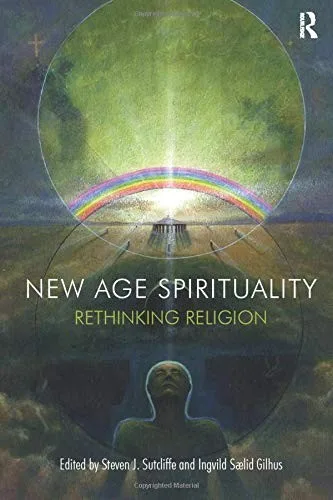
New Age Spirituality
 72
72

New Age Spirituality
Gilhus and Sutcliffe’s New Age Spirituality offers a sober academic appraisal of a subject often shrouded in hyperbole. The authors’ strength lies in their rigorous deconstruction of "New Age" as a category, demonstrating its historical contingency and internal diversity rather than treating it as a monolithic entity. A particularly effective section dissects the "spiritual marketplace," illustrating how ideas and practices are packaged and consumed. While the work is commendable for its analytical distance, it occasionally feels detached, leaving the reader wanting more engagement with the lived experiences of adherents. The analysis of the "self-help" phenomenon, for instance, could benefit from a deeper exploration of its psychological underpinnings. Nevertheless, it provides a crucial academic framework for understanding contemporary spiritual phenomena. It is a valuable, if dry, contribution to the field of religious studies.
📝 Description
72
Ingvild Saelid Gilhus and Steven J. Sutcliffe's New Age Spirituality (2007) analyzes contemporary spiritual movements.
This book examines the variety of spiritual and religious movements that have appeared outside traditional Western structures. It moves past simple definitions to look at the practical applications and the ideas behind these phenomena. The authors investigate how people and groups create meaning, identity, and community through different spiritual paths.
The study is placed in the late 20th and early 21st centuries, a time of growing global connection, the spread of digital communication, and challenges to established religious authority. It recognizes the origins of these movements in earlier counter-cultural changes and explorations of theosophy. The book sets these changes against the background of a post-Christian West and the wider cultural environment that encouraged interest in Eastern religions and esoteric ideas.
Central to the analysis are ideas like 'spiritual but not religious,' the commercialization of spirituality, how media spreads beliefs, and the focus on personal experience and healing. The authors consider the changing nature of identity within these movements and how various practices, from yoga and meditation to shamanism and crystal healing, are taken up and adapted. The book also discusses the creation of sacredness in non-traditional settings.
This work addresses the proliferation of spiritual practices and beliefs that gained traction in the late 20th and early 21st centuries, often outside established religious institutions. It acknowledges the historical connections to earlier movements like theosophy and counter-cultural trends. The book analyzes how ideas from Eastern religions and esoteric thought were adapted and integrated into Western societies, particularly within a post-Christian context, and how these trends influenced notions of personal meaning-making and identity.
💡 Why Read This Book?
• Gain an academic understanding of "New Age" as a complex, evolving category, moving beyond popular stereotypes. Learn how scholars analyze spiritual trends, citing the authors' examination of the "spiritual marketplace" as a case study. • Understand the historical emergence of these movements, particularly the influence of the late 20th century's cultural shifts. The book references the context of a post-Christian West, providing specific temporal and societal factors. • Discover the analytical tools used to study contemporary spirituality, such as the concepts of "spiritual but not religious" and the commodification of belief. This offers a concrete framework for interpreting modern spiritual expressions.
⭐ Reader Reviews
Honest opinions from readers who have explored this book.
❓ Frequently Asked Questions
When was New Age Spirituality first published and by whom?
New Age Spirituality was first published in 2014. It is authored by Ingvild Saelid Gilhus and Steven J. Sutcliffe, scholars who bring extensive academic backgrounds to the study of religion and spirituality.
What academic disciplines does New Age Spirituality draw upon?
The book draws from multiple academic disciplines, including religious studies, sociology, cultural anthropology, and history. This interdisciplinary approach provides a comprehensive analysis of contemporary spiritual phenomena.
Does the book present a critical or a sympathetic view of New Age movements?
The book adopts a critical, analytical perspective rather than a sympathetic one. It aims to understand and explain New Age phenomena academically, examining their social, cultural, and historical contexts without necessarily endorsing their beliefs.
What is the "spiritual marketplace" concept discussed in the book?
The "spiritual marketplace" refers to the commercialization and commodification of spiritual ideas, practices, and goods in contemporary society. The book explores how elements of New Age spirituality are bought, sold, and consumed.
How does the book define "New Age" if it's not a monolithic entity?
The authors treat "New Age" as a fluid and diverse category, acknowledging its historical development and the wide range of beliefs and practices it encompasses. They highlight its emergence from various Western and Eastern spiritual traditions.
Is New Age Spirituality suitable for beginners interested in the topic?
Yes, while academic, the book is accessible for beginners seeking a structured understanding of New Age phenomena. Its clear explanations of key concepts and historical context make it a solid starting point for non-specialists.
🔮 Key Themes & Symbolism
The "Spiritual Marketplace"
The work critically examines the "spiritual marketplace," a key concept for understanding how New Age beliefs and practices are commodified and consumed in contemporary Western societies. It details how elements from diverse traditions, like yoga or meditation, are extracted from their original contexts, repackaged, and sold as self-help tools or consumer goods. This section highlights the economic and cultural forces shaping modern spirituality and its accessibility outside traditional religious institutions.
Spiritual Fluidity and Identity
A significant theme is the fluidity of spiritual identity in the New Age milieu. The book explores how individuals often construct personalized belief systems, drawing from multiple sources rather than adhering to a single doctrine. It discusses the "spiritual but not religious" demographic and the emphasis on subjective experience and personal transformation as central tenets, contrasting this with the structured nature of established religions.
Globalization and Syncretism
The authors address how globalization has facilitated the spread and syncretism of spiritual ideas. New Age movements are depicted as products of cross-cultural exchange, often blending Eastern philosophies, indigenous traditions, and Western esotericism. This theme underscores how technology and increased travel in the late 20th century allowed for unprecedented mixing and adaptation of spiritual practices and worldviews.
Secularization and the Sacred
The book interrogates the concept of the sacred in secularized societies. It analyzes how individuals find meaning and transcendence outside conventional religious frameworks, often through practices focused on well-being, self-discovery, and holistic health. This theme explores the redefinition of religious or spiritual experience in a world where traditional religious institutions hold less sway.
💬 Memorable Quotes
Direct passages from the work, attributed to the author.
“The New Age represents a complex and contradictory phenomenon.”
— This statement captures the authors' approach: acknowledging the many-sided nature of "New Age" spirituality. It suggests that simple definitions or judgments are insufficient, and a deeper analysis is required to grasp its diverse manifestations and internal tensions.
“The spiritual marketplace has become a powerful force shaping contemporary belief.”
— This highlights the authors' focus on the commercial aspect of modern spirituality. It implies that economic structures and consumer culture significantly influence how spiritual ideas and practices are disseminated, adopted, and understood.
“Many individuals now identify as 'spiritual but not religious'.”
— This observation points to a significant demographic shift in belief systems. It signifies a move away from institutional religion towards personalized, often eclectic, spiritual paths that prioritize individual experience and well-being.
“The emphasis is often on personal transformation and therapeutic outcomes.”
— This interpretation underscores the practical and individualized focus within many New Age movements. It suggests that the pursuit of inner change and psychological healing is a primary motivation for adherents, often more so than adherence to dogma.
💡 Key Ideas
Editorial paraphrase of the work's core concepts — not direct quotes.
There is a tendency to synthesize elements from various traditions.
This paraphrase emphasizes the syncretic nature of New Age thought. It reflects how individuals often blend concepts and practices from different religious and philosophical backgrounds to create unique spiritual frameworks.
🌙 Esoteric Significance
Tradition
While not strictly adhering to a single esoteric lineage, New Age Spirituality critically examines movements that draw heavily from Western esotericism (like Theosophy and Hermeticism) and Eastern traditions (Buddhism, Hinduism). It positions these contemporary expressions as a departure from older, more structured esoteric orders, emphasizing a more individualistic, therapeutic, and consumer-oriented approach to spiritual seeking in a globalized, secularized world.
Symbolism
The work implicitly engages with the symbolism of self-transformation and holistic wellness, prevalent in New Age thought. Concepts like the "energy body" or the use of crystals, while not deeply analyzed as specific symbols, represent a broader motif of accessing hidden potentials and universal forces for personal betterment. The blending of symbols from diverse cultures—such as mandalas, chakras, and angelic figures—illustrates the syncretic impulse central to many New Age practices.
Modern Relevance
Contemporary thinkers and practitioners in fields like positive psychology, mindfulness-based stress reduction (MBSR), and even certain branches of alternative medicine echo the therapeutic and self-optimization focus discussed in the book. Modern spiritual entrepreneurs and online influencers who curate personalized spiritual content often embody the "spiritual marketplace" dynamic that Gilhus and Sutcliffe analyze, demonstrating the enduring relevance of their critique for understanding current spiritual trends.
👥 Who Should Read This Book
• Academic researchers in religious studies, sociology of religion, and cultural anthropology seeking to understand the theoretical frameworks for analyzing contemporary spiritual movements. • Individuals interested in the "spiritual but not religious" phenomenon who want a scholarly perspective on its origins, characteristics, and social implications. • Students of comparative religion and Western esotericism curious about how older traditions are adapted and synthesized in modern, secularized contexts.
📜 Historical Context
Published in 2014, Ingvild Saelid Gilhus and Steven J. Sutcliffe’s New Age Spirituality emerged during a period of intense academic interest in the diversification of religious life. The late 20th and early 21st centuries witnessed a significant rise in what sociologist Grace Davie termed the "believing without belonging" phenomenon in Western Europe, a trend mirrored globally. This book situates itself against the backdrop of the post-Christian West, exploring how spiritual seeking flourished outside traditional church structures. It acknowledges influences from the counter-cultural movements of the 1960s and the earlier dissemination of Eastern philosophies through figures like Helena Blavatsky and the Theosophical Society. The authors engage with scholarship from scholars like J. Gordon Melton, who extensively cataloged new religious movements, offering a more nuanced view than earlier critiques that often dismissed these phenomena as mere fads or cults. The reception of such movements has historically been varied, ranging from dismissive journalistic accounts to serious academic study.
📔 Journal Prompts
The spiritual marketplace and its impact on belief.
Personal construction of spiritual identity.
Globalization's role in spiritual syncretism.
The concept of "spiritual but not religious."
Defining sacredness in secularized contexts.
🗂️ Glossary
New Age
A broad and often ill-defined term referring to a range of spiritual or religious beliefs and practices that emerged in Western countries during the 1970s, often drawing from Eastern religions, esoteric traditions, and self-help psychology.
Spiritual Marketplace
A concept describing the commodification and commercialization of spiritual ideas, practices, and goods, where spiritual experiences and products are bought and sold within a consumer culture.
Spiritual but Not Religious
A self-identifier used by individuals who feel a sense of spiritual connection or belief but do not identify with or participate in organized, institutional religion.
Syncretism
The merging or attempted merging of different religions, cultures, or schools of thought. In the context of New Age, it refers to the blending of elements from various spiritual traditions.
Secularization
The process whereby religious institutions, beliefs, and practices lose social significance and influence in the face of modernization and the rise of rationalism and science.
Commodification
The process of transforming something that is not originally a product for sale into a product that can be bought and sold in a market.
Holistic Health
A philosophy of health that views the body, mind, and spirit as interconnected and emphasizes treating the whole person rather than just the symptoms of illness.
🔮 Readers Also Liked
Browse all →


![Aloysii Charitini [pseud.] Discurs von trüglichen Kennzeichen der Zauberey, worinnen viel abergläubische Meinungen vernunfftmässig untersucht und verworffen; wie auch ... 1708: Iss 174](/img/thumb/aloysii-charitini-pseud-discurs-von-tr-glichen-kennzeichen-der-zauberey-worinnen-viel-abergl-ubische-meinungen-vernunfftm-ssig-untersucht-und-verworffen-wie-auch-1708-iss-174-brunneman-jacob-d-1735.webp)



More by Ingvild Saelid Gilhus, Steven J. Sutcliffe
All books →
More Free Witchcraft & Paganism Books
View all →