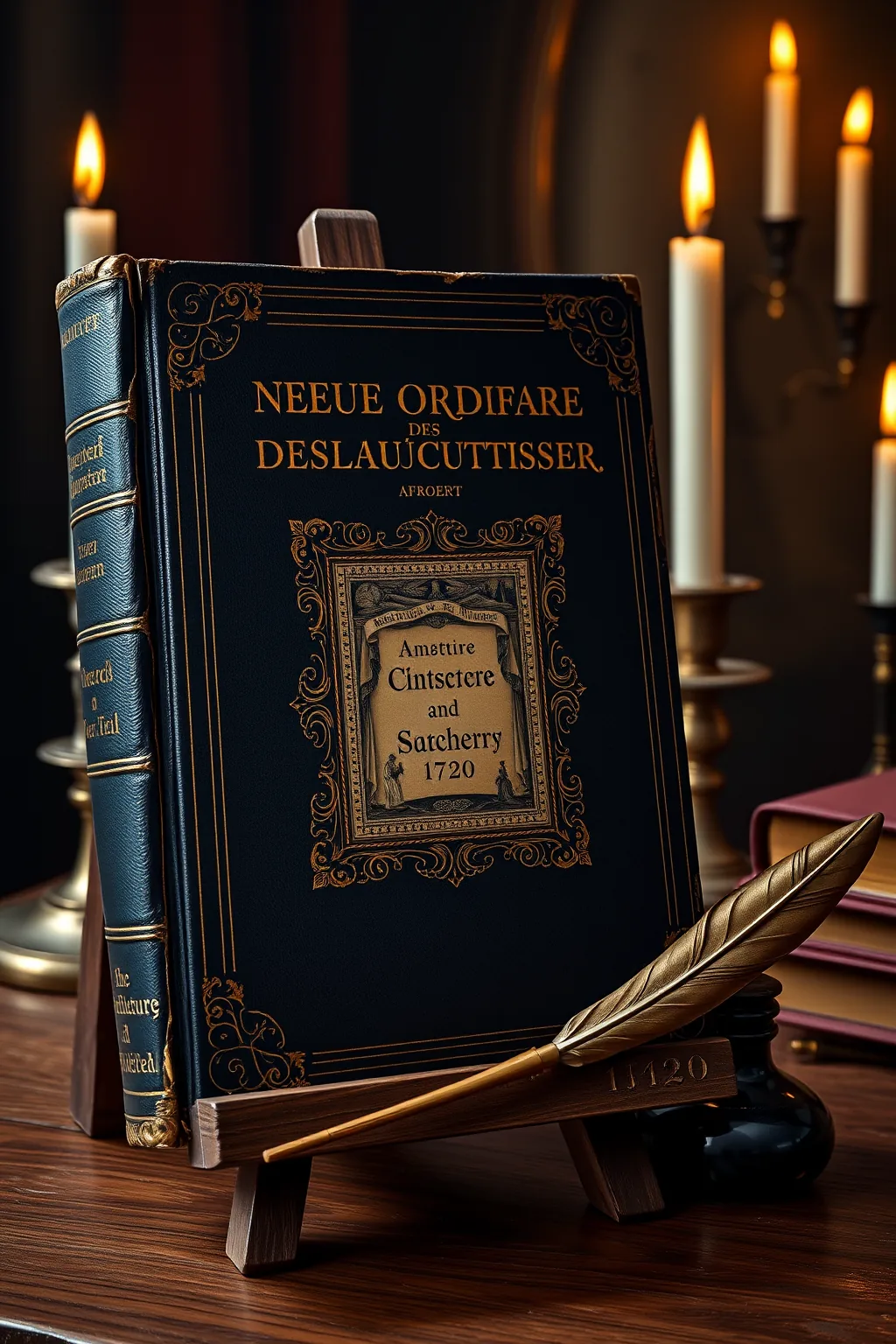
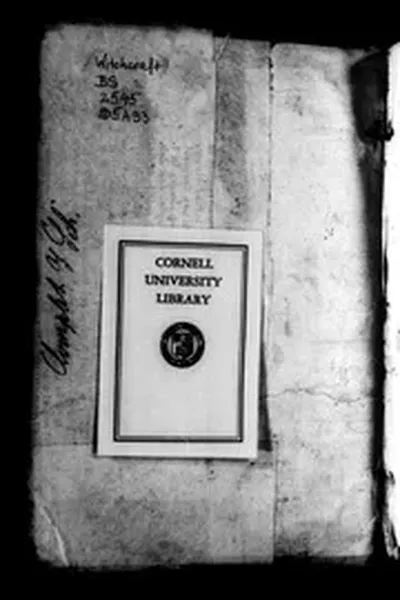
Neue Ordnung des Durchläuchtigsten Fürsten und Herrn, Herrn Wilhelm Friederich, Marggrafens zu Brandenburg ... 1720: Iss 158
 76
76

Neue Ordnung des Durchläuchtigsten Fürsten und Herrn, Herrn Wilhelm Friederich, Marggrafens zu Brandenburg ... 1720: Iss 158



Ophelia Vance, Mystical Literature Reviewer — This 1720 decree offers a fascinating, albeit formal, window into the legal and spiritual landscape of Brandenburg-Ansbach. Beyond its procedural aspects, the "Neue Ordnung" subtly reveals the prevailing attitudes towards the occult and the boundaries of acceptable spiritual practice. Its value lies in its historical documentation of how perceived societal threats, often linked to witchcraft, were addressed by princely authority. For scholars of European legal history, religious studies, and the evolution of witchcraft persecution, this is an indispensable primary source. It provides crucial context for understanding the societal anxieties that fueled witch trials and the attempts to codify control over perceived supernatural transgressions.
📝 Description
76
In 1720, Margrave Wilhelm Friedrich of Brandenburg-Ansbach issued the 'Neue Ordnung,' a decree blending law with esoteric concerns.
This 1720 decree from Margrave Wilhelm Friedrich of Brandenburg-Ansbach, titled 'Neue Ordnung des Durchläuchtigsten Fürsten und Herrn,' details legal and spiritual governance for the principality. Beyond standard statutes, the text reveals the era's anxieties and occult beliefs. It touches on concepts of ancient pacts and the relationship between secular power and supernatural influence. The document is more than a historical legal record; it shows how metaphysical ideas affected the period's understanding of the world.
The ruling elite's belief system, which shaped justice and social order, is visible in its formal language. This work provides insight into the symbolic language of power and humanity's continuing interest in cosmic mysteries. It prompts reflection on the historical origins of witchcraft discussions and the search for hidden knowledge.
This decree emerges from a period where legal and spiritual matters were not strictly separated, particularly in smaller principalities seeking to legitimize authority. Rulers often invoked or incorporated elements of the prevailing worldview, which could include beliefs about divine right, hidden influences, and spiritual protection. The 'Neue Ordnung' reflects this by embedding legal pronouncements within a framework that acknowledges unseen forces and potentially esoteric understandings of order and authority, a common feature in early modern European governance where the sacred and secular were deeply intertwined.
💡 Why Read This Book?
Uncover the historical entanglement of law and esoteric belief in 18th-century Europe. This decree illuminates how notions of witchcraft and spiritual order were legally codified, offering critical insights for scholars, practitioners of historical occultism, and anyone fascinated by the societal control of perceived 'unseen' forces. Explore the deep roots of modern spiritual discourse through a rare primary source.
⭐ Reader Reviews
Honest opinions from readers who have explored this book.
❓ Frequently Asked Questions
What is the primary focus of this document?
The primary focus is the "New Order" established by Margrave Wilhelm Friedrich of Brandenburg-Ansbach in 1720, outlining laws and regulations. It touches upon societal order, implicitly including the control of perceived transgressions often linked to witchcraft.
Who was Margrave Wilhelm Friedrich?
Margrave Wilhelm Friedrich was a ruler of the Margraviate of Brandenburg-Ansbach in the early 18th century. His decrees, like this one, reflect the legal and social priorities of his principality during that era.
What historical period does this document represent?
This document represents the early 18th century, specifically 1720. This period was a time of significant legal and societal development in many European states, often with lingering beliefs from earlier eras.
Is this document directly about practicing witchcraft?
No, it is not a grimoire or a guide to practicing witchcraft. Instead, it is a legal and administrative document from a period when societal anxieties about witchcraft were still prevalent and addressed by law.
Where can I find the original digitized version?
The original digitized version can be accessed via the Internet Archive, identified by the catalog number IA40330315-21.
🔮 Key Themes & Symbolism
Divine Right and Temporal Authority
This decree expresses the 18th-century concept of the divine right of rulers, where princely authority was seen as divinely sanctioned. Margrave Wilhelm Friedrich, as the 'Durchläuchtigsten Fürsten' (Most Serene Prince), wielded power not just as a secular leader but as a custodian of spiritual order within his domain. The 'Neue Ordnung' reflects a desire to codify and enforce a worldview that aligned temporal laws with perceived divine will, thereby reinforcing the monarch's legitimacy and control over societal norms and beliefs. This theme is crucial for understanding the intersection of politics, religion, and the law in the early modern period, demonstrating how rulers sought to legitimize their power through spiritual alignment.
The Codification of Spiritual Boundaries
Within the formal structure of this legal document lies the implicit or explicit delineation of acceptable spiritual practices and the regulation of perceived transgressions. While not a direct exposé of witchcraft, its existence in an era deeply concerned with such matters suggests the legal framework was designed to address behaviors or beliefs deemed harmful to the established spiritual and social order. This theme explores how legal systems historically attempted to define and police the boundaries of religious and magical expression, reflecting societal fears and the desire for uniformity. It highlights the legalistic approach to controlling perceived 'otherness' and the enforcement of a singular spiritual narrative.
Symbolism of Order and Control
The very act of issuing a 'Neue Ordnung' (New Order) is a powerful symbolic gesture. It signifies a desire to impose structure, clarity, and control upon a potentially chaotic world, both seen and unseen. For the ruling elite, this order was often intertwined with the maintenance of social hierarchy and the suppression of any forces that threatened it. The language used, the meticulous detail of regulations, and the underlying assumptions about societal behavior all contribute to this symbolic representation of authority. Understanding this symbolism allows us to perceive the text not just as a set of rules, but as a manifestation of the ruling ideology and its attempts to shape reality through legal and spiritual pronouncements.
💬 Memorable Quotes
Direct passages from the work, attributed to the author.
“Neue Ordnung des Durchläuchtigsten Fürsten und Herrn”
— Literally 'New Order of the Most Serene Prince and Lord,' this title itself signifies a foundational restructuring of governance and societal principles under princely authority.
“Herrn Wilhelm Friederich, Marggrafens zu Brandenburg”
— Identifies the author of this decree as Wilhelm Friedrich, the Margrave (a noble title) of Brandenburg, grounding the text in specific historical and political context.
“1720”
— Pinpoints the exact year of issuance, placing this legal and societal mandate within the specific historical milieu of the early Enlightenment, a time of both burgeoning reason and enduring superstition.
“Iss 158”
— Indicates this is issue number 158 of a series or a specific publication, suggesting a continuous effort to document and disseminate legal pronouncements from the Margraviate.
“Digitized from IA40330315-21”
— Provides the technical metadata for locating the digital source, essential for researchers accessing this historical document in its modern, accessible format.
🌙 Esoteric Significance
Tradition
This document belongs to the broader tradition of Legal and State-Magi, where secular authority sought to codify and control perceived supernatural forces for the maintenance of societal order and princely power. It reflects a period where the lines between legal jurisprudence and spiritual governance were blurred, and where rulers acted as arbiters of both temporal and metaphysical realities, often drawing upon a syncretic understanding of religious and folk beliefs to legitimize their decrees.
Symbolism
The 'Neue Ordnung' itself symbolizes a desire for cosmic and societal equilibrium, reflecting an underlying belief that the physical world is governed by spiritual laws. The emphasis on a 'Most Serene Prince' suggests the invocation of celestial harmony and the ruler's role as a conduit for divine order. The very existence of such decrees, addressing potential transgressions, implies a symbolic mapping of the known world against the 'otherworld,' with the law acting as a bulwark against chaotic or malevolent forces.
Modern Relevance
In an age increasingly concerned with the intersection of law, belief systems, and social control, this document offers a critical historical perspective. It illuminates how societies have historically attempted to regulate belief and practice, providing context for contemporary debates on religious freedom, freedom of expression, and the role of the state in matters of conscience. Understanding these historical mechanisms of control can foster a more nuanced appreciation of present-day challenges and the enduring human impulse to define and enforce norms.
👥 Who Should Read This Book
This primary source is important for academic researchers specializing in European legal history, the history of witchcraft and magic, religious studies, and early modern political philosophy. For practitioners of historical occultism and those interested in the evolution of spiritual practices, it offers crucial context on how such beliefs were perceived and legislated against. Enthusiasts of esoteric history will find it a fascinating artifact, revealing the mindset of a ruling elite tasked with maintaining order in a world perceived to be influenced by both tangible and intangible forces. Beginners interested in the historical suppression of marginalized beliefs will also find this an accessible entry point into complex societal dynamics.
📜 Historical Context
The year 1720 falls within the early 18th century, a period characterized by the lingering influence of Renaissance occultism and the burgeoning rationalism of the Enlightenment. While scientific inquiry and philosophical discourse began to challenge traditional beliefs, societal anxieties regarding witchcraft, demonic influence, and supernatural phenomena remained potent. Rulers like Margrave Wilhelm Friedrich were often expected to maintain not only civil order but also spiritual order, acting as protectors of their subjects from both earthly and unseen threats. Legal codes of this era frequently reflected this dual responsibility, with laws pertaining to heresy, magic, and witchcraft existing alongside civil statutes. This decree, therefore, is a product of a complex historical moment where nascent modernity coexisted with deep-seated traditional beliefs, and where the authority of the prince extended into the perceived spiritual realm.
📔 Journal Prompts
How did the concept of 'divine right' influence the legal pronouncements of rulers in the 18th century?
Analyze the implicit assumptions about 'witchcraft' or 'supernatural transgression' present in legal documents of this era.
In what ways does this decree reflect the tension between emerging rationalism and enduring traditional beliefs?
Consider the symbolic language of 'order' and 'serenity' as employed by 18th-century rulers. What does it reveal about their perceived role?
How might a decree like this have impacted the lives and practices of individuals accused of deviating from societal or spiritual norms?
🗂️ Glossary
Margrave
A hereditary nobleman, typically ruling a frontier territory (a margraviate), with a rank equivalent to a count but often with greater military and administrative authority.
Durchläuchtigsten
German for 'Most Serene' or 'Most Illustrious,' a formal honorific title used for high nobility, emphasizing their exalted and divinely favored status.
Neue Ordnung
German for 'New Order,' signifying a formal decree or restructuring of laws, regulations, and societal guidelines.
Fürsten
German for 'Princes,' a general term for rulers of principalities or dukedoms, indicating sovereign or near-sovereign authority.
Decree
An official order or law issued by a ruler or other authority, carrying the force of law within its jurisdiction.
This book appears in 2 collections
🔮 Readers Also Liked
Browse all →






More by BRANDENBURG-ANSBACH (GERMANY: PRINCIPALITY) [LAWS, ETC.]
All books →
From the “Witchcraft” Collection
View all →






More Free Witchcraft & Paganism Books
View all →