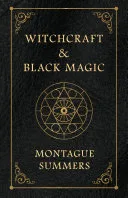
Witchcraft and Black Magic
 80
80

Witchcraft and Black Magic
Montague Summers' "Witchcraft and Black Magic" is less an objective historical survey and more a devout Catholic's polemic against perceived Satanic influence. The sheer density of references to obscure ecclesiastical texts and trial records is formidable, providing a genuine if filtered glimpse into how demonology was understood and codified within the Church. Summers' exploration of the "Black Mass" and the alleged rituals associated with witchcraft, drawn from sources like the *Malleus Maleficarum*, offers vivid, if disturbing, detail. However, his unwavering conviction that all such practices were demonstrably real and diabolical, without acknowledging alternative interpretations or psychological factors, severely limits its scholarly neutrality. A particularly telling passage details the supposed efficacy of demonic pacts, presented as historical fact rather than belief. While invaluable for understanding Summers' perspective and the historical demonological framework he operated within, the book requires a critical reader prepared to sift fact from the author's deeply ingrained theological bias. It is a potent historical document of belief, not a balanced account of witchcraft.
📝 Description
80
Montague Summers' "Witchcraft and Black Magic" appeared in 1946, examining historical demonology through a Catholic lens.
Published in 1946, Montague Summers' "Witchcraft and Black Magic" offers a detailed look at historical witchcraft and demonology. Summers, a Catholic convert, bases his arguments on church records, personal accounts, and older texts, framing witchcraft as Satanic activity within a spiritual warfare context. His deep knowledge of Catholic theology heavily shapes his interpretations. The book is aimed at students of Western esotericism, occult history, and comparative religion. It will interest those curious about demonology's development, the social effects of witch trials, and how figures like Summers viewed magic theologically.
Readers should expect to encounter potentially challenging religious ideas and engage with substantial primary source material. Summers' work emerged during a time of revived occult interest but stands apart from more romanticized accounts. His rigorous approach, citing ecclesiastical documents and theological works, firmly places his book in the historical demonology tradition, distinguishing it from contemporary folklorists or those studying pagan survivals.
Montague Summers approached the occult with an academic rigor informed by his Catholic faith. His work on witchcraft and black magic aligns with a historical tradition of demonology that interprets supernatural phenomena through specific religious doctrines. Unlike more modern or folkloric studies of witchcraft, Summers' focus remained on the perceived mechanisms of demonic influence and pacts with the Devil, as understood within a strict theological framework. This perspective places his research firmly within a Catholic understanding of spiritual warfare and heresy.
💡 Why Read This Book?
• Learn about the historical understanding of "Satanic practices" as detailed in ecclesiastical court records cited by Summers, offering a specific theological framework for interpreting witchcraft. • Gain insight into the ritualistic accusations leveled against accused witches, as presented through Summers' analysis of primary sources from the 16th and 17th centuries. • Understand the Catholic Church's historical theological position on demonology, as articulated by Summers, a devout convert, and its influence on his interpretation of witchcraft.
⭐ Reader Reviews
Honest opinions from readers who have explored this book.
❓ Frequently Asked Questions
What is the original publication date of Montague Summers' "Witchcraft and Black Magic"?
While this edition is newly published in 2024, Montague Summers' "Witchcraft and Black Magic" was first published in 1946. This historical context is crucial for understanding its perspective.
What kind of sources does Montague Summers use in "Witchcraft and Black Magic"?
Summers draws extensively from ecclesiastical court records, personal accounts, classic literary works, and biblical evidence to support his overview of black magic and demonology.
Is "Witchcraft and Black Magic" an objective historical account?
No, the book presents a perspective heavily influenced by Montague Summers' devout Catholic faith, focusing on what he deemed to be Satanic practices within a specific theological framework.
What is the primary focus of "Witchcraft and Black Magic"?
The book's primary focus is on providing an extensive history of what Montague Summers identified as Satanic practices, exploring demonology through a lens of Catholic theology.
Who was Montague Summers?
Montague Summers (1880-1948) was an English ecclesiastic, scholar, and author known for his extensive writings on witchcraft, demonology, and the occult, often from a strongly Catholic viewpoint.
Does the book discuss the Malleus Maleficarum?
Yes, Summers frequently references and analyzes the *Malleus Maleficarum* (Hammer of Witches), a significant historical text on witchcraft, within his examination of the subject.
🔮 Key Themes & Symbolism
Satanic Practices
The central theme revolves around Montague Summers' interpretation of "Satanic practices." He meticulously details alleged rituals, pacts with demons, and acts of malevolent magic, framing them through the theological lens of his devout Catholicism. The work examines the historical perception of witchcraft as a direct affront to divine order, supported by citations from ecclesiastical documents and theological treatises that outline the perceived mechanisms of demonic influence and invocation.
Historical Demonology
Summers' extensive research into historical demonology forms the backbone of this volume. He reconstructs the belief systems and legal frameworks surrounding witchcraft from various periods, with a particular emphasis on the witch trials of the 16th and 17th centuries. By referencing court records and contemporary theological arguments, the book illustrates how demonic entities and their supposed human agents were understood and prosecuted within Western society.
Catholic Theological Framework
The author's deep immersion in Catholic doctrine profoundly shapes the narrative. "Witchcraft and Black Magic" consistently interprets events and phenomena through the prism of Catholic eschatology and the ongoing spiritual battle against evil. Summers views witchcraft not merely as superstition but as a tangible manifestation of diabolical power, a perspective that informs his analysis of biblical evidence and the historical Church's response to perceived heresy and occultism.
Evidence from Ecclesiastical Courts
A significant aspect of the book is its reliance on evidence drawn from ecclesiastical court records. Summers uses these historical legal documents to present detailed accounts of accusations, testimonies, and judicial proceedings related to witchcraft. This method provides a granular view of how accusations were formulated, investigated, and adjudicated within religious and legal systems of the past, offering concrete examples of historical belief in action.
💬 Memorable Quotes
Direct passages from the work, attributed to the author.
“The work gathers vivid detail from a wealth of sources and references that enhance its overview of black magic.”
— This statement highlights the book's methodological approach, emphasizing its reliance on diverse historical documents and scholarly references to build its comprehensive account of dark magic.
“Montague Summers’ research explores numerous court records, personal accounts, and classic works of literature, as well as taking evidence from the Bible.”
— This points to the interdisciplinary nature of Summers' research, combining legal, personal, literary, and religious texts to construct his arguments about witchcraft and demonology.
“The book provides an extensive history of what Montague Summers deems to be Satanic practises.”
— This highlights the subjective, belief-driven nature of Summers' examination, indicating that the content reflects his specific theological judgments on what constituted 'Satanic' activity.
“Summers analyzes witchcraft through the historical lens of demonology and spiritual warfare.”
— This interpretation emphasizes the book's focus on the theological and supernatural aspects of witchcraft, positioning it as a conflict between divine and demonic forces.
💡 Key Ideas
Editorial paraphrase of the work's core concepts — not direct quotes.
The author presents his findings within a framework of devout Catholic theology.
This paraphrased concept underscores the theological lens through which Summers views and interprets historical witchcraft, emphasizing his faith's influence on his scholarship.
🌙 Esoteric Significance
Tradition
Montague Summers' work belongs to the tradition of historical demonology and occult studies, viewed through a staunchly Catholic lens. While not aligning with modern esoteric lineages like Theosophy or Hermeticism in practice, his meticulous research into historical beliefs about magic, witchcraft, and demonic pacts provides source material for scholars of Western esotericism. It represents a specific, faith-based interpretation of occult phenomena within the broader context of Christian magical history.
Symbolism
The book frequently engages with symbols of the demonic and occult, such as the inverted pentagram, the concept of the Sabbath, and the ritualistic elements associated with alleged pacts. These symbols are presented not as abstract concepts but as tangible manifestations of Satanic power and influence, interpreted within the theological framework of sin, heresy, and spiritual warfare central to Catholic demonology.
Modern Relevance
Contemporary scholars of Western esotericism and occult history continue to reference Summers' work for its comprehensive compilation of historical sources, particularly court records and theological treatises. While his interpretations are often critiqued for bias, the factual data he presents remains valuable for understanding historical perceptions of witchcraft and demonology. Thinkers exploring the history of magic, the psychology of belief, and the societal impact of religious doctrine still engage with his findings.
👥 Who Should Read This Book
• Students of Western Esotericism: Those seeking to understand the historical development of demonology and witchcraft beliefs from a specific, faith-informed perspective. • Comparative Religion Scholars: Researchers interested in the historical interaction between religious doctrine (specifically Catholicism) and societal beliefs about magic and the supernatural. • Occult Historians: Individuals investigating primary source material and historical interpretations of witchcraft trials and perceived demonic practices during the early modern period.
📜 Historical Context
Published in 1946, "Witchcraft and Black Magic" emerged from the pen of Montague Summers, an English scholar and convert to Catholicism known for his extensive, often polemical, works on the occult. The mid-20th century saw a continued, albeit fragmented, interest in esoteric subjects, yet Summers' approach was distinct. Unlike folklorists focusing on survivals or anthropological studies, Summers adopted a rigorous, theological stance rooted in his devout faith. His work engaged directly with historical demonology, drawing heavily on the traditions established by texts like the *Malleus Maleficarum* (1487). While figures like Margaret Murray were proposing more anthropological theories of witchcraft around the same time, Summers remained firmly within the traditional Catholic understanding of witchcraft as a pact with the Devil. His work was met with scholarly attention for its detailed research but also criticism for its lack of critical distance and perceived bias, particularly from those outside his theological framework.
📔 Journal Prompts
The historical concept of "Satanic practices" as presented by Summers.
Ecclesiastical court records and their portrayal of witchcraft accusations.
Montague Summers' interpretation of biblical evidence regarding magic.
The theological framework of spiritual warfare in relation to witchcraft.
The influence of the *Malleus Maleficarum* on historical demonology.
🗂️ Glossary
Demonology
The study of demons or beliefs about demons. In Summers' context, it refers to the theological and historical understanding of evil spirits and their influence on the human world.
Ecclesiastical Court
A court set up by a church to try cases involving members of the clergy or matters of church doctrine and discipline. Summers uses records from these courts concerning witchcraft.
Satanic Practices
Actions or rituals believed to be performed in allegiance with or at the behest of Satan. Summers applies this term extensively to historical witchcraft accusations.
Malleus Maleficarum
A famous and influential treatise on witchcraft published in 1487, detailing the nature and practice of witchcraft and providing methods for its detection and prosecution.
Pact with the Devil
A supposed agreement, often involving the renunciation of God, between an individual and the Devil, typically in exchange for supernatural powers or knowledge.
Spiritual Warfare
The concept of conflict between spiritual forces, often framed as a struggle between good (God and angels) and evil (Satan and demons), as interpreted within Christian theology.
Heresy
Belief or opinion contrary to orthodox religious (especially Christian) doctrine. Witchcraft was often categorized as a form of heresy.