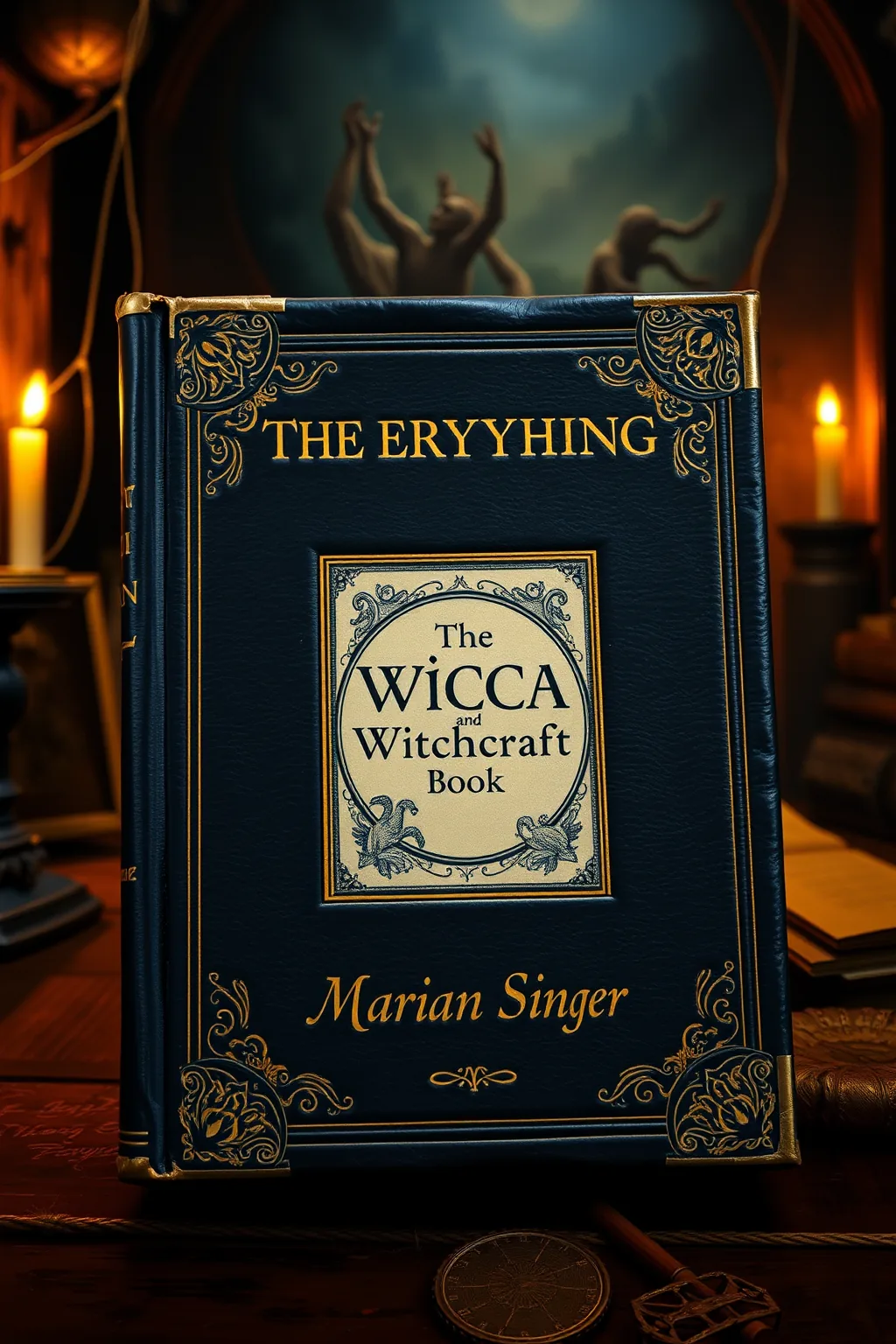
The Everything Wicca and Witchcraft Book
 75
75

The Everything Wicca and Witchcraft Book
Marian Singer's "The Everything Wicca and Witchcraft Book" offers a remarkably clear and straightforward entry into the world of modern witchcraft. Its strength lies in its unpretentious approach, avoiding the dense academic prose or overly romanticized depictions often found in similar texts. Singer presents foundational concepts like the Wiccan Rede and the cycles of the Wheel of the Year with an admirable clarity that is genuinely helpful for beginners. However, the book's broad scope means that some topics, such as advanced spellcasting techniques or deep dives into specific pantheons, are necessarily treated superficially. For instance, the section on elemental correspondences, while present, lacks the nuanced detail one might seek in a more specialized grimoire. Ultimately, it functions well as an initial primer, but readers will likely outgrow its introductory scope once they establish a personal practice.
📝 Description
75
Marian Singer's 2002 book demystifies modern Wicca and witchcraft for a general audience.
Published in 2002, Marian Singer's The Everything Wicca and Witchcraft Book aims to explain the principles and practices of modern Wicca and witchcraft to readers unfamiliar with these paths. The text offers clear explanations of core beliefs, rituals, and magical theory, covering a wide range of subjects. These include the history and ethics of witchcraft, as well as how these practices can be applied in everyday life.
This book is principally for those new to Wicca and witchcraft who want a basic understanding. It will also appeal to individuals interested in paganism, other spiritualities, or the historical and cultural background of magic. Readers seeking a direct guide to fundamental ideas, without overly academic language or highly specialized terms, will find this volume useful. Singer's work is a straightforward entry point into these traditions.
The book appeared as public interest in Neopaganism and witchcraft grew following the cultural shifts of the late 20th century. As people looked for spiritual frameworks beyond mainstream religions, books like Singer's offered accessible introductions. It reflects a tendency to make esoteric subjects more widely known and understandable.
💡 Why Read This Book?
• Gain a foundational understanding of the Wiccan Rede, the ethical code central to many Wiccan traditions, enabling a clearer grasp of responsible magical practice. • Learn about the Wheel of the Year, including the eight major Sabbats, providing a framework for connecting with natural cycles and seasonal celebrations. • Understand the concept of the God and Goddess, two primary deities in many Wiccan paths, offering insight into dualistic divinity and its symbolic representation.
⭐ Reader Reviews
Honest opinions from readers who have explored this book.
❓ Frequently Asked Questions
What is the historical origin of the Wiccan Rede as discussed in The Everything Wicca and Witchcraft Book?
The Wiccan Rede, a set of ethical guidelines, is presented in the book as originating from early 20th-century witchcraft revivals. While its exact origins are debated, it gained prominence in the mid-20th century through figures like Gerald Gardner.
Does Marian Singer's book cover different types of witchcraft?
Yes, "The Everything Wicca and Witchcraft Book" touches upon various expressions of witchcraft, acknowledging that not all practitioners follow the same traditions. It highlights commonalities while respecting individual paths.
What are the Sabbats mentioned in the book?
The Sabbats are eight seasonal festivals celebrated in Wicca, marking significant points in the agricultural year. The book likely details Samhain, Yule, Imbolc, Ostara, Beltane, Litha, Lughnasadh, and Mabon.
How does the book explain the concept of the God and Goddess?
Singer's work typically explains the God and Goddess as archetypal divine energies representing masculine and feminine principles, often seen as complementary forces within the universe and in nature.
Is "The Everything Wicca and Witchcraft Book" suitable for solitary practitioners?
Absolutely. The book's structure and content are well-suited for individuals practicing alone, offering guidance on personal rituals, beliefs, and magical development outside of coven structures.
When was "The Everything Wicca and Witchcraft Book" first published?
The book was first published in 2002, placing it within a period of growing interest and accessibility for books on Wicca and witchcraft.
🔮 Key Themes & Symbolism
Ethical Frameworks
The book emphasizes the importance of ethical conduct within magical practice, most notably through the Wiccan Rede. This ethical code, "An it harm none, do what ye will," is presented as a reference for responsible witchcraft, guiding practitioners to consider the consequences of their actions. Singer explores how this principle applies to spellcasting, personal interactions, and one's relationship with the natural world, ensuring magic is used constructively and with respect for free will and universal balance.
The Sacredness of Nature
A core theme is the profound connection between spirituality and the natural world. The book highlights the Wiccan reverence for the Earth and its cycles, epitomized by the celebration of the Wheel of the Year. This involves understanding and honoring the seasonal transitions, the elements, and the living beings that inhabit the planet. It frames nature not just as a backdrop, but as a source of divine energy and wisdom.
Divine Duality
Singer's work introduces the concept of the God and Goddess as central deities in many Wiccan traditions. This duality represents complementary masculine and feminine energies, embodying both the active and receptive forces of the universe. The book explains how this divine pair is honored through various rituals and festivals, reflecting the balance found in nature and within individuals. It offers an accessible perspective on polytheistic and dualistic divinity.
Personal Empowerment
The book promotes the idea of personal empowerment through magical practice and spiritual awareness. It encourages readers to recognize their inherent connection to the divine and to develop their own inner strength and intuition. Spellcraft and ritual are presented as tools for self-transformation, problem-solving, and manifesting positive change, fostering a sense of agency and self-reliance.
💬 Memorable Quotes
Direct passages from the work, attributed to the author.
“The Craft is a path of balance, reverence for nature, and personal responsibility.”
— This statement captures the book's core message, highlighting the interconnectedness of magic, the environment, and ethical living as fundamental tenets of Wicca and witchcraft.
“The Wheel of the Year turns, marking sacred times for celebration and reflection.”
— This highlights the book's focus on the cyclical nature of time and the importance of honoring seasonal festivals, which are central to many pagan spiritual practices.
“Magic is the art of changing consciousness in accordance with will.”
— This definition, often attributed to practitioners like Aleister Crowley, emphasizes the mental and intentional aspects of spellcasting, suggesting magic is a disciplined practice of directing psychic energy.
“Respect the Earth, for it sustains all life.”
— This expresses the deep ecological and spiritual connection prevalent in Wicca, underscoring the belief that the planet is sacred and deserves care and veneration.
“The God and Goddess represent the fundamental forces of the universe.”
— This conveys the dualistic nature of divinity in many Wiccan paths, illustrating the belief in complementary masculine and feminine divine energies that govern existence.
🌙 Esoteric Significance
Tradition
The book aligns broadly with the modern Wiccan tradition, which itself draws from various esoteric currents including ceremonial magic, folk magic, and nature-based spirituality. While not strictly adhering to a single lineage like Gardnerian or Alexandrian Wicca, it incorporates elements common across many contemporary pagan paths. It departs from older, more secretive traditions by aiming for broad accessibility, reflecting a 21st-century trend of clarifying esoteric knowledge for a general readership.
Symbolism
Key symbols explored include the Pentacle, representing the five elements (Earth, Air, Fire, Water, and Spirit) and protection, often worn as an amulet. The Horned God and the Triple Goddess are central divine symbols, representing masculine and feminine energies, lunar and solar cycles, and the Maiden, Mother, and Crone archetypes. The Wheel of the Year, a circular symbol, represents the annual cycle of seasons and festivals, signifying cosmic order and the rhythm of life, death, and rebirth.
Modern Relevance
Singer's work remains relevant for contemporary practitioners seeking a clear, introductory text. Its accessible approach influences how new generations engage with Wicca and witchcraft, particularly those drawn to self-directed learning. The book's emphasis on nature-based spirituality and ethical practice appeals to modern eco-conscious and mindfulness movements, making its core principles applicable beyond formal Wiccan practice.
👥 Who Should Read This Book
• Curious individuals exploring alternative spiritual paths: Those seeking an unbiased, foundational overview of Wiccan beliefs and witchcraft practices without dense theological or historical jargon. • Aspiring solitary practitioners: Individuals interested in developing a personal spiritual practice rooted in nature, ritual, and ethical magic, seeking guidance on core concepts and techniques. • Comparative religion students: Researchers or students looking for an accessible introduction to modern paganism and witchcraft as a contemporary spiritual movement, understanding its basic tenets and cultural context.
📜 Historical Context
Marian Singer's "The Everything Wicca and Witchcraft Book," published in 2002, arrived during a significant period for Neopaganism. The late 20th and early 21st centuries saw a surge in interest in esoteric traditions, partly fueled by increased access to information and a growing dissatisfaction with conventional religious structures. This era followed the Wiccan revival sparked by figures like Gerald Gardner in the mid-20th century, and books like Singer's aimed to synthesize and present these evolving practices to a wider audience. It emerged in a landscape where authors like Doreen Valiente had already laid crucial groundwork, and contemporary authors such as Scott Cunningham were popularizing a gentler, more accessible form of witchcraft. The book's publication coincided with a general trend of "mainstreaming" occult and spiritual topics, making them less fringe and more approachable, though debates about authenticity and appropriation were ongoing within the pagan community.
📔 Journal Prompts
Reflect on your understanding of the Wiccan Rede and its implications for personal action.
Consider the archetypes of the God and Goddess in relation to your own life experiences.
Map out the Wheel of the Year in your local environment, noting natural changes.
Explore the concept of immanent divinity within the natural world around you.
How might the principle of "harm none" guide a specific decision you face?
🗂️ Glossary
Wiccan Rede
An ethical code central to many Wiccan traditions, famously summarized as 'An it harm none, do what ye will.' It emphasizes personal responsibility and the avoidance of causing harm.
Wheel of the Year
A cyclical calendar representing the eight major seasonal festivals (Sabbats) celebrated in Wicca and some other pagan traditions, marking the solstices, equinoxes, and cross-quarter days.
Sabbats
The eight major festivals celebrated throughout the year in Wicca and other pagan paths, corresponding to significant points in the agricultural and solar cycles.
God and Goddess
The primary divine figures in many Wiccan traditions, representing complementary masculine and feminine energies. They are often seen as aspects of a greater divine unity.
Pentacle
A five-pointed star, typically enclosed within a circle, used as a symbol of the five elements (Earth, Air, Fire, Water, Spirit) and as a protective amulet in Wicca and other magical traditions.
Immanent Divinity
The belief that the divine is present within the natural world and all living beings, rather than existing solely in a transcendent realm separate from creation.
Spellcraft
The practice of creating and casting spells, involving focused intent, visualization, and the use of symbolic tools or energies to effect change.
🔮 Readers Also Liked
Browse all →







More by Marian Singer
All books →


More Free Witchcraft & Paganism Books
View all →