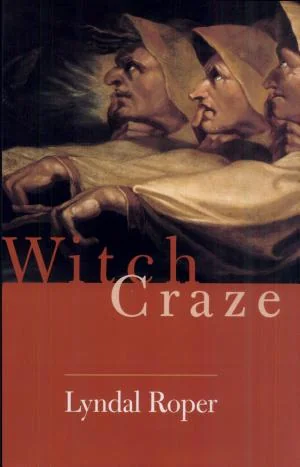
Witch Craze
 81
81

Witch Craze
Lyndal Roper’s Witch Craze confronts the reader with the brutal efficacy of historical belief systems. The book excels in its detailed reconstruction of the legal and social machinery that facilitated the extermination of thousands. Roper’s meticulous attention to the confessions, however coerced, reveals the anxieties and mentalities of the period with chilling clarity. A particularly potent section details the interrogation methods, exposing the systematic dehumanization involved. While the book’s academic rigor is undeniable, its sheer density of historical fact and prose can at times feel overwhelming, demanding sustained concentration. The lack of explicit engagement with modern occult interpretations, while true to its historical focus, might leave some readers wanting. Still, for understanding the historical roots of Western fears surrounding witchcraft, Roper’s work is an indispensable, albeit harrowing, account.
📝 Description
81
Lyndal Roper's 2004 book examines the European witch hunts of the 16th and 17th centuries.
Witch Craze by Lyndal Roper looks closely at the European witch hunts from the 1500s and 1600s. The book moves past simple folklore to show the harsh realities of accusations, interrogations, and executions. Roper reconstructs the social, religious, and psychological conditions that drove this period of persecution, using extensive archival research.
The book places the witch craze within the turbulent time of the Reformation and Counter-Reformation. This era of religious conflict and social change created an environment ripe for scapegoating. New religious ideas about the Devil's power and legal methods for fighting heresy were central to the witch trials.
Roper considers how the figure of the 'witch' was formed in popular belief and legal discussions. The study examines the use of confessions, often obtained through torture, to confirm beliefs about witchcraft. It also looks at the gendered aspect of accusations, noting how women, especially older or marginalized ones, were frequently targeted.
While not strictly an esoteric text, Roper's work engages with the historical roots of beliefs that have informed later esoteric traditions. The book details how historical anxieties, religious doctrines, and social structures created a climate where accusations of maleficium and demonic pacts became widespread. It shows the concrete historical manifestation of fears about hidden malevolent forces and the systematic efforts to combat them, which have parallels in certain occult beliefs concerning spiritual warfare and the nature of evil.
💡 Why Read This Book?
• Gain a rigorous understanding of the historical witch hunts, moving beyond myth to the documented realities of 16th and 17th-century European persecution, as detailed in chapters discussing the Reformation. • Explore the psychological and social mechanisms of mass hysteria and scapegoating, learning how societal anxieties in periods like the late 1500s could lead to widespread accusations and executions. • Analyze the role of legal and religious authorities in constructing the image of the witch, understanding how 'confessions' under torture shaped the narrative and justified the 'craze'.
⭐ Reader Reviews
Honest opinions from readers who have explored this book.
❓ Frequently Asked Questions
What specific historical period does Lyndal Roper's 'Witch Craze' focus on?
The book primarily concentrates on the intense witch hunts of the 16th and 17th centuries across Europe, detailing the peak years of accusations, trials, and executions during this era.
How does 'Witch Craze' differ from popular depictions of witches?
Roper's work moves past folklore and fantasy, presenting a scholarly analysis of the historical persecution. It focuses on the grim realities of legal proceedings, confessions, and the societal factors that led to the deaths of thousands.
What role did religion play in the witch hunts discussed in the book?
The book explores how religious upheaval, particularly the Reformation and Counter-Reformation, intensified fears of the Devil and witchcraft. Theological interpretations of demonic pacts and heresy fueled the legal and social drive to eliminate perceived witches.
Does the book explain why women were disproportionately targeted?
Yes, 'Witch Craze' examines the gendered nature of the accusations, highlighting how societal norms, misogyny, and the perceived roles of women in the 16th and 17th centuries made them primary targets for accusations of witchcraft.
What kind of sources does Lyndal Roper use in her research?
Roper draws upon extensive archival research, including court records, trial transcripts, theological texts, and personal confessions from the period of the witch hunts.
Is 'Witch Craze' suitable for someone interested in modern witchcraft practices?
While the book provides essential historical context for the origins of Western witchcraft fears, it is a historical study of persecution and not a guide to modern esoteric practices or beliefs.
🔮 Key Themes & Symbolism
The Machinery of Persecution
Roper meticulously dissects the legal and social apparatus that enabled the witch hunts. This includes the development of specific legal frameworks, the role of inquisitors and magistrates, and the reliance on coerced confessions. The book details how accusations, often stemming from local disputes or mass hysteria, were processed through formal channels, leading to interrogation, torture, and execution, particularly in regions like the Holy Roman Empire during the 1500s.
Gender and Accusation
A central theme is the profoundly gendered nature of the witch craze. Roper highlights how societal anxieties about female autonomy, sexuality, and perceived social disorder converged to make women, especially older and marginalized figures, the primary targets. The book examines the specific accusations leveled against women – pacts with the Devil, harming children, blighting crops – and how these reflected patriarchal fears of the era.
The Devil and Demonic Pact
The concept of the diabolical pact formed a central to witch trial ideology. Roper explores how theological debates and popular beliefs about Satan's active role in the world fueled the idea that individuals, particularly witches, could enter into explicit agreements with the Devil. This belief system provided a theological justification for the extreme measures taken against accused witches, framing them as agents of a cosmic evil.
Confession and Belief
The role of confession, whether voluntary or extracted under torture, is crucial. Roper shows how these 'confessions' were not necessarily factual accounts but performances shaped by the interrogators' expectations and the accused's desperate attempts to survive. The book illustrates how these manufactured narratives then reinforced the collective belief in witchcraft, perpetuating the cycle of accusation and punishment throughout the 17th century.
💬 Memorable Quotes
Direct passages from the work, attributed to the author.
“Thousands of women confessed to making pacts with the Devil, causing babies to sicken, and killing animals and crops.”
— This concise statement captures the core accusations that formed the basis of witch trials. It highlights the specific, often domestic or agricultural, nature of the alleged harm attributed to witches, revealing the tangible fears of the communities involved.
“The witch has been a powerful figure of the Western imagination.”
— This suggests the enduring archetype of the witch, predating and outlasting the historical witch hunts. It points to the cultural resonance of this figure, which served as a vessel for societal anxieties and moral anxieties across centuries.
“The pursuit, interrogation, torture, and burning of witches.”
— This direct phrasing underscores the brutal, systematic process at the heart of the witch craze. It emphasizes the physical and legal violence inflicted upon accused individuals, stripping away any romanticized notions of the phenomenon.
“In the sixteenth and seventeenth centuries thousands of women confessed...”
— This highlights the scale and timeframe of the persecutions. The emphasis on 'confessed' is critical, as Roper explores the often coerced nature of these statements, which nonetheless served as 'evidence' for the trials.
“Drawing on hundreds of ori”
— This points to the rigorous, evidence-based methodology of Roper's work. The use of extensive primary source material is fundamental to her detailed reconstruction of the historical events and beliefs surrounding the witch hunts.
🌙 Esoteric Significance
Tradition
While 'Witch Craze' is fundamentally a work of secular history, it is indispensable for understanding the historical roots of Western esoteric traditions that later engaged with or reinterpreted witchcraft. It does not align with a specific lineage like Hermeticism or Gnosticism but provides the crucial historical and social context for why figures accused of witchcraft were demonized, a context often elided in modern occult revivalism.
Symbolism
The book indirectly illuminates symbols potent in esoteric thought by detailing their historical persecution. The 'Devil's Mark,' often cited as physical evidence, became a symbol of demonic pacts. Accusations of controlling weather or crops point to a perceived manipulation of natural forces, a theme explored in many magical traditions. The image of the 'Sabbath' itself, though a construct of accusers, became a symbolic locus for forbidden rites and gatherings.
Modern Relevance
Contemporary practitioners and scholars of Wicca, modern witchcraft, and Neo-Paganism draw heavily on historical understandings of witchcraft, often seeking to reclaim or re-evaluate the figure of the witch. Roper’s work provides essential historical grounding, allowing for a critical understanding of the lineage and persecution that modern traditions often engage with, offering a corrective to romanticized or anachronistic interpretations of historical witch figures.
👥 Who Should Read This Book
['• Historians and students of Early Modern Europe: Gain a detailed, evidence-based understanding of the social, religious, and legal dynamics driving the witch hunts of the 16th and 17th centuries.', '• Scholars of religion and demonology: Analyze the theological justifications and evolving beliefs surrounding the Devil and witchcraft that underpinned the persecutions.', '• Readers interested in social psychology and mass hysteria: Examine the mechanisms of scapegoating, communal fear, and the construction of deviant identities within historical societies.']
📜 Historical Context
Lyndal Roper's Witch Craze emerged in 2004, contributing to a rich historiographical tradition examining the European witch hunts. This period, particularly the 16th and 17th centuries, was defined by intense religious conflict following the Protestant Reformation, widespread social upheaval, and a burgeoning belief in the active malevolence of Satan. Intellectual currents included a growing preoccupation with heresy and demonic influence, fueled by both popular superstition and scholarly demonology. Roper's work engages with scholars like Keith Thomas and Christina Larner, who had previously explored the social and economic factors behind the hunts. Unlike earlier, more folkloric accounts, Roper's approach emphasizes the legal and psychological dimensions, situating the craze within the specific anxieties of the early modern state and church. The reception of such works within academia has generally been one of rigorous debate, focusing on the interpretation of trial records and the specific socio-religious contexts of different regions.
📔 Journal Prompts
The construction of the 'witch' as a figure in the Western imagination.
The role of confession, particularly under duress, in shaping historical narratives of witchcraft.
Gendered accusations during the 16th and 17th-century witch hunts.
The impact of religious upheaval, such as the Reformation, on the intensity of witch persecutions.
Analyzing the legal and social frameworks that facilitated the 'pursuit, interrogation, torture, and burning' of accused witches.
🗂️ Glossary
Witch Hunts
A period of widespread persecution and execution of individuals accused of practicing witchcraft, particularly prevalent in Europe during the 15th to 18th centuries, with a peak in the 16th and 17th centuries.
Diabolical Pact
A purported agreement between a witch and the Devil, often involving renouncing God and receiving supernatural powers in exchange for allegiance. This was a key element in the theological justification for witch trials.
Confession
In the context of witch trials, often a statement made by the accused admitting to witchcraft. Roper emphasizes that many confessions were obtained through torture or intense psychological pressure.
Reformation
The 16th-century religious movement that led to the establishment of Protestant churches, causing significant religious and political upheaval across Europe and influencing perceptions of heresy and demonic activity.
Demonology
The study or belief in demons and their influence. During the period of the witch craze, demonological texts by scholars helped to codify beliefs about the nature and threat of witchcraft.
Scapegoating
The practice of blaming an individual or group for the problems or wrongdoings of others. Witch hunts are often analyzed as a form of mass scapegoating driven by societal anxieties.
Inquisition
Historically, a powerful institution within the Catholic Church aimed at combating heresy. While distinct from secular witch trials, its methods and focus on rooting out perceived heresy influenced the broader climate of persecution.
This book appears in 1 collection
🔮 Readers Also Liked
Browse all →







From the “Witchcraft” Collection
View all →





More Free Occult Philosophy Books
View all →