Discover Entdecke Découvrir Buddhism
 84
84

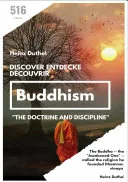
Discover Entdecke Découvrir Buddhism
Heinz Duthel's "Discover Entdecke Découvrir Buddhism" attempts to clarify the origins and structure of a major world religion. The author correctly identifies the Dhamma-vinaya and the Sangha as central pillars of the Buddhist tradition, emphasizing their role in preserving the Buddha's teachings. The book’s strength lies in its straightforward presentation of these institutional aspects, offering a solid historical anchor for understanding how Buddhism propagated. However, the work feels somewhat encyclopedic, occasionally lacking the deeper interpretive lens that might illuminate the philosophical nuances for a Western esoteric audience. For instance, while the establishment of the Sangha is detailed, the text could benefit from exploring the symbolic implications of monastic discipline beyond its practical function. The original blurb's incomplete sentence about "ignorance" hints at a deeper philosophical exploration that isn't fully realized in the provided text. Ultimately, this book offers a competent, if somewhat dry, account of Buddhism's formative elements.
📝 Description
84
Heinz Duthel's 2018 book traces the establishment of Buddhist doctrine and monastic life.
Discover Entdecke Découvrir Buddhism details the core principles and historical growth of Buddhist thought. It covers the fundamental teachings Siddhartha Gautama, the Buddha, established, and follows how these ideas developed through monastic and lay groups. The book focuses on the Dhamma-vinaya, which is the doctrine and discipline that forms the heart of the Buddhist path.
It explains the founding of the Sangha, the community of monks and nuns. This community was formed to keep these teachings alive and pass them on to future generations. The text places the Buddha's teachings within the socio-religious setting of ancient India. This was a time of many different philosophical and ascetic practices. The book shows how the Buddha's Dhamma-vinaya and Sangha offered a structured approach to the spiritual questions of that era. It reflects the intellectual climate where new religious ideas were appearing, and the Buddha's way offered a unique route to spiritual freedom and ethical living.
This book examines Buddhism not just as a historical religion but as a path focused on liberation through disciplined practice. It highlights the Sangha as the institutional framework for preserving and transmitting the Buddha's teachings, the Dhamma-vinaya. The focus on doctrine and discipline, alongside the community's role, points to the structured, contemplative aspects often found in esoteric traditions that seek direct spiritual realization through established methods and community support.
💡 Why Read This Book?
• Gain clarity on the specific meaning of "Dhamma-vinaya" and its role in early Buddhist practice, as presented in Heinz Duthel's work. • Understand the historical function of the Sangha, the monastic order founded by Siddhartha Gautama, and its significance for preserving teachings. • Grasp the foundational concept of the "Awakened One" and how his doctrine and discipline differentiated Buddhism from other contemporary spiritual movements in ancient India.
⭐ Reader Reviews
Honest opinions from readers who have explored this book.
❓ Frequently Asked Questions
What is the primary difference between Dhamma-vinaya and Dharma in Buddhism?
Dhamma-vinaya, as used in the context of the Buddha's teachings, specifically refers to 'the doctrine and discipline.' While Dharma (Sanskrit) is a broader term encompassing cosmic law and duty, Dhamma-vinaya is a more precise designation for the teachings and rules established by Siddhartha Gautama.
When was "Discover Entdecke Découvrir Buddhism" first published?
The book "Discover Entdecke Découvrir Buddhism" by Heinz Duthel was first published on November 16, 2018.
Who founded the Buddhist religion?
The Buddhist religion was founded by Siddhartha Gautama, who is referred to as the "Awakened One" or the Buddha.
What is the Sangha in Buddhism?
The Sangha is the monastic community of monks (bhikkhus) and nuns (bhikkhunis) established by the Buddha to support the practice of Dhamma-vinaya and preserve his teachings for future generations.
What does 'Dhamma-vinaya' mean?
'Dhamma-vinaya' is a term used by the Buddha to describe his teachings, comprising 'the doctrine and discipline.' It encompasses both the philosophical understanding and the ethical and monastic rules that guide practitioners.
Is this book suitable for complete beginners to Buddhism?
Yes, the book is designed as an introductory overview, explaining core concepts like Dhamma-vinaya and the Sangha in a clear manner suitable for those new to Buddhist philosophy and history.
🔮 Key Themes & Symbolism
Doctrine and Discipline
The work emphasizes the dual nature of the Buddha's legacy as 'Dhamma-vinaya.' This concept highlights that Buddhist teachings are not merely philosophical ideas but are intrinsically linked to a code of conduct and discipline. The book explains how this integrated approach, encompassing both understanding (Dhamma) and practice (Vinaya), was crucial for the formation of the monastic order (Sangha) and the preservation of the teachings. It underscores that the discipline served as a framework to support the realization of the doctrine's transformative potential, distinguishing it from purely intellectual pursuits.
The Sangha's Role
A significant theme is the establishment and enduring importance of the Sangha, the community of monks and nuns. The book presents the Sangha as the institutional vehicle designed by the Buddha to safeguard the Dhamma-vinaya. Its function extends beyond mere community living; it is depicted as the living repository and transmission mechanism for the Buddha's teachings across centuries. The text implies that the Sangha's structure and discipline were vital for maintaining the purity and accessibility of the doctrine for both monastics and lay followers.
The Awakened One
The figure of Siddhartha Gautama, the "Awakened One," is central. The book positions him as the originator of a distinct spiritual path, differentiating his "doctrine and discipline" from other contemporary movements. The emphasis is on his enlightenment as the source of the teachings and the foundation upon which the Sangha was built. The concept of awakening signifies a profound shift in understanding, which the book implies is the ultimate goal of the Dhamma-vinaya, accessible through the structured practice established by the Buddha.
Preservation of Teachings
The overarching theme is the Buddha's foresight in establishing structures for the longevity of his teachings. The creation of the Dhamma-vinaya and the Sangha are presented as deliberate actions to ensure that the "doctrine and discipline" would be passed down accurately through generations. This focus on preservation underscores the practical and organizational genius attributed to the Buddha, framing Buddhism not just as a spiritual philosophy but as a resilient tradition designed for enduring transmission.
💬 Memorable Quotes
Direct passages from the work, attributed to the author.
“The Buddha called the religion he founded Dhamma-vinaya — "the doctrine and discipline."”
— This statement precisely defines the core of the Buddha's teaching, highlighting its dual nature as both philosophical insight (Dhamma) and a practical code of conduct (Vinaya), essential for spiritual progress.
“To provide a social structure supportive of the practice of Dhamma-vinaya... the Buddha established the order of bhikkhus (monks) and bhikkhunis (nuns) — the Sangha.”
— This highlights the institutional aspect of Buddhism, emphasizing that the monastic community was intentionally created to foster the practical application of the Buddha's teachings.
“The Sangha... continues to this day to pass his teachings on to subsequent generations.”
— This points to the enduring legacy of the Sangha as the primary vehicle for the transmission of Buddhist doctrine, underscoring its role in maintaining the tradition's continuity.
“The Buddha — the "Awakened One" — called the religion he founded Dhamma-vinaya.”
— This connects the founder's enlightened status to the specific designation of his teachings, framing his awakening as the source of both the doctrine and the discipline.
“Because of our ignora”
— This fragment suggests an exploration of how ignorance hinders spiritual progress, implying that the Dhamma-vinaya and Sangha are antidotes to such fundamental limitations.
🌙 Esoteric Significance
Tradition
While "Discover Entdecke Découvrir Buddhism" focuses on the historical and doctrinal foundations, its categorization within 'Esoteric' suggests an alignment with traditions that seek deeper, often hidden, meanings within religious frameworks. It doesn't explicitly align with a specific Western esoteric lineage like Hermeticism or Kabbalah but rather serves as an introduction to a system often studied by esotericists for its psychological and metaphysical implications. The emphasis on 'awakening' and the structured path can be seen as aligning with esoteric goals of inner transformation and higher consciousness.
Symbolism
The core symbols presented are institutional rather than purely visual. The "Awakened One" signifies not just an enlightened individual but the potential for universal consciousness. The "Dhamma-vinaya" symbolizes the path to liberation, where doctrine provides the map and discipline the vehicle. The Sangha, as a structured community, represents the collective effort and interdependency required for spiritual progress, embodying order and shared purpose in the pursuit of enlightenment.
Modern Relevance
Contemporary mindfulness movements, secular Buddhist practices, and psychological explorations of consciousness frequently draw upon the foundational concepts outlined in this book. Thinkers and practitioners interested in the intersection of psychology and spirituality, or those seeking non-theistic paths to well-being, often revisit the core tenets of Dhamma-vinaya. The emphasis on discipline and structured practice also speaks to modern self-improvement and intentional living philosophies.
👥 Who Should Read This Book
• Beginning students of world religions seeking a factual overview of Buddhism's origins and core organizational principles. • Comparative religion researchers interested in understanding the historical context of the Dhamma-vinaya and the establishment of the Sangha. • Individuals exploring philosophical paths who are drawn to the concept of 'awakening' and the structured discipline presented by the Buddha.
📜 Historical Context
Heinz Duthel's "Discover Entdecke Découvrir Buddhism" emerges from a modern scholarly and popular interest in Eastern philosophies that gained significant traction in the West throughout the 20th century. The book implicitly engages with this legacy, aiming to clarify the historical origins of Buddhism. It situates Siddhartha Gautama's teachings within the milieu of ancient India, a period characterized by diverse ascetical and philosophical schools like the Jains and various Brahmanical traditions. The mid-20th century saw a surge in Buddhist studies, notably with figures like D.T. Suzuki popularizing Zen Buddhism in America, and Rhys Davids translating early Pali texts. While Duthel's work focuses on the foundational "doctrine and discipline" (Dhamma-vinaya) and the establishment of the Sangha, it appears as a direct descendant of this ongoing Western engagement with Buddhism, seeking to provide accessible information without the controversies that sometimes surrounded earlier esoteric interpretations.
📔 Journal Prompts
The concept of Dhamma-vinaya as both doctrine and discipline.
The Buddha establishing the Sangha for posterity.
The significance of being called the 'Awakened One'.
How the Sangha functions as a preserver of teachings.
Personal reflection on the 'doctrine and discipline' dichotomy.
🗂️ Glossary
Dhamma-vinaya
The term used by the Buddha to denote his teachings, comprising both the doctrine (Dhamma) and the monastic discipline (Vinaya).
Awakened One
A title for Siddhartha Gautama, the founder of Buddhism, signifying his attainment of enlightenment and profound understanding of reality.
Sangha
The monastic community of Buddhist monks (bhikkhus) and nuns (bhikkhunis), established to uphold and transmit the Buddha's teachings.
Bhikkhu
A fully ordained Buddhist monk, a member of the Sangha.
Bhikkhuni
A fully ordained Buddhist nun, a member of the Sangha.
Doctrine
In Buddhism, refers to the teachings of the Buddha (Dhamma), encompassing philosophical insights and understanding of existence.
Discipline
In Buddhism, refers to the rules and ethical conduct (Vinaya) prescribed for monks and nuns to support the practice of the doctrine.