Advaita Vedanta
 75
75

Advaita Vedanta
Prabhuji David Ben Yosef Har-Zion's take on Advaita Vedanta offers a stark, no-nonsense approach to self-inquiry. Eschewing flowery language, the text zeroes in on the existential weight of the question, "Who am I?" This directness is its primary strength, cutting through academic or devotional platitudes to address the seeker's core yearning for truth. The assertion that this question represents "the highest and noblest rebellion" is particularly potent, reframing spiritual seeking not as passive contemplation but as an active, almost defiant, act of reclaiming one's inherent dignity. A limitation, however, lies in its density; the philosophical underpinnings, while essential, can be challenging for those entirely new to Vedanta without supplementary guidance. The emphasis on jñāna-yoga as an "existential view" rather than a mere theory is well-articulated, urging a lived embodiment of these principles. Ultimately, this work serves as a potent, albeit demanding, primer for those ready to confront the most fundamental question of existence.
📝 Description
75
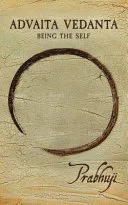
Prabhuji David Ben Yosef Har-Zion's 2021 book presents Advaita Vedanta as an existential view, not just doctrine.
This work introduces Advaita Vedanta as an "existential view" rather than a set of doctrines. Originating from Hindu traditions, it targets individuals intensely seeking self-knowledge and liberation, known as moksha. The book emphasizes a path of knowledge, jñāna-yoga, aiming for a lived reality beyond mere intellectual understanding. Central to this path is self-inquiry, a direct questioning of personal identity.
The text is suited for earnest seekers of Truth who wish to grasp their fundamental essence and achieve moksha. It speaks to those who find abstract theories insufficient and desire an experiential grasp of reality. Readers drawn to a direct, challenging approach to self-discovery, one that questions common ideas about selfhood, will find this book resonates. It appeals to a questioning spirit about the nature of existence.
Advaita Vedanta's roots extend over a thousand years within Hinduism, with key texts like the Upanishads and Adi Shankara's teachings. Prabhuji David Ben Yosef Har-Zion's 2021 presentation situates this ancient philosophy within contemporary spiritual thought. While its core is ancient, this modern articulation addresses a global audience interested in non-dualistic perspectives, often as an alternative to Western dualistic frameworks.
Advaita Vedanta, an ancient Hindu school of thought, posits the fundamental oneness of the individual soul (Atman) and the absolute reality (Brahman). It asserts that the perception of a separate self is an illusion (maya) and that liberation comes through direct realization of this non-dual truth. This tradition, with roots in the Upanishads and systematized by figures like Adi Shankara, often employs rigorous philosophical analysis and meditative practices to dismantle ignorance and reveal the inherent unity of existence.
💡 Why Read This Book?
• Learn the core practice of "self-inquiry" as taught in Advaita Vedanta, moving beyond abstract philosophy to a direct, existential confrontation with the self, as detailed in the book's emphasis on the "Who am I?" question. • Understand jñāna-yoga not as a theoretical system but as a path of "knowledge" that is fundamentally an "existential view," offering a practical method for realizing one's true essence beyond mere intellectual assent. • Grasp the concept of moksha (liberation) as the ultimate goal of this philosophical pursuit, presented as the realization of one's inherent nature, a state obscured by ignorance (avidya), as central to the Advaita framework.
⭐ Reader Reviews
Honest opinions from readers who have explored this book.
❓ Frequently Asked Questions
What is the primary philosophical stance of Advaita Vedanta presented in Prabhuji David Ben Yosef Har-Zion's book?
The book presents Advaita Vedanta as a non-dualistic philosophy, emphasizing the ultimate oneness of the individual self (Atman) and the universal consciousness (Brahman). It's framed as an 'existential view' rather than a mere theory, focusing on direct realization.
What is the core practice recommended for seekers in this book?
The recommended practice is "self-inquiry," epitomized by the question "Who am I?" This is presented as a radical act of rebellion aimed at dismantling the illusion of a separate ego and uncovering one's true essence.
What does Advaita Vedanta suggest is the ultimate goal for a seeker?
The ultimate goal is moksha, or liberation. This is not seen as an attainment but as the direct realization of one's true nature as non-dual Brahman, free from the limitations and suffering associated with the illusory separate self.
How does this book define jñāna-yoga?
Jñāna-yoga is defined as the "path of knowledge." However, it's distinguished from purely intellectual pursuit, described instead as an "existential view" and a philosophical pearl of Hinduism focused on experiential understanding and self-realization.
When was Advaita Vedanta by Prabhuji David Ben Yosef Har-Zion first published?
The book 'Advaita Vedanta' by Prabhuji David Ben Yosef Har-Zion was first published on April 28, 2021, making it a contemporary exploration of this ancient philosophical tradition.
What distinguishes Advaita Vedanta from other schools of Hindu philosophy?
Advaita Vedanta's distinctiveness lies in its strict non-dualism, asserting that only Brahman is ultimately real and the individual soul (Atman) is identical to Brahman. This contrasts with dualistic schools that posit a fundamental difference between God and the soul.
🔮 Key Themes & Symbolism
The Path of Knowledge (Jñāna-Yoga)
This theme centers on jñāna-yoga as the primary method for achieving liberation in Advaita Vedanta. It is not presented as mere intellectual study but as an "existential view" – a way of being and understanding reality. The focus is on direct experiential knowledge that transcends conceptual frameworks. The work emphasizes that this path requires a deep commitment to inquiry and a willingness to challenge one's fundamental assumptions about selfhood, leading to the realization of one's true, non-dual nature.
Self-Inquiry as Rebellion
The book frames the act of asking "Who am I?" as "the highest and noblest rebellion." This theme highlights the radical nature of Advaita Vedanta, which demands a complete re-evaluation of identity. It is a rebellion against the ingrained illusion of a separate ego and the limitations imposed by conventional understanding of self. This inquiry is not an academic exercise but an existential confrontation designed to restore inherent dignity by revealing the seeker's true, unconditioned being, free from societal or personal constructs.
Moksha and the Nature of Reality
Moksha, or liberation, is presented as the ultimate aim for seekers of Truth within the Advaita framework. This theme explores moksha not as a future reward but as the direct realization of one's identity with Brahman, the ultimate reality. The work posits that this realization dissolves the illusion of separateness and suffering. Understanding the non-dual nature of reality, where Atman and Brahman are one, is key to dispelling ignorance (avidya) and achieving this state of freedom.
Essence and Existential View
This theme focuses on the concept of 'essence' as the fundamental truth of one's being, which Advaita Vedanta aims to reveal. The philosophy is described as an "existential view," meaning it is concerned with the lived reality of existence and the nature of the self. It encourages a shift from theoretical knowledge to an embodied understanding, where the seeker directly knows their own essence. This perspective challenges superficial identities and points towards a profound, unchanging reality that underlies all phenomenal experience.
💬 Memorable Quotes
Direct passages from the work, attributed to the author.
“"Who am I?" This question is an expression of the highest and noblest rebellion.”
— This statement recontextualizes the fundamental Advaita question. It reframes self-inquiry not as passive introspection but as an active, courageous challenge against the deeply ingrained illusion of a separate self, asserting the seeker's inherent right to know their true nature.
“Advaita Vedanta is the most refined philosophical pearl of Hinduism.”
— This elevates Advaita Vedanta within the broader spectrum of Hindu thought. It suggests a peak of philosophical development, emphasizing its elegance, depth, and the purity of its non-dualistic message, reserved for those serious about ultimate Truth.
“It suggests following the path of knowledge, called jñāna-yoga, which is more an existential view than a theory.”
— This highlights the practical, lived dimension of jñāna-yoga. It's not about accumulating abstract knowledge but about adopting a fundamental perspective on existence that informs one's entire being and experience, leading to direct realization.
“It restores our dignity and accepts us as the only...”
— This speaks to the empowering nature of self-realization within Advaita. By questioning the false self, one rediscovers an inherent dignity and acceptance, recognizing the singular, unified nature of consciousness that underlies all perceived individuality.
“It is reserved for seekers of Truth who want to know their own essence and aspire to liberation, or mok?a.”
— This defines the intended audience and purpose of Advaita Vedanta. It is for dedicated individuals focused on ultimate self-knowledge and freedom, indicating that this philosophy is not for casual study but for those with a profound spiritual aspiration.
🌙 Esoteric Significance
Tradition
Advaita Vedanta is a central to the Vedantic school within Hindu philosophy, often considered the most refined expression of its non-dualistic principles. While rooted in Vedic tradition, its esoteric significance lies in its direct mapping of the human consciousness onto the absolute reality (Brahman). It shares common ground with certain Gnostic ideas concerning the illusory nature of the material world and the potential for innate knowledge to lead to liberation, though its metaphysical framework is distinct.
Symbolism
A key symbol is the illusory snake mistaken for a rope in dim light, representing the world of multiplicity superimposed upon the singular reality of Brahman due to ignorance (avidya). The "rope" is Brahman, the sole reality, and the "snake" is the perceived world of separate phenomena. Another motif is the "witness consciousness" (sakshi), symbolizing the unchanging, non-involved awareness that observes all mental and physical activity, pointing to the true self beyond the changing states.
Modern Relevance
Contemporary thinkers and spiritual practitioners, particularly in Western mindfulness and meditation circles, often draw upon Advaita's emphasis on non-duality and the witness consciousness. Schools exploring consciousness studies and non-dual inquiry frequently reference Advaita principles. Modern interpreters often adapt its concepts to bridge Eastern philosophy with Western psychological and scientific understandings of the mind and reality.
👥 Who Should Read This Book
• Seekers of ultimate Truth interested in a rigorous philosophical path to self-knowledge, particularly those drawn to the non-dualistic perspective of Hinduism. • Students of comparative religion and philosophy looking to understand the core tenets of Advaita Vedanta beyond superficial introductions, including its historical context and key concepts like jñāna-yoga. • Individuals engaged in deep self-inquiry who are ready to confront existential questions about identity and reality, and who are seeking a framework that emphasizes direct realization over dogma.
📜 Historical Context
The philosophical lineage of Advaita Vedanta traces back to ancient Indian texts like the Upanishads and was systematized by figures such as Adi Shankara around the 8th century CE. Shankara's commentaries on the Brahma Sutras and his emphasis on the non-duality of Atman and Brahman, contrasting with schools like Vishishtadvaita (qualified non-dualism) championed by Ramanujacharya, laid the groundwork for centuries of study. While Advaita Vedanta has a long history, Prabhuji David Ben Yosef Har-Zion's presentation, first published in 2021, situates this ancient wisdom within contemporary global spiritual discourse. It engages with a modern audience often seeking alternatives to materialistic worldviews or more dualistic religious frameworks. The work's focus on existential inquiry aligns with perennial philosophical interests that transcend specific eras.
📔 Journal Prompts
The "Who am I?" question as the highest rebellion: In what ways does society or your own conditioning limit your sense of self?
The concept of moksha: How does the idea of liberation as realization, rather than achievement, shift your perspective on personal growth?
Jñāna-yoga as an existential view: Reflect on a time when a theoretical understanding became a lived reality for you.
The essence of being: What aspects of your experience feel most fundamental and unchanging, beyond temporary thoughts or emotions?
The illusion of separateness: How do daily interactions reveal or challenge the perceived boundary between yourself and others?
🗂️ Glossary
Advaita Vedanta
A school of Hindu philosophy emphasizing non-dualism, asserting that the individual soul (Atman) is identical to the ultimate reality (Brahman).
Moksha
Liberation or release from the cycle of birth and death (samsara), understood in Advaita as the realization of one's true, non-dual nature.
Jñāna-yoga
The path of knowledge or wisdom, a core practice in Advaita Vedanta focused on direct realization of the truth through inquiry and understanding.
Atman
The individual self or soul, which in Advaita Vedanta is ultimately identical to Brahman.
Brahman
The ultimate, unchanging reality or consciousness that underlies all existence in Hindu philosophy.
Self-Inquiry
A meditative practice central to Advaita, typically involving asking "Who am I?" to investigate the nature of the self and dissolve egoic illusions.
Avidya
Ignorance or illusion, the fundamental condition that obscures the true nature of reality and the self, leading to suffering.