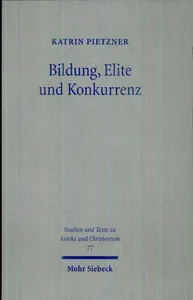
Wicca, Orion Plain and Simple

 81
81

Wicca, Orion Plain and Simple
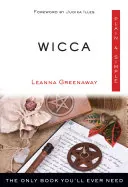
Leanna Greenaway's "Wicca, Orion Plain and Simple" attempts a laudable goal: to distill the essence of Wicca into an accessible format. The book succeeds in its clarity, avoiding the esoteric jargon that can alienate newcomers. Greenaway's explanation of the Wheel of the Year, for instance, is presented with a refreshing directness, making the seasonal observances understandable even to someone with no prior knowledge. However, this very simplicity can be a double-edged sword. While it fulfills the 'plain and simple' promise, it occasionally sacrifices the depth and nuanced historical evolution of the tradition. For instance, the book touches upon the ethical maxim 'An it harm none, do what ye will,' but could benefit from a more thorough exploration of its philosophical underpinnings and historical interpretations. The work is a competent introduction, particularly for those seeking a no-frills overview, but practitioners looking for a deeper historical or theological engagement might find it a bit too sparse. It serves well as a first step, not a final destination.
📝 Description
81
Leanna Greenaway's 2017 book, Wicca, Orion Plain and Simple, clarifies Wiccan beliefs and practices.
Wicca, Orion Plain and Simple by Leanna Greenaway, published in 2017, provides a straightforward explanation of Wiccan beliefs and practices. The book aims to make Wicca understandable, presenting it as a structured system for spiritual growth and connection to nature. It covers the fundamental ideas and practical applications of Wiccan philosophy, moving away from notions of arcane mystery.
This book is written for anyone curious about Wicca who wants clear, direct information. It is a good starting point for complete beginners interested in witchcraft and paganism. Readers who prefer simple, practical advice for spiritual exploration will find its approach helpful. It also serves those who have encountered inaccurate information and want a source focused on clarity.
Published in 2017, Wicca, Orion Plain and Simple enters a modern period of renewed interest in paganism and witchcraft. It follows earlier revivals of these traditions, particularly those influenced by Gerald Gardner's work in the 1950s. Greenaway's book distinguishes itself by its commitment to simplicity, contrasting with more complex or academic texts that emerged in earlier waves of esoteric literature. It offers a contemporary perspective on the tradition.
💡 Why Read This Book?
• Learn the fundamental structure of the Wheel of the Year, a concept central to Wiccan seasonal practices, as explained with practical examples in Greenaway's accessible style. • Understand the core ethical principle of the Wiccan Rede, 'An it harm none, do what ye will,' and its implications for daily life and spiritual practice as presented in the book. • Gain a clear, unadorned introduction to the concept of the God and Goddess, presented as foundational divine principles within Wiccan cosmology, without the typical density of esoteric texts.
⭐ Reader Reviews
Honest opinions from readers who have explored this book.
❓ Frequently Asked Questions
What is the main focus of 'Wicca, Orion Plain and Simple'?
The book's primary aim is to provide a clear, straightforward explanation of Wiccan beliefs and practices. It demystifies the religion for beginners, focusing on core concepts and accessible guidance without complex jargon.
Who is the intended audience for this book?
It is written for individuals new to Wicca and paganism who seek a simple, easy-to-understand introduction. It's ideal for those who want foundational knowledge without dense historical or ritualistic detail.
Does the book discuss Wiccan rituals?
While the book focuses on core beliefs and principles, it likely touches upon the essence of Wiccan practice and the importance of seasonal observances like the Wheel of the Year.
Is 'Wicca, Orion Plain and Simple' suitable for experienced practitioners?
While it provides a solid foundation, experienced practitioners might find the 'plain and simple' approach lacks the depth and nuance they are accustomed to. It's more of a beginner's guide.
What is the significance of the 'Orion' in the title?
The 'Orion' in the title likely refers to a specific branch or interpretation of Wicca that the author, Leanna Greenaway, follows or presents, emphasizing a particular lineage or focus within the broader tradition.
When was 'Wicca, Orion Plain and Simple' first published?
The book was first published in 2017, placing it within the contemporary wave of accessible guides to various spiritual paths.
🔮 Key Themes & Symbolism
The Wheel of the Year
This theme explores the cyclical nature of Wiccan spirituality, intrinsically linked to the earth's seasons. Greenaway likely details the eight festivals—Samhain, Yule, Imbolc, Ostara, Beltane, Litha, Lughnasadh, and Mabon—explaining their origins in ancient agricultural rites and their modern symbolic meanings. It emphasizes how observing these turning points fosters a connection with natural rhythms and divine cycles, providing a framework for personal and spiritual growth throughout the year.
The Wiccan Rede
Central to Wiccan ethics, the Rede serves as a guiding principle for action and intent. The phrase 'An it harm none, do what ye will' is likely presented not merely as a prohibition, but as an active directive to consider the consequences of one's actions on oneself, others, and the environment. This section would explore the nuances of 'harm,' its subjective nature, and how this ethical stance informs magical practice and daily life, promoting responsibility and mindful living within the Wiccan framework.
The God and Goddess
This theme looks at the polytheistic or duotheistic understanding of the divine within Wicca. Greenaway likely explains the archetypal energies of the Goddess (often associated with the Moon, earth, and feminine principles) and the God (often linked to the Sun, nature, and masculine principles). The work probably portrays them not as literal rulers, but as fundamental forces and aspects of the divine that practitioners connect with through ritual and meditation, representing the balance and interplay of cosmic energies.
Nature Reverence
A core part of Wiccan practice, this theme highlights the deep spiritual connection and respect for the natural world. Greenaway's work likely illustrates how Wiccans view the earth, its elements, and all living beings as sacred. This reverence translates into practices that honor natural cycles, promote environmental stewardship, and seek spiritual understanding through direct experience in nature, viewing the divine immanent in all creation.
💬 Memorable Quotes
Direct passages from the work, attributed to the author.
“The Wiccan Rede: 'An it harm none, do what ye will.'”
— This foundational ethical principle underscores the importance of intention and consequence in Wiccan practice. It encourages responsible action, emphasizing that personal freedom should not infringe upon the well-being of oneself or others.
“The Wheel of the Year marks the sacred cycles of the seasons.”
— This highlights the importance of celestial and terrestrial rhythms in Wiccan spirituality. It suggests that aligning oneself with these natural cycles is key to spiritual understanding and connection.
“Wicca sees divinity present in all aspects of nature.”
— This points to the immanent quality of the divine in Wiccan belief, suggesting that the sacred is not separate but woven into the fabric of the natural world, inviting reverence for all life.
“Understanding the God and Goddess provides balance.”
— This suggests that the archetypal energies of the divine masculine and feminine are crucial for comprehending the universe and one's place within it, offering a framework for spiritual equilibrium.
“Simplicity is key to understanding these practices.”
— This reflects the book's core philosophy, advocating for clear, direct communication of Wiccan concepts to make them accessible to a broad audience without unnecessary complexity.
🌙 Esoteric Significance
Tradition
This work fits within the broader spectrum of modern Western Esotericism, specifically concerning neo-paganism and contemporary witchcraft. While not explicitly tied to ancient mystery schools, it draws upon archetypal symbolism and nature-based spirituality that echo pre-Christian European traditions. Its lineage can be traced, albeit indirectly, to the foundational work of figures like Gerald Gardner in the mid-20th century, who synthesized various esoteric and folk magic elements into what became known as Wicca.
Symbolism
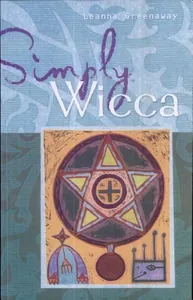
Key symbols likely explored include the Pentacle, representing the five elements (Spirit, Earth, Air, Fire, Water) and protection, and the Triple Moon, symbolizing the Goddess in her maiden, mother, and crone aspects. The Wheel of the Year itself is a potent symbol of cyclical time, death, and rebirth, mirroring natural processes and cosmic order within the Wiccan worldview.
Modern Relevance
The work's emphasis on accessibility and clear explanations makes it relevant to contemporary spiritual seekers who are often overwhelmed by information. It provides a grounded entry point for individuals interested in nature-based spirituality, eco-consciousness, and personal empowerment, trends that resonate with current movements in holistic wellness and environmental activism.
👥 Who Should Read This Book
• Absolute beginners curious about Wicca who prefer direct, unadorned explanations and wish to avoid complex historical or theoretical discussions. • Individuals seeking a practical overview of core Wiccan ethics, such as the Wiccan Rede, and their application in daily life. • Those interested in understanding the significance of seasonal cycles in a spiritual context, particularly through the framework of the Wheel of the Year.
📜 Historical Context
Published in 2017, Leanna Greenaway's "Wicca, Orion Plain and Simple" emerged during a period of widespread accessibility and popularization of neo-pagan and witchcraft traditions. This era saw a proliferation of books aiming to explain these paths, often building upon the foundations laid by earlier figures. Gerald Gardner's establishment of the first coven in the early 1950s and his subsequent publications are seminal points in modern Wicca's history. By 2017, Wicca was no longer a fringe curiosity but a recognized spiritual path with diverse expressions. Greenaway's work can be seen as part of a lineage that includes authors like Doreen Valiente, who, though a contemporary of Gardner's, also sought to codify and explain Wiccan beliefs. The book likely aimed to stand apart from more academic or historically dense works by offering a straightforward, beginner-focused approach, potentially as a counterpoint to the expansive, sometimes intricate, literature that followed the initial Wiccan revival.
📔 Journal Prompts
Reflect on the principle 'An it harm none, do what ye will' and its potential applications in your own life.
Consider the symbolism of one of the eight festivals of the Wheel of the Year that particularly draws your attention.
Explore your personal connection to the archetypes of the God and Goddess as described in the text.
How does the concept of nature reverence, as presented in the book, align with or challenge your current worldview?
What aspects of the 'Orion' tradition, if elaborated upon, would you be most interested in learning more about?
🗂️ Glossary
Wiccan Rede
A code of ethics central to Wicca, famously summarized as 'An it harm none, do what ye will.' It guides practitioners to act with intention and consideration for consequences.
Wheel of the Year
The Wiccan calendar marking eight major seasonal festivals: Samhain, Yule, Imbolc, Ostara, Beltane, Litha, Lughnasadh, and Mabon. It represents natural cycles and spiritual turning points.
God and Goddess
The principal divine figures in many Wiccan traditions, representing complementary archetypal energies—often the masculine and feminine principles—that embody natural forces and cosmic balance.
Pentacle
A five-pointed star, often enclosed within a circle. It typically symbolizes the five elements (Earth, Air, Fire, Water, Spirit) and is used for protection and representation of faith.
Samhain
One of the eight festivals of the Wheel of the Year, celebrated around October 31st. It marks the end of the harvest and the beginning of winter, often associated with honoring ancestors and the thinning veil between worlds.
Imbolc
A festival celebrated around February 1st, marking the halfway point between the winter solstice and the spring equinox. It is associated with the first stirrings of spring, purification, and the goddess Brigid.
Esotericism
A broad category of spiritual or philosophical traditions that emphasize the pursuit of knowledge and wisdom concerning the fundamental nature of reality, often through direct experience or initiation.
🔮 Readers Also Liked
Browse all →








More by Leanna Greenaway
All books →

More Free Witchcraft & Paganism Books
View all →