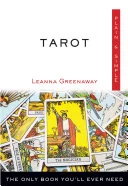
Tarot Plain & Simple
 72
72

Tarot Plain & Simple
Leanna Greenaway's Tarot Plain & Simple succeeds admirably in its stated goal of making Tarot accessible. The book presents card meanings with a refreshing lack of jargon, focusing on practical, relatable interpretations that avoid the historical baggage often associated with Tarot texts. Its strength lies in its clarity and directness, particularly in explaining the Minor Arcana, which many beginners find challenging. The section on the court cards, for instance, offers a concise breakdown of their roles. However, the book’s very simplicity might leave seasoned practitioners wanting more depth. For example, while the upright and reversed meanings are clear, the nuanced interplay between cards in a complex spread, a hallmark of advanced readings, receives less attention. The treatment of the Fool's journey, a foundational narrative, is present but somewhat streamlined. Ultimately, this is a commendable primer for the absolute novice, offering a solid foundation without unnecessary complication.
📝 Description
72
Published in 2017, Tarot Plain & Simple offers a direct path to understanding the 78 Tarot cards.
Leanna Greenaway's 2017 guide, Tarot Plain & Simple, presents a clear method for learning the 78 cards. The book focuses on straightforward meanings for each card, whether upright or reversed. It also details simple techniques for creating and interpreting card layouts, steering clear of complex historical or philosophical discussions that can deter novices.
This approach is aimed at individuals new to Tarot or those who have felt overwhelmed by other texts. Greenaway favors a practical, step-by-step system for developing reading skills. Readers seeking a no-nonsense guide to building confidence in Tarot readings for themselves and others will find this book useful. The author prioritizes ease of use and immediate application over extensive theoretical background.
While the Tarot's roots trace to 15th-century Europe as a game, its use in divination grew significantly from the late 18th century onward. Figures like Antoine Court de Gébelin and occult revival groups such as the Hermetic Order of the Golden Dawn shaped its esoteric reputation. Greenaway's work, however, situates itself within a modern trend of making esoteric tools accessible. It acknowledges the Tarot's lineage but emphasizes practical, contemporary application for new students of the cards.
💡 Why Read This Book?
• Learn a straightforward method for interpreting the 78 Tarot cards, including the Minor Arcana suits and court cards, as presented in Leanna Greenaway's practical framework. • Gain confidence in reading Tarot by practicing with clear, modern meanings for each card, as detailed in the book's approach to divination. • Understand the basic structure of a Tarot spread through the simple layout examples provided, enabling you to perform basic readings effectively.
⭐ Reader Reviews
Honest opinions from readers who have explored this book.
❓ Frequently Asked Questions
Is Tarot Plain & Simple suitable for someone who has never read Tarot cards before?
Absolutely. Tarot Plain & Simple is specifically designed for beginners. It breaks down complex concepts into easy-to-understand steps, focusing on clear meanings for each of the 78 cards and simple spread interpretations.
How does this book differ from other Tarot guides published before 2017?
This book updates Tarot interpretations for a contemporary audience, making meanings relevant and easy to grasp, unlike some older texts that can be dense or steeped in historical esoteric language.
Does the book cover both upright and reversed card meanings?
Yes, Tarot Plain & Simple provides guidance on interpreting cards in both their upright and reversed positions, offering a more comprehensive understanding of potential messages.
What are the Major and Minor Arcana, and how does the book explain them?
The book clearly defines the Major Arcana (the 22 trump cards representing significant life events) and the Minor Arcana (the 56 other cards divided into four suits), explaining their roles and meanings.
Are there exercises or practical advice for learning to read Tarot?
Yes, the book offers practical advice and emphasizes consistent practice as key to mastering Tarot reading. It guides readers on how to approach and interpret the cards in a reading.
Can I learn to do readings for others with this book?
The book provides the foundational knowledge and interpretive skills necessary to begin reading Tarot for yourself and others, focusing on clear communication of card meanings.
🔮 Key Themes & Symbolism
Accessible Card Meanings
Greenaway prioritizes clarity, presenting the 78 Tarot cards with meanings that are easy to understand and apply to modern life. This approach explains the process, moving away from obscure symbolism that can alienate new practitioners. The focus is on direct interpretation, making the cards feel more like accessible guides than cryptic prophecies. This theme is central to the book's 2017 publication, aiming to engage a contemporary audience seeking practical esoteric tools.
The Structure of the Tarot
The book systematically breaks down the Tarot into its core components: the 22 Major Arcana and the 56 Minor Arcana, further divided into the four suits (Wands, Cups, Swords, Pentacles) and the Court Cards. Understanding this structure is presented as the fundamental step towards mastering card reading. Greenaway provides a clear explanation of how these elements interact, offering a logical framework for comprehension.
Practical Application and Practice
Tarot Plain & Simple emphasizes that learning Tarot is an active process. It encourages consistent practice and offers simple methods for laying out cards and interpreting spreads. The goal is to build confidence through repetition and direct experience, rather than relying solely on memorization. This theme underscores the book's function as a practical handbook for developing divination skills.
Modern Divination
By updating card interpretations and focusing on relevance, Greenaway positions Tarot Plain & Simple as a guide for the 21st century. It acknowledges the historical roots of Tarot but presents it as a living, adaptable tool for self-discovery and guidance. This theme addresses the desire for contemporary spiritual and divinatory practices that align with modern sensibilities and challenges.
💬 Memorable Quotes
Direct passages from the work, attributed to the author.
“Many people struggle with the many different tarot books available today—they can be difficult for the novice to follow, and many present differing interpretations of the cards.”
— This statement highlights the book's core purpose: to address the common frustration of beginners facing a sea of conflicting and complex Tarot literature. It sets the stage for Greenaway's simplified, unified approach.
“This guide brings tarot into the 21st century, making the card meanings relevant and easy to understand and follow.”
— This captures the book's ambition to modernize Tarot interpretation. It suggests a departure from archaic language and concepts, aiming for a more direct and applicable understanding of the cards for contemporary readers.
“By following the guidelines set out in this book, you will come to understand how easy it is to master the art of reading cards.”
— This expresses the author's confidence in her method and aims to empower the reader. It promises that mastery is achievable through the structured approach provided, reducing the perceived difficulty of learning Tarot.
“Tarot is a popular form of divination that has been used for centuries.”
— This simple, factual statement grounds the book's subject matter. It acknowledges the long history and widespread appeal of Tarot, positioning the guide as an entry point into a time-honored practice.
💡 Key Ideas
Editorial paraphrase of the work's core concepts — not direct quotes.
The emphasis is on developing a personal connection with the cards through consistent practice and simple interpretation frameworks.
This paraphrase underscores the book's pedagogical approach. It stresses that true understanding comes not just from memorizing meanings, but from actively engaging with the cards and building an intuitive relationship with them.
🌙 Esoteric Significance
Tradition
This work engages with the broad Western esoteric tradition of Tarot divination, which gained prominence during the occult revival of the 19th century. While not explicitly aligning with a single lineage like Hermeticism or Kabbalah, Greenaway's approach simplifies the core divinatory function. It departs from more complex systems that integrate astrology or numerology deeply, focusing instead on intuitive meaning derived from the imagery and context, making it a secularized or beginner-friendly iteration of the divinatory art.
Symbolism
The book focuses on the inherent symbolism within the 78 cards themselves. Key motifs include the journey of The Fool, representing new beginnings and potential, and the archetypal figures of the Court Cards (Page, Knight, Queen, King), symbolizing different expressions of personality and roles. The four suits—Wands (creativity, passion), Cups (emotions, relationships), Swords (intellect, conflict), and Pentacles (material world, security)—are presented as fundamental symbolic languages for understanding different life domains.
Modern Relevance
Tarot Plain & Simple appeals to contemporary trends in self-help and mindfulness, adapting ancient tools for modern psychological exploration. Its accessible format appeals to a generation familiar with digital learning and seeking practical, immediate applications. While not directly engaging with academic occult studies or specific contemporary esoteric schools, its emphasis on clarity and personal intuition aligns with the broader interest in accessible spirituality and personal development practices prevalent today.
👥 Who Should Read This Book
['• Absolute beginners to Tarot seeking a clear, jargon-free introduction to the 78 cards and basic reading techniques.\n• Individuals who have previously found Tarot intimidating or confusing due to complex historical texts or conflicting interpretations.\n• Modern spiritual seekers interested in a practical, accessible tool for self-reflection and guidance without deep dives into esoteric history.', '• Students of divination looking for a foundational text that prioritizes ease of understanding and immediate application of card meanings.\n• Those interested in developing their intuition through a structured, yet personal, approach to card reading.\n• Readers who prefer concise, direct instruction over lengthy theoretical discussions in their learning process.']
📜 Historical Context
Leanna Greenaway's Tarot Plain & Simple, published in 2017, arrived during a period of renewed interest in esoteric practices, particularly among younger demographics seeking accessible spiritual tools. The mid-to-late 20th century saw a significant popularization of Tarot, moving beyond its occult revival roots championed by figures like Aleister Crowley and the Hermetic Order of the Golden Dawn in the early 1900s. Contemporary authors like Rachel Pollack had already been instrumental in expanding the discourse around Tarot, often linking it to psychology and feminist theory. Greenaway's work can be seen as a response to the perceived complexity of these later interpretations, as well as the historical depth found in texts predating the 1900s. By focusing on straightforward meanings, she implicitly contrasts with schools of thought that emphasize intricate Kabbalistic or astrological correspondences, offering a more streamlined path for the modern novice.
📔 Journal Prompts
Reflect on The Fool's journey through the Major Arcana as presented in the book.
Consider the symbolic meaning of the Swords suit in relation to a recent challenge.
How do the interpretations of the Court Cards align with people you know?
Explore the concept of 'card families' for understanding recurring themes.
Analyze the reversed meaning of a card you drew for yourself today.
🗂️ Glossary
Major Arcana
The 22 trump cards in a Tarot deck, representing significant life lessons, spiritual archetypes, and major turning points. They are often seen as the overarching narrative of the Tarot.
Minor Arcana
The 56 cards of a Tarot deck, divided into four suits (Wands, Cups, Swords, Pentacles). These cards typically represent everyday events, challenges, and circumstances.
Suits
The four divisions of the Minor Arcana: Wands (often associated with spirit, creativity, passion), Cups (emotions, relationships, intuition), Swords (intellect, conflict, truth), and Pentacles (material world, finance, security).
Court Cards
The four face cards within each suit of the Minor Arcana: Page, Knight, Queen, and King. They can represent people, personality types, or aspects of the querent's life.
Spread
A specific arrangement of Tarot cards laid out for interpretation. Different spreads are designed to answer particular types of questions or explore specific situations.
Divination
The practice of seeking knowledge of the future or the unknown by supernatural means. In the context of Tarot, it involves interpreting card symbolism to gain insight.
Reversed
Referring to a Tarot card drawn upside down. Reversed meanings often suggest an internal aspect of the issue, a blockage, or a different perspective on the upright meaning.
This book appears in 1 collection
🔮 Readers Also Liked
Browse all →









From the “Spellcraft” Collection
View all →






More Free Occult Philosophy Books
View all →