Tarot
 84
84

Tarot
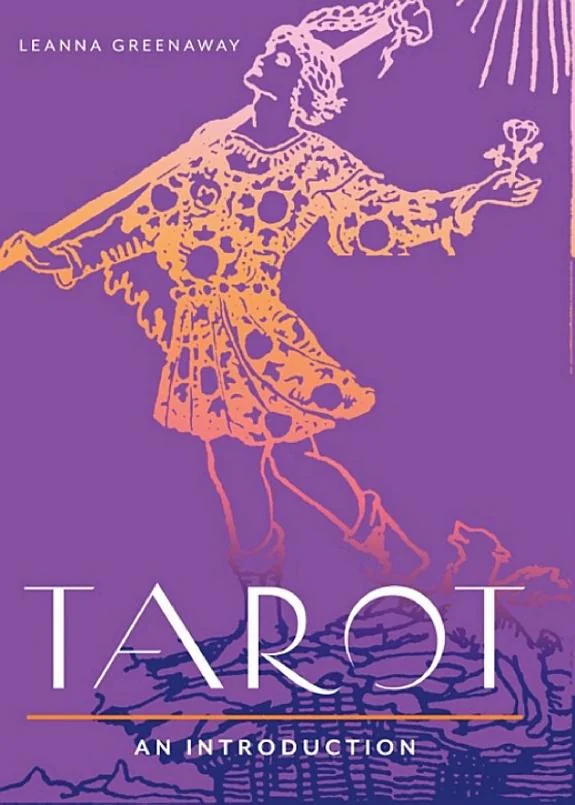
Leanna Greenaway's "Tarot" enters a crowded field with a clear objective: to provide a no-nonsense guide for beginners. Its strength lies in its methodical presentation of card meanings, particularly its clear distinctions between the Major and Minor Arcana, avoiding the esoteric jargon that often alienates newcomers. The section on common spreads, while brief, offers practical starting points. However, the book sometimes feels overly simplistic, particularly when discussing the archetypal depth of the Major Arcana; the interpretation of The Fool, for instance, leans heavily on a singular, almost didactic meaning without fully exploring its multi-layered symbolism as seen in some 19th-century occult traditions. While effective as an entry point, those seeking a deeper philosophical or historical engagement with Tarot's lineage might find it wanting. It serves its purpose as a functional primer, but lacks the nuanced exploration of comparative Tarot scholarship.
📝 Description
84
Leanna Greenaway's 'Tarot' aims to simplify card reading for beginners.
Leanna Greenaway's 'Tarot' offers a direct approach to learning the 78-card Tarot deck. The book begins by detailing the 22 Major Arcana cards, explaining their symbolic meanings and connection to personal growth. It then moves to the 56 Minor Arcana cards, covering the four suits – Wands, Cups, Swords, and Pentacles – along with their court and numbered cards.
Beyond individual card meanings, the guide addresses how to interpret Tarot spreads. It introduces common layouts, like the Celtic Cross and three-card spreads, showing how card placement affects the reading. The book encourages developing intuition alongside memorizing card interpretations. Greenaway's central goal is to give new readers a clear, unified method for learning Tarot, avoiding the confusion that can come from multiple sources.
This book fits within the Western esoteric tradition of Tarot, which views the cards not just as a divination tool but as a symbolic language for psychological and spiritual understanding. It draws on the established structure of the Rider-Waite-Smith system, a common framework for modern Tarot practice. The focus on archetypes and personal development aligns with interpretations that see the Tarot as a map of the human psyche and a means of self-discovery.
💡 Why Read This Book?
• Learn the foundational meanings of all 78 Tarot cards, including the distinct symbolism of the Major Arcana and the suit-based narratives of the Minor Arcana, as presented in Greenaway's accessible framework. • Gain practical skills in interpreting common Tarot spreads, such as the three-card and Celtic Cross layouts, enabling you to conduct basic readings for yourself or others. • Understand the historical lineage of Tarot as a tool for self-discovery, tracing its use as a method of divination that has been popular for centuries.
⭐ Reader Reviews
Honest opinions from readers who have explored this book.
❓ Frequently Asked Questions
What is the primary focus of Leanna Greenaway's "Tarot"?
The book's primary focus is to serve as a plain and simple guide for beginners to understand the meanings of the Major and Minor Arcana cards and how to interpret Tarot spreads for divination.
How does "Tarot" by Leanna Greenaway help novice readers?
It offers clear explanations of card meanings and spread interpretations, aiming to simplify the learning process and build confidence for those new to reading cards, distinguishing itself from more complex texts.
What types of spreads are covered in the book?
The book covers common and foundational Tarot spreads, including the widely used three-card spread and the more detailed Celtic Cross layout, providing practical examples for interpretation.
When was Leanna Greenaway's "Tarot" first published?
Leanna Greenaway's "Tarot" was first published on March 4, 2024, making it a contemporary guide to the practice.
Does the book discuss the historical significance of Tarot?
Yes, the book touches upon Tarot's history as a popular form of divination used for centuries, framing it as a key to unlocking psychological understanding.
What distinguishes this book from other Tarot guides?
Its distinction lies in its plain and simple approach, designed to overcome the confusion often caused by the multitude of complex and differing interpretations found in other Tarot books.
🔮 Key Themes & Symbolism
Major Arcana Archetypes
The Major Arcana cards are presented as archetypal forces influencing life's journey. Each of the 22 cards, from The Fool to The World, is explored for its symbolic meaning and its representation of significant life events or spiritual lessons. The book emphasizes understanding these archetypes as fundamental keys to unlocking deeper psychological insights through Tarot reading.
Minor Arcana Suit Meanings
The Minor Arcana, comprising 56 cards across four suits (Wands, Cups, Swords, Pentacles), are detailed to show their connection to daily life experiences. Each suit is linked to specific elemental energies and themes: Wands to action and creativity, Cups to emotions and relationships, Swords to intellect and conflict, and Pentacles to the material world and practical matters.
The Art of Spread Interpretation
Beyond individual card meanings, the book focuses on how cards interact within a spread. It teaches readers to analyze the relationships between cards, the significance of card positions, and how to synthesize these elements into a coherent narrative. This practical skill is crucial for effective divination and self-understanding using Tarot.
Tarot as a Divinatory Tool
The work frames Tarot as a time-honored method of divination, used for centuries to gain insight into the psyche and potential future paths. It presents the practice not as fortune-telling in a deterministic sense, but as a tool for self-reflection, guidance, and understanding the subtle influences at play in one's life.
💬 Memorable Quotes
Direct passages from the work, attributed to the author.
“Tarot is a popular form of divination that has been used for centuries and is key to unlocking the psyche.”
— This statement positions Tarot not just as a predictive tool, but as a psychological instrument, emphasizing its long history and its capacity to reveal inner truths and subconscious patterns.
“By following the advice and knowledge set out in this book, you will come to understand how easy it is to master the art of reading cards.”
— This conveys the author's pedagogical approach, promising a simplified learning curve and empowering readers to achieve competence in Tarot reading through structured guidance.
“Many people struggle with the multitude of tarot books available today—they can be difficult for the novice to follow.”
— This highlights a common pain point for beginners in the Tarot community, suggesting that Greenaway's book aims to provide a less intimidating and more accessible alternative to existing literature.
“Your Plain & Simple Guide to Major and Minor Arcana Card Meanings and Interpreting Spreads”
— This is the book's subtitle, clearly defining its scope and target audience. It promises clarity and comprehensiveness regarding core Tarot components and practical application.
“many present differing interpretations”
— This observation points to a perceived inconsistency in Tarot literature, implying that Greenaway's work offers a more unified or definitive approach to card meanings.
🌙 Esoteric Significance
Tradition
While not explicitly aligning with a single esoteric lineage, Greenaway's "Tarot" draws from the broad Western esoteric tradition that views Tarot as a symbolic language for understanding the psyche and life's journey. It carries the hermeneutic approach popularised in the late 19th and early 20th centuries, where Tarot was less about historical cartomancy and more about personal revelation and psychological mapping.
Symbolism
The book explores key symbols within the Tarot, such as the archetypal figures of the Major Arcana (e.g., The Magician representing will and manifestation, The High Priestess embodying intuition and the subconscious) and the elemental associations of the Minor Arcana suits (Wands/Fire for spirit/action, Cups/Water for emotion/relationships, Swords/Air for intellect/truth, Pentacles/Earth for material reality/body).
Modern Relevance
Contemporary practitioners and authors who focus on accessible, psychologically-oriented Tarot readings, often found in online communities and self-help contexts, can see Greenaway's work as a foundational text. It aligns with modern trends that utilize Tarot for mindfulness, self-discovery, and navigating personal challenges, moving away from purely predictive applications.
👥 Who Should Read This Book
• Absolute beginners curious about Tarot card meanings and basic divination practices, seeking a clear, step-by-step introduction. • Individuals overwhelmed by the vast amount of esoteric literature on Tarot, who desire a single, uncomplicated resource to start their learning journey. • Aspiring readers looking for practical guidance on interpreting spreads and developing their intuitive skills without immediate immersion in complex occult symbolism.
📜 Historical Context
Leanna Greenaway's "Tarot," published in 2024, emerges in an era where esoteric practices are experiencing a resurgence, often filtered through digital platforms and a renewed interest in personal psychology. While the book itself is contemporary, its subject matter places it within a tradition stretching back to at least the mid-18th century, when Tarot cards began to be associated with occultism and divination. Key figures like Antoine Court de Gébelin in the 1780s linked the cards to ancient Egyptian wisdom, a notion that influenced subsequent occultists. The book's straightforward approach can be seen as a counterpoint to the complex, often dense, occult theories developed by figures like Eliphas Lévi in the 19th century or the influential interpretations found in the Rider-Waite-Smith deck, first published in 1909. Unlike works that engage deeply with Kabbalistic or astrological correspondences, Greenaway focuses on practical application for the modern novice.
📔 Journal Prompts
The Fool's journey through the Major Arcana: what initial leap of faith does it represent for you?
Reflect on the suit of Cups: how do your emotional currents manifest in relationships?
Consider The Magician's tools: what skills do you possess to manifest your intentions?
The symbolism of The Tower: how can sudden change lead to necessary rebuilding?
Interpret the placement of a card in a three-card spread: what narrative emerges?
🗂️ Glossary
Major Arcana
The set of 22 trump cards in a Tarot deck, representing significant life lessons, archetypal figures, and major events or spiritual themes.
Minor Arcana
The 56 cards in a Tarot deck, divided into four suits (Wands, Cups, Swords, Pentacles), which typically represent everyday events, challenges, and circumstances.
Arcana
Latin for 'secrets' or 'mysteries,' referring to the two main divisions of the Tarot deck: the Major Arcana and the Minor Arcana.
Divination
The practice of seeking knowledge of the future or the unknown by supernatural means, often through tools like Tarot cards, for guidance and insight.
Spread
A specific arrangement or layout of Tarot cards used in a reading, designed to address particular questions or explore different facets of a situation.
Wands
One of the four suits in the Minor Arcana, typically associated with the element of Fire, representing action, creativity, passion, and inspiration.
Pentacles
One of the four suits in the Minor Arcana, typically associated with the element of Earth, representing the material world, finances, health, and practical matters.
This book appears in 1 collection
🔮 Readers Also Liked
Browse all →









From the “Minor Arcana” Collection
View all →







More Free Occult Philosophy Books
View all →