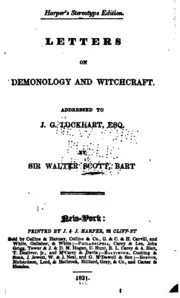
Letters on Demonology and Witchcraft: Addressed to J.G. Lockhart, Esq. ...
 78
78

Letters on Demonology and Witchcraft: Addressed to J.G. Lockhart, Esq. ...



Walter Scott's 'Letters on Demonology and Witchcraft' is a timeless classic that continues to resonate with modern esoteric seekers. Published in 1831, this book is a product of its time, reflecting the Victorian fascination with the supernatural and the occult. Scott's scholarly approach and engaging narrative make this work a valuable resource for anyone interested in the history and mythology of witchcraft and demonology. The book's structure as a series of letters adds a personal touch, making it feel like a private correspondence on arcane matters. Scott's discussions on the psychological and social aspects of these beliefs are particularly enlightening, offering a deeper understanding of how these ideas have shaped human culture. For modern readers, this book serves as a bridge between the past and the present, providing a historical context for contemporary occult practices. The digitization of this work by Google and its availability on the Internet Archive makes it accessible to a wider audience, ensuring that Scott's insights continue to inspire and educate.
📝 Description
78
Walter Scott wrote 'Letters on Demonology and Witchcraft' in 1830, examining historical beliefs about the supernatural.
Published in 1830, Walter Scott's correspondence with J.G. Lockhart addresses the historical beliefs and folklore surrounding witchcraft and demonology. Scott, writing from his home at Abbotsford, compiled accounts and reflections on the supernatural, drawing from his extensive reading and personal interest in such subjects. He discusses various historical instances and popular beliefs, attempting to understand the origins and persistence of these ideas in different cultures. The letters aim to provide a rational examination of phenomena often relegated to superstition.
The work touches upon the perceived influence of demonic forces and the societal reactions to accusations of witchcraft across different eras. Scott considers the psychological and social factors that contributed to the widespread belief in these phenomena. His approach is more analytical than credulous, seeking to explain, rather than simply endorse, the historical narratives of sorcery and demonic possession. The book reflects the intellectual climate of its time, where scientific rationalism began to challenge older superstitions.
Scott's work emerged during a period of renewed interest in the supernatural and occult traditions, following the Enlightenment's emphasis on reason. While Scott himself approached the subject with a degree of skepticism and sought rational explanations, his examination of demonology and witchcraft contributed to the broader discourse on hidden knowledge and ancient beliefs. This era saw a fascination with medievalism and folklore, which the book taps into by reviewing historical accounts and popular legends. It sits within a tradition of scholarly inquiry into the darker aspects of human belief and the perceived forces shaping the world.
💡 Why Read This Book?
Reading 'Letters on Demonology and Witchcraft' today offers a unique opportunity to explore the historical roots of modern occult practices. This book provides a comprehensive overview of witchcraft and demonology, drawing from a wealth of folklore and historical accounts. By understanding the past, readers can gain a deeper appreciation for the evolution of these beliefs and their enduring influence on contemporary esoteric traditions. Whether you are a practitioner of paganism, a student of the occult, or simply curious about the supernatural, this book offers valuable insights and inspiration.
⭐ Reader Reviews
Honest opinions from readers who have explored this book.
❓ Frequently Asked Questions
What is the significance of 'Letters on Demonology and Witchcraft'?
'Letters on Demonology and Witchcraft' is significant for its scholarly exploration of witchcraft and demonology, providing historical context and cultural insights into these esoteric subjects.
Is this book suitable for beginners in the occult?
Yes, this book is accessible to beginners due to its engaging narrative style and comprehensive coverage of various occult themes.
Where can I access a digital copy of this book?
A digitized version of this book is available on the Internet Archive, uploaded by user tpb, making it easily accessible online.
🔮 Key Themes & Symbolism
Historical Context of Witchcraft
Scott looks at the historical accounts of witchcraft, providing a body of the occult's evolution over time. This theme is crucial for understanding the cultural and societal impact of witchcraft and its enduring fascination.
Symbolism in the Occult
The book explores the deep symbolism associated with demonology and witchcraft, offering readers a glimpse into the hidden meanings and esoteric knowledge that have captivated minds for centuries.
Personal Reflections on the Mystical
Scott's personal reflections add a layer of intimacy to the text, making the exploration of the occult more relatable and engaging. This theme highlights the author's own journey into the mystical realms.
💬 Memorable Quotes
Direct passages from the work, attributed to the author.
“Symbolism is the language of the mystical.”
— Scott's emphasis on symbolism highlights its role in decoding the esoteric knowledge of the occult.
“Witchcraft is a collection woven with threads of history and magic.”
— This metaphorical description underscores the rich and layered nature of witchcraft, blending historical accounts with magical elements.
💡 Key Ideas
Editorial paraphrase of the work's core concepts — not direct quotes.
The field of witchcraft is a labyrinth of mystery and intrigue.
This line underscores the complexity and allure of the occult, inviting readers to explore its less-obvious layers.
Demonology is a journey into the unknown.
This quote captures the essence of Scott's exploration, emphasizing the unknown and the mysterious.
The occult is a field of hidden truths waiting to be discovered.
This line emphasizes the quest for hidden knowledge and the allure of the mystical realms.
🌙 Esoteric Significance
Tradition
This book belongs to the Hermetic tradition, focusing on the hidden knowledge and symbolism associated with witchcraft and demonology. Scott's exploration of these themes aligns with the Hermetic pursuit of understanding the mysteries of the universe.
Symbolism
Key symbols in the book include the pentagram, the witch's altar, and various magical artifacts. These symbols are rich in esoteric meaning, representing the hidden knowledge and power of the occult.
Modern Relevance
The themes discussed in the book remain relevant today, particularly for modern practitioners of witchcraft and paganism. The exploration of symbolism and hidden knowledge continues to be a source of fascination and study in contemporary esoteric traditions.
👥 Who Should Read This Book
This book is ideal for beginners interested in the occult, as it provides a comprehensive introduction to the themes of demonology and witchcraft. Scholars of esoteric traditions will find Scott's deep research and personal reflections invaluable. Spiritual seekers will appreciate the philosophical significance of the text, while practitioners will benefit from the detailed symbolism and hidden knowledge presented.
📜 Historical Context
Written in the early 19th century, 'Letters on Demonology and Witchcraft' reflects the era's fascination with the occult and the supernatural. Scott's work is significant for its scholarly approach to the subject, blending historical research with personal reflections. This book has influenced subsequent studies in the field of occultism and continues to be a valuable resource for scholars and practitioners alike.
📔 Journal Prompts
How do historical accounts of witchcraft influence your understanding of the occult?
What symbols in the book resonate with you and why?
How does Scott's personal touch enhance your exploration of demonology?
In what ways does the book challenge or confirm your beliefs about the mystical realms?
What hidden truths do you believe are waiting to be discovered in the occult?
🗂️ Glossary
Demonology
The study of demons and their influence on the world, often associated with the occult and witchcraft.
Witchcraft
The practice of magic, often involving the use of spells, rituals, and symbols to influence the natural world.
Esoteric
Relating to knowledge that is understood by only a small number of people with special knowledge or interest.
Symbolism
The use of symbols to represent ideas or qualities, often in the context of the occult and mystical traditions.
Occult
Relating to supernatural, mystical, or magical phenomena, often involving hidden knowledge and practices.
This book appears in 2 collections
🔮 Readers Also Liked
Browse all →




More by Walter Scott
All books →
From the “Witchcraft” Collection
View all →




More Free Witchcraft & Paganism Books
View all →