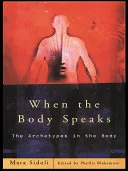
When the Body Speaks
 77
77

When the Body Speaks
Mara Sidoli’s *When the Body Speaks* presents a compelling, if sometimes dense, argument for the profound impact of infancy on adult psychosomatic conditions. Her integration of Jungian archetypes with Fordham's concept of the primary self offers a fresh lens through which to view early developmental trauma. The strength of the book lies in its detailed clinical observations, which lend significant weight to its theoretical framework. However, the academic rigor occasionally overwhelms the accessibility, making certain passages challenging for those not already well-versed in Jungian terminology. A particularly striking section discusses how early, uncontained affect can manifest as physical symptoms, illustrating the direct line from infantile experience to somatic disturbance. Sidoli’s work stands as a significant contribution to understanding the unconscious roots of physical suffering.
📝 Description
77
Mara Sidoli's 2003 book, When the Body Speaks, connects infant experience to adult psychological patterns.
First published in 2003, When the Body Speaks applies Carl Jung's analytical psychology to early human development. Mara Sidoli, drawing on her clinical work, argues that psychosomatic issues and lasting psychological habits originate in infancy. The book explains how archetypal images, present from birth, can affect later life and mental health.
This work is for psychoanalysts, psychotherapists, and students of depth psychology, especially those focused on Jungian theory and infant observation. It will also interest scholars of esoteric sciences, developmental psychology, and anyone curious about the link between early life and adult psychology. Readers concerned with the unconscious mind and physical signs of distress will find it valuable.
When the Body Speaks engages with Jungian thought, particularly Michael Fordham's work on early ego development and the primary self. It bridges object relations and attachment theory with archetypal psychology, a field Jung himself developed from the mid-20th century. The book considers how the unconscious mind, formed in infancy, manifests physically and psychologically.
💡 Why Read This Book?
• Gain a deeper understanding of how Jungian archetypes, such as the Self, manifest in infant development, a concept explored in relation to Fordham's primary self. • Learn to identify the origins of psychosomatic disturbances by examining unregulated affects during early life stages, as detailed through Sidoli's clinical work. • Appreciate the lasting influence of early psychological formation on adult life, grounded in the book’s analysis of how archetypal imagery takes root before conscious memory.
⭐ Reader Reviews
Honest opinions from readers who have explored this book.
❓ Frequently Asked Questions
What is the central argument of Mara Sidoli's *When the Body Speaks*?
The book argues that early infant experiences, particularly unregulated affects and the formation of archetypal imagery, lay the groundwork for later psychosomatic disturbances and permanent psychological patterns.
What psychological theories does *When the Body Speaks* draw upon?
It primarily draws from Carl Jung's analytical psychology, specifically concepts like archetypes and the Self, and integrates them with Michael Fordham's theories on the primary self and infant development.
Who is Michael Fordham and why is he relevant to this book?
Michael Fordham was a British Jungian psychoanalyst who expanded upon Jung's work, focusing on infant development and the concept of the 'primary self.' Sidoli builds upon his contributions in her analysis.
How does the book explain psychosomatic disturbances?
Sidoli explains psychosomatic disturbances as originating in the early stages of life through unmanaged emotional states (affects) and the imprinting of archetypal patterns on the developing psyche.
When was *When the Body Speaks* first published?
The book was first published on September 2, 2003.
What is the significance of 'archetypal imagery' in early life according to Sidoli?
Sidoli suggests that archetypal imagery, formed in early life, can permanently shape an individual's psychology, influencing their perceptions, emotional responses, and even physical health throughout their lives.
🔮 Key Themes & Symbolism
Infant Affect and Psychosomatics
This theme centers on Mara Sidoli's central thesis: the profound link between unregulated emotional states in infancy and the subsequent development of psychosomatic symptoms. The work posits that early, uncontained affects create psychic wounds that can manifest physically later in life. By examining clinical case studies, Sidoli illustrates how the body 'speaks' the language of unresolved infantile distress, offering a framework for understanding the origins of physical ailments rooted in early psychological experiences.
Archetypal Imagery in Early Development
The book explores how Jungian archetypes are not merely abstract concepts but active forces that shape the nascent psyche from birth. Sidoli details how archetypal imagery, drawn from the collective unconscious, is imprinted upon the developing infant, influencing personality structure and the perception of reality. This early imprinting can establish enduring psychological patterns, connecting the individual to universal human experiences through primordial symbols and narratives.
The Primary Self and Ego Formation
Drawing significantly from Michael Fordham's theories, this theme investigates the concept of the 'primary self' – the earliest layer of ego organization in infants. Sidoli applies this to understanding how the interaction between the infant's innate potential (the Self) and their environment shapes the foundational ego structure. Disturbances in this early formation, due to unregulated affects or environmental factors, are presented as key contributors to later psychological difficulties.
Jungian Concepts Applied to Infancy
This theme highlights the novel application of Carl Jung's complex theories to the seemingly simple field of infant psychology. Sidoli demonstrates how concepts like the Self, archetypes, and the unconscious are not confined to adult neuroses but are actively at play from the earliest moments of life. The book bridges theoretical Jungian psychology with empirical infant observation, offering a unique perspective on developmental processes.
💬 Memorable Quotes
Direct passages from the work, attributed to the author.
“Archetypal imagery formed in early life can permanently affect a person's psychology.”
— This statement captures the book's core argument: the unconscious, symbolic patterns encountered or generated in infancy have a lasting and formative impact on an individual's mental landscape and functioning.
“Psychosomatic disturbances originate in the early stages of life through unregulated affects.”
— This highlights Sidoli's focus on the developmental roots of physical symptoms, suggesting that unmanaged emotional experiences in infancy are direct precursors to later bodily expressions of psychological distress.
“The book links Jung's concepts of the self and the archetypes to the concepts of the primary self as conceptualized by Fordham.”
— This points to the book's theoretical synthesis, demonstrating how Sidoli integrates established Jungian ideas with Fordham's specific contributions to understanding the earliest stages of ego development.
“The work shows how the body speaks through psychosomatic manifestations.”
— This interpretation emphasizes the idea that physical symptoms are not random but are a form of communication from the unconscious, expressing unmet needs or unresolved conflicts from early life.
💡 Key Ideas
Editorial paraphrase of the work's core concepts — not direct quotes.
Early life experiences shape the developing child's inner world and psyche.
This paraphrased concept underscores the book's emphasis on the formative power of infancy, asserting that the environment and internal psychic processes during this period are critical in building the foundation of personality.
🌙 Esoteric Significance
Tradition
This work aligns with the depth psychology tradition, a branch of esoteric thought that seeks to understand the unconscious mind and its influence on human behavior and consciousness. While rooted in Jungian analytical psychology, it extends into the esoteric by exploring the symbolic language of the unconscious as it manifests from the earliest stages of life, connecting individual experience to universal psychic patterns.
Symbolism
A key symbol is the 'unregulated affect,' representing primal, unformed emotional energy that, if not contained or processed, can become a source of psychic imbalance and somatic expression. The 'archetypal imagery' itself functions symbolically, acting as primordial blueprints for human experience, influencing the infant’s nascent understanding of self and world.
Modern Relevance
Contemporary fields such as somatic experiencing, developmental trauma therapy, and even certain transpersonal psychology approaches echo Sidoli's insights. Thinkers exploring intergenerational trauma and the impact of early attachment patterns on adult well-being find resonance in her work, which provides a theoretical basis for understanding how deeply ingrained psychic structures from infancy persist.
👥 Who Should Read This Book
• Psychoanalytic therapists and Jungian analysts seeking to deepen their understanding of infant development and its link to adult psychopathology. • Students of esoteric sciences and comparative psychology interested in the application of archetypal theory to early human experience. • Individuals grappling with psychosomatic conditions who wish to explore potential origins in their earliest life stages through a psychological lens.
📜 Historical Context
When *When the Body Speaks* was published in 2003, Jungian psychology continued to hold significant sway in psychoanalytic circles, albeit alongside evolving schools of thought like attachment theory and relational psychoanalysis. Mara Sidoli's work emerged within this intellectual milieu, offering a specific application of Jungian principles to infant observation, an area where figures like Michael Fordham had already laid crucial groundwork. Fordham himself, a contemporary and collaborator with figures like Winnicott, had been developing his ideas on the primary self since the mid-20th century. Sidoli’s contribution was to synthesize these ideas with a focus on psychosomatics, a topic that had seen diverse approaches from Freud's early theories to more contemporary somatic therapies. The book navigated a landscape where Jungian thought was often seen as distinct from, though sometimes intersecting with, object relations theory, providing a bridge through its detailed clinical examples.
📔 Journal Prompts
The formation of archetypal imagery in infancy and its potential lasting impact.
Early life experiences and the origins of psychosomatic disturbances.
The concept of the primary self as understood through Fordham and Sidoli.
How unregulated affects in infancy might manifest in adult life.
The connection between the body's 'speech' and early psychological imprinting.
🗂️ Glossary
Archetypal Imagery
Universal, primordial patterns and images originating from the collective unconscious that influence human thought, emotion, and behavior, often manifesting in dreams, myths, and early psychological development.
Psychosomatic Disturbances
Physical symptoms or illnesses that are believed to originate or be exacerbated by mental or emotional factors, stemming from the interplay between the psyche and the soma (body).
Unregulated Affects
Intense emotional states experienced in infancy that are not adequately managed, soothed, or processed, potentially leading to psychic fragmentation or somatic expression.
Primary Self
A concept, particularly developed by Michael Fordham, referring to the earliest, most fundamental layer of ego organization and psychic potential in an infant, distinct from but interacting with the broader Jungian concept of the Self.
The Self (Jungian)
In Jungian psychology, the central archetype of the totality of the psyche, representing wholeness, integration, and the organizing principle of both the conscious and unconscious mind.
Analytical Psychology
The school of psychology founded by Carl Jung, focusing on the exploration of the unconscious, archetypes, individuation, and the symbolic life.
Infant Observation
A method of studying infant development through direct, often non-interventive, observation, used to understand early emotional and psychological processes.
This book appears in 1 collection
🔮 Readers Also Liked
Browse all →









From the “Archetypes” Collection
View all →








More Free Occult Philosophy Books
View all →