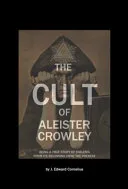
The Cult of Aleister Crowley
 74
74

The Cult of Aleister Crowley
Cornelius's *The Cult of Aleister Crowley* offers a direct, often polemical, account of internal Thelemic strife. The book's strength lies in its unwavering focus on specific disputes, particularly the alleged takeover of the O.T.O. by "Restrictionists" within the A.'.A.'. lineage. Cornelius meticulously details his grievances, providing names and specific instances that lend weight to his narrative. A notable passage discusses the controversial assertion of J. Daniel Gunther's 'papal' status, highlighting the schisms over authority. However, the work sometimes suffers from its highly personal tone, which, while passionate, can verge on an echo chamber for those already in agreement. The critique of Kenneth Grant, while historically significant, feels somewhat secondary to the core argument about A.'.A.'./O.T.O. control. Ultimately, Cornelius presents a vital, if contentious, insider's perspective on the ongoing struggle for Thelemic autonomy.
📝 Description
74
Published in 2021, J. Edward Cornelius's *The Cult of Aleister Crowley* revisits internal A.'.A.'. conflicts.
J. Edward Cornelius's *The Cult of Aleister Crowley* revisits internal A.'.A.'. conflicts, adding over 150 pages to his earlier work, *Memoirs of an A.'.A.'. Initiate*. The book directly addresses disputes over control and lineage within the A.'.A.'. and the wider Thelemic movement. Cornelius examines accusations and challenges to Thelemic freedom, analyzing the power dynamics and differing interpretations that have emerged among organizations claiming succession from Aleister Crowley.
The work is for dedicated students and practitioners of Thelema, particularly those interested in the historical and organizational aspects of the A.'.A.'. and O.T.O. It will appeal to readers seeking to understand the internal politics and doctrinal disagreements that have shaped modern occult movements. Those interested in the controversies surrounding leadership, succession, and the preservation of esoteric teachings within these traditions will find this book particularly useful.
This book is situated within the history of modern Western esotericism, specifically the Thelemic tradition that emerged from Aleister Crowley's writings. It focuses on the organizational and biographical schisms that followed Crowley, particularly concerning the A.'.A.'. and the O.T.O. The text engages with the decades-long debates about legitimate succession and leadership that intensified after 1985, contrasting different approaches to maintaining the integrity of Thelemic teachings.
💡 Why Read This Book?
• Understand the internal organizational politics of the A.'.A.'. and O.T.O., focusing on the "Restrictionist" faction's alleged takeover, a core conflict detailed by Cornelius. • Gain insight into the controversial claims of leadership, such as the "Thelemic Pope" status attributed to J. Daniel Gunther, a specific point of contention explored in the text. • Examine the historical pressures and alleged capitulations within occult lineages, referencing events like the pressure on Kenneth Grant, offering a unique perspective on esoteric power dynamics.
⭐ Reader Reviews
Honest opinions from readers who have explored this book.
❓ Frequently Asked Questions
What is the primary focus of J. Edward Cornelius's *The Cult of Aleister Crowley*?
The book primarily focuses on the internal conflicts and power struggles within the A.'.A.'. and O.T.O. lineages, detailing what Cornelius describes as the "Restrictionist" faction's attempt to control Thelemic organizations and freedom.
How does this book expand upon *Memoirs of an A.'.A.'. Initiate*?
It adds over 150 pages of new material, specifically addressing ongoing disputes and controversies that have arisen since the previous publication, deepening the narrative on Thelemic organizational dynamics.
Who are some key figures discussed in *The Cult of Aleister Crowley*?
Key figures include J. Edward Cornelius himself, J. Daniel Gunther (whose alleged 'papal' status is examined), and Kenneth Grant, whose interactions and alleged pressures are discussed in the context of organizational control.
What is the concept of 'Thelemic freedom' as presented by Cornelius?
Cornelius frames 'Thelemic freedom' as the original intent of Thelema, emphasizing individual liberty and the pursuit of the Great Work without the imposition of restrictive doctrines or organizational control by certain factions.
What does the book say about the O.T.O.'s lineage?
The book alleges that the O.T.O. has been influenced or controlled by "Restrictionists" from the A.'.A.'. lineage, compromising its original principles and leading to internal disputes over its direction and authenticity.
When was *The Cult of Aleister Crowley* first published?
The book was first published on October 27, 2021, reflecting contemporary debates within the Thelemic community.
🔮 Key Themes & Symbolism
Lineage Control Disputes
The work meticulously details the ongoing conflict within the A.'.A.'. lineage and its alleged impact on the O.T.O. Cornelius argues that a "Restrictionist" faction has sought to consolidate power, challenging the autonomy and authentic practice of Thelema. This theme is central, examining how claims of succession and authority can lead to schisms and the suppression of esoteric freedoms, a recurring issue in occult organizational histories.
Thelemic Freedom vs. Restrictionism
Cornelius champions the concept of "Thelemic freedom," contrasting it with the "Restrictionist" approach he identifies within certain organizational branches. This involves a defense of individual interpretation and practice of Thelemic principles against what he perceives as dogmatic control and the imposition of rigid structures. The book advocates for a return to what the author believes are the foundational, liberating aspects of Crowley's teachings.
Authority and Succession
A significant focus is placed on the nature of authority and legitimate succession within esoteric orders. The book scrutinizes individuals like J. Daniel Gunther, questioning the basis of their claims to leadership and spiritual authority. This exploration looks at how authority is established, maintained, and contested within traditions that often rely on initiation and lineage, particularly relevant in the post-Crowley era.
Organizational Integrity
The integrity of occult organizations like the A.'.A.'. and O.T.O. is a core concern. Cornelius expresses alarm over perceived deviations from original principles and practices, attributing this to internal power plays. The narrative serves as a critique of how external pressures and internal ambition can corrupt the spiritual mission of such groups, aiming to preserve their esoteric purpose.
💬 Memorable Quotes
Direct passages from the work, attributed to the author.
“The ongoing fight for Thelemic freedom against the Restrictionists in the A.'.A.'. lineage who have taken control of the O.T.O.”
— This statement expresses the central conflict of the book: Cornelius's perspective on a struggle for authenticity and liberty within Thelemic organizations, pitting his view of 'freedom' against perceived authoritarian control.
“Why is J. Daniel Gunther a Thelemic Pope, according to one of his own lineage members?”
— This rhetorical question highlights Cornelius's skepticism regarding the claimed authority of figures like J. Daniel Gunther, pointing to internal disputes over leadership titles and legitimacy within the Thelemic hierarchy.
“Breeze attacked Kenneth Grant and forced him to capitulate”
— This refers to alleged external pressures exerted on prominent occultist Kenneth Grant, suggesting a pattern of coercion and control within esoteric circles that Cornelius aims to expose and critique.
“In this expanded volume, Jerry details the ongoing fight...”
— The use of 'Jerry' (Cornelius's nickname) and the emphasis on an 'expanded volume' signal a personal, continuous engagement with the subject matter, building upon previous works to address evolving controversies.
“Here's some of what's new in this book.”
— This phrase indicates that the book introduces fresh material and arguments, moving beyond his previous 'Memoirs' to tackle recent developments and specific incidents within the Thelemic community.
🌙 Esoteric Significance
Tradition
This work operates within the Thelemic tradition, a modern magical system founded by Aleister Crowley. It specifically engages with the organizational and philosophical disputes within the A.'.A.'. (Astrum Argenteum) and the O.T.O. (Ordo Templi Orientis), two primary esoteric orders associated with Crowley. Cornelius seeks to defend a particular interpretation of Thelemic principles, emphasizing individual liberty and the Great Work, often in opposition to what he perceives as bureaucratic or dogmatic control emerging within these lineages.
Symbolism
While the book's primary focus is organizational conflict, the underlying symbolism relates to the struggle for spiritual attainment. The 'Great Work' itself is a central symbol, representing the individual's path to self-realization and union with the divine, a concept foundational to Thelema. The A.'.A.'. and O.T.O. symbols, such as the pentagram and the double-headed eagle, implicitly represent the structures and lineages being contested, their purity and authentic meaning under threat according to Cornelius's argument.
Modern Relevance
Cornelius's work remains highly relevant for contemporary practitioners and scholars of Western Esotericism, particularly those interested in Thelema. It speaks to ongoing debates about organizational ethics, leadership accountability, and the preservation of esoteric knowledge in the digital age. Thinkers and groups concerned with maintaining the integrity of initiatory traditions against commercialization or ideological capture find resonance in his arguments about authenticity and freedom.
👥 Who Should Read This Book
• Students of Thelema and Aleister Crowley's philosophy who want to understand the internal organizational dynamics and historical disputes affecting the A.'.A.'. and O.T.O. • Practitioners of Western Esotericism interested in comparative studies of occult organizational structures, succession claims, and ideological conflicts within magical orders. • Researchers of modern occult history seeking primary source material on post-Crowleyan Thelemic movements and the controversies surrounding leadership and doctrine.
📜 Historical Context
Published in 2021, *The Cult of Aleister Crowley* emerges from decades of internal debate within Thelemic circles, a milieu shaped by the legacy of Aleister Crowley and the subsequent organizational efforts of figures like Grady McMurtry. The work directly confronts the schisms within the A.'.A.'. and its repercussions for the O.T.O., controversies that intensified following McMurtry's death in 1985. Cornelius’s critique targets what he terms "Restrictionists" within the A.'.A.'. lineage, whom he accuses of exerting undue control over the O.T.O. This narrative positions itself against alternative interpretations and organizational claims, notably those associated with J. Daniel Gunther, whose asserted authority Cornelius challenges. The book implicitly engages with the broader intellectual currents of Western Esotericism in the late 20th and early 21st centuries, where questions of lineage, authority, and textual interpretation became paramount, particularly in the wake of figures like Kenneth Grant whose own interactions with organizational pressures are referenced.
📔 Journal Prompts
The 'Cult of Aleister Crowley' as a phrase: Reflect on the perceived negative connotations and how Cornelius uses it to describe internal Thelemic factions.
J. Daniel Gunther's claimed 'Thelemic Pope' status: Analyze the implications of such titles within esoteric lineages.
The concept of 'Thelemic freedom' versus 'Restrictionism': Define these terms in your own words based on the book's context.
Organizational control within esoteric orders: Consider historical examples similar to the A.'.A.'./O.T.O. disputes described.
Kenneth Grant's alleged capitulation: Explore the pressures that might lead a practitioner to compromise their work or teachings.
🗂️ Glossary
A.'.A.'.
Stands for Astrum Argenteum (Latin for 'Silver Star'), one of the primary esoteric orders founded by Aleister Crowley, focused on spiritual attainment and the Great Work.
O.T.O.
Stands for Ordo Templi Orientis (Latin for 'Order of the Eastern Temple'), another major esoteric organization associated with Aleister Crowley, often focused on magical and sacramental practices.
Thelema
A philosophical and religious system developed by Aleister Crowley, based on his book The Book of the Law, emphasizing individual will ('Do what thou wilt shall be the whole of the Law').
Restrictionists
A term used by J. Edward Cornelius to describe a faction within the A.'.A.'. lineage that he believes seeks to impose control and limit Thelemic freedom within organizations like the O.T.O.
Great Work
A central concept in Western esotericism, including Thelema, referring to the ultimate spiritual attainment, self-realization, or union with the divine.
Lineage
In esoteric contexts, refers to the unbroken chain of transmission of teachings, initiations, or authority from a founder or master to their successors.
Capitulate
To surrender or cease to resist an opponent or demand; in this context, implies yielding to pressure or authority within an esoteric organization.